
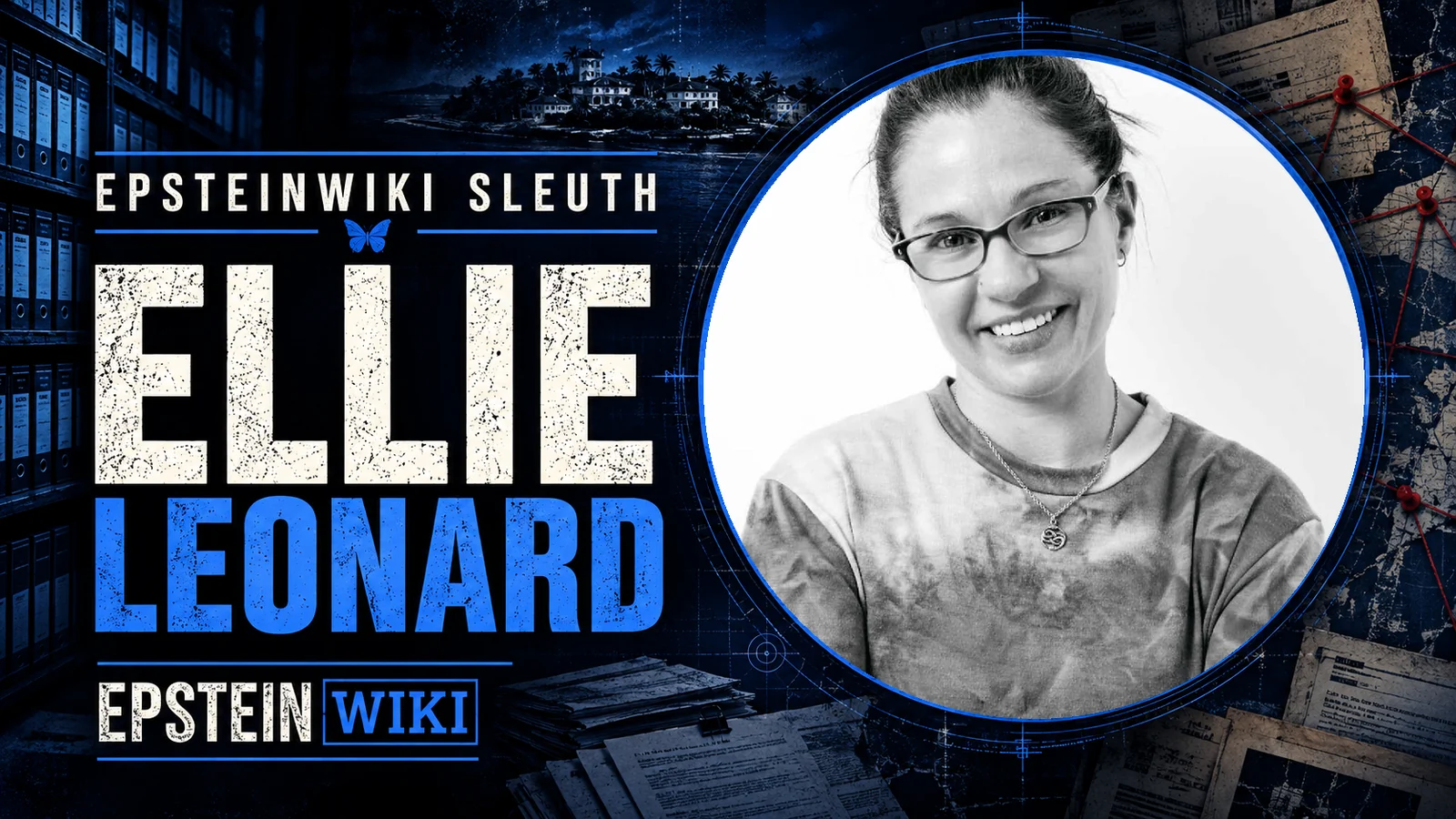
Sleuth Report: Ellie Leonard Shares a Call for New Democratic Leadership
Snapshot
| Field | Details |
|---|---|
| Shared by | Ellie Leonard, sharing another publication’s commentary |
| Original authors | Nick Paro and Sharad Swaney, signed authors at Sick of this Shit Publications |
| Original date | November 5, 2026, at 3:00 p.m. America/Denver |
| New appearance | Crosspost visible in Leonard’s public archive when checked on November 7, 2026 |
| Scope | Full accessible original reviewed. Selected primary references checked. Broader historical and election claims remain provisional. |
| Epstein relevance | General political advocacy. No new Epstein records, evidence identifiers, or case findings are presented. |
Overview
Paro and Swaney’s commentary argues that Democrats should replace Hakeem Jeffries and Chuck Schumer with leaders who will pursue accountability and affordability together. Leonard’s crosspost adds a brief endorsement of continued political pressure. Sharing the piece does not make her the author of its original analysis.
The essay advocates subpoenas, stronger fraud recovery, and changes to public spending. These are political demands. They are not evidence that a particular investigation, recovery, or leadership change has occurred.
Key Takeaways
- Leonard shared Paro and Swaney’s argument for new Democratic leadership; she did not author the original analysis.
- The official voting, statutory and constitutional references support narrower checks. The commentary presents political advocacy, not new Epstein records or institutional action.
Evidence Appearances and Exact References
House Roll Call 23, January 22, 2025, records passage of S. 5, the Laken Riley Act, by 263 votes to 156. The party breakdown shows 46 Democratic votes in favor and 156 against. Jeffries appears among the nays. This supports the essay’s specific voting reference. A vote record cannot establish why members voted as they did or prove that a caucus leader could have changed their decisions. The official page has no printed pagination.
31 U.S.C. § 3729(a)(1) provides civil liability for specified false claims and related conduct, including three times the government’s damages. Section 3729(a)(2) permits reduced damages when its conditions are met. These provisions concern qualifying conduct against the government. They do not establish that every instance of high prices or corporate misconduct qualifies, identify a liable company here, or automatically transfer ownership of a business to the public.
Article I, Section 9, Clause 7 of the Constitution requires appropriations made by law before money is drawn from the Treasury. Article I, Section 7 describes bicameral passage and presidential presentment. A demand to redirect recovered money therefore needs a lawful spending mechanism. These are section and clause references, not page references.
Significance
EpsteinWiki’s separate report on Greg Conners’s election commentary addresses the relationship between citizen research and accountability. Leonard’s crosspost belongs to the broader discussion of political strategy. Its relevance is contextual; it supplies no basis for linking its authors, preferred leaders, or other named people to Epstein’s crimes.
For readers evaluating oversight promises, the useful distinction is between an argument about who should lead and a verifiable action by an institution. Issued subpoenas, filed bills, recorded votes, and appropriations can be checked individually. An endorsement or an election result cannot substitute for those records.
Uncertainties and Open Questions
The original essay does not mention Jeffrey Epstein or the Epstein files. Leonard’s crosspost was not visible in her public archive when it was rechecked on November 13, 2026, so her endorsement could not be reconfirmed.
The essay’s projected 2026 seat totals, quoted contemporary political reactions, historical comparisons, and predictions about leadership were not independently audited in full. They should not be treated as verified findings of this report. The selected checks above establish narrower facts.
Which proposals will become bills? What investigations will committees authorize? Will any resulting recoveries receive a lawful appropriation for the services the authors favor? Those questions require subsequent official records.
Conclusion
Leonard’s crosspost contributes to a discussion of political leadership and accountability. The cited primary references clarify particular voting and legal points without verifying the essay’s full historical narrative, predictions or broader political claims.
Questions and Answers
Did Leonard write the original commentary?
No. Paro and Swaney are the signed authors. Leonard shared it with a brief endorsement.
Does it present new Epstein evidence?
No. It is political advocacy. The selected official references clarify specific voting and legal points, not new findings in the Epstein case.
Sources
- Paro and Swaney’s original commentary, November 5, 2026, and the crosspost carrying Leonard’s endorsement.
- Ellie Leonard’s public archive, checked November 7, 2026.
- House Clerk, Roll Call 23, January 22, 2025.
- 31 U.S.C. § 3729, subsections (a)(1) and (a)(2).
- National Archives, Constitution transcription, Article I, Sections 7 and 9.
- Related EpsteinWiki report on Greg Conners’s election commentary.