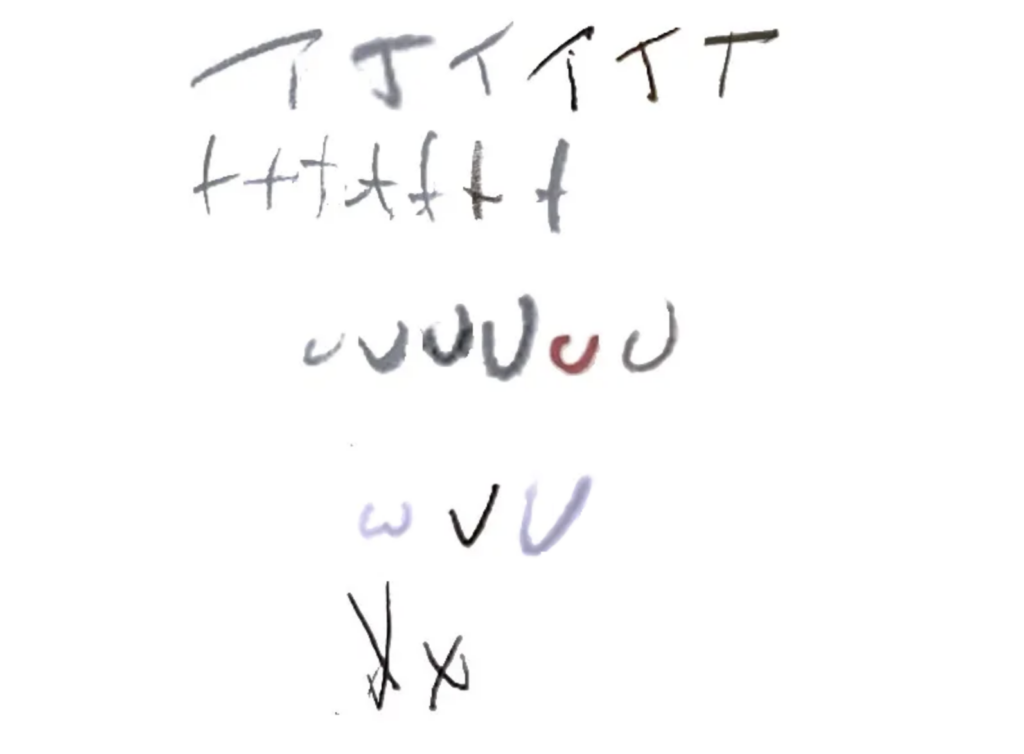
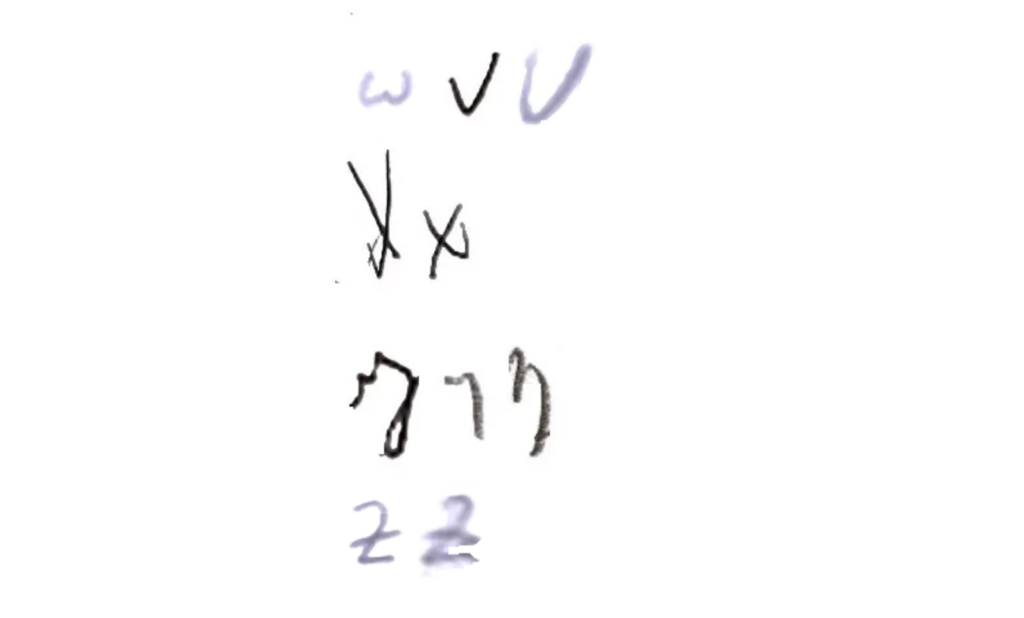
Investigative Training Guide to Jeffrey Epstein’s Handwriting and Document Authentication
Overview
One of the most important challenges facing Epstein Files investigators is determining the authenticity of disputed letters, notes, signatures, and handwritten records connected to Jeffrey Epstein.
The problem is significant because Epstein left behind relatively few publicly verified handwriting samples. Multiple former associates and investigators described Epstein as highly secretive, paranoid, and intentionally cautious about leaving documentary evidence. He often relied on assistants to write notes, relay messages, and record information on his behalf.
This creates major difficulties when investigators attempt to verify controversial documents allegedly written by Epstein.
Several disputed documents continue circulating online and in investigative communities, including:
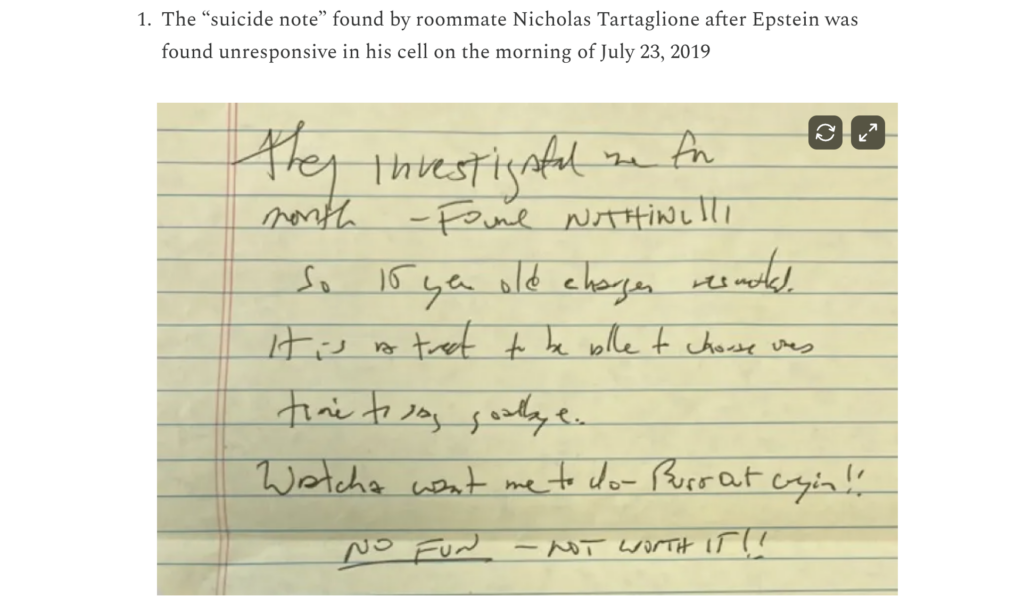
• the July 23, 2019 “suicide note” found after Epstein was discovered unresponsive in his jail cell
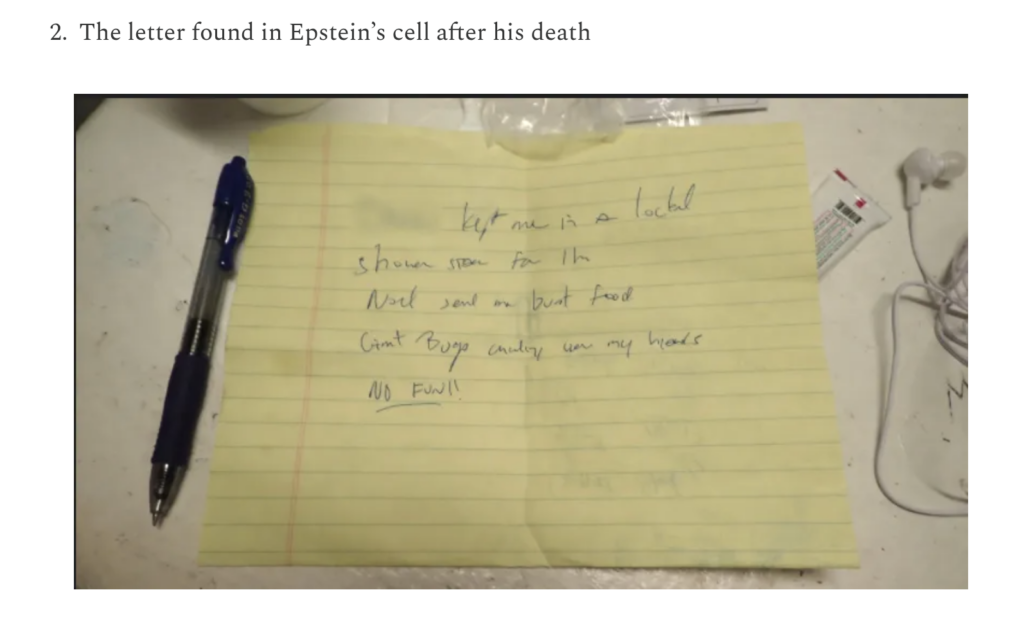
• the note allegedly found after Epstein’s death
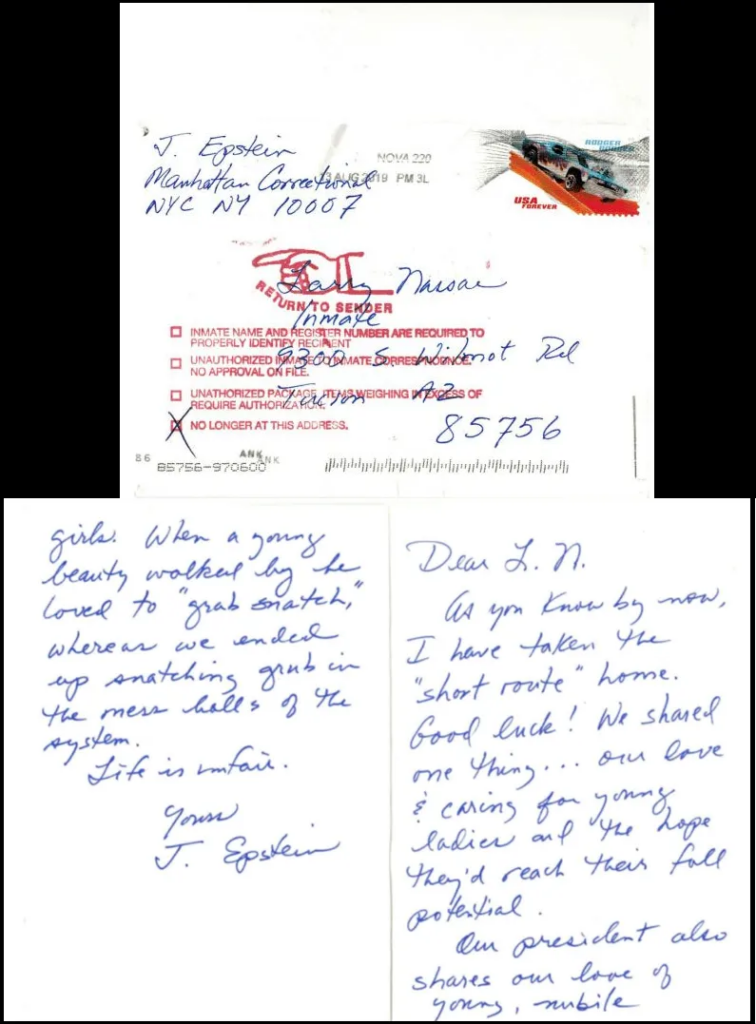
• the alleged Larry Nassar letter reportedly mailed after Epstein’s death
• various signatures appearing across passports, wills, and legal documents
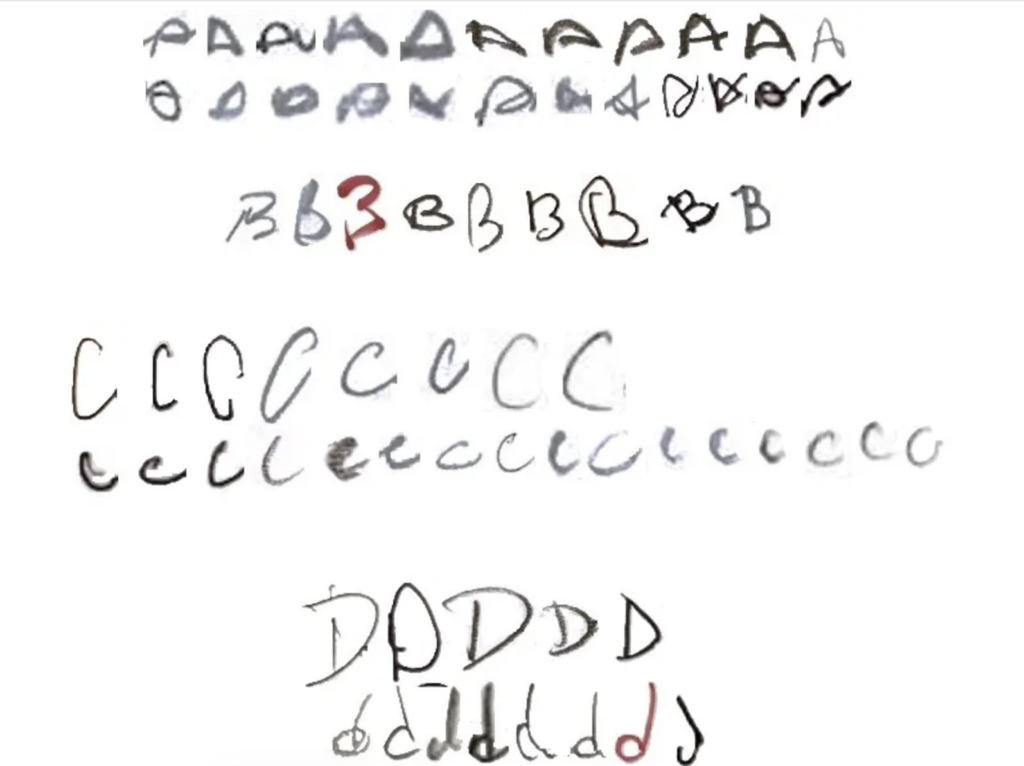
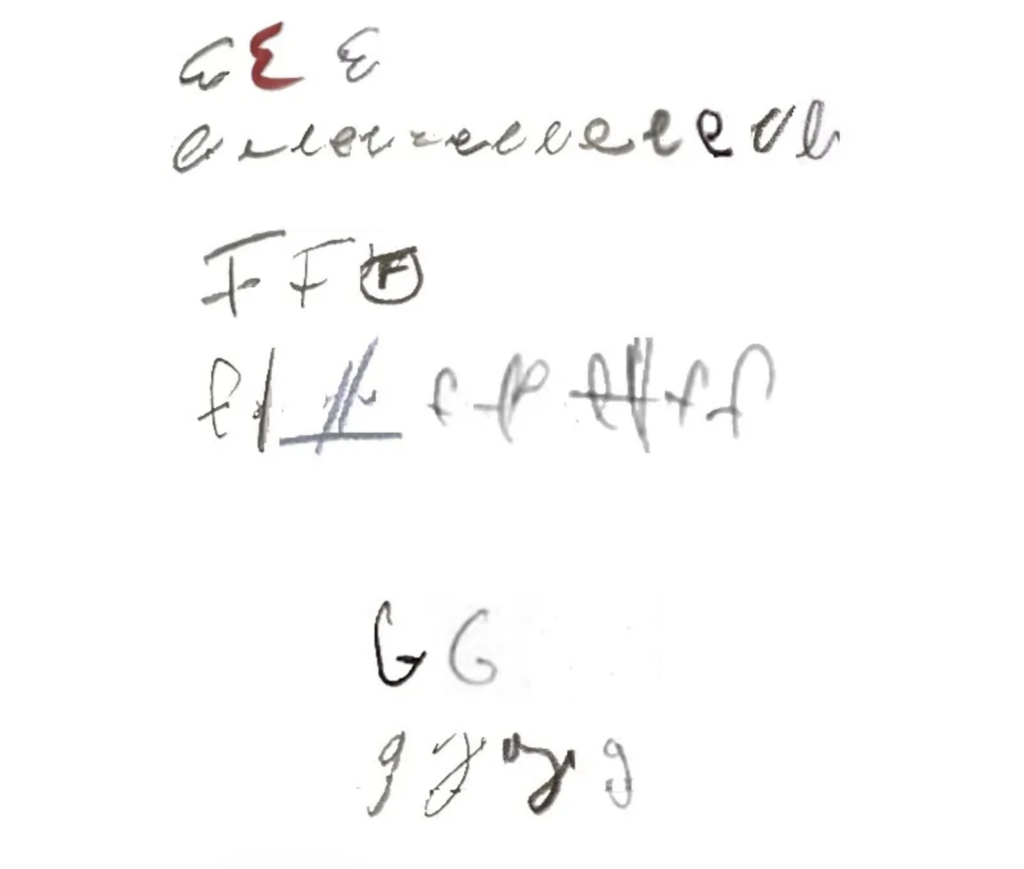
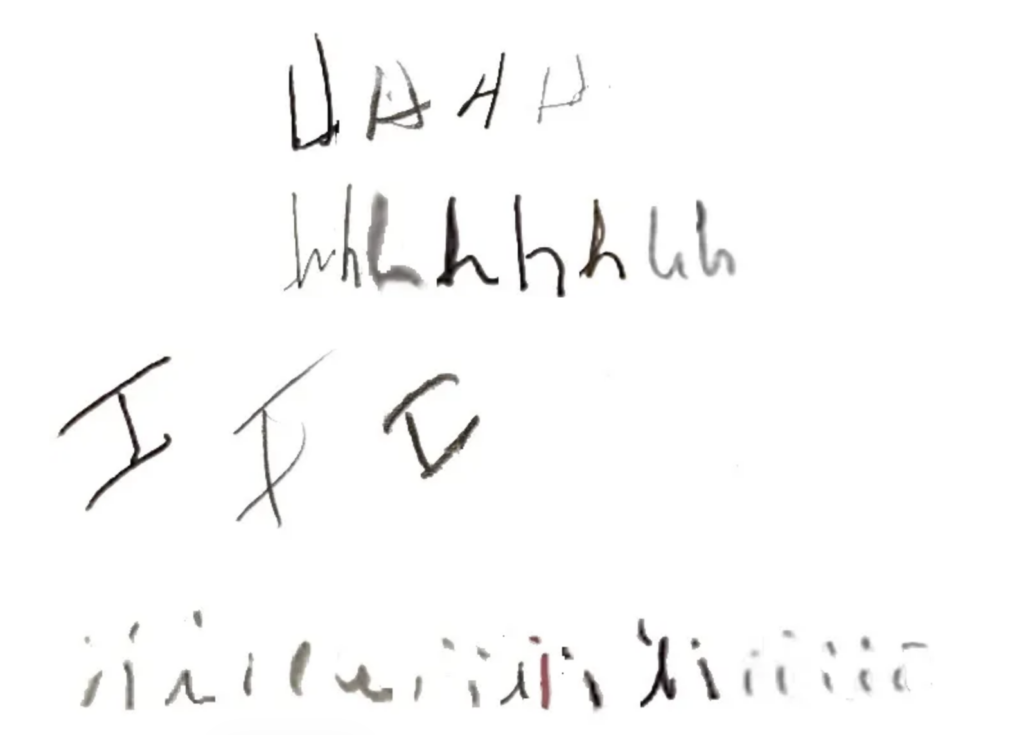
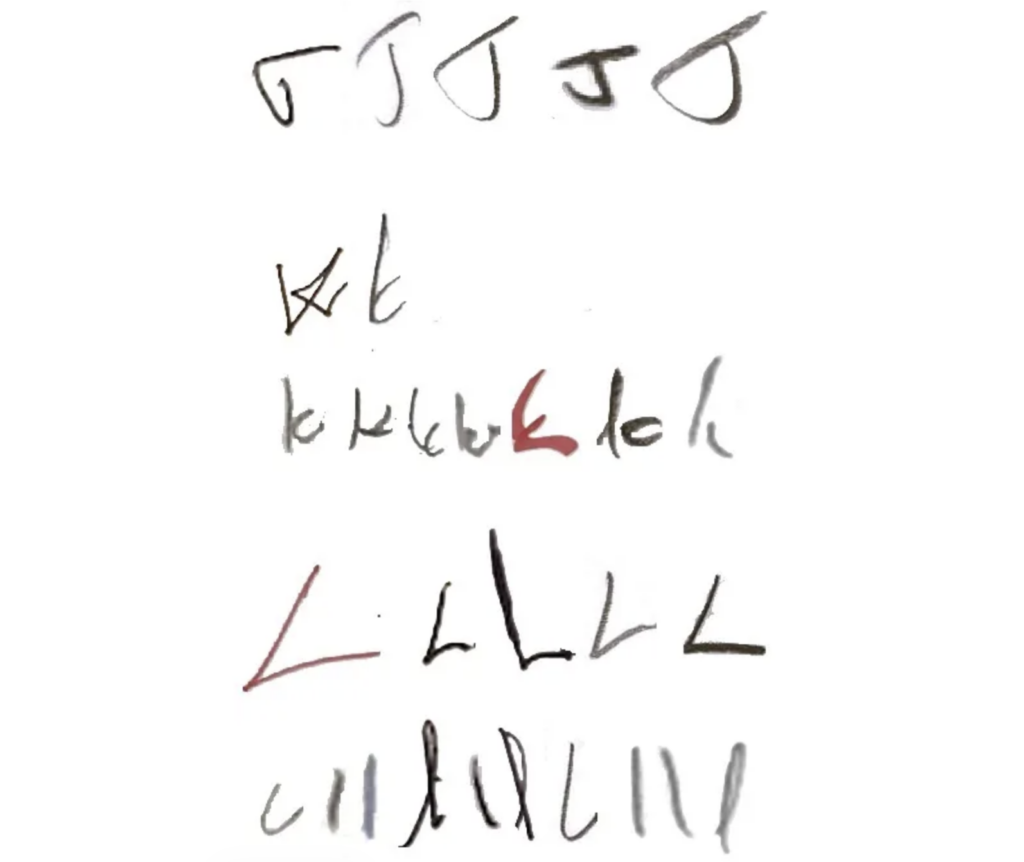
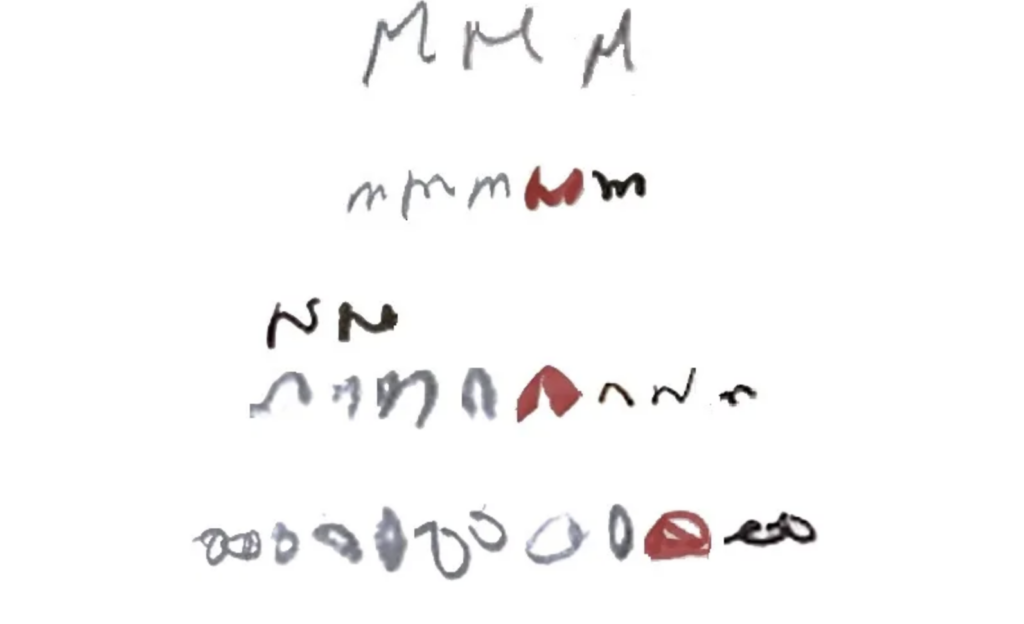
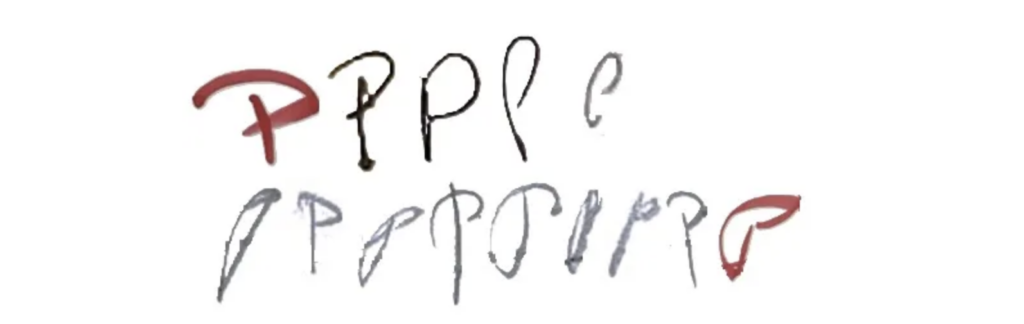
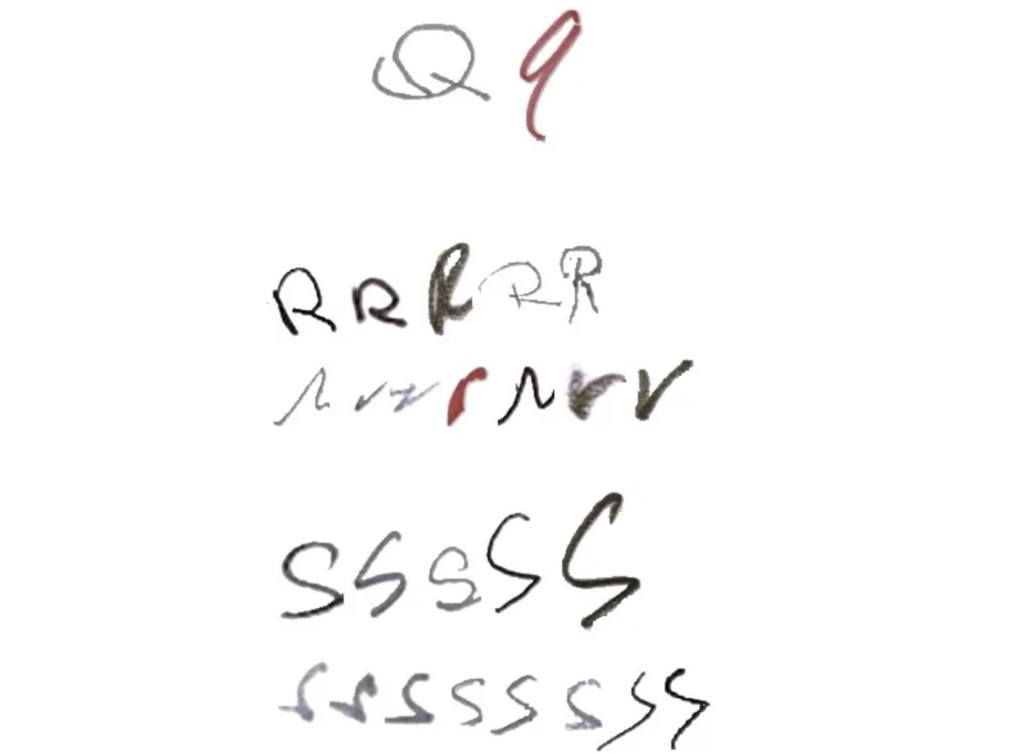
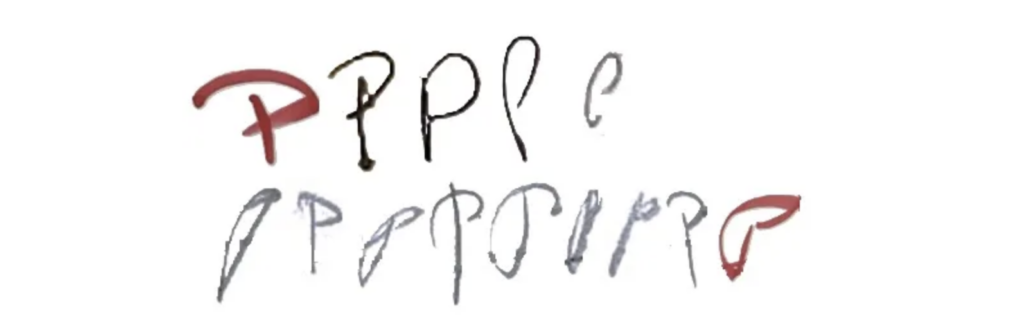
This training guide compiles verified handwriting examples and forensic comparison methods based on publicly available evidence and research compiled by investigative writer Ellie Leonard. The material is intended to help researchers, journalists, archivists, and independent investigators evaluate the authenticity of future Epstein related documents.
Why Epstein Handwriting Analysis Matters
The Epstein case contains enormous quantities of disputed or partially authenticated material.
Investigators regularly encounter:
• scanned letters
• photocopied signatures
• altered PDFs
• jail documents
• handwritten notes
• annotations
• alleged personal letters
• estate documents
• passport applications
Without verified baseline handwriting samples, it becomes extremely difficult to determine whether controversial records are authentic, forged, manipulated, or partially fabricated.
Handwriting analysis alone cannot definitively prove authorship. However, it can help identify:
• signature consistency
• stroke patterns
• letter spacing
• slant direction
• pressure habits
• abbreviation tendencies
• stylistic anomalies
• signs of tracing or forgery
These indicators become especially important when analyzing documents with disputed provenance.
The Three Most Controversial Epstein Letters
Several disputed Epstein related handwritten documents continue circulating online and in investigative discussions.
The July 23, 2019 Cell Note
This note was allegedly discovered by Epstein’s cellmate Nicholas Tartaglione after Epstein was found injured and unresponsive in his Metropolitan Correctional Center cell on July 23, 2019.
The note became controversial because investigators and online researchers questioned whether the handwriting matched verified Epstein samples.
Evidence Example
Ellie Leonard handwriting research article
The Post Death Jail Letter
Another disputed handwritten letter was reportedly found inside Epstein’s jail cell after his death on August 10, 2019.
Questions surrounding this note include:
• handwriting authenticity
• timing
• chain of custody
• authorship
• consistency with verified samples
This document remains heavily debated among researchers.
Evidence Example
Ellie Leonard handwriting research article
The Larry Nassar Letter
One of the strangest disputed documents is the alleged Larry Nassar letter reportedly mailed from the Metropolitan Correctional Center on August 13, 2019, three days after Epstein’s death.
The timing alone triggered immediate skepticism among investigators.
Questions surrounding the letter include:
• handwriting authenticity
• prison mailing procedures
• authorship timing
• possible fabrication
• postmark verification
• chain of custody issues
Evidence Example
Ellie Leonard handwriting research article

Why Verified Epstein Handwriting Is Rare
One of the largest obstacles in Epstein document analysis is the limited amount of confirmed handwriting available publicly.
Researchers and former associates have noted that Epstein often:
• relied on assistants
• avoided handwritten communication
• destroyed records
• used intermediaries
• compartmentalized information
• minimized paper trails
This means many publicly circulating “Epstein letters” lack reliable comparison material.
Because of that limitation, verified signatures and legal documents become critically important forensic reference points.
Verified Epstein Signature Samples
The strongest verified handwriting evidence currently available comes from official government and legal documents.
These include:
• passport signatures
• passport applications
• legal agreements
• Epstein’s last will and testament
• initials appearing on will pages
These records provide investigators with baseline comparison samples.
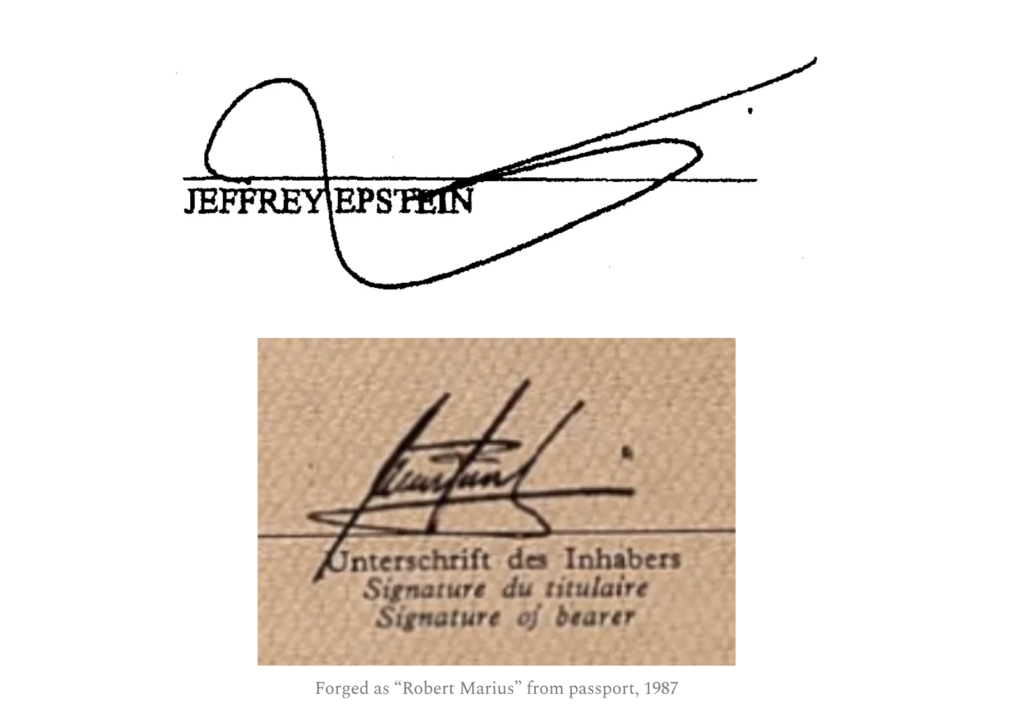
The “Robert Marius” Passport Signature
One of the earliest verified Epstein signatures appears on a forged Austrian passport using the alias “Robert Marius.”
Evidence Example
Robert Marius passport signature image
The forged passport is significant because it demonstrates:
• alternative identity usage
• signature evolution over time
• alias documentation
• international movement patterns
Investigators should compare later signatures against this earlier sample cautiously because handwriting naturally evolves across decades.
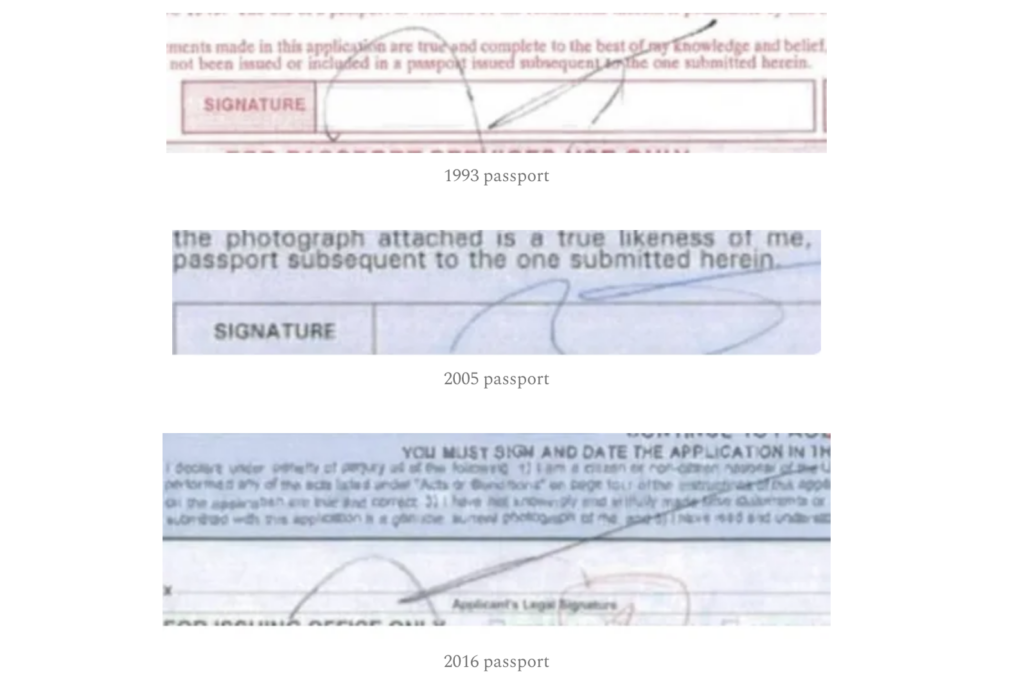
1993 Passport Signature
A verified Epstein passport signature from 1993 provides one of the clearest early baseline examples of his writing style.
Evidence Example
1993 passport signature reference
Researchers should examine:
• spacing
• angular letter formation
• slant consistency
• “J” formation
• pressure variation
• terminal stroke behavior
These patterns often remain surprisingly consistent across authentic signatures.
2005 Passport Signature
The 2005 passport signature is especially important because it appears during the period immediately before Epstein’s Florida criminal investigation became public.
Evidence Example
2005 passport signature reference
Investigators should compare:
• line smoothness
• rhythm consistency
• pen lift frequency
• signature acceleration
• simplification trends
Changes in stress, age, and writing speed can affect appearance without necessarily indicating forgery.
2016 Passport Signature
The 2016 passport signature provides one of the latest verified government sourced Epstein signatures available publicly.
Evidence Example
2016 passport signature reference
This sample is valuable because it helps investigators compare disputed 2019 jail writings against recent authentic material.
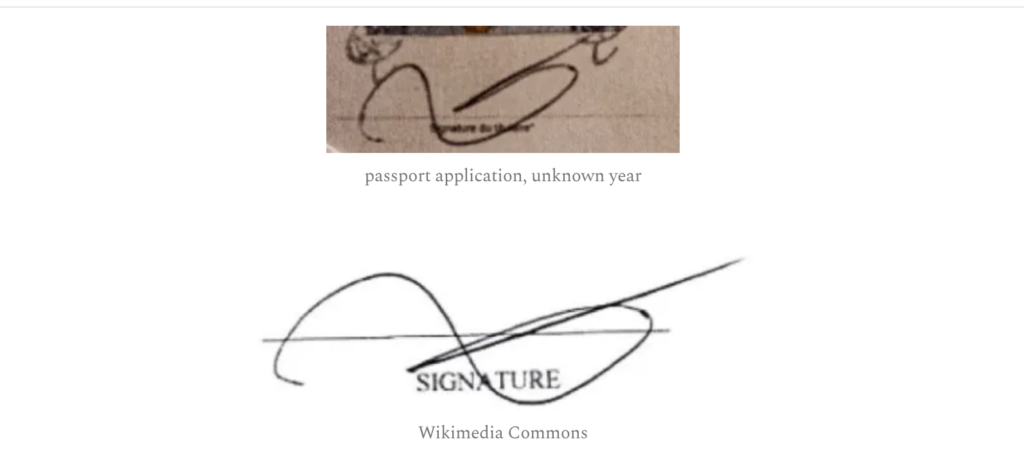
Passport Application Signature
A passport application signature from an unknown year provides additional baseline comparison material.
Evidence Example
Jeffrey Epstein passport application signature
Applications are particularly useful because they are often completed under different physical and psychological conditions than formal legal signatures.
That variation can help investigators understand authentic range differences.
Epstein’s Final Will and Testament
One of the most important verified handwriting sources is Epstein’s final will signed on August 8, 2019, two days before his death.
Evidence Example
Epstein final will signature reference
The will contains:
• full signatures
• page initials
• contemporaneous legal authentication
• timestamped execution records
Because the will was signed so close to Epstein’s death, it represents a crucial comparison source for disputed jail documents allegedly written days later.
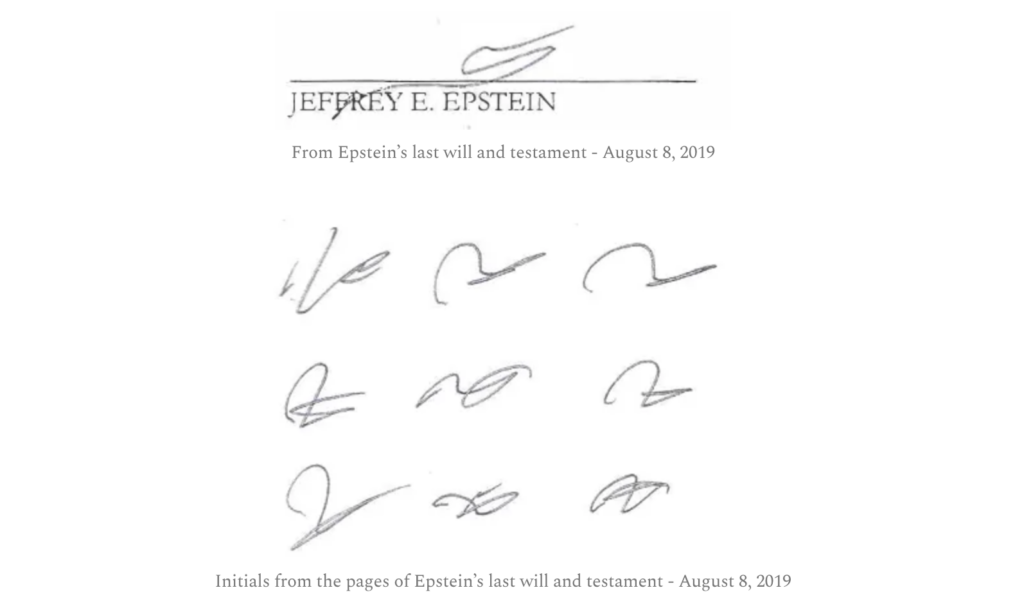
Initial Analysis Patterns
Based on the verified examples collected by Ellie Leonard, several recurring features appear across authentic Epstein signatures.
Common Characteristics
• compressed writing rhythm
• right leaning slant
• rapid signature flow
• simplified internal letter structures
• inconsistent capitalization pressure
• narrow spacing patterns
• aggressive terminal strokes
These observations are not definitive forensic conclusions. They are investigative reference points.
Formal forensic document examination requires professional laboratory analysis.
Common Mistakes Investigators Make
Many amateur investigators incorrectly assume handwriting analysis alone can conclusively authenticate documents.
That is not true.
Proper document authentication also requires:
• provenance verification
• chain of custody analysis
• ink dating
• paper analysis
• metadata examination
• contextual corroboration
• forensic imaging
• comparison with contemporaneous samples
Handwriting is only one component of larger forensic evaluation.
Red Flags in Potential Forgeries
Investigators should pay close attention to several common forgery indicators.
Possible Warning Signs
• unnatural pen hesitation
• overly slow strokes
• inconsistent slant
• copied signature stiffness
• traced line wobble
• pressure inconsistency
• mismatched rhythm
• unusual spacing changes
• abrupt style shifts
Forgers often imitate visual appearance without replicating natural writing rhythm.
Why This Matters for the Epstein Files
The Epstein case remains one of the largest active crowdsourced investigative ecosystems in modern history.
Researchers continue uncovering:
• newly released records
• disputed letters
• leaked documents
• estate files
• scanned correspondence
• archival material
• jail records
Without reliable authentication methods, misinformation can spread rapidly.
False documents can distort investigations, damage credibility, and contaminate legitimate evidence analysis.
That makes careful forensic comparison critically important for serious Epstein Files research.
Key Takeaways
Verified Epstein handwriting samples are limited
Epstein appears to have intentionally minimized handwritten records and relied heavily on assistants and intermediaries.
Passport and legal signatures are the strongest baseline evidence
Government and estate records provide the most reliable public handwriting references currently available.
Handwriting analysis alone cannot prove authenticity
Investigators must combine handwriting comparison with forensic, contextual, and provenance analysis.
Several disputed Epstein letters remain controversial
The July 23 note, post death jail letter, and Larry Nassar letter continue generating debate among researchers.
Proper authentication protects investigative credibility
Careful evidence evaluation is essential to prevent misinformation and preserve legitimate investigative work.
Evidence Examples
- Jeffrey Epstein Handwriting Samples by Ellie Leonard
- Robert Marius passport signature
- Jeffrey Epstein passport application signature
Related EpsteinWiki Articles
- DOJ Document Alteration Forensics
- Epstein Digital Evidence Index
- Mapping the Epstein Network
- Epstein Death in Custody
- Epstein Death Timeline 2019
Sources
- Ellie Leonard Substack article on Jeffrey Epstein handwriting samples
- Wikimedia Commons Epstein signature archive
- Jeffrey Epstein passport signature archive
- Forensic document examination overview from Department of Justice
More of Ellie Leonard’s Examples