Trumpsonian and the Cultural Fallout of the Epstein Files
Overview
The release of millions of pages of DOJ Epstein records triggered not only political fallout and investigative reporting, but also a growing wave of artistic and cultural responses. One of the most visible examples is the Trumpsonian project and the broader “Donald J. Trump and Jeffrey Epstein Memorial Reading Room” installation in New York City.

The exhibit transformed roughly 3.5 million pages of partially released Epstein records into a massive public art and archival installation. Shelves filled with bound volumes of DOJ documents became both an art piece and a political statement about transparency, institutional power, media accountability, and elite protection networks. (CNA)
The emergence of Epstein related installations marks a major shift in how the Epstein Files entered public consciousness. The documents are no longer treated only as legal evidence or investigative material. They have become part of political protest culture, public memory, internet activism, and contemporary art.
What Is the Trumpsonian
The Trumpsonian Memorial Reading Room is a temporary public installation organized by the Institute for Primary Facts. The exhibit displayed thousands of bound volumes containing DOJ released Epstein records in a gallery style environment in New York City. (CNA)
The installation opened in May 2026 and featured approximately 3,437 bound volumes representing roughly 3.5 million pages of records released under the Epstein Files Transparency Act. (CNA)
The exhibit framed itself as both a memorial and a public accountability project focused on the Epstein scandal, political corruption, and institutional failures surrounding the release of the files. (CNA)
According to organizers, the purpose of physically printing and binding the files was to make the scale of the records impossible to ignore. (CNA)
Why the Exhibit Matters
The Trumpsonian installation represents one of the clearest examples of the Epstein Files moving beyond journalism and into cultural symbolism.
The exhibit reframed the files as:
• public memory artifacts
• protest objects
• political performance
• institutional critique
• archival activism
• anti corruption art
The installation also highlighted growing public frustration surrounding the DOJ rollout of the files, missing records, heavy redactions, and accusations that politically damaging information had been withheld or delayed. (Wikipedia)
The project emerged during a period when the Epstein Files had become one of the largest document disclosure events in modern American political history.
The Epstein Files as Cultural Objects
One of the most important developments after the Epstein releases was the transformation of documents themselves into cultural and artistic material.
The files became:
• memes
• visual art
• museum installations
• protest posters
• internet archive projects
• searchable databases
• documentary material
• TikTok and social media content
• activist education tools
This reflects a broader historical pattern where large political scandals evolve into cultural memory systems. Similar patterns occurred after Watergate, the Pentagon Papers, WikiLeaks, and the Snowden disclosures.
The Epstein releases accelerated this process because of the combination of celebrity culture, elite political networks, sexual abuse allegations, internet sleuth communities, and massive quantities of digital evidence.
Public Reaction and Viral Attention
The exhibit received widespread online attention across social media platforms.
Photos and videos of towering shelves filled with Epstein records circulated heavily online, with many users describing the installation as surreal, dystopian, or emotionally overwhelming. (The Times of India)
Online reactions frequently focused on:
• the sheer scale of the records
• the normalization of elite corruption
• frustration over withheld files
• public distrust of institutions
• the role of Donald Trump in the broader Epstein narrative
• the cultural impact of physically displaying the archive
The visual power of the exhibit became part of the story itself.
The Trump and Epstein Framing
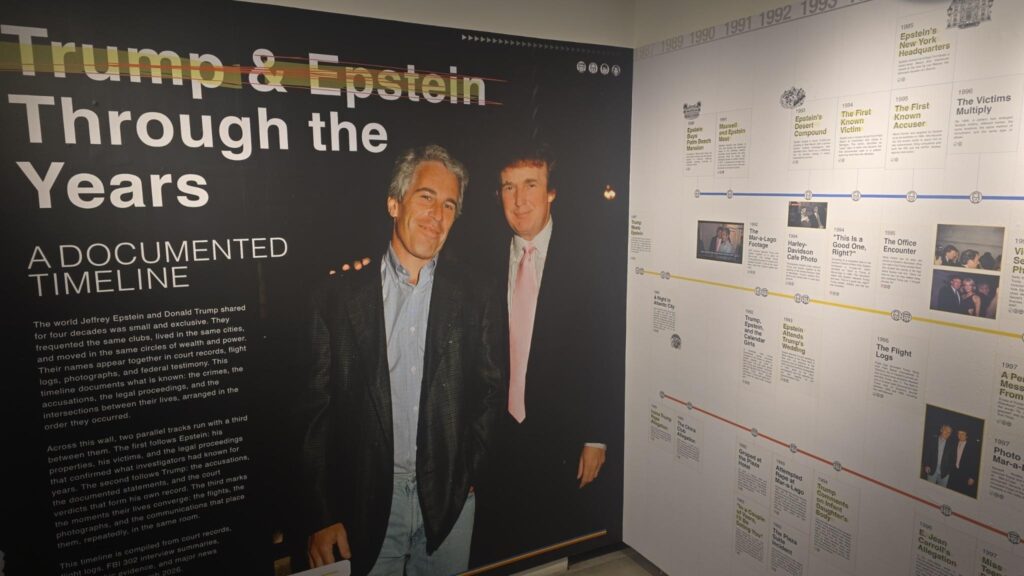
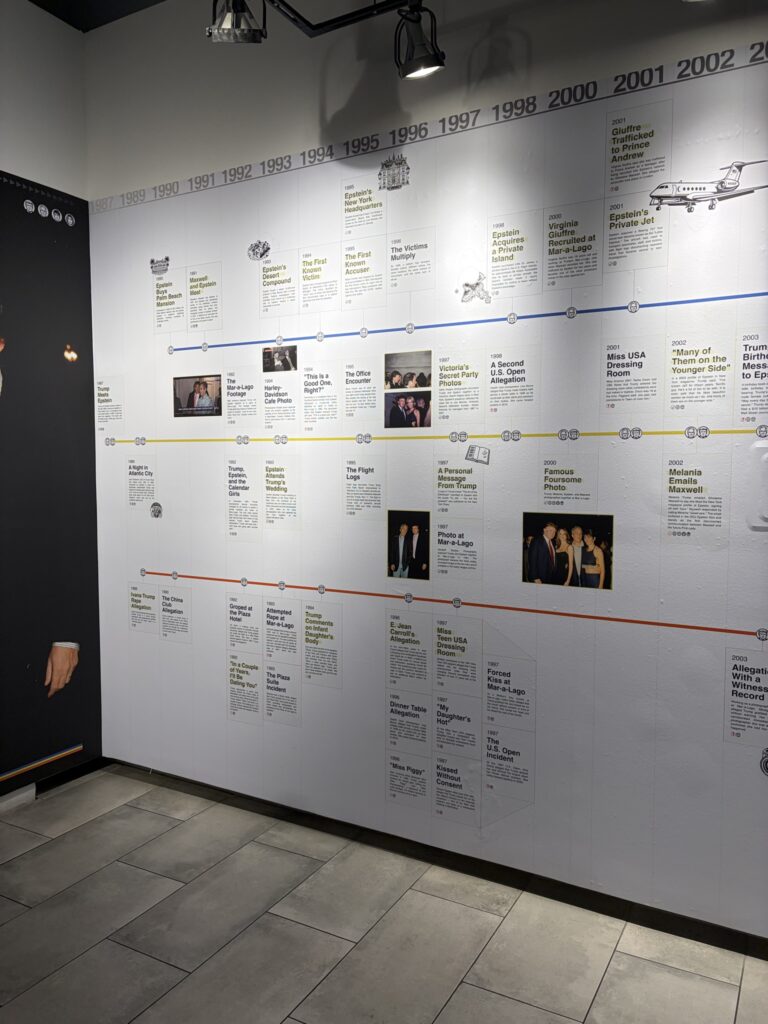
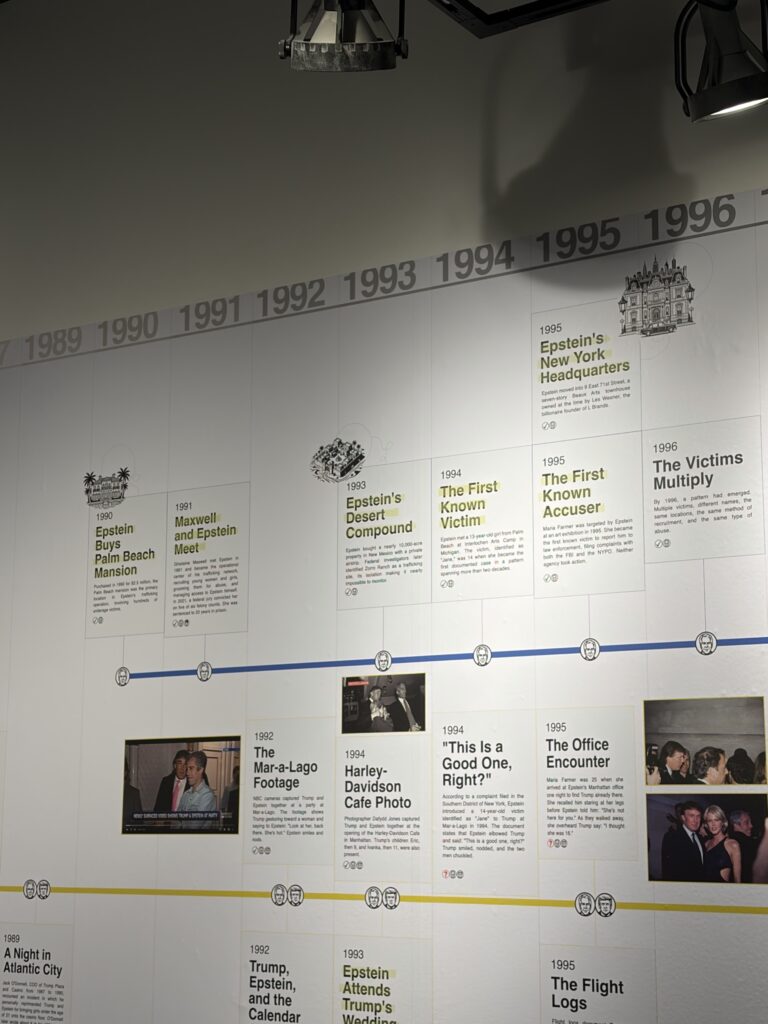
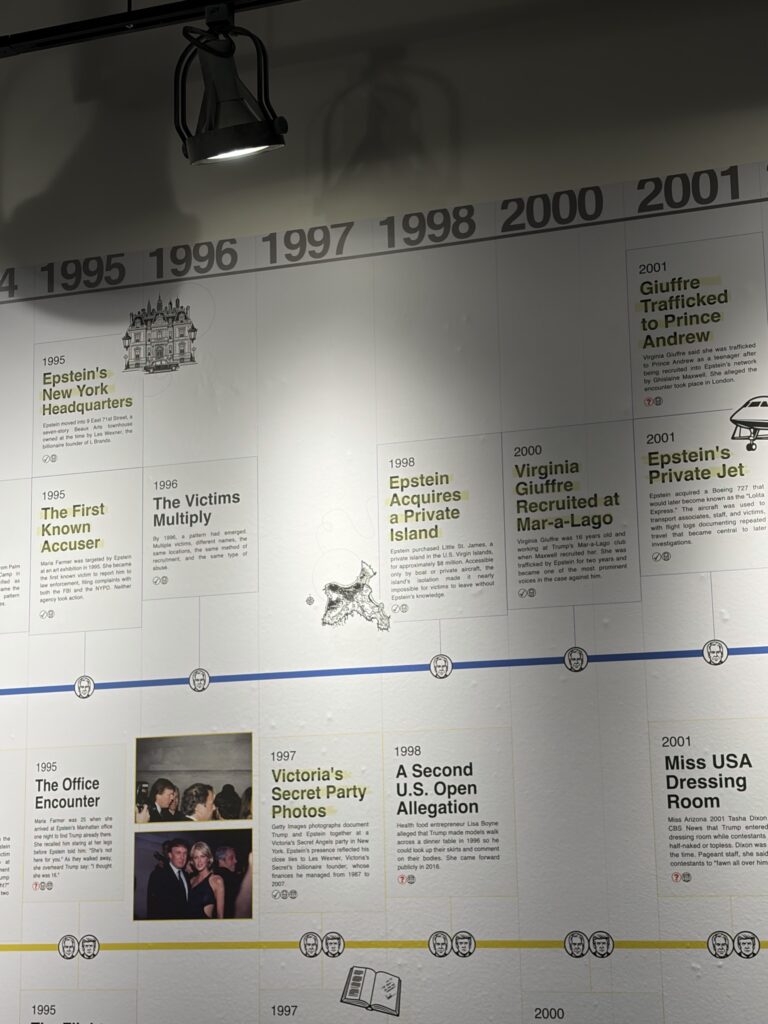
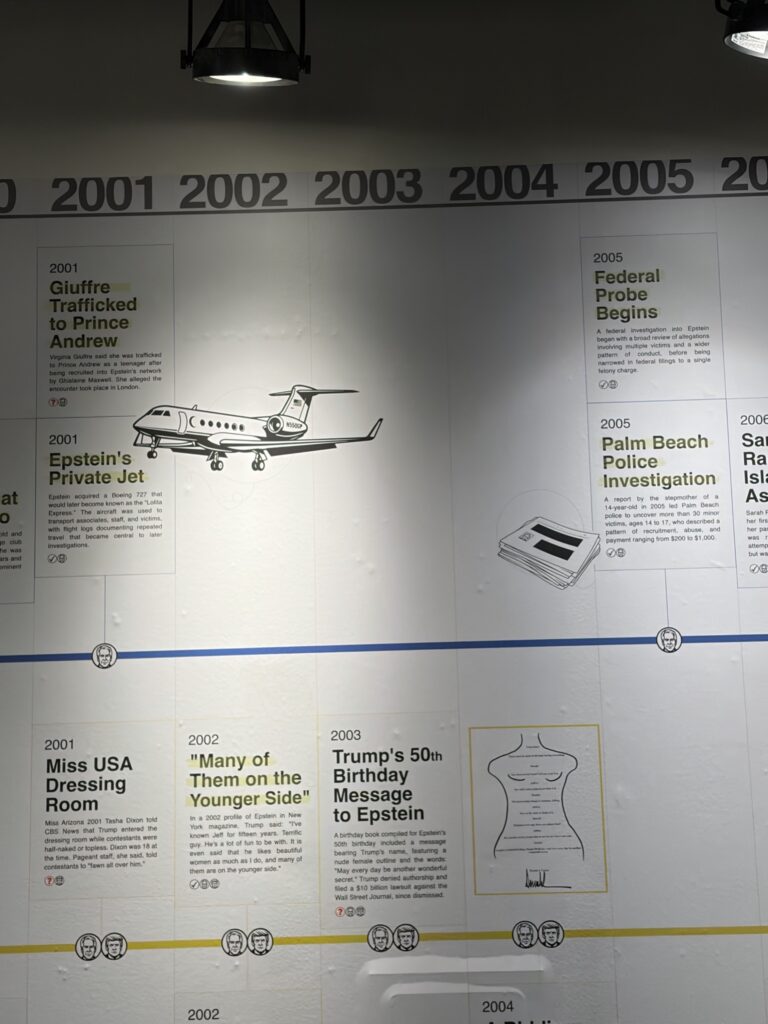
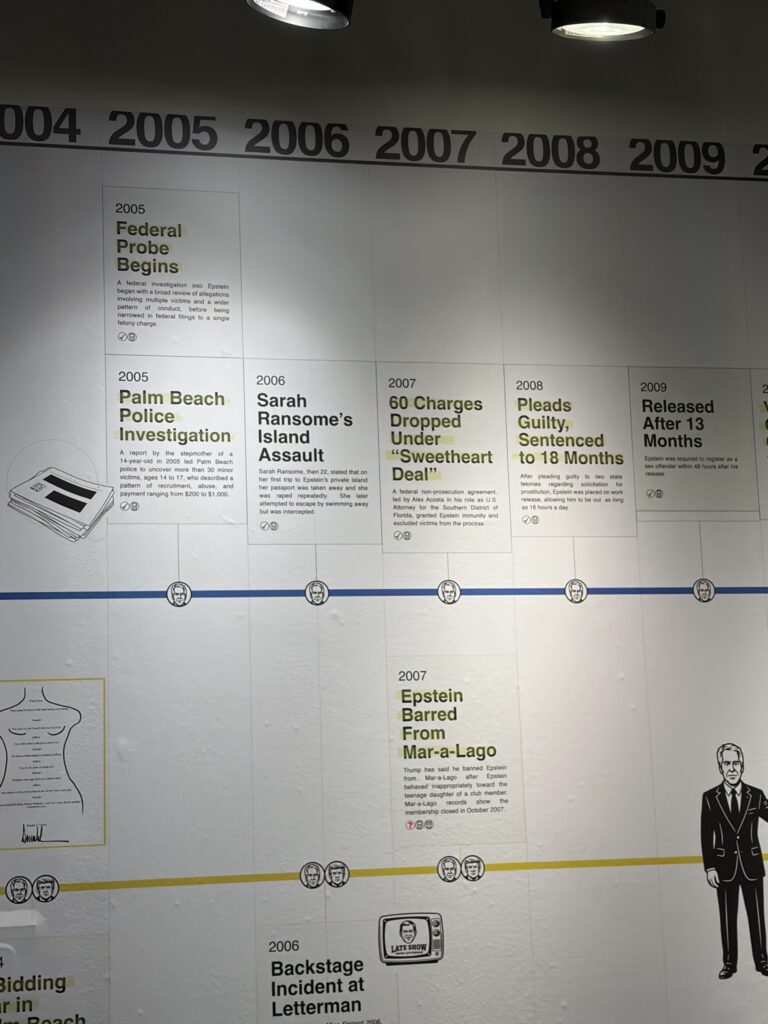
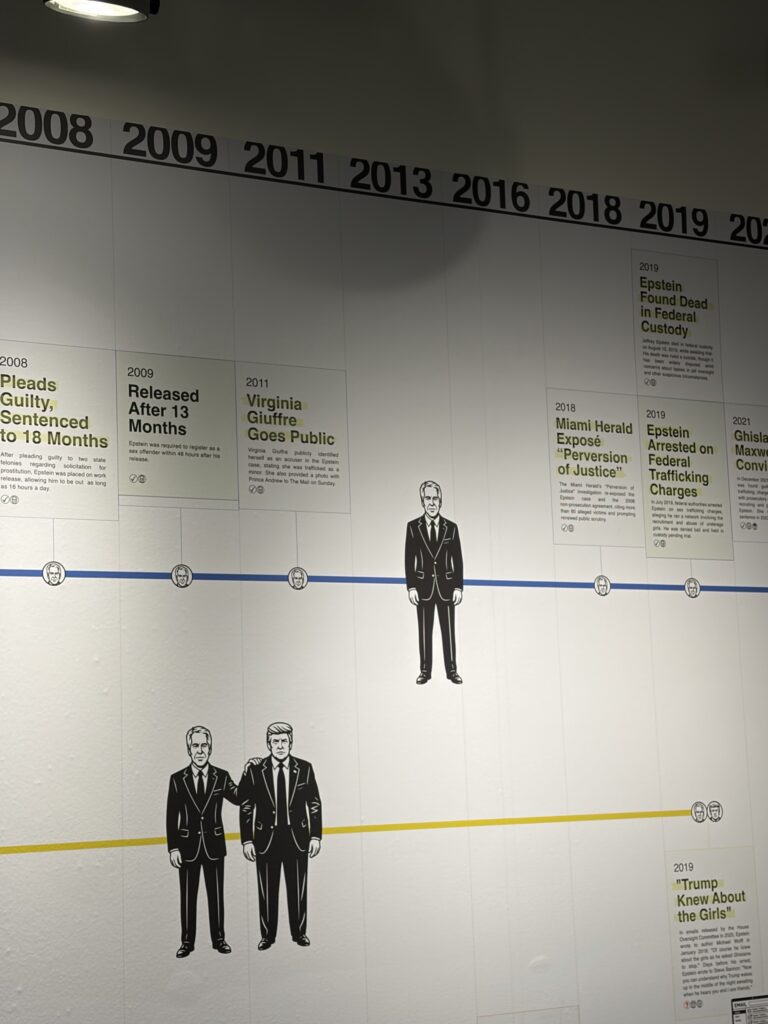
The installation specifically emphasized the long documented social relationship between Donald Trump and Jeffrey Epstein. (CNA)
The exhibit included timelines and displays related to Trump’s historical connections to Epstein while also framing the broader issue as one involving elite systems of protection and influence.
Importantly, inclusion within the files does not itself establish criminal wrongdoing. Multiple reporting outlets covering the releases emphasized that many individuals named in the records were not accused of crimes. (Wikipedia)
The exhibit therefore operated as both an archival project and a political commentary piece.
The Epstein Files Transparency Act and Public Fallout
The exhibit was made possible largely because of the Epstein Files Transparency Act, which triggered major DOJ releases during late 2025 and early 2026. (Wikipedia)
The releases included:
• millions of pages of records
• images
• financial documents
• emails
• investigative files
• court material
• partially redacted evidence
The rollout quickly became controversial because critics argued that millions of additional pages still remained unreleased. (Wikipedia)
The public debate surrounding the releases became part of the exhibit’s political message.
Art, Protest, and Accountability
The Trumpsonian project reflects a growing trend of activist driven archival art. Instead of creating fictional political commentary, the installation used real government documents as the art medium itself.
This approach transformed bureaucratic evidence into physical emotional experience.
The exhibit also blurred the line between:
• journalism
• activism
• public records
• protest art
• documentary installation
• political theater
That hybrid structure is part of why the exhibit gained so much attention online.
Key Takeaways
The Epstein Files became a cultural phenomenon beyond journalism
The releases evolved into art projects, public exhibits, social media activism, and internet archive culture.
The Trumpsonian exhibit transformed documents into political protest art
The installation used millions of pages of records as a physical representation of institutional scale and public distrust.
The exhibit highlighted frustrations surrounding transparency
The project emerged amid accusations that DOJ releases remained incomplete or overly redacted.
The installation reflects a broader shift toward archival activism
Artists and activists increasingly use leaked records, government disclosures, and public databases as raw material for political commentary.
The Epstein scandal has entered public memory culture
The files are no longer viewed only as investigative material. They are now part of a wider cultural and historical narrative surrounding elite power and institutional accountability.
Related EpsteinWiki Articles
- Epstein Files Transparency Act
- DOJ Document Alteration Forensics
- Epstein Digital Evidence Index
- Mapping the Epstein Network
- EpsteinWiki and Epstein Data Reverse Image Search Tool
Sources
- Trumpsonian Memorial Reading Room
- Architectural Record coverage of the exhibit
- Channel News Asia coverage of the exhibit
- Times of India coverage of the exhibit
- Times of India social reaction coverage
- Wikipedia overview of the Epstein Files
- Wikipedia overview of the Epstein Files Transparency Act
- People Magazine reporting on removed DOJ files
Gallery