
Sleuth Report: Greg Conners sets tests for Epstein research and the midterm election
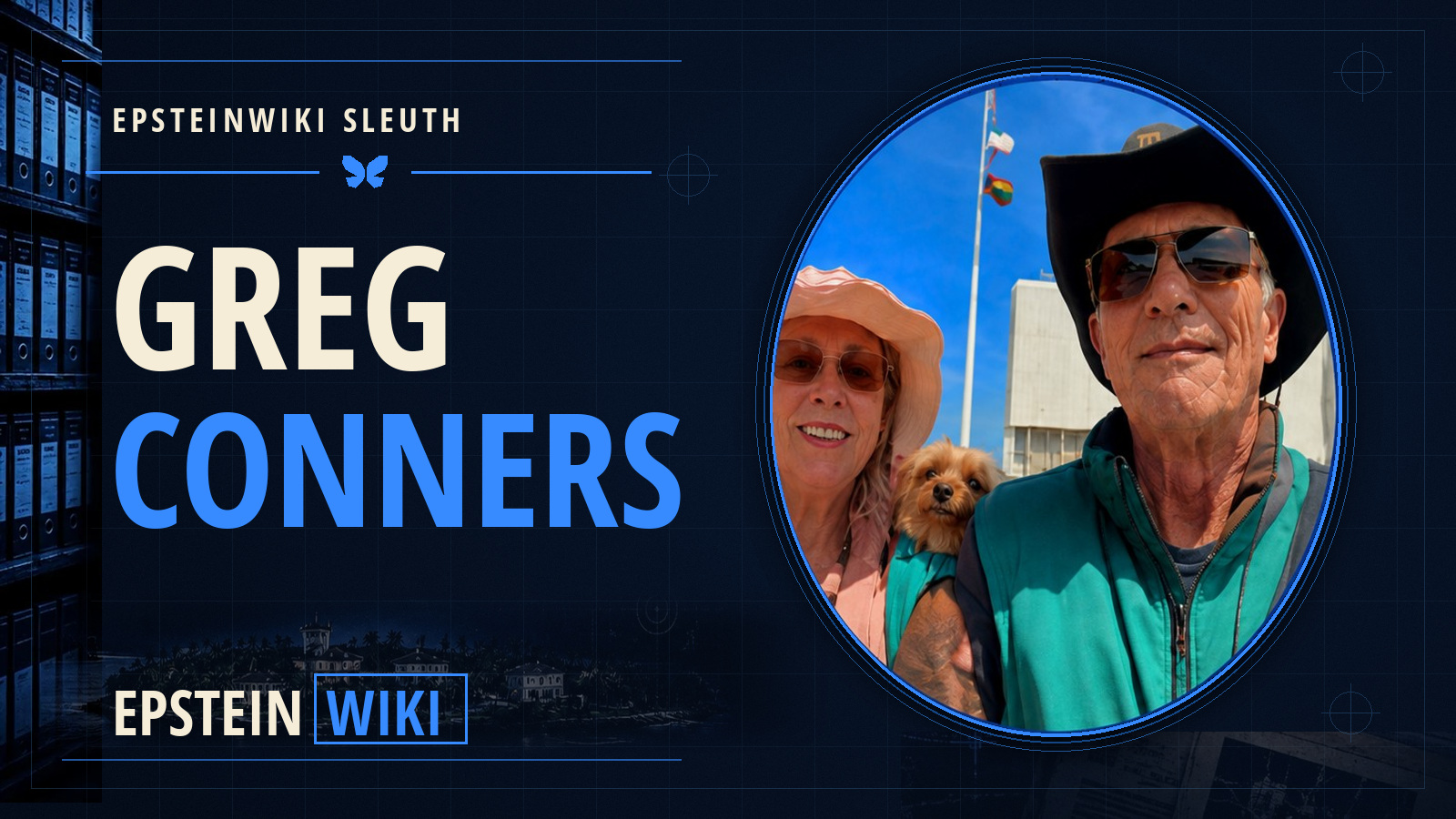
Snapshot
| Originating sleuth | Greg Conners, author of Did Epstein Research Move This Election?? |
|---|---|
| Publication date | November 3, 2026 |
| New contribution | A framework announced on Election Day for assessing independent researchers’ political influence. |
| Evidence reviewed | The complete original article, Public Law 119-38, House Roll Call 289, DOJ release 26-84 and AP’s survey methodology. |
| Verification scope | Provisional assessment of electoral impact. The article is fully accessible, but its proposed comparisons have not produced verified findings here. |
Important points and key takeaways
Greg Conners’s Election Day article asks how to distinguish the influence of independent Epstein researchers from ordinary partisan movement and campaign advertising. He proposes tracking the origins of findings, comparing legislators’ disclosure positions, measuring movement in targeted races, examining voter surveys and assessing turnout. He also promises a later review after certification.
The contribution is a public statement of intended tests before the outcome is known. It does not establish that researchers changed votes. A credible eventual finding would need a traceable chain from a specific discovery to public exposure and then to measurable political behavior.
The key takeaway is to preserve the distinction between visibility and persuasion. A document can become widely discussed without altering a voter’s choice. A campaign can repeat research without proving that its audience encountered the original investigation.
Evidence appearances and verified identifiers
Public Law 119-38, H.R. 4405 was approved on November 19, 2025. Printed page 139 Stat. 656, section 2(a), establishes the release requirement and identifies covered records. Printed page 139 Stat. 657, section 2(c)(1)(A), permits protection of survivor identifying information and private files. These provisions establish the statutory background, not an electoral effect.
House Roll Call 289 records passage of H.R. 4405 on November 18, 2025, with 427 ayes, one no and five members not voting. This is the final passage roll call. It cannot by itself classify who previously resisted disclosure or identify their reasons.
DOJ press release 26-84, dated January 30, 2026, reports nearly 3.5 million pages in total production, including more than 2,000 videos and 180,000 images in the additional release. These are the department’s stated totals. They do not independently establish completeness, accuracy of every submission or unique records after duplication.
AP’s current methodology page identifies The Voter Poll as the successor combining elements of AP VoteCast and traditional exit polling. Its approach includes interviews through several channels and verification of voting. The page does not establish that a particular Epstein question was asked in a particular state.
No specific EFTA document number or archival page is authenticated as evidence of changed voting behavior in this report. The law number, congressional roll call and press release identifier above are distinct record identifiers and should not be confused with EFTA evidence file numbers.
What a convincing comparison would require
The following assessment concerns research design. A useful provenance timeline would retain the first accessible publication, its underlying record, subsequent reporting and the actual campaign message. Similar wording alone would be insufficient to establish that one publisher supplied another’s information.
A comparison of disclosure supporters and opponents needs a rule for classifying them before examining election outcomes. Petition signatures, public statements and final votes answer different questions. Combining them into one label would conceal those differences.
District comparisons also require consistent geographic boundaries and comparable contests. A presidential margin and a congressional margin involve different candidates and incentives. Candidate quality, incumbency, spending and local issues can produce different movements even without an Epstein related effect.
County turnout introduces another limit. A change in an aggregate total does not reveal why a particular person voted or stayed home. Population change and the mix of eligible voters must be considered before interpreting a decrease as political withdrawal.
Significance
EpsteinWiki’s Fact Checking Desk provides a relevant starting point for separating a claim from the record supporting it. That distinction is especially useful when research becomes campaign material. An advertisement is evidence of a message being distributed, while its factual assertions still require separate verification.
Survivors’ pursuit of safety, recognition and accountability has value beyond an election result. Researchers should measure public influence without turning survivor experiences into campaign performance indicators or exposing protected identities. Appearance in released records does not establish wrongdoing.
Uncertainties and open questions
The advertisement counts, spending totals and several polling figures cited in the original have not been independently audited against their underlying datasets here. They should not be treated as verified measurements of persuasion. Poll sponsorship, wording, field dates, sample selection and weighting would all affect interpretation.
Which races qualify for comparison, and what rule determines inclusion? Will a survey ask specifically about Epstein, or only about a broader concept such as corruption? How large will any relevant subgroup be? Will a later assessment publish calculations and acknowledge contradictory results?
This report makes no claim about election winners or certified outcomes. A later analysis should identify its data cutoff, distinguish preliminary returns from certification and state whether its evidence supports attention, association or a stronger causal conclusion.
Sources
- Greg Conners, Did Epstein Research Move This Election??, November 3, 2026. Originating article read in full.
- GovInfo, Public Law 119-38, H.R. 4405, printed pages 139 Stat. 656 and 657.
- Office of the Clerk, House Roll Call 289, November 18, 2025.
- Department of Justice, press release 26-84, January 30, 2026.
- Associated Press, How we survey the electorate, current methodology.
- EpsteinWiki, Fact Checking Desk, verification guidance.