
John Caudwell
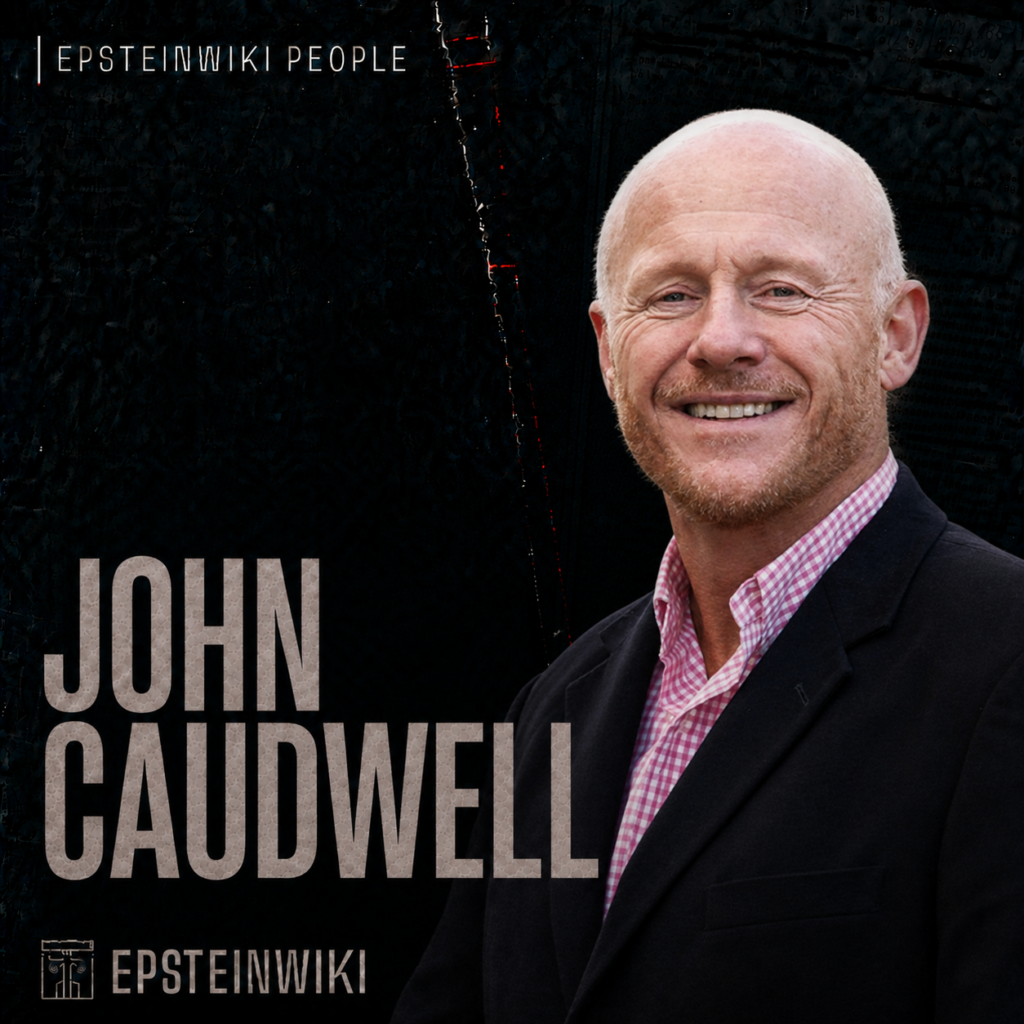
British billionaire and Phones 4u founder whose name appeared in Jeffrey Epstein’s records because Sarah Ferguson sought Epstein’s advice about a proposed £10 million financial arrangement with Caudwell
Snapshot
Full name: John David Caudwell
Also known as: John Caudwell
Born: October 7, 1952
Died: Living
Nationality or citizenship: British
Occupation or public role: Businessman, investor, property developer, and philanthropist
EpsteinWiki classification: Third party mentioned in correspondence
Documented Epstein connection: Sarah Ferguson and David Stern discussed a proposed financial arrangement involving Caudwell with Jeffrey Epstein in 2009
Legal status: Caudwell has not been accused or charged with an Epstein related crime
Relevant period: July through November 2009
Primary locations: United Kingdom
Associated organizations: Phones 4u, Caudwell Group, Caudwell Children, Caudwell Youth, and the Giving Pledge
Known Epstein Data profile: John Caudwell records on Epstein Data
Key EFTA records: EFTA02525919, EFTA02435122, and EFTA00768468
Related cases: No Epstein related court case involving Caudwell has been identified in the cited evidence
Content warning: This article discusses Epstein’s access to Sarah Ferguson during his Florida incarceration and his involvement in her financial affairs
Key takeaway: Caudwell’s name appears in Epstein’s records because Ferguson asked Epstein to evaluate a proposed financial arrangement with Caudwell. The records do not establish that Caudwell communicated with Epstein, knew Ferguson was consulting him, or completed the proposed transaction.
Key Takeaways
- In July 2009, Sarah Ferguson told Epstein that Caudwell had proposed providing £10 million in exchange for 50 percent of her net profits for life.
- Ferguson asked Epstein to investigate Caudwell and advise her about the proposed terms.
- Epstein told Ferguson to obtain the proposal in writing.
- The exchange occurred before Epstein’s July 22, 2009 release from custody in Florida.
- In November 2009, Epstein adviser David Stern described the Caudwell proposal as one possible alternative to bankruptcy for Ferguson.
- Stern expressly warned that the reported offer still needed to be verified.
- Caudwell’s representative confirmed that Ferguson approached him about a possible business transaction intended to address her debts.
- Caudwell’s representative said Caudwell was unaware that Ferguson had consulted Epstein and that the transaction did not proceed.
- Caudwell’s representative also stated that Caudwell had never met, corresponded with, or maintained an association with Epstein.
- The identified records are communications between Ferguson, Stern, and Epstein. They are not messages written by Caudwell.
- The available evidence supports classifying Caudwell as a third party mentioned in Epstein’s correspondence, not as a documented Epstein associate.
Overview
John Caudwell is a British businessman best known for building the mobile telephone retailer Phones 4u. His name appears in the Epstein records through Sarah Ferguson’s financial relationship with Jeffrey Epstein.
In 2009, Ferguson was experiencing severe financial problems. Released emails show that she repeatedly sought Epstein’s advice about her debts, business proposals, income, bankruptcy, and possible sources of financing.
One proposal Ferguson presented to Epstein involved Caudwell. She said Caudwell had offered to provide £10 million in return for 50 percent of her net profits for the remainder of her life. Ferguson told Epstein that her debts were approximately £6 million and asked for his opinion.
Epstein advised Ferguson to have the proposal placed in writing. Several months later, David Stern discussed the same arrangement with Epstein while considering bankruptcy and other possible responses to Ferguson’s debts.
The documentary significance of Caudwell’s appearance is limited but clear. He was a potential source of financing discussed with Epstein by other people. The records do not contain direct correspondence between Caudwell and Epstein.
Caudwell’s representative later confirmed that Ferguson had approached Caudwell about a possible transaction. The representative said Caudwell did not know Ferguson was consulting Epstein and ultimately declined to complete the deal.
Identity Verification
The John Caudwell identified in the records is John David Caudwell, the British businessman who founded Phones 4u.
Ferguson’s July 2009 message described him as a man who made millions through a company called Phones 4u. David Stern’s November message similarly identified him as the English founder of Phones 4u.
Those details uniquely correspond to John David Caudwell.
According to Caudwell’s official biography, he was born in Birmingham on October 7, 1952, and grew up in Stoke on Trent. He began his career as an apprentice at Michelin before entering the mobile telephone industry.
Caudwell and his brother Brian began selling mobile telephones in 1987. The enterprise became the Caudwell Group, which included Phones 4u and the service provider Singlepoint.
Singlepoint was sold to Vodafone in 2003. Caudwell sold the wider business, including Phones 4u, in 2006 for approximately £1.5 billion.
Caudwell later concentrated on investments, property development, and philanthropy. He founded charitable organizations including Caudwell Children and Caudwell Youth. He also joined the Giving Pledge, committing most of his wealth to charitable causes.
The biographical identifiers in the Epstein correspondence, news reporting, and Caudwell’s official materials all point to the same individual.
Documented Epstein Connection
Sarah Ferguson’s July 2009 request for advice
On July 13, 2009, Sarah Ferguson wrote to Epstein about a proposal she attributed to Caudwell.
Ferguson identified Caudwell as the founder of Phones 4u and asked Epstein to investigate him. She said Caudwell wanted to provide her with £10 million in exchange for 50 percent of her net profits for life.
Ferguson told Epstein that her debts stood at approximately £6 million and asked what he thought about the proposed arrangement.
Epstein responded that Ferguson should have Caudwell put the proposal in writing.
The exchange appears in EFTA02525919.
The timing is important. Epstein was not released from Florida custody until July 22, 2009. Ferguson was therefore seeking financial advice from him while he was still serving the sentence imposed after his conviction involving the solicitation of a minor.
Nothing in the exchange indicates that Caudwell knew Ferguson was discussing the proposal with Epstein.
David Stern’s November 2009 summary
The proposed transaction appeared again in November 2009.
David Stern, who was assisting Epstein with Ferguson’s financial affairs, described two possible paths. The first was bankruptcy. The second was the reported arrangement with Caudwell.
Stern described Caudwell as the English founder of Phones 4u. He said the proposal involved £10 million to address Ferguson’s debts in exchange for 50 percent of her future earnings.
Stern added an important warning: the offer still needed to be verified.
The exchange appears in EFTA02435122. A duplicate or related production copy appears in EFTA00768468.
Stern’s warning means the message should not be treated as proof that a final written offer existed on precisely those terms. It establishes what Stern told Epstein about the proposal.
Ferguson and Caudwell’s documented acquaintance
Caudwell’s representative said Ferguson and Caudwell were longtime acquaintances who originally met through Caudwell’s support for Ferguson’s charitable work.
The representative confirmed that Ferguson later approached Caudwell to discuss a possible business transaction intended to help clear her debts.
This response corroborates the existence of discussions between Ferguson and Caudwell. It does not confirm every term described in Ferguson’s message or Stern’s later summary.
The representative said Caudwell eventually declined to proceed with the transaction.
Ferguson and Caudwell apparently remained socially acquainted. Reporting noted that Ferguson attended the wedding of Caudwell’s daughter in Montenegro in June 2019. That later social contact does not create an Epstein connection.
Caudwell’s denial of any direct Epstein relationship
Caudwell’s spokesperson issued a categorical denial of any direct relationship with Epstein.
The statement said Caudwell had never met Epstein and had no association or correspondence with him. It also said Caudwell was unaware that Ferguson had consulted Epstein about their discussions.
The released records identified for this article are consistent with the narrow part of that statement concerning direct correspondence. The emails were written by Ferguson, Epstein, or Stern. They were not sent by Caudwell.
The records therefore document Epstein’s awareness of Caudwell and his indirect consideration of a proposed Caudwell transaction. They do not document a relationship between the two men.
Epstein’s wider involvement in Ferguson’s finances
Caudwell’s name appears within a much larger collection of communications concerning Ferguson’s debts.
Throughout 2009 and 2010, Ferguson asked Epstein for advice about financial records, business proposals, sponsorships, trademarks, income, bankruptcy, employment, and potential lenders.
Epstein connected Ferguson with David Stern, discussed her financial records, commented on how she should explain her debts publicly, and advised her about commercial projects.
This broader record explains why Ferguson presented the Caudwell proposal to Epstein. Epstein had positioned himself as a trusted financial adviser during a period when Ferguson was financially vulnerable.
Caudwell’s inclusion in this correspondence does not mean he participated in that wider advisory relationship.
The proposed economics
Ferguson described a possible payment of £10 million in return for half of her net profits for life. She separately stated that she owed approximately £6 million.
If accurately described, the proposed payment exceeded the debt amount Ferguson reported to Epstein. The remaining funds could have provided liquidity while assigning Caudwell a continuing interest in future profits.
The records do not define “net profits,” identify which businesses or income streams would have been covered, or state whether there would have been limits, repayment terms, security, management rights, or termination provisions.
Stern’s description referred to half of Ferguson’s “life earnings,” while Ferguson referred to half of her “net profits for life.” Those phrases could create materially different rights. The surviving messages do not establish that a written agreement resolved the distinction.
Because the transaction did not proceed, the terms remained a reported proposal rather than a completed financial arrangement.
Evidence Appearances
EFTA02525919
Date: July 13, 2009
Document type: Email exchange
Caudwell’s role: Businessman identified by Sarah Ferguson as the source of a proposed financial arrangement
Evidence link: View EFTA02525919
What the record establishes: Ferguson told Epstein that Caudwell had proposed providing £10 million in exchange for 50 percent of her net profits for life. She identified him as the founder of Phones 4u, reported debts of approximately £6 million, and asked Epstein for advice. Epstein advised her to obtain the proposal in writing.
What the record does not establish: It does not prove that Caudwell wrote or signed an offer on those exact terms. It does not establish that Caudwell knew Ferguson was consulting Epstein. It does not establish any direct communication between Caudwell and Epstein.
EFTA02435122
Date: November 6, 2009
Document type: Email concerning Sarah Ferguson’s financial options
Caudwell’s role: Proposed source of financing discussed by David Stern and Epstein
Evidence link: View EFTA02435122
What the record establishes: Stern described bankruptcy as one option for Ferguson and a possible transaction with Caudwell as another. Stern said the reported transaction involved £10 million in return for half of Ferguson’s future earnings. He expressly stated that the offer needed verification.
What the record does not establish: It does not prove that Stern had communicated directly with Caudwell or reviewed a written agreement. It does not establish that Caudwell approved Stern’s description of the terms.
EFTA00768468
Date: November 2009
Document type: Duplicate or related production copy of the financial discussion
Caudwell’s role: Person identified in a proposed financial option for Ferguson
Evidence link: View EFTA00768468
What the record establishes: The record preserves another released copy of the discussion describing the possible Caudwell arrangement.
What the record does not establish: It does not represent an additional independent transaction or a separate communication from Caudwell. Duplicate records should not be counted as separate contacts.
Relevant Timeline
1987: John and Brian Caudwell enter the mobile telephone business.
2003: Singlepoint is sold to Vodafone.
2006: Caudwell sells the wider Caudwell Group, including Phones 4u, for approximately £1.5 billion.
June 30, 2008: Epstein pleads guilty in Florida to prostitution related charges, including a charge involving a minor.
July 13, 2009: Ferguson tells Epstein about a reported £10 million proposal involving Caudwell and asks for financial advice.
July 22, 2009: Epstein is released from custody and begins the community control portion of his sentence.
August through October 2009: Ferguson and Epstein continue discussing her debts, revenue opportunities, business plans, and financial records.
November 6, 2009: David Stern presents bankruptcy and the possible Caudwell transaction as two options for addressing Ferguson’s financial crisis. Stern says the reported offer requires verification.
2010: Ferguson continues seeking financial and employment assistance from Epstein. Caudwell does not appear as a participant in the cited communications.
2013: Caudwell joins the Giving Pledge.
June 2019: Ferguson attends the wedding of Caudwell’s daughter in Montenegro, according to later reporting.
February 2026: Newly released Epstein records generate reporting about Ferguson’s financial discussions and Caudwell’s indirect appearance in the correspondence.
February 2026: Caudwell’s representative confirms that Ferguson approached him about a possible transaction, denies any relationship or correspondence with Epstein, and states that the transaction did not proceed.
Legal Status and Evidence Limits
Caudwell has not been accused of participating in Epstein’s sexual abuse, trafficking operation, financial crimes, or efforts to conceal those crimes.
His documented appearance is indirect. Ferguson and Stern discussed him with Epstein. The identified evidence does not include a message written by Caudwell, sent to Caudwell, or copied to Caudwell.
The records establish that Ferguson attributed a proposed transaction to Caudwell. They do not independently establish every proposed term.
Ferguson described the arrangement as 50 percent of her net profits for life. Stern later described it as 50 percent of her life earnings. The difference matters because earnings and net profits are not necessarily the same.
Stern’s instruction that the reported offer needed verification is an express caution contained in the primary evidence. It indicates that Epstein’s adviser did not treat the reported proposal as fully confirmed.
Caudwell’s representative confirmed that Ferguson approached him about a transaction intended to address her debts. This supports the existence of discussions between Ferguson and Caudwell. The representative also said Caudwell ultimately declined to proceed.
The representative denied that Caudwell knew Ferguson was consulting Epstein. No cited record contradicts that denial.
The representative further stated that Caudwell never met, corresponded with, or maintained an association with Epstein. The identified records do not establish a direct connection.
Caudwell’s name appearing in multiple EFTA files does not necessarily represent multiple separate events. Some released files are duplicate or related copies of the same underlying email chain.
The most accurate characterization is that Caudwell was mentioned to Epstein as a potential financial counterparty during Ferguson’s financial crisis. The evidence does not support describing him as Epstein’s friend, client, adviser, business partner, or social associate.
Sleuth and Independent Reporting
Ellie Leonard
Ellie Leonard’s The Fergie Emails, Part 1 reconstructs Ferguson’s relationship with Epstein during 2008 and 2009 using released communications.
Leonard notes that communications sent before July 22, 2009 occurred while Epstein remained in custody in Palm Beach. This timing includes Ferguson’s July 13 request for advice about the Caudwell proposal.
The article documents Ferguson treating Epstein as a trusted adviser during his incarceration. She asked him for help with business plans, trademarks, sponsors, financial organization, housing, and the commercial development of her proposed Mother’s Army project.
Leonard’s The Fergie Emails, Part 2 continues the chronology through Ferguson’s worsening debt crisis. It documents Epstein’s direct involvement with David Stern and shows Epstein requesting continuing updates about Ferguson’s finances.
This wider correspondence is essential context. Caudwell was not shown joining Epstein’s network. Instead, Ferguson brought a proposed Caudwell transaction into an existing financial advisory relationship she had established with Epstein.
Leonard states that she compared multiple redacted and unredacted versions of the Ferguson correspondence. Her chronology helps distinguish communications written during Epstein’s incarceration from those sent after his release.
Independent news reporting
The Independent reported the July 2009 exchange and published Caudwell’s response. Its reporting confirms that Ferguson asked Epstein to assess the proposed deal and that Epstein advised her to obtain written terms.
LBC reported the November Stern message and Caudwell’s full denial of any Epstein relationship. It also reported Caudwell’s confirmation that Ferguson had approached him about a possible business transaction.
Both reports distinguish the existence of discussions with Ferguson from the unsupported claim of a direct relationship with Epstein.
Related EpsteinWiki Pages
- Sarah Ferguson
- Jeffrey Epstein
- Andrew Mountbatten Windsor
- David Stern
- Ghislaine Maxwell
- Epstein’s Florida Incarceration
- Mother’s Army
- Epstein’s Reputation Laundering Network
Sources
- Epstein Data search for John Caudwell
- EFTA02525919, Ferguson asks Epstein about the Caudwell proposal
- EFTA02435122, Stern discusses bankruptcy and the Caudwell option
- EFTA00768468, related copy of the November financial discussion
- John Caudwell official biography
- John Caudwell profile at the Giving Pledge
- Staffordshire University biography of John Caudwell
- Forbes profile of John Caudwell
- The Independent, Sarah Ferguson asked Epstein for bankruptcy advice
- The Independent, Ferguson discussed the Caudwell proposal with Epstein
- LBC, Caudwell proposal and public response
- Ellie Leonard, The Fergie Emails, Part 1
- Ellie Leonard, The Fergie Emails, Part 2
- Ellie Leonard, The Fergie Emails, Part 3
- Ellie Leonard, The Fergie Emails, Part 4