
Sleuth Report: Kait Justice’s Citizen Investigator Toolkit for Investigating Your Own Community
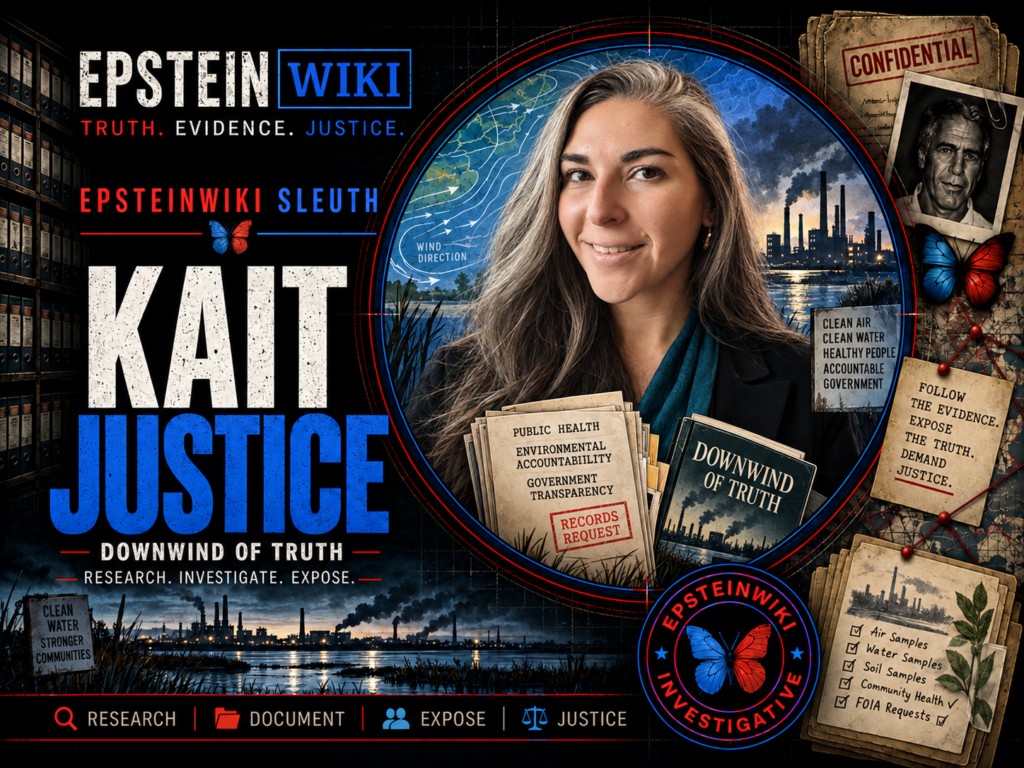
Snapshot
| Field | Details |
|---|---|
| Sleuth | Kait Justice, author of Downwind of Truth with Kait Justice |
| Original post | How to Investigate Your Own Community the Kait Justice Way, Substack, March 20, 2026 |
| Guide | The Citizen Investigator Toolkit, a 20 page guide |
| Price | Pay what you can, free if you need it |
| What it includes | Eight chapters, a FOIA request template, six primary source databases and a four layer document analysis method |
| Best for | New citizen sleuths, parents, neighbors and residents who want to dig into records in their own community |
| Central limit | This report is based on the public announcement post, which describes each chapter, not on the full text of the guide |
Introduction
Kait Justice’s guide to investigating your own community, The Citizen Investigator Toolkit, answers the question she says people ask her most: how do you actually do this work? Where do documents come from? How do you read a dense government filing? And how do you do all of it while living a full life?
The toolkit is a 20 page guide offered on a pay what you can basis. She says the guide grows out of her own work, which started with GE and the EPA in Pittsfield and grew to include Epstein documents, congressional exhibits, deposition transcripts and corporate filings.
This matters for anyone working on the Epstein files. The same skills that expose a polluter also expose a network: finding primary records, reading what a document hides, following the money and keeping your claims honest. This report covers what her post says the guide teaches. It is based on her public announcement post, not the full text of the guide.
Key Takeaways
- Kait Justice released a 20 page toolkit for citizen investigators that is free for anyone who needs it.
- Nearly all the research tools it names are free or available with a library card.
- Her four layer reading method treats gaps, redactions and passive voice as possible findings, not dead ends.
- Every finding gets sorted into one of three buckets: documented fact, credible allegation or open question.
- Heavy resistance to a records request can itself hint at what the records contain.
- Correcting mistakes, she says, matters as much as avoiding them.
Who Kait Justice Is
Kait Justice writes Downwind of Truth, an independent Substack funded by paid subscribers, with no corporate sponsors. She says she does her research late at night and early in the morning while raising three kids. Her work began with environmental advocacy in her own community and expanded into Epstein records and other document heavy investigations. She is one of the independent researchers listed among EpsteinWiki’s sleuths, and earlier Sleuth Reports cover her work on Epstein’s money trail from Wexner to missing DEA records and her Mitchell Rales demo flight lead.
What the Toolkit Teaches
Chapter 1: Before You Start
Build a research system that lasts longer than a few months. Keep a research log that actually helps you, with tips for people with ADHD. Protect yourself and your work, whether you plan to publish, hand findings to someone who can act on them or bring them to a town meeting.
Chapter 2: Finding Primary Sources
A primary source is the original record itself, like a court filing or tax form, rather than someone’s story about it. The guide points readers to these tools:
| Tool | What You Find There |
|---|---|
| PACER and CourtListener | Federal court filings |
| County assessor records | Property ownership |
| Secretary of State databases | Corporate records |
| SEC EDGAR | Financial disclosures from public companies |
| FEC data | Campaign finance records |
| Congress.gov | Congressional documents |
| GAO | Government Accountability Office reports |
| Newspaper archives | Decades of coverage, often free with a library card, including events from before the internet |
Chapter 3: Filing FOIA and Public Records Requests
The Freedom of Information Act (FOIA) is the federal law that gives you the right to ask for government records. States have their own public records laws. The guide covers your legal rights, how to write a request that is specific enough to work but broad enough to catch what you need, and how to handle delays, denials and silence. It includes a ready to use FOIA template. Her sharpest point: when an agency fights hard to keep records hidden, that fight can tell you something about what is inside.
Chapter 4: Reading Documents Like an Investigator
Her four layer method asks four questions of every document:
- Claims and implications. What does this statement mean in the real world? Her example: a “settlement” can mean someone was paid to stop talking.
- Access and power. Who has it, and who is noticeably missing?
- Function versus claims. How does the system actually work, compared with how it says it works?
- Gaps. What is hidden in redactions, omissions, passive voice and skipped time periods? She says these gaps are usually findings.
Chapter 5: Following the Money
The guide shows how to trace layered corporate ownership through public filings. It flags warning signs that point to who is really behind a company, such as the same registered agent or office address showing up across companies that look unrelated. A registered agent is the person or firm officially listed to receive legal papers for a company.
Chapter 6: Verification and Standards
Every finding goes into one of three categories:
- A documented fact backed by a primary source you can produce.
- A credible allegation from an identifiable source that you cannot yet verify.
- A question the evidence raises but cannot yet answer.
This chapter also covers correcting your mistakes, which she treats as just as important as avoiding them.
Chapter 7: Environmental Investigations
Drawn from her own advocacy, this chapter uses EPA Superfund records and the Toxics Release Inventory. It teaches readers to spot the gap between what a contamination report says and what it means, and to ask who set the “acceptable levels,” and when. She notes those people are rarely the ones living with the results.
Chapter 8: Publishing and Sharing Your Work
How to present findings so people trust them: through public writing, through journalists, at town meetings with documents in hand, or by handing them to people who can act.
Using These Methods on the Epstein Files
Her methods fit Epstein research closely. Gaps and redactions are everywhere in the released files, and her rule that gaps are usually findings is a useful starting point. Settlement language, missing names on guest lists and shell companies sharing an address are all patterns sleuths already chase.
To practice, start with the Epstein Data search tool and the Epstein Data wiki. Pull the original document, run it through the four layers and sort what you find into fact, allegation or question. Remember that appearing in a record does not prove someone did anything wrong.
Who the Guide Is For
Kait Justice says most people who ask her for help are not starting publications. They are parents questioning a zoning decision, neighbors whose contamination complaints get closed with no explanation and residents told there is nothing to see. Her argument is simple: bringing documents to a town meeting, sending findings to a reporter or just asking better questions all count.
Limits of This Report
This report is based on Kait Justice’s public announcement post, which describes each chapter. It does not reproduce or review the full text of the guide. For the complete FOIA template, database walkthroughs and examples, get the toolkit directly from Kait Justice.
Conclusion
The Citizen Investigator Toolkit turns years of hard won experience into a plain path anyone can follow. It covers where records live, how to read them for what they hide, how to follow the money and how to keep your claims honest. For Epstein sleuths and for anyone told there is nothing to see in their own town, it is a strong place to start. As Kait Justice puts it, “We are all downwind of something.”
Questions and Answers
Is the Citizen Investigator Toolkit free?
It is pay what you can. Kait Justice says it is free if you need it.
Do I need paid databases to use it?
No. Her post says nearly all the resources in the primary sources chapter are free or available with a library card.
What is the four layer document method?
It asks what a statement really means, who has power and who is missing, how a system actually works versus how it claims to work, and what the gaps and redactions are hiding.
What is the difference between a fact, an allegation and a question?
A fact is backed by a primary source you can show. An allegation comes from a named, credible source but is not yet verified. A question is something the evidence raises but cannot yet answer.
Can I use this guide for Epstein research?
Yes. Her own work includes Epstein documents, deposition transcripts and congressional exhibits, and the methods apply directly to the released files.