
Bill Burns
Snapshot
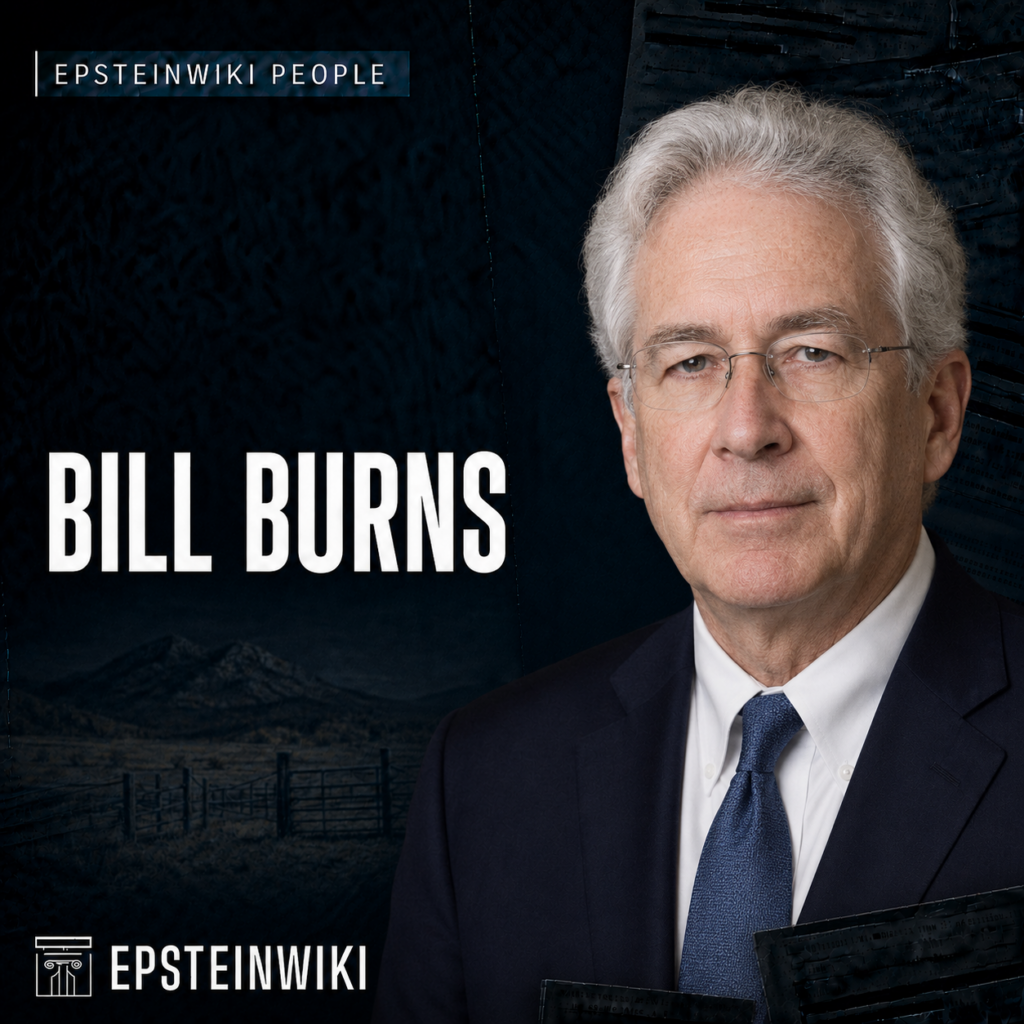
William Joseph “Bill” Burns is an American diplomat who served as United States Deputy Secretary of State, president of the Carnegie Endowment for International Peace, and Director of the Central Intelligence Agency.
Released records document direct contact between Burns and Jeffrey Epstein during 2014, when Burns was Deputy Secretary of State and preparing to leave government service.
The records show at least two completed meetings. Burns met Epstein for lunch at the Washington offices of the law firm Steptoe on August 21, 2014. The two met again at Epstein’s Manhattan townhouse on September 24, 2014.
Epstein also attempted to introduce Burns to billionaire Peter Thiel. Burns initially expressed interest, but a planned September meeting was canceled because Burns had to travel following President Barack Obama’s address concerning the Islamic State.
Correspondence continued through October 2014. On his final day at the State Department, Burns told Epstein that he remained interested in consulting or advisory arrangements. Epstein invited Burns and his wife to visit Little Saint James while they were vacationing in the United States Virgin Islands. Burns declined the invitation because his plans had changed and he was returning to diplomatic work involving Iran.
The Central Intelligence Agency initially said Burns had no relationship with Epstein and knew him only as a financial services expert who offered advice about Burns’s transition into the private sector. After additional records became public, a spokesperson said Burns deeply regretted meeting Epstein and ended contact after learning about Epstein’s conviction.
The released correspondence complicates the original description of the contact as three calendar entries involving someone Burns barely knew. It establishes repeated communication, two meetings, career discussions, interest in private consulting, and Epstein’s attempts to connect Burns with other members of his network.
The evidence does not establish that Burns visited Epstein’s island, accepted money from him, worked for him, shared classified information, participated in Epstein’s sexual abuse, or knew about the full extent of his crimes.
Identity and Diplomatic Career
William Joseph Burns was born on April 11, 1956, at Fort Bragg, North Carolina.
He received a bachelor’s degree in history from La Salle University. As a Marshall Scholar at Oxford University, he earned graduate degrees in international relations.
Burns entered the United States Foreign Service in 1982 and eventually attained the rank of Career Ambassador, the highest rank in the Foreign Service.
The official State Department history of William Burns documents his service as Executive Secretary of the State Department, Ambassador to Jordan, Assistant Secretary of State for Near Eastern Affairs, Ambassador to Russia, Under Secretary of State for Political Affairs, and Deputy Secretary of State.
Burns served as Ambassador to Jordan from 1998 to 2001 and Assistant Secretary of State for Near Eastern Affairs from 2001 to 2005.
He served as Ambassador to Russia from 2005 to 2008 and Under Secretary of State for Political Affairs from 2008 to 2011.
Burns became Deputy Secretary of State in July 2011. He remained in that position until November 2014.
His career spanned Democratic and Republican administrations. He became particularly respected for his knowledge of Russia, the Middle East, diplomacy, and nuclear negotiations with Iran.
Retirement from the State Department
In April 2014, Burns announced that he would retire from the Foreign Service later that year.
An official State Department announcement concerning his retirement described Burns as one of the most accomplished diplomats of his generation.
His departure created several possible career paths. Burns was considering institutional leadership, consulting, advisory positions, writing, and other work outside government.
This transition supplied the explanation later offered by the Central Intelligence Agency for his meetings with Epstein.
According to the agency, Epstein was introduced to Burns as an expert in financial services who could offer general advice about moving into the private sector.
The records show that private career opportunities were discussed. They also show that Epstein attempted to place Burns within a wider network that included Peter Thiel, Terje Rød Larsen, Reid Hoffman, Tom Pritzker, Ehud Barak, and other influential figures.
Terje Rød Larsen and the First References to Burns
The earliest identified effort to connect Epstein with Burns appears in correspondence involving Norwegian diplomat Terje Rød Larsen.
Rød Larsen was president of the International Peace Institute and a recurring Epstein contact. Epstein supported the institute through charitable contributions and also provided Rød Larsen with a personal loan.
In April 2013, Epstein wrote to Rød Larsen suggesting that they arrange a meeting with Burns in Washington or New York.
Epstein followed up in July 2013. He encouraged Rød Larsen to contact Burns and offer assistance.
At the time, Burns was Deputy Secretary of State and an important participant in the Obama administration’s diplomatic contacts with Iran.
The records establish that Epstein was attempting to reach Burns through Rød Larsen by 2013.
They do not establish that Burns knew about those early messages or that a meeting occurred in 2013.
Epstein’s Interest in Burns
Epstein’s interest in Burns appears to have involved several overlapping considerations.
Burns was one of the most respected career diplomats in the United States government. He possessed extensive knowledge of Russia, Iran, the Middle East, arms control, and international institutions.
Epstein repeatedly cultivated people with government experience, international contacts, specialized knowledge, and prestigious credentials.
Burns was also preparing to enter the private sector. That gave Epstein an opportunity to present himself as someone who could provide introductions, financial advice, consulting opportunities, and access to wealthy investors.
In May 2014, Epstein told Peter Thiel that Burns, Rød Larsen, and former Israeli Prime Minister Ehud Barak might be at his home on June 1.
Burns’s spokesperson later said Burns did not attend that gathering.
A proposed event or calendar entry is not proof that a person appeared.
The Proposed June 2014 Gathering
The June 2014 reference is important because it shows Epstein attempting to position Burns among prominent political and financial contacts before their first confirmed meeting.
Peter Thiel was a billionaire technology investor and a founder of Palantir. Ehud Barak was a former Israeli prime minister with longstanding political, military, intelligence, and business connections. Rød Larsen had served as a diplomat and Middle East negotiator.
Epstein appeared to view Burns as someone who belonged within that group.
There is no evidence that the proposed June meeting occurred.
Burns’s spokesperson specifically denied that Burns attended.
This distinction illustrates a recurring problem in interpreting Epstein’s records. Epstein frequently proposed dinners, introductions, visits, and meetings that were canceled or never completed.
Questions About Russia
In July 2014, Epstein received an invitation connected with Russia and discussed whether he should accept it.
He told Rød Larsen that he wanted Burns’s opinion about the proposed trip.
The record demonstrates that Epstein regarded Burns as a valuable authority on Russia.
It does not establish that Burns received the request or provided advice.
Burns had served as United States Ambassador to Russia and had extensive experience dealing with Vladimir Putin’s government. Epstein could therefore invoke Burns’s name as a source of authority even without communicating directly with him about the matter.
Researchers should distinguish Epstein’s desire to obtain Burns’s opinion from evidence that Burns actually supplied it.
The August 21, 2014 Washington Meeting
The first confirmed meeting occurred on August 21, 2014.
Epstein’s scheduling records placed him in Washington that morning. Reporting indicates that he attended a meeting involving officials at the United States Treasury before meeting Burns.
An Epstein assistant wrote that Burns was in another meeting and would call Epstein after it ended.
Burns and Epstein then met for lunch at the Washington offices of Steptoe, an international law firm with substantial work involving government regulation, sanctions, trade, national security, and international disputes.
The Wall Street Journal investigation into Epstein’s private calendar first publicly documented the scheduled meetings in 2023.
Later records and Guardian reporting on the Burns correspondence confirmed that the Washington lunch occurred.
Burns was still serving as Deputy Secretary of State.
Epstein was a registered sex offender who had already completed his Florida sentence.
Epstein’s Treasury Meeting Before Lunch
Reporting based on Epstein’s schedule indicates that he went to the Treasury Department before meeting Burns.
A Drop Site News investigation reported that Epstein discussed cryptocurrency, terrorist financing, arms shipments, and nuclear proliferation payments with Treasury personnel.
Epstein then returned to the Steptoe offices for his lunch with Burns.
The proximity of the Treasury meeting and Burns lunch is noteworthy because Burns was a major participant in Iran diplomacy at the time.
The surviving schedule does not prove that Burns discussed Treasury’s questions with Epstein. It also does not establish that Epstein carried information from Treasury into his conversation with Burns.
No released meeting memorandum or transcript identifies everything discussed during the lunch.
The timing nevertheless deserves scrutiny because the meeting involved a convicted sex offender privately consulting with the second ranking State Department official after visiting another federal department.
The Purpose Attributed to the Meeting
Burns’s spokesperson said the meeting concerned his approaching departure from government.
According to that account, Epstein offered general advice about moving into the private sector.
The explanation is consistent with later correspondence in which Burns discussed consulting and advisory work.
It is not possible to determine from the released records whether career planning was the only subject discussed.
The records do not contain a transcript of the lunch. There is also no public memorandum from Burns or the State Department describing the meeting.
The evidence therefore supports saying that private sector work was discussed. It does not support claiming that no other topic arose.
Epstein Proposed a Meeting with Peter Thiel
After the Washington lunch, Epstein attempted to connect Burns with Peter Thiel.
Epstein described Burns to Thiel as a highly respected administration diplomat.
On September 1, 2014, Epstein told Burns that Thiel would be with him in New York on September 13 and 14. Epstein offered Burns an apartment to use if he came to the city.
Burns thanked Epstein and said he would try to visit, although overseas travel might interfere.
Burns later asked whether a Saturday afternoon meeting could work. He explained that he needed to return to Washington because his superior would be away and he expected White House meetings during the weekend.
The messages show that Burns was actively attempting to make the proposed visit fit his government schedule.
This was more than Epstein placing Burns’s name on a calendar without his knowledge. Burns responded directly and tried to coordinate the meeting.
The September Meeting Was Canceled
The proposed September 13 meeting involving Thiel did not occur.
On September 12, Burns told Epstein that he had to take a short overseas trip connected with President Obama’s address concerning the Islamic State.
Burns asked Epstein to give his regards to Thiel and expressed interest in another opportunity to meet.
This cancellation is important because Epstein’s calendar reportedly identified three scheduled meetings. The calendar alone could create the impression that all three occurred.
The released messages establish that this particular meeting was canceled.
The record therefore supports two confirmed meetings between Burns and Epstein, not three completed meetings.
The September 24 Manhattan Townhouse Meeting
Burns later told Epstein that he would be in New York during the week of September 22.
The two arranged to meet on September 24.
Messages preserved in EFTA01618084 confirm the location as 9 East 71st Street, Epstein’s Manhattan townhouse.
Burns visited the residence while he was still Deputy Secretary of State.
Two days later, Epstein contacted Burns again. Burns apologized for responding slowly and wrote that he had enjoyed seeing Epstein earlier that week.
That exchange confirms that the meeting occurred.
It does not disclose the complete subject matter of the conversation or identify every person who may have been present.
Why the Townhouse Meeting Matters
Epstein’s townhouse was not a neutral conference location.
It was his private residence, a social center, a meeting venue, and one of the properties later associated with his sexual abuse operation.
A visitor’s presence at the townhouse does not establish participation in abuse. Many business, political, academic, legal, and social meetings occurred there.
The location remains important because Burns was not simply attending a public reception where Epstein happened to appear. He went to Epstein’s private home for a planned meeting.
Epstein had been publicly identified as a convicted sex offender for several years.
Burns’s spokesperson later said Burns did not know about the conviction at the time.
Contact with Peter Thiel Continued
Released correspondence indicates that Burns remained open to an introduction involving Thiel.
A September 30 record, EFTA02516760, includes Burns, Epstein, and Thiel in correspondence concerning a possible meeting.
The messages show Epstein acting as an intermediary between a senior diplomat leaving public service and a politically connected technology billionaire.
They do not conclusively establish that Burns and Thiel met through Epstein.
A proposed introduction must be distinguished from a completed meeting.
The episode is still significant because it shows what Epstein offered Burns. He could provide entry into a wealthy technology network while presenting himself as a career adviser and connector.
October 2014 Correspondence
Communication continued after the September townhouse meeting.
In EFTA01750218, Burns thanked Epstein for thinking of him while discussing his availability.
In EFTA00869068, Burns said he expected to have more flexibility after leaving the State Department on October 31.
Another copy of the October scheduling exchange appears in EFTA02335964.
These messages demonstrate that the contact did not end immediately after the September meeting.
Burns continued discussing his schedule and possible future contact as he approached retirement.
Consulting and Advisory Work
On October 31, 2014, Burns wrote to Epstein about his post government plans.
The exchange is preserved in EFTA01747998.
Burns said he had agreed to become president of the Carnegie Endowment for International Peace beginning the following February.
He explained that Carnegie would allow him to devote part of his time to other activities. Burns said he remained interested in consulting or advisory arrangements and thanked Epstein for his interest and advice.
The message is important because it documents Burns seeking more than a single courtesy conversation.
He regarded Epstein as someone who might help identify private consulting or advisory opportunities.
The records do not establish that Epstein found Burns a paid position or that Burns entered any business agreement with him.
The Carnegie Endowment Position
Burns became president of the Carnegie Endowment for International Peace in 2015.
He remained in that position until President Joe Biden nominated him to lead the Central Intelligence Agency in 2021.
The released Epstein correspondence does not establish that Epstein obtained the Carnegie position for Burns.
Burns had a lengthy and distinguished diplomatic record that independently qualified him to lead a major foreign policy institution.
The significance lies in Burns telling Epstein about the arrangement and explaining that he remained available for additional consulting work.
Epstein was therefore receiving information about Burns’s career structure and outside availability while Burns was still completing his government service.
The Little Saint James Invitation
Burns told Epstein that he and his wife planned to spend time in the United States Virgin Islands after he left the State Department.
Epstein replied that he was at his private island home and invited Burns to visit.
Epstein offered transportation and said Burns could bring anyone he wished. He also offered access to a boat, jet skis, scuba diving, and other recreational activities.
Burns described the offer as generous but declined.
He explained that his plans had changed because he was going to join Secretary of State John Kerry in Oman for discussions involving Iran. Burns also said he had promised his wife they would spend their remaining vacation time together.
Burns suggested that they could revisit the invitation during another vacation.
The exchange proves that Epstein invited Burns to Little Saint James.
It does not establish that Burns accepted the invitation or ever visited the island.
No Evidence Burns Visited the Island
No authenticated flight record, photograph, access record, witness account, or other document reviewed for this article places Burns on Little Saint James.
The October 31 correspondence instead shows him declining the immediate invitation.
Burns’s request for a future rain check expressed openness to later contact, but it is not proof that a later island visit occurred.
This distinction is essential. Epstein often invited prominent people to his properties. Invitations, tentative plans, and completed visits are different evidentiary categories.
The public record supports describing Burns as an invited guest who declined the documented invitation.
It does not support describing him as an island visitor.
Burns’s Trip to the Virgin Islands
In November 2014, Epstein told Hyatt executive Tom Pritzker that Burns had recently been in the Virgin Islands.
Burns’s spokesperson said the trip was unrelated to Epstein.
The October correspondence supports that distinction. Burns and his wife had independently planned a Virgin Islands vacation before Epstein extended the island invitation.
Epstein’s knowledge of the trip is nevertheless notable. Burns had discussed the vacation directly with him, and Epstein later repeated the information to another wealthy contact.
The fact that both men were in the same territory does not prove they met there.
Epstein Continued Using Burns’s Name
After their final identified direct correspondence, Epstein continued mentioning Burns to other people.
Shortly after the September townhouse meeting, Epstein recommended Burns to LinkedIn founder Reid Hoffman.
In November 2014, Epstein mentioned Burns to Tom Pritzker.
In March 2018, Epstein encouraged former Trump adviser Steve Bannon to meet Burns. That message is preserved in EFTA01615010.
Burns’s spokesperson said a meeting with Bannon did not occur.
These later references demonstrate Epstein’s habit of using prestigious contacts as social and political currency.
They do not prove that Burns authorized Epstein to make introductions or remained in contact with him.
The Steve Bannon Recommendation
The 2018 message involving Bannon occurred more than three years after Burns left the State Department.
Epstein told Bannon that he should meet Burns and suggested asking Rød Larsen about him.
The message establishes that Epstein still viewed Burns as a potentially useful connection.
It does not show that Epstein contacted Burns, that Burns knew about the proposal, or that Burns agreed to meet Bannon.
Epstein’s continued use of Burns’s name cannot automatically be treated as evidence of an ongoing relationship.
It does show that Epstein retained the perceived value of the connection long after their documented meetings ended.
The Initial Wall Street Journal Disclosure
The Burns meetings became public through an April 2023 Wall Street Journal investigation.
The newspaper reviewed Epstein’s private calendar and reported that three meetings with Burns had been scheduled during 2014.
The Journal stated that Burns first met Epstein in Washington and later visited his Manhattan townhouse.
The report was significant because Burns was then serving as Director of the Central Intelligence Agency.
Before the calendar disclosure, Burns had not been publicly identified as an Epstein contact.
The 2023 reporting relied principally on scheduling records. The later federal releases supplied direct messages and additional context.
The CIA’s Original Response
A Central Intelligence Agency spokesperson told the Wall Street Journal that Burns had no relationship with Epstein.
The agency said Burns knew nothing about Epstein other than that he had been introduced as an expert in financial services.
According to the statement, Epstein offered general advice about Burns’s transition into the private sector.
That explanation acknowledged that meetings occurred but presented them as limited professional encounters.
The phrase “no relationship” is difficult to reconcile literally with the later released evidence.
The record now shows two completed meetings, direct text messages, scheduling discussions, a proposed Thiel introduction, career advice, Burns’s interest in consulting arrangements, an island invitation, and correspondence continuing through Burns’s final day at the State Department.
The evidence does not prove a close friendship. It does establish more contact than an accidental or one time encounter.
Burns’s Later Response
After the 2026 release of additional messages, a spokesperson told The Guardian that Burns deeply regretted meeting Epstein.
The spokesperson said Burns did not know about Epstein’s criminal history when they met.
The spokesperson also said Burns ended contact after learning about the conviction.
Burns has not been accused of participating in Epstein’s sexual crimes.
The response provides important context, but it leaves an unresolved timing question.
The spokesperson reportedly connected Burns’s discovery of the conviction to the period after the September meeting. Released records show that communication continued during October and through October 31.
A precise date for when Burns learned about the conviction has not been publicly identified.
Epstein’s Conviction Was Public
Epstein pleaded guilty in Florida in June 2008 to offenses including procuring a person under eighteen for prostitution.
He served a jail sentence, entered a work release program, and registered as a sex offender.
The conviction was a matter of public record by 2014.
Burns’s spokesperson said Burns did not know about it when introduced to Epstein.
The available evidence does not establish whether Burns, his staff, the State Department, Steptoe personnel, or anyone involved in arranging the meetings conducted a background check.
It also does not establish who described Epstein to Burns as a financial services expert or what information that person supplied.
The absence of a documented screening process is a legitimate institutional question. It is not proof that Burns knowingly ignored Epstein’s conviction.
Use of a Personal Email Account
Several released messages involving Burns appear to use a personal email address.
The records concern scheduling, career plans, travel, meetings, and possible consulting work.
A personal account is consistent with discussion of Burns’s future private employment. However, Burns remained Deputy Secretary of State during much of the correspondence.
The public records reviewed for this article do not establish that Burns transmitted classified information or government records to Epstein.
They also do not establish whether any messages were preserved in State Department record systems or reviewed under federal records requirements.
The significance of the personal account depends on the subject matter and applicable record retention rules.
Iran Diplomacy and the Timing of Contact
Burns was deeply involved in secret and public diplomacy concerning Iran’s nuclear program.
The contact with Epstein occurred during a sensitive period in those negotiations.
Burns canceled one proposed New York visit because of travel connected with President Obama’s Islamic State speech.
He later interrupted his Virgin Islands vacation to join Secretary Kerry in Oman for negotiations involving Iran.
Epstein also met Treasury personnel and discussed financial systems, arms payments, and proliferation before his August lunch with Burns, according to released records and reporting.
No evidence establishes that Burns gave Epstein confidential information about Iran negotiations.
No evidence establishes that Epstein represented a government or intelligence service during their meetings.
The overlapping subject matter makes the absence of a detailed public explanation more consequential, but it does not prove an intelligence relationship.
Epstein’s Role as a Network Broker
The Burns correspondence illustrates how Epstein converted access into further access.
Rød Larsen appears in the earliest efforts to reach Burns.
Epstein then presented himself as a private sector adviser and arranged meetings with Burns.
He attempted to connect Burns with Thiel.
He recommended Burns to Hoffman.
He later invoked Burns’s name with Pritzker and Bannon.
This pattern allowed Epstein to demonstrate influence in multiple directions. To Burns, he could offer wealthy business contacts. To billionaires and political operatives, he could offer access to a highly respected diplomat.
The value came from the connection itself, even when a proposed meeting never occurred.
Peter Thiel and the Technology Network
Thiel’s presence in the correspondence is important because Burns was leaving government at a moment when national security, data analysis, surveillance, and private technology investment were becoming increasingly interconnected.
Thiel cofounded Palantir, a company whose principal clients included government agencies and intelligence organizations.
Epstein tried to introduce Burns to Thiel shortly after meeting Burns in Washington.
The records do not establish that Burns sought employment from Palantir or entered a financial arrangement with Thiel.
They show that Epstein viewed Thiel as a useful private sector contact for Burns and viewed Burns as a valuable government and diplomatic contact for Thiel.
This is a documented example of Epstein attempting to bridge public authority and private capital.
Terje Rød Larsen’s Continuing Role
Rød Larsen remained part of Epstein’s efforts to circulate Burns’s name.
Epstein’s 2018 message to Bannon suggested approaching Burns through Rød Larsen.
This indicates that Epstein regarded the Norwegian diplomat as a continuing connection point.
Rød Larsen’s own financial relationship with Epstein later became controversial. The International Peace Institute received Epstein connected funding, and Rød Larsen acknowledged obtaining a personal loan from him.
Rød Larsen resigned from the institute in 2020.
The Burns record does not establish that Burns knew the full extent of Rød Larsen’s financial dealings with Epstein.
It does show that Epstein relied on Rød Larsen when attempting to reach senior diplomats and political figures.
Carnegie Endowment Context
Burns became president of the Carnegie Endowment for International Peace after leaving government.
The institution conducts foreign policy research and maintains relationships with diplomats, government officials, foundations, donors, corporations, and international leaders.
Burns’s appointment gave him a prominent position outside government while allowing him to remain involved in foreign affairs.
The Epstein correspondence occurred before Burns formally assumed the Carnegie presidency.
No evidence reviewed for this article establishes that Epstein donated to Carnegie because of Burns, arranged Burns’s appointment, or exercised influence over the institution.
The records establish only that Burns told Epstein about the Carnegie arrangement while discussing his availability for other consulting work.
Director of the Central Intelligence Agency
President Joe Biden nominated Burns to become Director of the Central Intelligence Agency in January 2021.
The Senate confirmed him without a recorded opposing vote in March 2021.
Burns became the first career diplomat to lead the agency. Biden later elevated the CIA director to Cabinet status.
Burns served as CIA director until January 2025.
His official duties included intelligence collection, counterterrorism, Russia, China, Ukraine, Iran, and Middle East diplomacy.
The Epstein meetings had not been publicly reported at the time of Burns’s confirmation.
No evidence reviewed for this article shows that Burns was asked about Epstein during his public confirmation hearing.
Work After the CIA
Burns left the CIA at the end of the Biden administration.
A current Georgetown University profile identifies him as a senior adviser for global affairs at Evercore and a former CIA director.
Evercore is an international investment banking advisory firm.
Burns’s later employment does not establish any connection between Evercore and Epstein.
It is relevant to the broader career transition documented in the 2014 messages because Burns ultimately continued moving between government, foreign policy institutions, and private financial advisory work.
Sleuth Analysis of Epstein’s CIA Connections
Sasha Ingber’s investigation From FOIAs to Planes, Jeffrey Epstein’s Brushes With the CIA places the Burns meetings within a wider collection of records involving intelligence agencies.
Ingber documents Epstein’s requests for federal records, his interest in intelligence culture, his access to former officials, and his communications involving figures associated with the CIA and national security establishment.
The article correctly distinguishes Burns’s 2014 position from his later CIA role. Burns was Deputy Secretary of State when he met Epstein. He did not become CIA director until 2021.
That distinction prevents the meetings from being inaccurately described as Epstein meeting the sitting CIA director.
The investigation raises legitimate questions about how Epstein gained access to national security figures. It does not establish that Burns or Epstein was conducting an intelligence operation during their meetings.
Tara Palmeri’s Reporting
Tara Palmeri has examined Epstein’s relationships with government and foreign policy figures, including Burns, John Kerry, and people in the diplomatic network.
Her investigation John Kerry’s Uncomfortable Epstein Connection discusses Epstein’s efforts to invoke Kerry’s name, his contact with people around the State Department, and his recommendation that Rød Larsen approach Burns.
Palmeri’s reporting helps place Burns within an access network rather than treating the two meetings as isolated calendar entries.
The records do not establish that Kerry directed Burns to meet Epstein or knew about every communication.
Epstein’s references to Kerry and Burns show what Epstein claimed and whom he tried to reach. They do not automatically establish authorization by either official.
Intelligence History Analysis
Tom Griffin’s William Burns intelligence history profile examines Burns’s diplomatic career, his later CIA leadership, and the public reporting about his Epstein meetings.
This work is useful for separating Burns’s institutional roles by date.
In 2014, Burns was a senior diplomat preparing to leave the State Department.
From 2015 through 2021, he led the Carnegie Endowment.
From 2021 through January 2025, he directed the CIA.
Epstein’s direct contact belongs to the first period. Later references to Burns in Epstein’s messages do not prove later direct communication.
Chronological precision is particularly important when discussing intelligence officials because an inaccurate title can create a false impression about the authority under which a meeting occurred.
What the Correspondence Reveals
The messages reveal a relationship centered on access, introductions, and career transition.
Burns treated Epstein as someone capable of providing advice and possible connections in the private sector.
Epstein treated Burns as an unusually valuable diplomatic contact.
The correspondence was cordial. Burns thanked Epstein, tried to schedule meetings, expressed interest in seeing him, discussed consulting opportunities, and responded appreciatively to the island invitation.
The record does not read like an accidental encounter between strangers.
It also does not demonstrate a close personal friendship, long term partnership, or criminal relationship.
The most defensible description is a brief but active professional connection involving at least two meetings and several months of communication.
What Remains Unknown
Several important questions remain unanswered.
The released records do not identify with certainty who first described Epstein to Burns as a financial services expert.
They do not reveal whether Burns or his staff conducted a background check.
They do not contain transcripts of the Washington lunch or Manhattan townhouse meeting.
They do not establish whether foreign policy, Treasury matters, Iran, Russia, intelligence, private employment, or investment opportunities were discussed beyond the subjects identified in the surviving messages.
They do not explain whether Burns disclosed the meetings to State Department ethics, security, or records personnel.
They do not establish the exact date Burns learned of Epstein’s conviction.
They do not explain why the initial CIA response described the men as having no relationship despite the documented correspondence.
These gaps justify further records requests and careful reporting. They do not justify inventing answers.
No Evidence of Participation in Epstein’s Crimes
Burns has not been publicly accused of sexually abusing, trafficking, recruiting, or exploiting a girl or woman connected with Epstein.
No released evidence places Burns within Epstein’s massage system or sexual abuse operation.
No evidence reviewed for this article shows Burns receiving money, gifts, travel, housing, or employment from Epstein.
Epstein offered Burns temporary use of an apartment in New York and later invited him to Little Saint James. The available record does not establish that Burns accepted either benefit.
Meeting a convicted offender raises questions about judgment and screening. It does not establish participation in that offender’s crimes.
What the Evidence Establishes
The available evidence establishes that:
- William Burns was Deputy Secretary of State when he communicated with Epstein.
- Epstein and Rød Larsen discussed reaching Burns as early as 2013.
- Burns announced his retirement from the State Department in April 2014.
- Epstein attempted to include Burns in a June 2014 gathering with prominent contacts.
- Burns did not attend the proposed June gathering, according to his spokesperson.
- Epstein wanted Burns’s opinion about a proposed Russia trip.
- Burns met Epstein for lunch at the Steptoe offices in Washington on August 21, 2014.
- Epstein had visited the Treasury Department earlier that day.
- Epstein attempted to introduce Burns to Peter Thiel.
- Burns expressed interest in the proposed introduction.
- A September 13 meeting was canceled because Burns had to travel.
- Burns met Epstein at 9 East 71st Street on September 24, 2014.
- Burns later wrote that he had enjoyed seeing Epstein.
- Correspondence continued during October 2014.
- Burns told Epstein that he remained interested in consulting or advisory arrangements.
- Burns thanked Epstein for his interest and advice.
- Epstein invited Burns and his wife to Little Saint James.
- Burns declined the documented island invitation.
- Epstein continued recommending Burns to other people.
- Epstein suggested that Bannon meet Burns in 2018.
- Burns’s spokesperson said the Bannon meeting did not occur.
- The CIA originally said Burns had no relationship with Epstein.
- A later spokesperson said Burns regretted meeting Epstein and ended contact after learning of his conviction.
- Burns became president of the Carnegie Endowment after leaving government.
- Burns served as CIA director from 2021 through January 2025.
What the Evidence Does Not Establish
The available evidence does not establish that:
- Burns knew about Epstein’s conviction before their meetings.
- Burns knew the full extent of Epstein’s sexual abuse.
- Burns participated in trafficking or sexual misconduct.
- Burns visited Little Saint James.
- Burns flew on Epstein’s aircraft.
- Burns accepted Epstein’s offer of a New York apartment.
- Burns received money from Epstein.
- Burns entered a consulting agreement with Epstein.
- Epstein arranged Burns’s appointment at the Carnegie Endowment.
- Burns supplied classified information to Epstein.
- Burns discussed Iran negotiations with Epstein.
- Burns told Epstein about intelligence operations.
- Epstein represented the CIA or another intelligence service during the meetings.
- Burns attended the proposed June 2014 gathering.
- Burns completed the planned September meeting with Peter Thiel.
- Burns met Steve Bannon through Epstein.
- Every calendar entry represented a completed meeting.
- Epstein’s later references to Burns prove continuing direct contact.
- Burns’s Virgin Islands vacation involved Epstein.
- The two men maintained a close personal friendship.
Investigative Assessment
The Burns record is more substantial than a name in a calendar.
It contains confirmed meetings, direct messages, career discussions, attempted introductions, continuing scheduling activity, and a personal invitation to Epstein’s private island.
The contact is especially significant because Burns was the second ranking official at the State Department and deeply involved in sensitive diplomacy when the meetings occurred.
The later evidence also makes the CIA’s original assertion that the men had no relationship difficult to sustain without qualification. The record supports describing the connection as limited in duration, but it was still a functioning professional relationship.
The most consequential unanswered question is what Burns and Epstein discussed during their two completed meetings.
The available evidence supports the explanation that Burns sought advice about his transition from government. It also shows Epstein attempting to place Burns inside a network of billionaires, technology investors, diplomats, and political operatives.
There is no present evidence that Burns participated in Epstein’s sexual crimes or supplied him with classified information.
The most defensible classification is that Burns was a senior government official who knowingly met Epstein but, according to his spokesperson, did not know about Epstein’s criminal history. Their documented contact continued for several months and included interest in future professional opportunities.
That relationship warrants scrutiny because of Burns’s office, Epstein’s public conviction, and the national security environment surrounding the meetings. Scrutiny should remain tied to the records and should not be converted into unsupported claims of criminal or intelligence collaboration.
Key Takeaways
- Burns met Epstein at least twice in 2014.
- Both meetings occurred while Burns was Deputy Secretary of State.
- The first confirmed meeting was held at Steptoe in Washington.
- The second occurred inside Epstein’s Manhattan townhouse.
- Epstein attempted to introduce Burns to Peter Thiel.
- Burns initially tried to arrange the Thiel meeting, but one planned meeting was canceled.
- Burns discussed consulting and advisory opportunities with Epstein.
- Communication continued through Burns’s final day at the State Department.
- Epstein invited Burns and his wife to Little Saint James.
- Burns declined the documented invitation.
- No evidence places Burns on Epstein’s island.
- Epstein continued invoking Burns’s name with other influential people.
- The CIA originally described the men as having no relationship.
- Later records establish a limited but active professional connection.
- Burns’s spokesperson said he regrets the meetings and ended contact after learning about Epstein’s conviction.
- The exact date Burns learned about the conviction remains unclear.
- No evidence establishes that Burns participated in Epstein’s crimes.
- No evidence establishes that classified information was shared.
- The full subjects discussed during the two meetings remain unknown.
- Direct EFTA records should take priority over unconfirmed interpretations of calendar entries.
Related EpsteinWiki Articles
- Jeffrey Epstein
- Peter Thiel
- Terje Rød Larsen
- Steve Bannon
- Ehud Barak
- Reid Hoffman
- Tom Pritzker
- John Kerry
- International Peace Institute
- Carnegie Endowment for International Peace
- Jeffrey Epstein and the State Department
- Jeffrey Epstein and Intelligence Agencies
- Jeffrey Epstein’s Private Calendars
- How to Read an Epstein Document
Primary Government and Institutional Sources
- State Department history of William Joseph Burns
- State Department announcement of Burns’s retirement
- Foreign Service Journal interview with Burns
- Georgetown University profile of William Burns
- United States Department of Justice Epstein Library
Primary Reporting Sources
- Wall Street Journal investigation of Epstein’s private calendar
- Guardian report on the Burns messages
- Drop Site News investigation of Epstein’s Treasury meeting
- Reporting on Burns’s final State Department correspondence
Primary Epstein Data Evidence
- EFTA01621521 contains material involving Rød Larsen, Burns, proposed introductions, and career related discussions.
- EFTA01618084 preserves direct messages concerning the September New York meeting, the 9 East 71st Street location, and Burns’s statement that he enjoyed seeing Epstein.
- EFTA01747998 contains Burns’s October 31, 2014, discussion of Carnegie, consulting and advisory arrangements, his Virgin Islands vacation, and Epstein’s invitation to Little Saint James.
- EFTA00869068 contains Burns’s October 2014 message concerning his availability after leaving the State Department.
- EFTA02335964 preserves another copy of the October scheduling correspondence.
- EFTA01750218 contains Burns’s response to Epstein concerning possible scheduling and future contact.
- EFTA02516760 contains correspondence involving Burns, Epstein, and Peter Thiel.
- EFTA01615010 contains Epstein’s March 2018 suggestion that Steve Bannon meet Burns through Rød Larsen.
- EFTA00693776 contains a September 2014 planning record listing Burns among people Epstein expected or hoped to see.
- EFTA02512828 contains a later automated reference to Burns. It does not establish direct communication or a meeting.
Calendar references establish planning. Direct messages and post meeting acknowledgments provide stronger evidence that particular contact occurred.
EpsteinWiki Sleuth Sources
- Sasha Ingber: From FOIAs to Planes, Jeffrey Epstein’s Brushes With the CIA
- Tara Palmeri: John Kerry’s Uncomfortable Epstein Connection
- Tom Griffin: William Burns
- Top Secret Umbra: Epstein and Intelligence
- Seth Hettena: A CIA Medal, a Torture Scandal, and Jeffrey Epstein
These sources provide investigative context concerning diplomacy, intelligence institutions, government access, and Epstein’s network. Interpretive conclusions should be checked against the direct EFTA records and official government chronology.