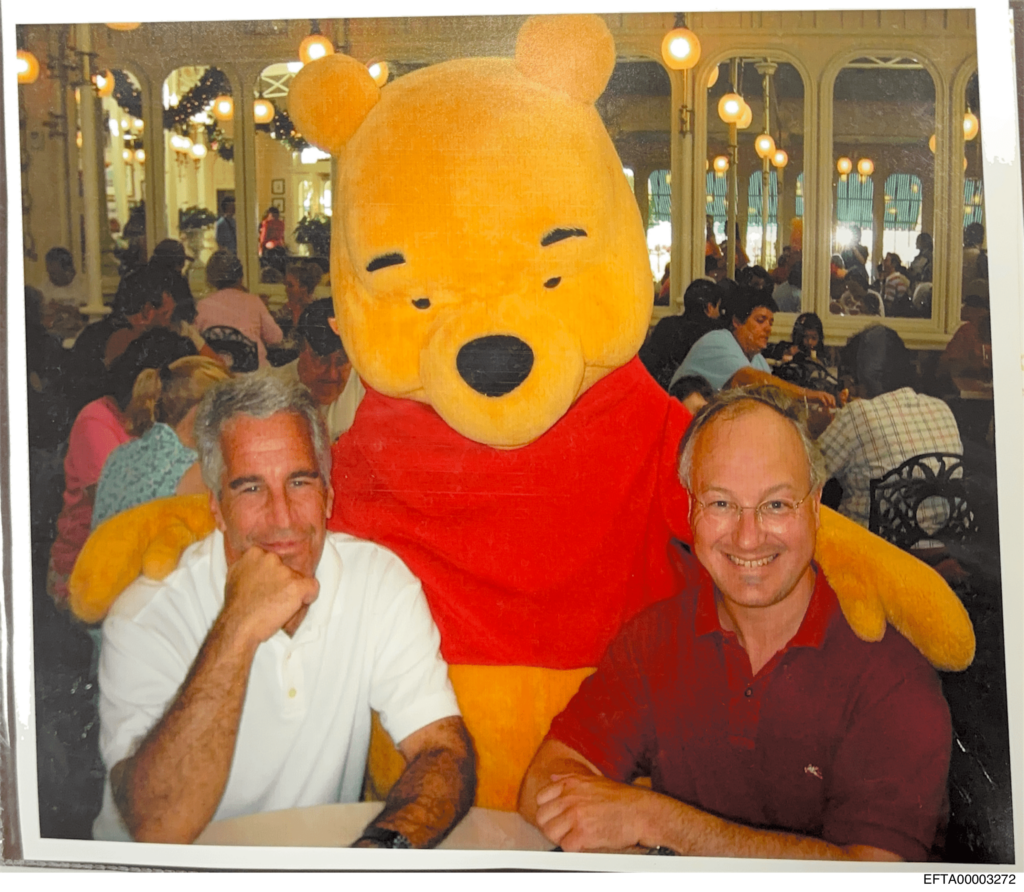
David Schoen

Snapshot
David I. Schoen is an American criminal defense and civil rights lawyer who advised Jeffrey Epstein before Epstein’s July 2019 arrest and met with him at the Metropolitan Correctional Center in New York nine days before Epstein’s death.
Schoen initially became publicly associated with Epstein because of an August 1, 2019 jail meeting. Schoen said Epstein asked him to assume a leading role in the defense of the federal sex trafficking case. After Epstein died on August 10, Schoen questioned the official conclusion that Epstein died by suicide.
Released records reveal a substantially longer relationship.
The documentary record includes a planned telephone call in 2010, a supportive email in 2011, correspondence from 2016, a February 2019 meeting at Epstein’s Manhattan residence, research concerning the Crime Victims’ Rights Act litigation, discussions of witnesses and legal strategy, communications about media coverage, and personal exchanges concerning Schoen’s practice and finances.
In a July 2011 message, Schoen expressed sympathy for Epstein and referred to people who appeared to be “extortionists posing as victims.” The email was sent after Epstein had pleaded guilty in Florida to state prostitution offenses, including an offense involving a minor, and had registered as a sex offender.
During 2019, Schoen reviewed legal issues connected with the federal non prosecution agreement and the finding that federal prosecutors violated survivors’ rights by concealing that agreement. He also discussed evidence, investigators, lawyers, public messaging, and potential media responses with Epstein.
These communications establish that Schoen’s involvement preceded Epstein’s final detention and was more substantive than a single consultation immediately before Epstein’s death.
They do not establish that Schoen participated in Epstein’s sexual abuse or trafficking. Representing or advising an accused person is not evidence that the lawyer participated in the client’s alleged crimes.
Schoen later represented Donald Trump during Trump’s second Senate impeachment trial. In 2025, Schoen said he had specifically asked Epstein whether Epstein possessed damaging information about Trump and that Epstein did not. That account is a statement by Schoen about a private attorney conversation. It is not independently verified by a recording or contemporaneous transcript.
As of September 2, 2026, Schoen is not publicly known to have been charged with an offense arising from his relationship with Epstein.
Identity and Legal Career
David I. Schoen was born in Washington, D.C., in 1958.
He received a bachelor’s degree from George Washington University, a law degree from Boston College Law School, and a Master of Laws degree from Columbia University.
Schoen established a practice focused on criminal defense, constitutional litigation, and civil rights cases. His professional biography states that he has practiced in trial and appellate courts throughout the United States and is admitted in several state and federal jurisdictions.
The Schoen Law Firm biography describes his work in complex civil and criminal litigation. A Boston College Law School profile records his early decision to remain in Alabama and pursue civil rights litigation.
His career has included challenges involving prisons, jails, foster care, public institutions, voting access, capital punishment, and criminal prosecutions.
Schoen has also represented controversial and prominent clients. His later clients included Roger Stone and Donald Trump.
A lawyer’s representation of an unpopular client does not imply approval of the client’s conduct. The relevant investigative questions concern the length and substance of Schoen’s Epstein relationship, the legal and public relations assistance he provided, and how his later descriptions compare with the surviving documents.
The Relationship Predated the 2019 Arrest
Early reporting often described Schoen as a lawyer who entered Epstein’s orbit only shortly before Epstein’s death.
Released records show earlier contact.
EFTA02429037 contains a February 2010 reminder that Epstein was expected to telephone David Schoen.
EFTA01814156 is a June 2010 email from Epstein concerning Schoen. The limited message does not disclose the full purpose of the contact, but it confirms that Schoen’s name was present in Epstein’s correspondence years before the 2019 prosecution.
In an August 2019 interview with the Atlanta Jewish Times, Schoen said he had become acquainted with Epstein approximately eleven years earlier. He said Epstein periodically asked him questions and had increasingly sought his advice during the year before his arrest.
The combination of contemporaneous records and Schoen’s own account supports the conclusion that their relationship began around 2008 or 2009 and continued intermittently.
The earliest records do not establish that Schoen was continuously retained throughout that period. They establish contact, not the precise terms of every legal relationship.
The July 2011 Supportive Email
One of the most consequential records is EFTA02383514, an email Schoen sent to Epstein on July 22, 2011.
Schoen said he had seen an article concerning Epstein and Prince Andrew. He asked whether Epstein’s civil cases had concluded and expressed hope that Epstein had returned to productive activities.
Schoen then referred to Epstein’s experiences with government agencies and people who appeared to Schoen to be “extortionists posing as victims.”
The language is significant because Epstein’s Florida criminal case was no longer merely an unresolved accusation. Epstein had pleaded guilty in 2008 to state offenses, including procuring a person under eighteen for prostitution. He served a jail sentence under unusually permissive work release arrangements and was required to register as a sex offender.
Survivors had also made allegations supported by police interviews, employee accounts, telephone records, and other investigative evidence.
The email does not identify which individuals Schoen intended to describe. It therefore cannot safely be interpreted as a specific accusation against every Epstein survivor.
It does establish that Schoen expressed sympathy for Epstein and adopted a hostile characterization of at least some people presenting themselves as victims or claimants.
That characterization was Schoen’s opinion. It was not a judicial finding that survivors were extortionists.
Contact During 2016
The relationship did not end after the 2011 message.
In EFTA02463361, Epstein and Schoen discussed meeting after Epstein returned in June 2016.
The record is limited and does not establish that the proposed meeting occurred. It nevertheless confirms continuing direct communication.
This period overlapped with extensive civil litigation concerning Epstein, Ghislaine Maxwell, Virginia Giuffre, Alan Dershowitz, Bradley Edwards, Paul Cassell, and the federal non prosecution agreement.
The available record does not establish that Schoen appeared as counsel of record in the principal Epstein cases during 2016. His communications should therefore be distinguished from formal pleadings signed by Epstein’s retained litigation teams.
The February 2019 Manhattan Meeting
Schoen’s involvement became more active in February 2019.
EFTA02275436 contains a calendar alert for coffee with David Schoen at 11:30 in the morning on February 26, 2019.
Related correspondence documents efforts by Epstein’s staff to move the meeting forward and coordinate Schoen’s arrival.
EFTA02275528 contains a message in which Schoen said he was travelling from the area of 48th Street and Eighth Avenue and expected to arrive at 11:30.
EFTA02278021 records Epstein’s office telling Schoen that Epstein wanted him to come as soon as possible.
EFTA02275678 shows an assistant reassuring Schoen that Epstein knew about his delayed arrival.
EFTA02276635 and EFTA02276668 contain messages exchanged after the meeting. Schoen thanked the assistant for the help and said it had been nice to meet her.
The records collectively provide stronger evidence than a calendar entry alone. They document scheduling, travel toward the appointment, Epstein’s awareness of Schoen’s arrival, and a message sent after the encounter.
Schoen later told the Atlanta Jewish Times that he met Epstein at Epstein’s Manhattan residence during the spring of 2019 to discuss legal affairs. His estimated date of April or May appears inconsistent with the documented February 26 meeting unless he visited Epstein more than once.
The presently identified records conclusively support a February meeting. They do not exclude additional meetings during April or May.
Crime Victims’ Rights Act Research
The February meeting occurred days after a major ruling in the litigation brought by Epstein survivors.
On February 21, 2019, United States District Judge Kenneth Marra ruled that federal prosecutors had violated the Crime Victims’ Rights Act by concealing Epstein’s non prosecution agreement from victims while representing that the federal investigation remained active.
EFTA00800253 contains a LexisNexis copy of the decision generated under Schoen’s name on February 23, 2019. The recorded search terms included the Crime Victims’ Rights Act and non prosecution agreements.
The document demonstrates that legal research associated with Schoen’s account was preserved in Epstein’s files shortly before the February 26 meeting.
EFTA01032685 contains direct discussion between Schoen and Epstein about the ruling, possible remedies, appellate procedure, and whether information in an anticipated opinion article had been presented to Judge Marra.
Schoen asked whether anyone was seriously considering a remedy that would invalidate the non prosecution agreement after it had been performed. He also asked about Senator Ben Sasse and survivor attorney Bradley Edwards.
These exchanges establish substantive legal consultation. They go beyond a general social conversation or an isolated request for a lawyer’s name.
They do not establish that Schoen formally appeared in the Crime Victims’ Rights Act litigation or that a court accepted his analysis.
The Non Prosecution Agreement Strategy
A central issue in Epstein’s legal strategy was whether the 2007 federal non prosecution agreement barred later federal charges.
Epstein’s lawyers argued that the agreement protected him from further federal prosecution for conduct within its scope. Survivors argued that prosecutors had negotiated and concealed the agreement in violation of their statutory rights.
Schoen’s messages show attention to both the enforceability of the agreement and the remedies available after Judge Marra’s ruling.
The legal questions were complicated. The agreement had been negotiated by the United States Attorney’s Office for the Southern District of Florida, while the 2019 prosecution was brought in the Southern District of New York.
After Epstein’s arrest, his lawyers continued arguing that the Florida agreement restricted the New York prosecution. Epstein died before the court could fully resolve the merits of that defense at trial.
Schoen later stated publicly that he believed the New York charges should have been dismissed under the Florida agreement.
That was a defense position. It was not a final judicial determination that the 2019 prosecution was barred.
Discussion of Witnesses and Investigative Material
The released correspondence also shows Schoen examining material concerning witnesses and investigators.
In EFTA01030719, Schoen reacted enthusiastically to an investigative statement Epstein had supplied. Schoen described the transcript as exceptionally valuable and discussed what it appeared to say about a witness, her lawyer, recruitment by investigators, and representations concerning age and consent.
The document was forwarded by Epstein to Steve Bannon.
Schoen’s message reflects a defense lawyer’s interpretation of selected evidence supplied by Epstein. It does not establish that the witness made every statement exactly as Schoen summarized it, that the record was complete, or that other evidence did not contradict it.
Statements concerning apparent age also require particular care. A person’s claim that someone looked or represented herself as being over eighteen does not resolve whether the person was legally capable of consent, whether coercion occurred, or whether a defendant knew the person’s actual age.
The underlying transcript should be examined in full before Schoen’s description is treated as an accurate evidentiary summary.
Discussion of Lawyers and Investigation
Other messages show Schoen discussing the performance of lawyers and investigators working on Epstein related matters.
In EFTA02637056, Schoen asked about developments in the case and articles that he believed might present the “real facts.” He also told Epstein to make sure attorney Martin Weinberg remained focused.
In EFTA01033418, Schoen asked about attorneys and investigative work. The exchange referred to gathering information while postponing certain witness interviews to avoid jeopardizing other work.
The surviving messages do not always identify the complete legal matter or every participant. Some names appear without sufficient context to determine their precise roles.
The records nevertheless show Schoen participating in ongoing discussions about legal personnel, factual investigation, potential witnesses, and strategic timing.
This is consistent with Schoen’s later statement that Epstein trusted him and had asked him to review work produced by the existing legal team.
Personal Advice and Schoen’s Finances
The relationship was not entirely one directional.
In EFTA02633170, Schoen told Epstein that Epstein had already helped him with questions concerning his legal practice and finances.
The email does not explain what advice Epstein gave, whether money changed hands, or whether Epstein made an investment in Schoen’s practice.
The record therefore establishes that Schoen acknowledged receiving advice. It does not establish a loan, payment, ownership interest, or financial dependency.
The personal nature of the exchange is important because it complicates the description of Schoen as merely an outside lawyer evaluating whether to accept a new client.
By February 2019, Schoen and Epstein were exchanging assistance and discussing professional matters affecting both men.
Work Concerning Israel and BDS
The same February 28 email described Schoen’s planned work in Israel.
Schoen said two organizations were paying for him to travel to Israel and meet government officials about legal challenges concerning the Boycott, Divestment, and Sanctions movement.
He also said he had previously led a United Nations panel concerning legal responses to terrorism. Schoen discussed the possibility of returning to Israel and the cost of airfare.
In EFTA02632587, Schoen told Epstein that he was travelling to Israel for a conference and meetings with Israeli government officials. He said the discussions would concern BDS, the International Criminal Court, the United Nations Human Rights Council, and other issues.
Schoen assured Epstein that he would remain reachable and invited him to make contact if he needed assistance or wanted to exchange ideas.
The emails document Schoen describing his work and travel. They do not establish that Epstein directed the work, represented the Israeli government, or financed the trip.
They do show that Schoen discussed his outside legal and political activity with Epstein while advising him on the Crime Victims’ Rights Act dispute.
Media Strategy Before Epstein’s Arrest
The released correspondence shows Schoen taking an interest in how Epstein was portrayed publicly.
HOUSE_OVERSIGHT_031824 is a June 15, 2019 email from Schoen to Epstein reacting to Fox News coverage of an Epstein civil settlement.
Schoen called the article ridiculous and objected to its characterization of the non prosecution agreement. He said he wanted Epstein to receive favorable coverage and argued that admissions he attributed to some women had not been adequately reported.
HOUSE_OVERSIGHT_031803 contains Epstein’s response and an additional message from Schoen noting that Fox News was circulating the article again.
The records show Schoen advocating a more favorable account of Epstein’s legal position approximately three weeks before Epstein’s arrest.
They do not establish that Schoen planted an article, controlled a news organization, or successfully changed the coverage.
They also do not establish that the women referenced by Schoen had withdrawn all allegations. Selected deposition admissions can concern individual details without invalidating the broader account of abuse.
The July 2019 Arrest
Federal agents arrested Epstein on July 6, 2019, after his aircraft arrived in New Jersey from Paris.
The 2019 federal indictment charged Epstein with sex trafficking of minors and conspiracy. Prosecutors alleged that he sexually exploited and abused dozens of underage girls at his properties in New York and Florida.
Epstein pleaded not guilty.
On July 18, the district court denied bail after concluding that Epstein presented a danger to the community and a flight risk. Epstein was detained at the Metropolitan Correctional Center while the case proceeded.
The charges were accusations until adjudicated. Epstein’s death ended the prosecution before a jury could determine guilt on the 2019 counts.
His death did not erase his earlier Florida guilty pleas or the established fact that he was a registered sex offender.
The August 1 Jail Meeting
Schoen met Epstein at the Metropolitan Correctional Center on August 1, 2019.
In his August 2019 account, Schoen said the meeting lasted approximately five hours and focused on the federal case, future litigation plans, and the organization of Epstein’s defense team.
Schoen said Epstein asked him to take over the case and act as the team’s “quarterback.” Schoen said he agreed in principle but needed to determine whether Epstein’s existing lawyers accepted the arrangement and what authority the role would carry.
A planned August 9 meeting with the lawyers was cancelled. Schoen expected to return to New York during the following week.
In 2025, Schoen described the arrangement more definitively, saying he had been hired as Epstein’s criminal defense lawyer nine days before Epstein died.
These statements are not necessarily irreconcilable. Epstein may have selected Schoen on August 1 while practical terms and coordination with other lawyers remained unresolved.
The available public record does not include a complete engagement agreement, court appearance, or billing record conclusively defining the relationship.
The most precise description is that Epstein asked Schoen to lead or coordinate his defense, Schoen agreed to assume the role, and Epstein died before the transition could be completed publicly.
The Psychological Evaluation During the Meeting
Schoen said the August 1 consultation was interrupted by a mental health professional who needed to assess Epstein under the jail’s suicide procedures.
The Justice Department Inspector General’s 2023 report confirms that prison psychology staff conducted a suicide risk assessment on August 1.
According to the report, United States Marshals paperwork described Epstein as having suicidal tendencies because of the earlier jail incident. Epstein denied being suicidal and expressed surprise at the notation.
The psychologist recorded that Epstein identified reasons to live, described positive future plans, and appeared psychologically stable. The assessment classified his acute suicide risk as low and found no chronic suicide risk at that time.
This official record provides partial corroboration for Schoen’s statement that a mental health assessment occurred on the day of their meeting.
It does not establish that the psychologist observed the entire attorney consultation or agreed with Schoen’s later homicide theory.
Schoen’s Description of Epstein’s State of Mind
Schoen said Epstein appeared upbeat, engaged, and eager to contest the charges.
He described their conversation as future focused and said they discussed possible motions, legal strategies, and changes to the defense team.
The Inspector General’s report records several contemporaneous assessments in which Epstein denied suicidal thoughts. On July 31, a psychologist described him as being in a pleasant mood. On August 1, he discussed positive future plans. On August 8, he again denied suicidal ideation, intention, or a plan.
These records support Schoen’s narrower claim that Epstein did not express suicidal intent during their August 1 meeting.
They do not prove that Epstein’s mental state remained unchanged. Suicidal intent can fluctuate, and a person can conceal it from lawyers, family members, medical staff, or correctional officers.
A lawyer’s impression during one consultation cannot determine the medical manner of death nine days later.
The July 23 Neck Injury
Before Schoen’s meeting, Epstein had been found injured in his cell during the early morning of July 23.
The Inspector General reported that officers found Epstein with an orange cloth around his neck. His cellmate said Epstein had attempted to hang himself.
Epstein initially told prison personnel that his cellmate had tried to kill him. He later said he did not remember how he received the injuries and did not want to discuss the event. At another point, he asked to be housed with the same cellmate.
Medical staff observed friction marks and superficial redness. Epstein was placed on suicide watch and then psychological observation.
The prison’s internal investigation concluded that there was insufficient evidence to determine whether Epstein injured himself or was injured by his cellmate.
Schoen later said Epstein told him that the cellmate had caused the injury and had arranged the scene to appear like an attempted suicide.
That account is evidence of what Schoen says Epstein told him. It is hearsay and cannot independently establish what happened inside the cell.
The Inspector General’s investigation did not substantiate either explanation.
Epstein’s Death
Epstein was found unresponsive in his locked cell on the morning of August 10, 2019.
The New York City Office of Chief Medical Examiner determined that the cause of death was hanging and the manner of death was suicide.
The Inspector General documented numerous institutional failures.
Epstein’s cellmate was removed on August 9 and was not replaced despite a psychology department directive that Epstein should not be housed alone. Officers failed to perform required rounds and counts. Records were falsified. Epstein’s cell contained excess linens, some of which had been torn into nooses. Part of the prison camera recording system was not functioning.
These failures allowed Epstein to remain alone and unmonitored for several hours.
The failures were severe and contributed to public suspicion. They do not by themselves demonstrate homicide.
Schoen’s Homicide Theory
Shortly after Epstein’s death, Schoen said he did not believe Epstein had killed himself.
He based his view principally on Epstein’s demeanor, future legal plans, the unresolved July 23 incident, prison failures, and later reporting concerning injuries observed during the autopsy.
Schoen was not present when Epstein died. He did not conduct the autopsy, inspect the cell as a forensic investigator, or observe the available prison video as part of the official investigation.
His opinion therefore carries value as the impression of a lawyer who met Epstein shortly before his death. It is not direct evidence of homicide.
Schoen has sometimes stated the homicide conclusion forcefully while also acknowledging that he does not know precisely what happened.
A responsible account must preserve both parts of his position.
The Autopsy Dispute
Pathologist Michael Baden observed the autopsy at the request of Epstein’s brother and later argued that certain neck fractures were more consistent with homicidal strangulation than suicidal hanging.
The medical examiner who performed the autopsy disagreed.
According to the Inspector General, the medical examiner concluded that Epstein’s injuries were consistent with hanging and that there were no defensive injuries indicating a struggle. Investigators did not find debris under Epstein’s fingernails, damaged fingernails, injuries to his hands, bruised knuckles, or other bodily injuries expected after a violent strangulation.
Fractures of neck structures can occur in both hanging and strangulation, particularly in older adults. Their presence does not by itself determine the manner of death.
Schoen’s reliance on Baden’s interpretation represents one side of a forensic disagreement. The official ruling remained suicide.
The Inspector General’s Findings
The Justice Department Inspector General released a detailed report in June 2023.
The investigation confirmed serious misconduct and institutional breakdowns at the Metropolitan Correctional Center. Staff failed to follow the cellmate directive, failed to conduct required observations, falsified records, permitted an unmonitored telephone call, failed to search the cell adequately, and did not maintain a fully functional recording system.
The report also addressed the homicide question.
Investigators found no evidence contradicting the FBI’s determination that Epstein’s death did not result from a criminal act. The available recorded video showed no person entering Epstein’s housing tier from the common area during the relevant period.
Three inmates with a direct view of Epstein’s cell door said no one entered or left the cell after Epstein was returned for the night.
The camera did not show the interior of Epstein’s cell or its door directly. The available footage therefore was not a recording of the death itself.
The Inspector General concluded that negligence, misconduct, and failures by prison personnel created the opportunity for Epstein to die by suicide. It did not conclude that those failures were part of a murder conspiracy.
Schoen’s Knowledge Had Clear Limits
Schoen possessed direct knowledge of his own communications and his August 1 meeting with Epstein.
He could describe:
- What Epstein asked him to do.
- What legal issues they discussed.
- Epstein’s apparent mood during the meeting.
- Statements Epstein made about the July 23 incident.
- Schoen’s communications with Epstein before the arrest.
Schoen could not directly establish:
- What occurred in Epstein’s cell on July 23.
- Epstein’s thoughts after their August 1 meeting.
- What occurred inside the cell on August 9 and August 10.
- Whether another person entered the cell without appearing in the available evidence.
- The medical significance of every autopsy finding.
- Whether Epstein concealed suicidal intent.
The distinction between personal observation and inference is essential when evaluating Schoen’s public statements.
The 2025 Statement About Donald Trump
In June 2025, Schoen responded to public claims concerning Donald Trump and the Epstein files.
Schoen said he had specifically asked Epstein whether Epstein possessed information that could harm Trump. According to Schoen, Epstein said he did not.
The statement received additional attention because Schoen later represented Trump during the former president’s second Senate impeachment trial.
Schoen’s account establishes that he publicly described a private conversation with Epstein. No publicly available recording or contemporaneous memorandum verifies the wording or context of the exchange.
Even if accurately recalled, Epstein’s answer would represent Epstein’s statement to his lawyer. It would not independently establish the complete contents of government files, third party records, photographs, flight records, or witness testimony.
Schoen’s statement also does not prove that Trump and Epstein had no social relationship. Their past acquaintance is independently documented.
The relevant distinction is between evidence of a social relationship and evidence of criminal conduct. A name in a file, contact record, photograph, or flight log does not by itself establish participation in Epstein’s crimes.
Attorney Client Confidentiality Questions
Schoen has publicly discussed several statements he attributes to Epstein.
Lawyers ordinarily owe present and former clients duties of confidentiality. Those duties can survive a client’s death, although their precise scope and the available exceptions depend on the jurisdiction, the nature of the communication, and whether the client authorized disclosure.
The released record does not establish whether Epstein authorized Schoen to discuss particular conversations or whether Schoen concluded that the statements fell outside protected communications.
A public assertion that a conversation occurred does not resolve the professional responsibility question.
The issue is legally separate from whether Schoen’s account is factually accurate.
Defense Advocacy and Survivor Centered Reporting
Criminal defense lawyers must be permitted to investigate evidence, challenge government conduct, test witness credibility, and assert legal defenses.
That principle applies even when the accusations are horrifying and the client has a prior conviction.
It does not require journalists or researchers to adopt defense descriptions of survivors as established fact.
Schoen’s communications repeatedly emphasized information he believed undermined accusers, favorable interpretations of the non prosecution agreement, and media accounts he considered unfair. Those are recognizable defense functions.
The 2011 language concerning “extortionists posing as victims” is different in tone from a technical evidentiary argument. It generalized about people asserting victim status without identifying the supporting evidence.
Survivors should not be described as extortionists merely because a defense lawyer used that characterization in a private email.
The correct evidentiary description is that Schoen made the statement. Whether any individual claimant committed extortion would require separate proof.
What the Evidence Establishes
The available evidence establishes that:
- David Schoen is a criminal defense and civil rights lawyer.
- Schoen and Epstein were in contact by 2010.
- Schoen told reporters that Epstein had periodically sought his advice for approximately eleven years.
- Schoen sent Epstein a supportive email in July 2011.
- In that email, Schoen referred to people who appeared to be “extortionists posing as victims.”
- The 2011 message was sent after Epstein’s Florida guilty pleas and sex offender registration.
- Schoen and Epstein remained in contact during 2016.
- Schoen met Epstein in Manhattan on February 26, 2019.
- Schoen conducted research concerning the Crime Victims’ Rights Act ruling and the federal non prosecution agreement.
- Schoen discussed possible remedies, appellate issues, lawyers, witnesses, investigations, and media coverage with Epstein.
- Schoen interpreted selected investigative material in a manner favorable to Epstein.
- Epstein forwarded at least one Schoen legal analysis to Steve Bannon.
- Schoen acknowledged that Epstein had advised him about his practice and finances.
- Schoen told Epstein about work concerning BDS, the International Criminal Court, and United Nations institutions.
- Schoen advocated more favorable media treatment of Epstein shortly before the July 2019 arrest.
- Schoen met Epstein at the Metropolitan Correctional Center on August 1, 2019.
- Epstein asked Schoen to assume a leading role in the criminal defense.
- Schoen said he agreed to take that role, subject to coordination with the existing lawyers.
- Epstein underwent a documented suicide risk assessment on the day of the Schoen meeting.
- Epstein denied suicidal intent and discussed positive future plans during that assessment.
- Schoen said Epstein appeared upbeat and engaged in future legal planning.
- Schoen publicly questioned the official suicide finding.
- The medical examiner ruled Epstein’s death a suicide by hanging.
- The Justice Department Inspector General documented severe prison failures.
- The Inspector General found no evidence contradicting the FBI’s determination that Epstein’s death did not result from criminal conduct.
- Schoen later said Epstein told him that he possessed no information capable of harming Donald Trump.
- Schoen’s account of the Trump conversation has not been independently verified through a public recording or contemporaneous transcript.
- Schoen later represented Trump during his second Senate impeachment trial.
- Schoen is not publicly known to have been charged with participating in Epstein’s sexual abuse or trafficking.
What the Evidence Does Not Establish
The available evidence does not establish that:
- Schoen participated in Epstein’s sexual offenses.
- A lawyer’s representation of Epstein made the lawyer responsible for Epstein’s conduct.
- Schoen was continuously retained from 2010 through 2019.
- Every proposed meeting between Schoen and Epstein occurred.
- Epstein paid Schoen during every period in which they communicated.
- Epstein made a loan or investment in Schoen’s legal practice.
- Schoen’s 2011 characterization of purported victims was accurate.
- Survivors were extortionists because Schoen used that term.
- Selected inconsistencies in a witness statement disproved every allegation made by that witness.
- The Florida non prosecution agreement conclusively barred the 2019 New York charges.
- A court adopted Schoen’s analysis of the Crime Victims’ Rights Act litigation.
- Schoen controlled Epstein’s complete legal team before Epstein died.
- Epstein’s positive demeanor on August 1 made suicide impossible nine days later.
- Epstein’s denial of suicidal thoughts conclusively established his future intentions.
- Epstein’s former cellmate caused the July 23 injuries.
- Epstein attempted suicide on July 23.
- The July 23 incident was an attempted homicide.
- Prison negligence proves that Epstein was murdered.
- Malfunctioning recording equipment proves deliberate evidence destruction.
- The available camera recorded Epstein’s cell interior or the death itself.
- Neck fractures alone establish strangulation.
- The Inspector General found evidence of a homicide conspiracy.
- Schoen personally witnessed the circumstances of Epstein’s death.
- Epstein’s reported statement about Trump describes every government or private record concerning Trump.
- Epstein was necessarily truthful when answering Schoen’s reported question.
- Schoen’s later representation of Trump invalidates everything he said about Epstein.
- Schoen has been convicted of an Epstein related offense.
Investigative Assessment
David Schoen’s connection to Jeffrey Epstein was longer and more substantive than the original public narrative suggested.
He was not simply an unfamiliar lawyer called to a jail for one last consultation. The documentary record shows contact beginning by 2010, personal support after Epstein’s conviction, renewed meetings, legal research, strategic discussion, analysis of witnesses, attention to media coverage, and reciprocal professional advice.
The 2011 email is particularly important. It demonstrates that Schoen expressed sympathy for Epstein and disparaged people claiming victim status after Epstein had already pleaded guilty and registered as a sex offender.
The 2019 correspondence establishes that Schoen was actively examining Epstein’s legal problems months before the arrest. He studied the Crime Victims’ Rights Act ruling, discussed possible remedies, evaluated investigative material, commented on lawyers and witnesses, and encouraged a more favorable public narrative.
His August 1 jail meeting was therefore a continuation of an established advisory relationship rather than the beginning of all meaningful contact.
Schoen’s account of Epstein’s demeanor deserves consideration because it is partly corroborated by prison psychology records. Epstein denied suicidal intent, described future plans, and was assessed as presenting a low immediate risk on August 1.
That evidence does not resolve the manner of death.
The official medical and federal investigations concluded that Epstein died by suicide. They also established that extraordinary prison failures left him alone, unmonitored, and supplied with excess linens. Those failures explain why the death generated justified scrutiny without proving homicide.
Schoen’s murder theory remains an inference based on his impression of Epstein, Epstein’s disputed account of the July 23 incident, and questions concerning the autopsy and prison conditions. It is not supported by a public judicial finding or an official investigative conclusion.
The most defensible classification is that Schoen was a longstanding legal adviser who became increasingly involved in Epstein’s defense during 2019 and was selected to help lead the criminal team shortly before Epstein’s death.
His legal representation does not imply participation in Epstein’s crimes. His private statements about survivors, his assistance with Epstein’s public narrative, and the evolution of his public accounts remain legitimate subjects of documentary investigation.
Key Takeaways
- Schoen’s Epstein relationship began years before the August 2019 jail meeting.
- Records document contact as early as 2010.
- In 2011, Schoen expressed sympathy for Epstein and disparaged unidentified people claiming victim status.
- The statement was Schoen’s opinion, not a court finding against survivors.
- Schoen met Epstein at his Manhattan residence in February 2019.
- He researched the Crime Victims’ Rights Act ruling and the non prosecution agreement.
- He discussed witnesses, investigators, lawyers, remedies, and media strategy with Epstein.
- Epstein also advised Schoen about his practice and finances.
- Schoen remained available to Epstein while travelling for meetings in Israel.
- He sought more favorable media coverage for Epstein shortly before the arrest.
- Epstein asked Schoen to help lead the 2019 criminal defense.
- Schoen met Epstein in jail for approximately five hours on August 1.
- Prison records corroborate that Epstein denied suicidal intent and discussed future plans that day.
- Those records do not prove that Epstein could not have died by suicide later.
- Schoen’s homicide theory conflicts with the official medical ruling and federal investigative findings.
- The Inspector General confirmed grave prison failures but found no evidence of criminality in the death.
- Schoen’s later statement about Trump is an account of a private conversation and is not independently verified.
- Representing Epstein does not establish participation in Epstein’s offenses.
- Schoen’s private descriptions of survivors should not be adopted without independent evidence.
- Each conclusion about Schoen should be tied to the underlying email, calendar record, court document, or official investigation.
Related EpsteinWiki Articles
- Jeffrey Epstein
- Jeffrey Epstein Death Timeline
- 2019 Epstein SDNY Indictment
- Jeffrey Epstein Non Prosecution Agreement
- Jane Does v. United States Government
- Epstein v. United States Government
- Bureau of Prisons
- Department of Justice
- Southern District of New York
- Epstein Network Legal and Law Enforcement
- Witness Statements and Depositions Litigation
- Steve Bannon
- Donald Trump
- HOUSE_OVERSIGHT_031824 Email From David Schoen to Jeffrey Epstein
- How to Read an Epstein Document
Primary Court and Government Sources
- United States v. Jeffrey Epstein federal docket
- 2019 federal sex trafficking indictment
- Justice Department announcement of the 2019 charges
- Justice Department Inspector General report on Epstein’s custody and death
- Inspector General announcement summarizing the findings
- Crime Victims’ Rights Act decision in Doe v. United States
- David Schoen professional biography
- Boston College Law School profile of David Schoen
- Atlanta Jewish Times interview concerning Schoen’s August 1 meeting
- Independent report on Schoen’s challenge to the suicide finding
- PBS report identifying Schoen as a member of Trump’s impeachment defense
- Reporting on the 2025 statement concerning Trump
- Reporting on Schoen’s BDS and Israel related correspondence
Primary Epstein Data Evidence
- EFTA02429037 contains a February 2010 reminder concerning a planned telephone call between Epstein and David Schoen.
- EFTA01814156 is a June 2010 Epstein email concerning Schoen.
- EFTA02383514 contains Schoen’s July 2011 supportive message and his characterization of purported victims or claimants as apparent extortionists.
- EFTA01965304 records a LinkedIn connection between Epstein and Schoen in 2013.
- EFTA02463361 contains 2016 correspondence about meeting after Epstein returned in June.
- EFTA00800253 contains the February 2019 Crime Victims’ Rights Act decision generated through a LexisNexis account bearing Schoen’s name.
- EFTA01032685 contains Schoen’s discussion of the Crime Victims’ Rights Act ruling, remedies, appeal, the non prosecution agreement, Senator Ben Sasse, and Bradley Edwards.
- EFTA02275436 contains the February 26, 2019 calendar alert for coffee with Schoen.
- EFTA02275528 documents Schoen travelling to the February meeting.
- EFTA02278021 records Epstein’s office asking Schoen to arrive as soon as possible.
- EFTA02275678 contains scheduling communication during Schoen’s journey to the meeting.
- EFTA02276635 contains Schoen’s message after the meeting thanking Epstein’s assistant.
- EFTA02276668 contains the assistant’s reply confirming that the meeting arrangements had been completed.
- EFTA02633170 contains Schoen’s statement that Epstein had helped him with questions concerning his practice and finances. It also describes Schoen’s planned Israel work.
- EFTA02632587 contains Schoen’s March 2019 message concerning meetings in Israel and his continuing availability to Epstein.
- EFTA01030719 contains Schoen’s reaction to investigative material that he considered favorable to Epstein. Epstein forwarded the exchange to Steve Bannon.
- EFTA02637056 contains Schoen’s questions about case developments, press coverage, and attorney Martin Weinberg.
- EFTA01033418 contains discussion of lawyers and investigative work concerning potential witnesses.
- EFTA02636162 contains a March 2019 exchange concerning mediation.
- HOUSE_OVERSIGHT_031824 contains Schoen’s June 15, 2019 criticism of Fox News coverage and his call for more favorable reporting about Epstein.
- HOUSE_OVERSIGHT_031803 contains Epstein’s response and Schoen’s additional discussion of the circulated Fox News article.
- HOUSE_OVERSIGHT_031825 contains the related forwarded coverage.
These documents establish communications and the statements made within them. They do not automatically establish that every legal or factual assertion made by either Schoen or Epstein was accurate.