
Andrew Mountbatten-Windsor formerly Prince Andrew, Duke of York
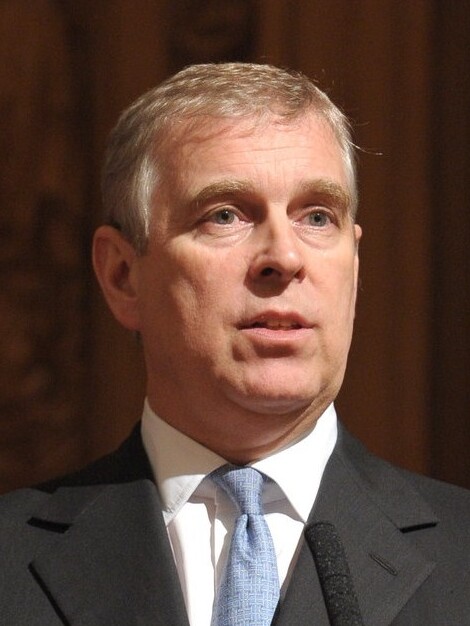
Source: Wikimedia Commons
Credit: Carfax2
License: Creative Commons Attribution ShareAlike 3.0
Snapshot
Andrew Mountbatten-Windsor, formerly styled Prince Andrew and no longer using the Duke of York designation, is a member of the British royal family whose relationship with Jeffrey Epstein and Ghislaine Maxwell has been the subject of extensive documentary scrutiny, civil litigation and institutional consequences. The legal distinctions between his former princely style, unused peerages and succession position are set out below.
The public record includes first person emails, photographs, civil court filings, sworn survivor testimony, FBI records, a United States request for international legal assistance, correspondence about Andrew’s government trade work, and records showing that he remained in contact with Epstein after Epstein’s 2008 conviction.
Virginia Giuffre alleged that Epstein and Maxwell trafficked her to Andrew on three occasions when she was seventeen. Andrew denied every allegation of sexual misconduct and said he had no recollection of meeting her. Giuffre sued him in federal court in 2021. The case settled in 2022 before Andrew was deposed or tried, without an admission of liability.
Johanna Sjoberg separately testified that Andrew touched her breast at Epstein’s Manhattan townhouse. Andrew denied wrongdoing. Other investigative records preserve additional allegations, but their appearance in an FBI file does not transform them into proven facts.
The documentary record also concerns Andrew’s activities as the United Kingdom’s Special Representative for International Trade and Investment. Emails released under the Epstein Files Transparency Act appeared to show him sending Epstein information obtained through his official work.
Thames Valley Police arrested Andrew on February 19, 2026, on suspicion of misconduct in public office and released him under investigation that day. Its October 8 update said the investigation continued after the February search warrants were quashed. The High Court ruling concerned the warrants and retention of seized material, not a finding on the alleged misconduct.
In late 2025, separate instruments removed Andrew’s princely title and Royal Highness style and cancelled his Garter and Royal Victorian Order appointments. He is officially known as Andrew Mountbatten-Windsor. Those changes did not themselves extinguish his peerages or remove him from the line of succession.
The evidence establishes a sustained relationship with Epstein and Maxwell. Allegations of sexual misconduct, the settled civil case and the continuing public-office investigation must be assessed on their own records; association is not a criminal verdict.
This profile was reviewed on October 19, 2026. It synthesises the principal biographical, documentary and procedural record; it is not a claim to have searched every page of the Epstein releases or independently authenticated every email account. Original records, statements, allegations, investigative summaries, press clippings and duplicate productions are identified according to their source type.
For the full sequence of proposed and completed arrangements, see The Arrangement Records. For distinct complainants and accounts, see the sexual-misconduct evidence guide. The Royal Family overview addresses wider institutional decisions, while this article remains Andrew’s principal profile.
Watch the EpsteinWiki Musical Explainer
Prince Charming Turned Out to be the Beast is an EpsteinWiki musical explainer. Consult the article and linked records for source context.
Current Name and Royal Status
Andrew Albert Christian Edward was born on February 19, 1960, the second son of Queen Elizabeth II and Prince Philip.
For most of his life he was known as Prince Andrew. Upon his marriage to Sarah Ferguson in 1986, Queen Elizabeth II created him Duke of York, Earl of Inverness, and Baron Killyleagh.
His status changed in several stages.
On November 20, 2019, Andrew announced, with the Queen’s permission, that he would step back from public duties for the foreseeable future. The announcement followed his BBC Newsnight interview and expressed regret for his association with Epstein.
On January 13, 2022, Buckingham Palace announced that his military affiliations and royal patronages had been returned to Queen Elizabeth II. The Palace said he would continue not to undertake public duties and would defend the civil case as a private citizen. The later formal removal of his Royal Highness style was a distinct step.
On October 17, 2025, Andrew said, with the King’s agreement, that he would no longer use his title or honours. He also repeated his denial of the accusations. This announcement of non-use preceded the formal instruments.
The October 30, 2025 Palace announcement said the King had initiated a formal process concerning Andrew’s styles, titles and honours, and that notice had been served regarding surrender of the Royal Lodge lease. It initially rendered his new name without a hyphen; the current official form is Andrew Mountbatten-Windsor.
Letters Patent dated November 3, 2025 removed his right to the style Royal Highness and the titular dignity of Prince. A Gazette notice published December 1 recorded cancellation of his Garter and Royal Victorian Order appointments pursuant to the King’s direction of October 30. The Commons Library’s March 12, 2026 briefing separately records his December 13, 2025 reversion to Commander (Retired).
The Commons Library briefing distinguishes removal of Andrew’s name from the Roll of Peerage from extinguishing the underlying dukedom and other peerages. He no longer uses the Duke of York designation, but royal non-use and a change to the roll do not, by themselves, abolish those peerages.
The Royal Family’s current succession page, checked for this review, identifies him as Andrew Mountbatten-Windsor and lists him eighth. Removal of the princely title and royal style did not remove him from succession; any proposed change to succession must be distinguished from an enacted change.
Background and Public Role
Andrew attended Gordonstoun and entered the Royal Navy in 1979.
He trained as a helicopter pilot and served during the Falklands War aboard HMS Invincible. His military service became an important part of his public identity, and he remained in the Navy until 2001.
Andrew began serving as the United Kingdom’s Special Representative for International Trade and Investment in 2001. The Government announced his departure on July 21, 2011, but the UK Trade & Investment 2011–12 annual report, paragraphs 2.81–2.84, records that he fulfilled existing commitments through March 2012. The announcement did not immediately end every approved trade engagement.
The position placed him at the intersection of government, diplomacy, banking, private investment, royal access, and international business. He travelled extensively and cultivated relationships with executives, financiers, political leaders, and wealthy intermediaries.
The public-office investigation is a separate legal track from Giuffre’s civil sexual-abuse allegations. The May 22 police statement described an ongoing misconduct investigation; the released trade correspondence supplies relevant documentary context, but a record of forwarding information does not itself establish all the elements of an offence.
Appointment Records and Government Accountability
The Government’s May 21, 2026 statement described British Trade International’s accountability to trade and foreign secretaries, a minister-chaired board and Royal Visits Committee advice on official travel. It said the role was unpaid, with official costs covered and engagement-approval systems established. The existence of those systems is not proof that supervision worked effectively in every case.
In HC 222, numbered pages 7–9, David Wright’s February 25, 2000 proposal reported the Queen’s wish that Andrew succeed the Duke of Kent in trade-promotion work and proposed overseas visits, regional work and hosting under BTI coordination. The March 24, 2026 ministerial clarification says Andrew did not inherit the Duke of Kent’s BTI board position. These appointment records do not establish Epstein’s involvement or the Queen’s knowledge of his crimes.
The May statement reported that searches had found no evidence of formal due diligence or vetting, or that either had been considered. That is the Government’s stated result from a historical record search, not proof that every potentially relevant record survives. The published return explains redactions for personal information, protected communications and other public-interest considerations; withheld text is not evidence of a particular allegation.
A July 9, 2026 supplementary statement disclosed thirteen further documents concerning preparation, induction, board briefing and role development. The Government said reasonable searches under the appointment-focused request were complete, while committing to supply later-discovered responsive records. This did not declare an exhaustive disclosure of every trade engagement or all correspondence from 2001 to 2011. The parliamentary disclosure exercise and the police inquiry have different purposes.
Andrew’s Relationship With Ghislaine Maxwell
Andrew knew Maxwell before he acknowledged knowing Epstein.
Maxwell moved within British social circles that overlapped with the Royal Family, wealthy business families, politicians, diplomats, and media figures. She attended royal events and maintained a close and informal relationship with Andrew.
Andrew said during his 2019 Newsnight interview that he met Epstein through Maxwell in 1999. In her July 24, 2025 Justice Department interview, transcript pages 132–136, Maxwell denied introducing them and offered an uncertain alternative recollection involving a gathering associated with Lynn Forester. She could not fix the location or date reliably. Her later recollection is disputed testimony, not a finding that resolves the first-meeting date.
Released correspondence demonstrates that Andrew and Maxwell were communicating directly by 2001.
Emails attributed to Andrew used addresses and names including “The Invisible Man,” “PA,” “The Duke,” and variations of his initials. The attribution is supported by references to Balmoral, his daughters, royal schedules, travel, household arrangements, and email addresses later identified in FBI search materials.
EFTA00011437 contains an August 2001 email attributed to Andrew in which he described being at Balmoral with the Royal Family and asked Maxwell whether she had found him “new inappropriate friends.”
EFTA00011440 preserves Maxwell’s reply in the August 2001 exchange alongside personal correspondence. She said she had found only appropriate friends and joked about church meetings. Reading the reply with the request avoids treating an isolated phrase as evidence of ages, trafficking or a completed introduction.
EFTA00011441 preserves the March 3, 2002 Peru correspondence, in which Maxwell forwarded plans for sightseeing and discreet social introductions. This is a related correspondence thread, not a separate proved sexual encounter.
The emails establish familiarity and direct communication. Their tone is inconsistent with a merely incidental acquaintance.
The 2001 and 2002 messages came from two Pipex accounts. EFTA00011437 was sent from abx17@dial.pipex.com. From January 2002, messages under the same display name came from aace@dial.pipex.com, including EFTA02334952 and the March 3, 2002 reply in EFTA00011441. An FBI search terms list, EFTA00101065, names both addresses alongside Andrew, Prince and Invisible. No forensic header analysis appears in the released record, so the attribution rests on converging content and search evidence.
Maxwell’s Arrangements for Andrew
Released records show Maxwell making social and travel arrangements for Andrew.
EFTA02335012 contains an email concerning Andrew’s planned visit to Peru. Maxwell told a contact that Andrew was interested in the Nazca Lines and in “2 legged sight seeing,” which she explained as meeting women who were intelligent, attractive, fun, and from socially prominent families.
The same message indicated that Andrew did not want the trip reported in the press.
The document supports the conclusion that Maxwell sought to arrange discreet social introductions for Andrew. It does not establish that every proposed introduction took place.
It does not state that the women were minors, coerced, or trafficked. It therefore should not be represented as proof of a sexual offence.
Federal prosecutors nevertheless considered the email relevant to their broader case against Maxwell. In EFTA00080134, the government notified Maxwell’s defense that it might introduce evidence that she selected women for influential men, specifically referring to her arrangements for the Duke of York.
That notice described the prosecution’s proposed evidentiary theory. It does not prove that the evidence was admitted or that Andrew committed an offence.
EFTA02332233 and EFTA02332304 concern social and travel plans involving Maxwell and Andrew’s family. The full August 24–27, 2002 island chain in EFTA02332304 contains Andrew’s cancellation: he said he would not join the visit and wanted to spend time with Sarah and his children. It must not be counted as a completed island trip.
Rye Howard Stone’s research on Maxwell and Clinton’s circle provides a discovery trail to three distinct exchanges. The primary records distinguish attempted contact, a retrospective thank-you and accepted planning.
The December 9, 2001 golf reply records Maxwell telling Doug that she had spoken with Andrew and could help connect him with Clinton. She corrects the premise that Andrew was already in Scotland: he was not there yet but was going. This is Maxwell’s account of the proposed contact, not proof that a call or golf outing occurred.
October 2002 thank-you correspondence seeks Andrew’s address so Julie can thank him concerning a dinner for Clinton. The parallel copy supplies Buckingham Palace as a mailing address, not proof of the dinner’s venue. The exchange does not establish the dinner’s exact date, full guest list or Epstein’s presence. Its corrupted outer date must not be substituted for the October 2002 headers.
The April 7, 2004 reply chain contains Maxwell’s proposed dinner while Andrew was in town and Doug Band’s acceptance for himself and his brother, with an offer to arrange a reservation. Neither Epstein nor Clinton is named as an attendee in this chain. Acceptance and an offered reservation do not prove that dinner occurred.
Together, these records place Maxwell in a recurring role as confidante, host, organiser, and social intermediary.
How Andrew Met Jeffrey Epstein
Andrew told Emily Maitlis that Maxwell introduced him to Epstein in 1999.
The released record does not conclusively establish a single first meeting date.
EFTA00038586 records a secondhand FBI account in which an Epstein associate allegedly claimed to have massaged Andrew on Martha’s Vineyard during an earlier period. Because this account reports what another person allegedly said, it requires caution and does not independently establish a meeting.
Other published accounts place Andrew and Epstein within overlapping social circles by the late 1990s.
Andrew’s own account places the beginning of his acquaintance with Epstein in 1999. The documentary record establishes a relationship over subsequent years, but the conflicting retrospective introduction accounts do not supply a single independently established first-meeting date.
The Documented Relationship
Andrew and Epstein met socially, communicated privately and discussed travel and business. Records establish Andrew’s use of Epstein’s hospitality and proposals for Epstein to visit royal settings; a proposed visit requires its own completion evidence.
The relationship included:
- Visits to Epstein’s Manhattan townhouse
- Use of Epstein’s Paris residence
- Social events involving Maxwell
- Contact concerning bankers, investors, and intermediaries
- Communications about Andrew’s travel and trade activity
- Continued contact after Epstein’s 2008 conviction
- Reputation management after Giuffre’s allegations became public
The record is important because Andrew later described Epstein primarily as a contact introduced through Maxwell and said the December 2010 visit was intended to end the friendship.
The correspondence shows a relationship that was personal, useful, and active across multiple years.
Post Conviction Communications
Epstein pleaded guilty on June 30, 2008 to Florida state prostitution offences, including procurement of minors for prostitution. The Justice Department’s 2020 review, printed pages ii–iii, records the pleas, consecutive sentences and July 22, 2009 release from custody into home detention. This was not a federal sex-trafficking conviction.
Andrew continued communicating and meeting with him afterward.
EFTA01810893 records an invitation attributed to Andrew for dinner at Buckingham Palace on September 27, 2010. The fuller EFTA02419708 chain records discussion of the setting and guest arrangements. It establishes planning and acceptance of a proposed setting, not a complete independently verified attendance list.
EFTA02418723 contains a 2010 exchange concerning financier David Rowland. The message attributed to Andrew was signed with his royal title and initials.
These communications occurred after Epstein’s conviction.
They do not establish participation in Epstein’s crimes. They establish that Andrew maintained a direct and apparently useful relationship with a convicted sex offender.
The August 2010 Introduction Offer
EFTA00894291 preserves an August 11 and 12, 2010 exchange between Epstein and “The Duke,” whose signature reads HRH The Duke of York KG. Epstein said a friend would be in London from the 20th to the 24th and described her as 26, Russian, clever, beautiful and trustworthy. Andrew replied that he was in Geneva until the 22nd but would be delighted to see her. He asked what else Epstein knew about her, what Epstein had told her about him, and whether she had his email.
In the same exchange, preserved at EFTA00734505, Andrew asked Epstein whether it was “Good to be free?” The thread came weeks after Epstein completed his Florida sentence and months before the December 2010 visit that Andrew later described as an effort to end the friendship.
The record documents an offered introduction to an adult woman and Andrew’s interest in it. It does not show that a meeting took place, and it does not allege an offense. It should be read alongside the June 2010 introduction chain discussed under business intermediaries, without merging the two women into one identity.
The Paris Apartment
Released messages show Andrew seeking and receiving permission to use Epstein’s Paris residence.
On September 6, 2009, a message attributed to Andrew requested the Paris apartment for September 11–14; EFTA00769899 also records Epstein’s offer of a car and driver and continuing arrangements. Separately, EFTA00766424 contains Andrew’s December 23 thank-you for a completed working weekend using the apartment. The latter establishes an after-event acknowledgment but does not date that stay to November or prove it was the same stay proposed in September.
The correspondence is significant because it demonstrates personal reliance on Epstein after the Florida prosecution.
It also shows that the relationship was not confined to chance encounters or events organised by Maxwell. Andrew contacted Epstein directly for lodging and maintained enough familiarity to make personal requests.
The December 2010 Manhattan Visit
In December 2010, Andrew stayed at Epstein’s Manhattan townhouse.
Epstein had already completed his Florida sentence. His conviction and sex offender status were public.
Andrew and Epstein were photographed walking together in Central Park. The image became decisive evidence that their relationship continued after the conviction.
Andrew later said he travelled to New York to end the friendship in person. During the Newsnight interview, he acknowledged that remaining at Epstein’s house for several days was the wrong decision but described it as convenient.
EFTA01866152 and EFTA02188521 preserve correspondence about press interest in the Central Park photograph.
The photograph proves that Andrew and Epstein met and walked together. It does not reveal the complete purpose of the trip, but it undermined attempts to present the post conviction contact as remote or accidental.
The Photographs Released in January 2026
The Justice Department’s January 30, 2026 release included photographs of Andrew on all fours over a clothed woman lying on a floor, whose face is redacted in the release. AFP reported the images on publication. Sky News’s data unit matched details in the photographs to a room in Epstein’s New York mansion, and The Telegraph reported that one image appears to have been taken in the same room during the December 2010 stay.
The images are undated. Matching a room is location evidence, not a date. The photographs do not establish the woman’s identity, her age, whether she consented to being photographed or that any offense occurred. They must not be assigned to any named complainant without evidence.
Direct Contact After December 2010
EFTA01798176 preserves a February 28, 2011 message from the Duke to Epstein expressing concern and anticipating continued contact. The supportive message is Andrew’s within the nested chain, not Epstein’s reassurance to Andrew. The same chain discusses press complaints and a separate wage/debt dispute. It demonstrates direct communication after the December visit without independently proving sexual misconduct.
Virginia Giuffre’s Allegations
Virginia Giuffre alleged that Epstein and Maxwell trafficked her to Andrew on three occasions.
According to Giuffre, the first encounter occurred in London in March 2001, when she was seventeen. She said she went with Epstein, Maxwell, and Andrew to Tramp nightclub before returning to Maxwell’s residence in Belgravia.
Giuffre alleged that Maxwell instructed her to do for Andrew what she did for Epstein. She alleged that Andrew sexually assaulted her at Maxwell’s house.
Giuffre said two later encounters occurred at Epstein’s Manhattan townhouse and on Little Saint James in the United States Virgin Islands.
Her allegations appeared in sworn declarations, court filings, interviews, and later litigation.
EFTA00021553 contains a filing identifying Andrew as the British royal family member to whom Giuffre said she had been trafficked.
EFTA00098456 contains Giuffre related declaration material and references to the nickname “Randy Andy.”
EFTA00045963 preserves material describing Giuffre’s allegation that she was trafficked to Andrew three times.
These records document Giuffre’s allegations in identified legal and investigative contexts. Repetition across pleadings, interviews and reproductions is not independent corroboration of each alleged encounter and is not a criminal verdict.
Andrew categorically denied having sexual contact with Giuffre.
The Andrew, Giuffre, and Maxwell Photograph
A widely published photograph depicts Andrew with his arm around Giuffre’s waist while Maxwell stands behind them.
Giuffre said Epstein took the photograph at Maxwell’s London home in 2001.
Andrew acknowledged that the man in the image appeared to be him but questioned whether the photograph accurately represented the event. He said he did not remember it being taken and raised questions about his clothing, his hand, his customary behavior, and the absence of the original print.
Maxwell later publicly questioned the photograph’s authenticity.
Released correspondence is relevant to the history of the photograph dispute, but it must be separated from forensic examination of the image.
In a July 1, 2011 message preserved at HOUSE_OVERSIGHT_031413, page 1, Epstein acknowledged that the woman discussed in the chain had travelled on his aircraft and been photographed with Andrew. The nested correspondence names journalist Landon Thomas. Epstein was also attacking the woman’s credibility and proposing press coverage; those attacks are his claims, not findings adopted here. The acknowledgment is documentary evidence relevant to the photograph dispute, not forensic authentication or proof of subsequent sexual conduct.
EFTA02383976, page 1, contains Maxwell’s January 10, 2015 draft statement saying that a redacted person met friends including Andrew in London in 2001 and a photograph was taken. EFTA00866922 preserves the overlapping draft and January 11 discussion with Epstein, including proposed edits to her denials. These are related drafts, not two independent accounts.
The drafts record Maxwell’s proposed account while denying sexual wrongdoing. They do not establish that the statement was issued, identify a redacted person by this article, authenticate an original photograph or prove a subsequent assault. Epstein’s participation in editing a response does not mean that every sentence is his firsthand recollection.
This review did not inspect the original physical print or an independent forensic report establishing its complete chain of custody. That verification limit should not be rewritten as proof that no original ever existed or that the image was fabricated. Giuffre’s account, the published image and the later correspondence are distinct evidentiary components.
Maxwell’s 2025 account and the staged bath photographs
In her July 2025 interview with Todd Blanche, Maxwell called the photograph “literally a fake photo.” LBC reported that she also said she was at her mother’s 80th birthday celebrations in the countryside outside London at the relevant time and that the bathroom was too small for Giuffre’s account. These are Maxwell’s statements in an unsworn interview. They sit uneasily with her own 2015 draft in EFTA02383976, which accepted that a photograph was taken in London in 2001.
In January 2023, Maxwell’s brother Ian released staged photographs of two people in masks of Andrew and Giuffre sitting in the bath at the former London house. The staging illustrates the bath’s size. It is not evidence of what happened in 2001.
Giuffre’s posthumous memoir dates the first alleged encounter to March 10, 2001. AFP reported her account that Epstein later paid her $15,000 for the night with Andrew. That is her allegation, not a documented payment record.
Johanna Sjoberg’s Testimony
Johanna Sjoberg gave sworn deposition testimony in May 2016 during Giuffre v. Maxwell.
Sjoberg described Maxwell recruiting her while she was a college student and bringing her into Epstein’s system of massages, travel, and sexual activity.
She testified that Andrew attended a gathering at Epstein’s Manhattan townhouse. During an episode involving a caricature puppet, Sjoberg alleged that Andrew placed his hand on her breast.
Sjoberg’s May 18, 2016 deposition, filed publicly on January 3, 2024 as document 1320-12 in Giuffre v. Maxwell, records the puppet and touching account at transcript pages 21–22. The 2024 unsealing date is not the date of the alleged incident or the testimony.
EFTA00212332 is a sixteen-page MailOnline clipping, updated February 28, 2011 and printed March 1, not Sjoberg’s deposition or an FBI finding. A newspaper story preserved in a government release remains a newspaper source. Its reported allegations must not be presented as additional sworn testimony.
Sjoberg’s testimony establishes that she made the touching allegation under oath. At transcript pages 81–84 she also described clothed participants, voluntary seating on Andrew’s lap and joking, with uncertainty about parts of the seating sequence. Those qualifications do not withdraw the allegation. At page 116 she said she had not seen evidence of Giuffre being trafficked to third parties or heard instructions to have sex with them. Her separate account is not eyewitness proof of every act Giuffre alleged. Andrew has denied wrongdoing; the reviewed record identifies no trial judgment against him on this allegation.
Other FBI and Witness Records
Several FBI records preserve additional allegations involving Andrew.
EFTA00269896 is a twelve-page FD-302 recording an interview on March 17, 2011; its entry date is July 5, 2013. Pages 9–10 preserve allegations involving Andrew. An FD-302 is an agent’s interview summary, not the witness’s sworn deposition or an adjudicated finding.
EFTA00269967 is a substantially overlapping twelve-page production of that interview, with different redactions. It must not be counted as another witness, additional encounter or independent corroboration. Differences in redaction are not an invitation to reconstruct protected identities.
EFTA01660622 is an FBI briefing concerning prominent names. Its Andrew section compiles survivor and witness allegations, including claims about sexual activity, Little Saint James, and Epstein’s aircraft.
The briefing also contains internal qualifications and conflicting statements. One witness was identified as having a criminal history. Another section challenged particular claims about the configuration of alleged group sexual activity.
An FBI briefing proves that investigators recorded and considered the information. It does not establish that every underlying allegation was verified.
The distinction is especially important when a record contains anonymous reports, hearsay, press summaries, or allegations from witnesses whose reliability investigators questioned.
The interview also preserves uncertainty: the island recollection was qualified by heavy Xanax use, and its travel discussion associates a January 2001 entry with the return from the London visit, whereas later accounts use March. A profile should retain those differences for comparison, not silently substitute a corrected chronology. The arrangement review provides the page-level comparison.
In her May 21, 2026 congressional interview, released June 4, Sarah Kellen recalled Andrew at Epstein’s New York house, dinner at Andrew’s private Buckingham Palace apartment and attendance at Princess Beatrice’s eighteenth-birthday party at Windsor Castle. The committee-released transcript, page 58, lines 13–15, records her recollections without supplying a dinner date or complete guest list. This was a voluntary transcribed committee interview, not a sworn deposition or a judicial finding.
In a separate sequence expressly limited to inappropriate sexual behaviour she personally witnessed, Kellen answered no when asked about Andrew (transcript page 81, lines 2–9 and 19–20; page 82, lines 6–9). That answer is relevant witness context. It does not address everything she heard, events outside her presence or the truth of other people’s allegations, and it does not exonerate Andrew. Neither the birthday-party account nor the dinner recollection establishes wrongdoing or knowledge of abuse by other royal attendees.
Epstein’s Aircraft and Properties
Investigators examined Andrew’s possible presence at Epstein properties in New York, Florida, New Mexico, and the United States Virgin Islands.
The House-released estate production, page 6, contains a May 12, 2000 Hyperion Air manifest naming Prince Andrew on aircraft N908JE from Teterboro to West Palm Beach, trip 1338, alongside Epstein and Maxwell. It is affirmative evidence of documented travel. This review does not claim a complete audit of every released manifest or a log for every location and encounter alleged.
The lack of a log for a particular alleged journey should not be overstated. A missing flight entry does not prove that travel did not occur: a person could travel commercially, use another aircraft, board at an intermediate location or be omitted from an incomplete log. Equally, an unlocated record must not be invented to fill a chronology.
A contemporaneous manifest can strengthen a travel chronology, but it does not show what happened at a destination or what a passenger knew. Other ledger pages in that estate production contain two $200 entries referring only to Andrew; they do not independently establish the prince’s identity, the recipients’ ages or a sexual service. These are Epstein’s accounting records, not proof that Andrew paid a woman.
The government’s later request for Andrew’s travel dates demonstrates that investigators were still trying to reconstruct the chronology.
The United States Investigation
In April 2020, United States authorities submitted a Mutual Legal Assistance Treaty request seeking evidence from Andrew.
EFTA00022062 is the central released request.
It sought:
- The history and nature of Andrew’s relationship with Epstein
- The history and nature of his relationship with Maxwell
- Dates of visits to Epstein’s Manhattan, Palm Beach, New Mexico, and Virgin Islands properties
- Information about contact with survivors and witnesses
The April 3, 2020 request, pages 3–4, said prosecutors had evidence concerning sexual conduct involving an Epstein victim while expressly stating that Andrew was not then a target and that they had not gathered evidence he committed a crime under United States law. The document sought information; it did not charge Andrew.
Those statements describe the investigators’ position at that date, not a permanent exoneration or a later charging decision. The request covered Epstein and a separate Nygard inquiry; questions in it are investigative topics, not findings that the assumed events occurred. EFTA00087994 and EFTA00099391 are overlapping productions of the same request, not two additional criminal cases.
The Cooperation Dispute
Andrew said during the Newsnight interview that he was willing to assist law enforcement.
United States prosecutors later stated that he had provided no meaningful cooperation.
EFTA00010321 preserves the actual September 2020 disagreement. On September 16, counsel Gary Bloxsome offered a witness statement and written answers on the full range of relevant topics, including matters outside Maxwell’s pending indictment. On September 23, prosecutors rejected that format and said Andrew had declined a voluntary interview with real-time oral answers; they intended to pursue a compelled interview through the assistance request.
EFTA00022059 records delivery of the international legal assistance request to the United Kingdom.
EFTA00017042 and EFTA00022980 preserve aspects of Andrew’s lawyers’ response. His attorneys disputed the claim that he had offered no cooperation and said they had proposed assistance on multiple occasions.
The records establish communications and a dispute over the scope and format of cooperation. They do not support saying there was no contact at all, or that the offered written process satisfied prosecutors. No completed substantive interview is established by the records inspected for this review.
The 2019 BBC Newsnight Interview
On November 16, 2019, BBC Newsnight broadcast Emily Maitlis’s interview with Andrew.
Andrew confirmed the friendship with Epstein and the December 2010 stay but denied Giuffre’s allegations.
He said he had no recollection of meeting Giuffre. He suggested the photograph might not accurately depict the event alleged.
Andrew said he could not have been with Giuffre on the date she identified because he had taken his daughter Beatrice to a party at PizzaExpress in Woking.
He also challenged Giuffre’s description of him sweating heavily while dancing. Andrew said a medical condition connected to his Falklands War service had temporarily left him unable to sweat.
He defended the decision to stay at Epstein’s townhouse as convenient and said the relationship had created useful opportunities to meet people.
The recorded BBC interview is a primary source for Andrew’s answers.
The interview did not clear him. It was not testimony under oath, and Maitlis did not have access to every document later released.
Its immediate consequence was political and institutional. Sponsors, universities, charities, and organisations withdrew from projects associated with him, and Andrew stepped back from royal duties.
Emily Maitlis later said the Pizza Express alibi was recorded after the main interview. The Evening Standard reported her account that Andrew asked to add it because he had not mentioned it when first asked. That account concerns how the answer was recorded. It does not show whether the alibi itself is true or false.
Buckingham Palace had denied Giuffre’s allegations years earlier. In January 2015 it said it was “emphatically denied” that Andrew had any sexual contact or relationship with her.
Giuffre v. Prince Andrew
Giuffre filed Giuffre v. Prince Andrew, No. 1:21-cv-06702 in the Southern District of New York on August 9, 2021.
She asserted claims under New York law concerning sexual assault and intentional infliction of emotional distress.
Andrew sought dismissal.
His lawyers argued that Giuffre’s earlier settlement with Epstein released potential defendants, that the complaint was legally insufficient, and that the New York statute used by Giuffre was unconstitutional or inapplicable.
Judge Lewis Kaplan denied the motion in an opinion signed January 11 and filed January 12, 2022.
The ruling allowed the lawsuit to proceed. It did not find that Giuffre’s allegations were true. At the dismissal stage, a court generally assesses legal sufficiency while treating adequately pleaded allegations as true for purposes of the motion.
The 2022 Settlement
On February 15, 2022, the parties filed a letter and statement announcing a settlement in principle.
The public statement did not disclose the financial sum. It said Andrew intended to make a substantial donation to Giuffre’s charity. The undisclosed settlement amount and the charitable donation should not be collapsed into one court-verified total; press estimates remain estimates.
The settlement statement recognised Giuffre as an established victim of Epstein’s abuse. Andrew expressed regret for his association with Epstein and commended Giuffre and other survivors for standing up for themselves and others.
Andrew did not admit liability.
The March 8, 2022 docket entry, document 83, records a court-signed stipulation dismissing the action with prejudice, with each side bearing its own costs. This review verified the docket text; the signed document 83 PDF was not independently downloaded.
Because the case settled:
- Andrew was not deposed
- Giuffre was not cross examined at trial
- A jury did not evaluate the allegations
- No damages verdict was entered
- No judicial finding established that Andrew committed the alleged assaults
The settlement ended the civil case without a trial or admission of liability. It did not amount to a criminal conviction, a criminal acquittal, a finding that Giuffre’s allegations were false or a retraction of those allegations.
The EpsteinWiki Prince Andrew Civil Settlement article and Virginia Giuffre v. Prince Andrew case article provide focused records of the litigation.
Virginia Giuffre’s Death and Memoir
Virginia Giuffre died in Australia on April 25, 2025.
Her family stated that she died by suicide after living with the effects of trauma and abuse. Her death did not alter the legal status of the settlement or convert her allegations into judicial findings.
Her memoir, Nobody’s Girl, was published posthumously in October 2025.
The book repeated her allegations against Andrew and supplied additional detail about the alleged encounters.
A memoir is a first person historical source. It is not sworn trial testimony, and its contents must be compared with contemporaneous documents, earlier statements, depositions, and opposing accounts.
Giuffre’s death also means that future proceedings cannot include her live testimony. Her prior sworn statements and any applicable evidentiary exceptions would therefore become especially important if another proceeding addressed the same events.
Sarah Ferguson and Epstein
Andrew’s former wife, Sarah Ferguson, also had financial and social contact with Epstein.
In 2011, Ferguson publicly acknowledged that Epstein had contributed money toward a debt owed to her former assistant. She called accepting the money a serious error of judgment.
Released documents show that PricewaterhouseCoopers administered a proposed settlement of the debt.
EFTA00591267 contains a letter stating that Andrew intended to provide funds enabling Ferguson to reach agreements with creditors.
EFTA00591268 contains an unsigned composition deed concerning a reduced payment to creditor John O’Sullivan.
EFTA02039934 shows the paperwork being transmitted to Epstein.
The letter, unsigned deed and transmission record identify an intended funding arrangement; they are not by themselves proof of the final payer, execution, transfer or repayment. Ferguson’s separate public acknowledgment of Epstein’s contribution and other wage discussions must be assessed on their own sources. See the Sarah Ferguson profile for that financial record.
This financial matter is distinct from Giuffre’s allegations and from the 2026 misconduct in public office investigation.
Andrew, Epstein, and Business Intermediaries
Andrew’s relationship with Epstein extended into financial and diplomatic networks.
Emails involve figures including David Stern, David Rowland, Jes Staley, Tim Collins, and international investors.
EFTA01812700 contains the June 14–15, 2010 chain concerning Andrew, a proposed introduction to a woman and a planned dinner involving Jes Staley. Andrew reported an unanswered email to the woman, and Epstein supplied a route for further contact. The arrangement review compares the related chains and separately sourced testimony.
The chain establishes an attempted introduction and plans, not the woman’s attendance, a completed sexual encounter, her age or trafficking. A nearby message about another woman must not be merged into the same identity merely because the dates and participants overlap.
Researcher Rye Howard Stone’s investigation, “We Should Do One in Syria or Lebanon”, traces another documentary thread involving Epstein, David Stern, private equity executive Tim Collins, proposed bank investments, and Andrew’s endorsement.
EFTA01816291 discusses prospective Middle Eastern bank acquisitions, but the inspected page does not name Andrew. The separate linking records below are necessary before describing this as an Andrew-related business sequence.
EFTA01810510 concerns a proposed meeting involving Andrew and Collins.
EFTA01779226 contains Stern’s report that Andrew had endorsed him to Collins.
EFTA01980132 contains an Epstein message to Andrew proposing discussion of Stern, Collins, Abu Dhabi, travel, and a private film screening.
An August 8, 2017 KYC comment records Epstein’s relationships with Bill Clinton and Prince Andrew among the bank review’s risk factors. It also records approval and says no red flags required further escalation. This single page from a larger review documents the bank’s assessment, not independent proof of ongoing royal contact or intervention.
A November 16, 2018 Deutsche Bank compliance chain, pages 1 and 2, asks whether those associations continued during an insurance trust beneficiary verification review. The conditional alternative verification route required bank official Andrew Gallivan’s approval, not Prince Andrew’s. The inspected nine-page chain does not show that approval, a completed waiver, a risk downgrade or intervention by either Prince Andrew or Clinton. It must not be simplified into a waiver of Epstein’s own identification requirements.
Taken together, the linked messages document business networking in which Andrew’s contacts and endorsement were discussed. They do not establish that he knew every onward recipient, that every proposed meeting occurred, that an investment closed or that profits or fees were paid. A 2013 onward chain, EFTA02573653, should likewise be read as circulation of a proposed business/legal arrangement rather than proof of Andrew’s knowledge of Epstein’s receipt.
Confidential Trade Information
EFTA00751685 is a November 30, 2010 forwarding email attributed to Andrew, listing reports about Hong Kong, Shenzhen, Singapore and Vietnam after an earlier message from aide Amit Patel. The cover email shows an onward transmission and attachment filenames. The four report texts were not located in the targeted filename searches underlying this review, so their full contents and restrictions are not independently established here.
EFTA02033746 records the December 24, 2010 circulation of a Helmand investment brief to Epstein. The sender described it as confidential, asked for comments and contemplated offering it elsewhere in his network. EFTA00901048 records a reply within the same thread. These are related correspondence records, not separate projects.
A two-page brief dated December 19, 2010 survives separately as EFTA01071356 and in an overlapping production, EFTA00586551. It describes commercial opportunities and development support in Helmand. Its title and subject match the circulated brief, but the separate release does not supply a complete attachment chain proving byte-for-byte identity with the Word file in the cover email. The description confidential comes from the sender; these records alone do not establish classified military intelligence, an illicit payment or a completed criminal breach.
The legal assessment requires more than identifying an email or a confidentiality label. The nature of Andrew’s public role, duties, authority to disclose information and alleged conduct would have to be evaluated against the applicable offence and the admissible evidence. The warrant litigation did not determine those substantive questions.
Andrew has denied wrongdoing in connection with Epstein. The October 8 High Court reasons and police update address searches, retention proceedings and the continuing investigation; neither is a determination that the trade correspondence proves criminal misconduct.
February 2026 Arrest
On February 19, 2026, Thames Valley Police announced that it had arrested a man in his sixties from Norfolk on suspicion of misconduct in public office.
The man was Andrew Mountbatten-Windsor.
Police searched addresses in Berkshire and Norfolk, including property associated with his former residence at Royal Lodge and his accommodation on the Sandringham estate.
The May 22 police update confirms interview under caution and release under investigation on February 19. The update describes consultation with the Crown Prosecution Service for early investigative advice and efforts to obtain further United States material.
King Charles III’s February 19 statement named Andrew and the misconduct allegations, supported a full investigation and said the legal process must proceed. Royal Household cooperation is an institutional statement, not a finding that the alleged offence occurred.
An arrest permits police to question a person under caution and pursue evidence. It is not a charge, prosecution, or conviction.
As of this October 19 review, the latest verified Thames Valley Police update is dated October 8 and describes an ongoing investigation. No announced charge is identified in those inspected official updates. This is a dated source finding, not a prediction of the outcome.
The Continuing Inquiry and Separate Allegation Assessment
In its May 22, 2026 statement, Thames Valley Police distinguished the misconduct investigation from a separate assessment of reports that a woman was taken to a Windsor address in 2010 for sexual purposes.
Police said they had engaged with the woman’s legal representative and would treat a report seriously if she wished to make one, respecting her wishes and anonymity. That assessment is not an announced sexual-offence charge against Andrew or proof of the underlying account.
The October 8 statement confirmed that the misconduct investigation remained ongoing despite the warrant ruling. It did not adjudicate the separate Windsor allegation or convert the February arrest into an arrest for that alleged encounter.
The source dates and procedural labels matter. An assessment, an investigation, a request for assistance, an arrest and a charge are different steps; evidence of one should not be silently promoted into another.
Any prosecution would require the Crown Prosecution Service to determine that sufficient admissible evidence provides a realistic prospect of conviction and that prosecution is in the public interest.
October 2026 Warrant Ruling and Retention Proceedings
The October 8, 2026 High Court order and reasons concern warrants issued February 18 and executed the next day at Royal Lodge and Wood Farm. Police conceded the first of five grounds challenging the use of the Police and Criminal Evidence Act section 8 route for the material contemplated. The court approved allowing that challenge and quashing the warrants on July 22; October’s public reasons addressed publication and access to court papers.
The police had applied on June 4 under section 59 of the Criminal Justice and Police Act 2001 to retain material that could lawfully be seized. Andrew opposed that application. The reasons said the retention hearing would not be ready until 2027. Quashing did not end the investigation or determine guilt, innocence, the lawfulness of the arrest, or whether every seized item must be returned. Thames Valley Police’s same-day statement confirmed the investigation continued.
Removal From Royal Lodge
The October 2025 Palace announcement said formal notice had been served concerning surrender of Andrew’s Royal Lodge lease. The Crown Estate’s later completion statement supplies the authoritative outcome rather than leaving the account at that announced intention.
On October 9, 2026, the Crown Estate confirmed that the lease had ended and Andrew had fully vacated Royal Lodge. Reuters reported the move to Sandringham on February 4; the October statement confirms the legal surrender and final vacancy, not that every property and occupation milestone occurred in February.
The Crown Estate reported receiving £1.8 million for dilapidations, offset by approximately £302,000 in lease compensation, for a net receipt of £1.5 million. These are the Crown Estate’s reported amounts; the statement did not identify the ultimate source of the funds. A prior conditional compensation estimate should not replace this completed settlement.
Royal Lodge’s surrender and financial settlement concern property rights and obligations. They do not resolve the Epstein-related allegations and should not be used to infer criminal guilt, a criminal penalty or a publicly verified source for Andrew’s other legal costs.
Congressional Interview Request and August 2026 Accusation
On August 31, 2026, Representative Thomas Massie named Andrew in a House floor speech recorded at page H5349. The Congressional Record, rather than a later report’s date, establishes when the speech occurred.
Massie accused Andrew of sexual crimes in the United States and called for investigation and prosecution of people he named. He linked the speech to a proposed Epstein Files Transparency Act II and asserted that millions of files remained withheld. Those are his accusations and political claims; the speech is not evidence independently establishing the alleged crimes or the precise number or status of unreleased records.
Massie’s statements are a member of Congress’s accusations. They are not charges filed by a prosecutor, findings by a court, or proof of guilt.
The Congressional Record is a primary source for what Massie said, not a criminal charging document. No United States charge against Andrew is established by that speech or by the legal records inspected for this review.
Separately, Democratic members of the House Oversight Committee wrote to Andrew on November 6, 2025, requesting a transcribed interview and a response by November 20. The letter was a request from those members, not a subpoena issued to Andrew. Its reference to a subpoena concerned Epstein estate documents.
On November 21, 2025, Garcia and Subramanyam said Andrew had failed to respond. That is the members’ dated account of nonresponse, not proof of guilt. A completed Andrew interview or later subpoena was not verified in the sources checked for this update; this is a verification limit, not proof that no further correspondence exists.
Andrew’s Denials
Andrew has consistently denied sexual wrongdoing.
His position includes the following assertions:
- He has no recollection of meeting Giuffre.
- He did not have sexual contact with her.
- He was at PizzaExpress in Woking on the date of the alleged London encounter.
- His medical condition made Giuffre’s description of his sweating inaccurate.
- The famous photograph may not reliably represent the event alleged.
- He travelled to New York in 2010 to end his association with Epstein.
- He was willing to assist United States authorities.
- The 2022 settlement contained no admission of liability.
The released emails do not independently prove the alleged assaults. They do challenge parts of his broader portrayal of the relationship by demonstrating familiarity, direct contact, post conviction communication, private hospitality, and business discussions.
What the Evidence Establishes
The available record establishes that:
- Andrew maintained close personal contact with Maxwell.
- Maxwell planned and facilitated social arrangements for Andrew; the documents distinguish completed hospitality from proposals and a cancelled island visit.
- Andrew said his acquaintance with Epstein began in 1999; later introduction recollections conflict.
- Andrew used Epstein’s properties and hospitality.
- Andrew continued communicating with Epstein after Epstein’s 2008 conviction.
- Andrew stayed at Epstein’s Manhattan townhouse in December 2010.
- Andrew and Epstein were photographed together in Central Park.
- Giuffre formally and repeatedly alleged that Epstein and Maxwell trafficked her to Andrew.
- Sjoberg made a separate allegation under oath.
- Andrew denied all sexual misconduct allegations.
- United States investigators sought an interview and travel information from Andrew.
- Andrew’s lawyers and United States prosecutors disputed whether he had cooperated.
- Giuffre’s civil lawsuit survived Andrew’s motion to dismiss.
- The case settled before deposition or trial.
- The settlement contained no admission of liability.
- Released emails document Andrew’s involvement in international business and investment discussions involving Epstein.
- Emails appeared to show Andrew sharing information obtained through his official trade role.
- British police arrested Andrew on suspicion of misconduct in public office in February 2026.
- He was released under investigation without charge.
- Separate steps ended public duties and removed affiliations, patronages, royal style, princely title and particular honours; the peerages and succession require distinct treatment.
What the Evidence Does Not Establish
The available record does not establish that:
- Andrew has been convicted of a sexual offence.
- The 2022 settlement was an admission of guilt.
- Judge Kaplan found Giuffre’s allegations true.
- Andrew was deposed in Giuffre’s case.
- Every allegation in an FBI record was verified.
- Every woman Maxwell introduced to Andrew was a survivor or trafficking victim.
- Every visit to an Epstein property involved sexual activity.
- A photograph with Epstein proves participation in Epstein’s crimes.
- The original Andrew and Giuffre photograph has been forensically authenticated in the materials independently inspected for this review.
- Every trip attributed to Andrew appears in the released flight logs.
- Andrew knew the full scope of Epstein’s trafficking operation.
- The 2026 arrest proves misconduct in public office.
- The official police and court records inspected for this update announce a charge against Andrew in the British investigation.
- Representative Massie’s congressional accusation constitutes a legal finding.
- Removal of royal status is equivalent to a criminal conviction.
Investigative Assessment
The documentary case concerning Andrew has several distinct layers.
The first and strongest concerns the relationship itself. Emails, photographs, accommodation requests, social arrangements, and post conviction meetings establish that Andrew’s association with Epstein and Maxwell was sustained, personal, and useful.
The second concerns survivor allegations. Giuffre and Sjoberg supplied detailed accounts, but Andrew denied them, and neither allegation produced a criminal trial. Giuffre’s lawsuit passed the dismissal stage but ended by settlement.
The third concerns the truthfulness and completeness of Andrew’s public narrative. Released emails substantially complicate his description of the relationship, particularly the suggestion that contact after Epstein’s conviction was limited to an effort to end the friendship.
The fourth concerns public office. The trade correspondence raises separate questions about confidential information, commercial introductions, royal influence, and the use of government access. Those questions produced the 2026 police investigation and arrest.
The final layer concerns institutional accountability. The monarchy, government, prosecutors, police, banks and media held different records at different times. Their responsibilities and decisions should be traced through dated documents rather than assuming shared knowledge. The settled civil action did not produce Andrew’s deposition or a trial; the reviewed cooperation correspondence does not establish a completed United States interview. The record does not by itself prove a single institutional cause for those outcomes.
The evidence should neither be understated nor converted into a verdict that no court has delivered.
EpsteinWiki Sleuth Research
Independent researchers have materially expanded the searchable Andrew record.
Ellie Leonard’s four part series identified Andrew associated names and email addresses that simple searches for “Prince Andrew” failed to locate. Her work is especially valuable for reconstructing the 2001 through 2002 Maxwell correspondence and later communications with Epstein:
- The Prince Andrew Emails, Part 1
- The Prince Andrew Emails, Part 2
- The Prince Andrew Emails, Part 3
- The Prince Andrew Emails, Part 4
Leonard also examined Maxwell’s later account of Andrew in The Maxwell Tapes, Part 3 and reconstructed Giuffre’s allegations in Jeffrey’s Favorite.
Leonard’s The Knave of Hearts (November 13, 2026) brings the friendship, the trade emails, Giuffre’s allegations and the 2026 arrest into one narrative. EpsteinWiki’s Sleuth Report on that article checks its claims against the released emails and notes where details need correction.
Rye Howard Stone’s bank acquisition investigation traces how Epstein and David Stern used Andrew’s endorsement and access within investment discussions. The article distinguishes documentary evidence from unproven criminal inference.
Jeffrey Epstein Focus examined the contrast between Andrew’s public child protection role and Giuffre’s allegation in Royal Face of Abuse Charity, and separately examined Andrew’s relationship with Goga Ashkenazi.
Nina Burleigh’s American Freakshow essay, Epstein, Trump, and the Myth of the Happily Transactional Relationship, places Giuffre’s litigation against Maxwell and her allegations involving Andrew within the history of public access to the Epstein court record.
These articles are investigative analyses. Their underlying EFTA records, court filings, and government documents should be consulted before treating any interpretation as established fact.
Key Takeaways
- Andrew’s relationship with Epstein and Maxwell was extensive and continued after Epstein’s conviction.
- Maxwell acted as Andrew’s confidante, organiser, host, and social intermediary.
- Giuffre alleged three encounters and sued Andrew in federal court.
- Andrew denied the allegations and was not deposed in Giuffre’s civil case.
- The case settled without an admission of liability or trial verdict.
- Sjoberg supplied a separate sworn allegation.
- Private correspondence supports the existence of the famous Andrew and Giuffre photograph.
- United States investigators sought Andrew’s cooperation through formal international channels.
- Released emails raise separate questions about his trade envoy activity and confidential information.
- British police arrested him in February 2026; their October 8 update says the investigation continues after the warrants were quashed.
- The King’s separate 2025 instruments removed the princely title, Royal Highness style and specified honours, not Andrew’s place in succession.
- Massie’s August 31, 2026 speech contains political accusations, not legal findings; the November 2025 interview letter was a request, not an Andrew subpoena.
- The strongest documentary evidence proves the relationship, access, and continuing communication.
- The sexual misconduct allegations remain allegations that did not reach criminal or civil trial.
Related EpsteinWiki Articles
- Jeffrey Epstein
- Ghislaine Maxwell
- Virginia Roberts Giuffre
- Britannia Johanna Sjoberg
- Virginia Giuffre v. Prince Andrew
- Prince Andrew Civil Settlement
- Royal Family, Prince Andrew, and Jeffrey Epstein
- Witness Statements and Depositions Litigation
- Giuffre v. Maxwell
- Jes Staley and Jeffrey Epstein
- David Boies
- How to Read an Epstein Document
Primary Court and Government Sources
- Giuffre v. Prince Andrew federal docket
- Opinion denying Andrew’s motion to dismiss
- Giuffre v. Maxwell federal docket
- Johanna Sjoberg deposition, document 1320-12, transcript pages 21–22, 81–84 and 116
- BBC Newsnight interview
- Buckingham Palace title removal statement
- Royal Family succession page
- Thames Valley Police’s May 22 update; October 8 continuing-investigation statement; October 8 High Court order and reasons
- Statement from King Charles III following Andrew’s arrest
- United States Department of Justice Epstein Library
Released Records and Reporting Added in November 2026
- EFTA00894291, August 2010 introduction thread
- EFTA00734505, August 12, 2010 reply
- EFTA02334952, January 2002 email from the aace address
- EFTA00101065, FBI search terms naming both Pipex addresses
- AFP via RNZ on the photographs released in January 2026
- Sky News analysis of where the photographs were taken
- The Telegraph on the Manhattan photographs
- Evening Standard on the Newsnight alibi
- RNZ on the January 2015 palace denial
- LBC on Maxwell’s 2025 claims about the photograph
- Insider on Ian Maxwell’s staged photographs, January 2023
- AFP via RNZ on Giuffre’s memoir
- Ellie Leonard, The Knave of Hearts, November 13, 2026
Epstein Release Documents and Finding Aids
- Andrew Mountbatten-Windsor Epstein Data investigation (research finding aid, not an independently authenticated primary record)
- Prince Andrew Epstein Data entity profile (entity-search finding aid, not a judicial or investigative finding)
- EFTA00011437, Andrew associated Balmoral email to Maxwell
- EFTA00011440, personal Andrew associated email
- EFTA00011441, Andrew and Maxwell correspondence
- EFTA02335012, Maxwell’s Peru introductions and discretion correspondence; proposed arrangements, not proof of completed sexual encounters
- EFTA00080134, prosecution notice referring to Maxwell selecting women for influential men
- EFTA01810893, post conviction communication and proposed Buckingham Palace dinner
- EFTA02418723, Andrew and Epstein correspondence concerning David Rowland
- EFTA01866152, press correspondence concerning the Central Park photograph
- EFTA00022062, United States Mutual Legal Assistance Treaty request
- EFTA00010321, September 2020 dispute over real-time oral interview versus counsel’s offered written answers
- EFTA00022059, delivery of the legal assistance request
- EFTA01660622, FBI prominent names briefing
- EFTA00021553, court filing containing Giuffre’s allegation
- EFTA00098456, Giuffre declaration material
- EFTA00212332, February 2011 MailOnline clipping; not Sjoberg’s deposition
- EFTA00269896, FD-302 of March 17, 2011 interview, entered July 5, 2013
- EFTA00269967, overlapping production of the same interview, with different redactions
- EFTA00591267, PricewaterhouseCoopers debt settlement letter
- EFTA00591268, unsigned composition deed
- EFTA01812700, Andrew, Epstein, Staley, and Eastern European woman correspondence
- EFTA01816291, proposed international bank acquisition discussion
- EFTA01810510, proposed Andrew and Tim Collins meeting
- EFTA01779226, reported Andrew endorsement of David Stern
- EFTA01980132, Epstein message to Andrew concerning Stern, Collins, Abu Dhabi, and travel