
Royal Family and Jeffrey Epstein
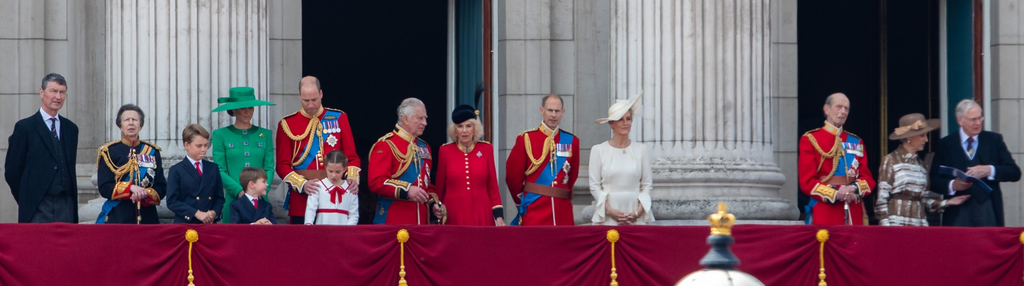
By Katie Chan – Own work, CC BY-SA 4.0, Link
Snapshot
Jeffrey Epstein did not enter Britain’s royal orbit through diplomacy or public service. He entered through private friendships, elite social events, royal residences, international travel, and his relationship with Prince Andrew and Ghislaine Maxwell.
The documentary record connects Epstein most directly to Andrew and Andrew’s former wife, Sarah Ferguson. It also shows Epstein attempting to use royal access as social currency.
Andrew continued communicating with Epstein after Epstein’s 2008 conviction. He stayed at Epstein’s Manhattan residence in December 2010 and was photographed walking with him in Central Park. Andrew later said that he stayed with Epstein to end the friendship in person.
Virginia Roberts Giuffre alleged that Epstein and Maxwell trafficked her to Andrew when she was seventeen. Andrew denied her allegations. Giuffre filed a civil lawsuit in 2021. The case ended in a settlement in 2022 without an admission of liability.
The royal consequences unfolded over several years. Andrew withdrew from public duties in 2019. His military affiliations and royal patronages were returned to Queen Elizabeth II in 2022. King Charles III began the formal removal of Andrew’s remaining styles, titles, and honours in October 2025.
In February 2026, Andrew Mountbatten Windsor was arrested on suspicion of misconduct in public office in connection with allegations concerning information shared with Epstein while Andrew served as a United Kingdom trade representative. He was released under investigation. An arrest is not a criminal conviction, and the investigation remains subject to the legal process.
The central issue is not that the entire Royal Family had a documented relationship with Epstein. The central issue is that Epstein gained extraordinary access through one senior royal, while Palace officials and the royal institution spent years managing the consequences.
How Epstein Entered the Royal Circle
Andrew reportedly met Epstein through Ghislaine Maxwell in 1999. Maxwell was already familiar with British elite society as the daughter of media proprietor Robert Maxwell.
Andrew, Maxwell, and Epstein socialized in London, New York, Florida, and the United States Virgin Islands. Epstein’s access to Andrew offered something that money alone could not provide: proximity to a senior member of the British Royal Family.
The association brought Epstein into environments connected with Windsor Castle, Sandringham, Buckingham Palace, and Andrew’s official trade activities.
This access should not be confused with an official relationship between Epstein and the monarchy. The evidence shows a personal relationship with Andrew and connections involving Sarah Ferguson. It does not establish that Queen Elizabeth II, King Charles III, or other members of the Royal Family participated in Epstein’s crimes.
Windsor Castle and Royal Prestige
Reports and photographs place Epstein and Maxwell at a royal gathering at Windsor Castle in 2000. The event reportedly involved a birthday celebration for Maxwell and coincided with celebrations associated with Queen Elizabeth II.
Their presence demonstrated that Andrew’s friendship could carry Epstein into settings normally closed to the public. For Epstein, photographs and stories involving royal properties enhanced his reputation among wealthy, political, academic, and business contacts.
A later released record states that Epstein had been invited to Windsor Castle in 2000 and subsequently travelled to Sandringham. The record supports reporting about Epstein’s entry into royal social settings. It does not establish that the Queen personally invited him or understood the nature of his conduct.
Evidence:
HOUSE_OVERSIGHT_009302 contains a summary referring to Epstein’s reported invitation to Windsor Castle and later travel to Sandringham. It helps document the reported royal access. It does not identify who approved each visit or prove that other royals knew about Epstein’s abuse.
Other emails show Epstein and his contacts discussing dinners and invitations connected with Windsor Castle. These communications demonstrate how royal settings were treated as valuable social opportunities.
EFTA01048339 contains an email in which Epstein discussed a possible Windsor Castle dinner invitation involving prominent business figures. It proves that Epstein was discussing access to such an event. It does not prove that he attended or that the invitation was authorized by the Royal Family.
EFTA02346760 describes a planned Windsor Castle dinner with international business figures. It documents the event being discussed within Epstein’s network. It does not establish Epstein’s attendance.
Prince Andrew and Epstein’s Private World
Andrew’s relationship with Epstein extended beyond brief appearances at public events.
Released records connect Andrew with Epstein’s residences, aircraft, telephone communications, and social arrangements. Andrew visited Epstein in New York and was associated with travel involving Epstein’s aircraft.
EFTA00559801 is an email concerning the adjustment of a flight so that Prince Andrew could be collected at John F. Kennedy International Airport. It documents travel coordination involving Andrew and Epstein’s network. It does not establish criminal conduct during the trip.
EFTA02415487 records that the Duke of York returned Epstein’s telephone call in October 2010. It confirms continued direct contact after Epstein’s conviction. It does not reveal the substance of the call.
EFTA01990003 contains a December 2010 email exchange between Andrew and Epstein concerning a telephone conversation. It shows that their communication continued during the period when Andrew later said he was ending the friendship.
Andrew also acknowledged visiting Little St. James, Epstein’s private island in the United States Virgin Islands. Presence on the island is relevant to the history of the relationship, but presence alone does not prove participation in Epstein’s crimes.
Virginia Giuffre’s Allegations
Virginia Giuffre alleged that Epstein and Maxwell trafficked her to Andrew when she was seventeen.
Giuffre described three encounters involving Andrew:
- An encounter at Maxwell’s London residence in 2001
- An encounter at Epstein’s Manhattan residence
- An encounter on Little St. James
A photograph shows Andrew with his arm around Giuffre’s waist while Maxwell stands behind them. Giuffre said it was taken at Maxwell’s London home on the night of the first alleged encounter.
Andrew denied that the encounters occurred. He also said that he had no recollection of meeting Giuffre and questioned whether the photograph was authentic. No conclusive public finding has established that the photograph was fabricated.
Released interview records contain detailed accounts concerning an introduction to Andrew and alleged sexual activity. These are investigative records of witness statements. They document what investigators were told, not an adjudicated finding of guilt.
EFTA00269896 records an account of a young woman being introduced to Prince Andrew in the presence of Epstein and Maxwell. It is evidence that the allegation was formally documented. It does not, by itself, prove the allegation beyond dispute.
EFTA00269967 contains further allegations about an encounter involving Andrew. It preserves the witness account within investigative files. It is not a criminal judgment or a finding by a jury.
Andrew has consistently denied Giuffre’s allegations.
Johanna Sjoberg’s Account
Britannia Johanna Sjoberg testified that she met Andrew at Epstein’s Manhattan townhouse.
Sjoberg described a photograph involving Andrew and a puppet created by the British television program Spitting Image. She testified that Andrew placed his hand on her breast while the photograph was being taken.
Her testimony became public through litigation connected with Giuffre and Maxwell. Andrew has denied wrongdoing.
EFTA00212332 contains reporting and testimony related material describing the Manhattan gathering and the Spitting Image puppet. It supports the existence of Sjoberg’s account. It does not constitute an adjudicated finding against Andrew.
EFTA01688916 contains another released record describing the puppet and the gathering. It corroborates that this episode appeared repeatedly in the documentary record. It does not independently prove every allegation about what occurred.
The 2008 Conviction Changed the Meaning of the Friendship
Epstein pleaded guilty in Florida in 2008 to offenses involving prostitution and a minor. He served a custodial sentence and was required to register as a sex offender.
After that conviction, continued association with Epstein could no longer be explained as ignorance of his public criminal record.
Andrew nevertheless maintained contact.
In December 2010, Andrew stayed at Epstein’s Manhattan townhouse. Photographers later captured Andrew and Epstein walking together in Central Park.
During his 2019 BBC Newsnight interview, Andrew said that he travelled to New York to end the relationship in person. He acknowledged that staying in Epstein’s house was the wrong decision but described the accommodation as convenient.
The released communications complicate the claim that the relationship ended cleanly.
“We Are in This Together”
One of the most consequential released documents is an email attributed to Andrew after press attention intensified around the famous photograph.
Andrew wrote to Epstein that he was concerned for him, stated that they appeared to be “in this together,” and said they would have to rise above the situation. The email also referred to keeping in close contact.
EFTA01798176 contains the email attributed to Andrew. It proves that Andrew sent Epstein a supportive message after public scrutiny had begun. It does not prove participation in Epstein’s trafficking crimes.
Duplicate copies of the same communication appear in the released collection, including EFTA01836403 and EFTA02038795. These copies corroborate the document’s presence across overlapping productions. They are not separate incidents and should not be counted as separate communications.
The email is important because it contradicts the impression of an immediate and complete break with Epstein.
Buckingham Palace and the Photograph
Released communications show that Palace press officials became involved when news organizations sought comment about the photograph of Andrew, Giuffre, and Maxwell.
EFTA02020640 contains communications involving Ed Perkins, who served as Deputy Press Secretary to the Queen and Head of News. The emails concern sending the photograph to Andrew for identification and preparing a response. They show Palace staff participating in press management. They do not establish that the Queen personally reviewed the evidence or directed the response.
EFTA02687581 contains another copy of communications about forwarding the photograph to Andrew. It corroborates the Palace response process but does not independently establish whether the photograph was authentic.
EFTA02017536 records internal discussion concerning what had been sent to a newspaper and whether Palace staff had seen the photograph. It documents institutional handling of the media inquiry. It does not prove involvement in suppressing evidence.
Buckingham Palace issued repeated denials of Giuffre’s allegations on Andrew’s behalf. Those statements reflected Andrew’s position. They were not judicial findings.
Sarah Ferguson and Epstein’s Money
Sarah Ferguson’s connection to Epstein became public after it emerged that Epstein had provided £15,000 toward a debt owed to her former assistant.
Ferguson publicly described accepting the money as a serious error of judgment. She said that she abhorred child sexual abuse and would have nothing more to do with Epstein.
However, later released communications showed that she subsequently apologized to Epstein. She described him in affectionate terms and said she had been advised to make her public statement.
EFTA01867763 contains an inquiry to Epstein about reports that he supplied £15,000 to address Ferguson’s debt. It documents contemporary scrutiny of the payment. It does not, standing alone, establish the complete financial arrangement.
EFTA01153067 preserves reporting about Ferguson’s public apology. It documents her public acknowledgement that accepting Epstein’s assistance was an error.
EFTA00769994 concerns accommodation arrangements for Sarah Ferguson in New York. It shows that Epstein’s network was involved in logistical planning around her travel. It does not prove that Ferguson knew about or participated in Epstein’s crimes.
EFTA01829855 contains an email in which Epstein claimed that Ferguson could arrange tea in apartments at Buckingham Palace or Windsor Castle. It shows Epstein presenting Ferguson as a possible source of royal access. It does not prove that such a visit occurred or that Palace officials approved it.
In 2025, additional emails reportedly showed Ferguson apologizing privately to Epstein shortly after publicly disavowing him. Her representative said the message followed threats from Epstein and was intended to calm him. Charities subsequently ended relationships with Ferguson.
In February 2026, Sarah’s Trust announced that it would close after further communications became public. ITV News documented the closure and the released emails.
Epstein’s Claims of Buckingham Palace Access
Epstein sometimes referred in emails to possible dinners or meetings at Buckingham Palace.
EFTA02023522 contains an email in which Epstein stated that he would be having dinner at Buckingham Palace and invited another person to join him. The email proves that Epstein made the statement. It does not establish that the dinner occurred, that the recipient attended, or that the Royal Household authorized the invitation.
This distinction is essential. Epstein frequently used the names of powerful people and prestigious institutions to increase his perceived importance. An email claiming royal access is evidence of the claim, not automatic proof of the event.
The Newsnight Interview
In November 2019, Andrew agreed to an interview with Emily Maitlis for BBC Newsnight.
The interview was intended to explain his relationship with Epstein and answer Giuffre’s allegations. Instead, it intensified the crisis.
Andrew said that he had no recollection of meeting Giuffre. He cited a visit to PizzaExpress in Woking as part of his account of the day in question. He also challenged Giuffre’s description of him sweating, saying that a medical condition at the time made sweating difficult.
He acknowledged staying at Epstein’s Manhattan home after Epstein’s conviction. He described that decision as convenient and said he had travelled there to end the friendship.
The interview was widely criticized for its emphasis on Andrew’s reputation and for what many viewers saw as insufficient concern for Epstein’s victims. ITV’s contemporary account preserves Andrew’s explanation for staying at Epstein’s residence.
Four days after the interview, Andrew announced that he was stepping back from public duties.
The United States Investigation
Federal prosecutors sought to interview Andrew concerning Epstein and his associates.
A released investigative memorandum lists subjects authorities wanted to discuss with him, including the history of his relationship with Epstein, travel, visits to Epstein’s properties, and his knowledge of other individuals in Epstein’s circle.
EFTA00022062 identifies topics investigators proposed covering in a voluntary interview with Andrew. It proves that federal authorities considered his information relevant to the investigation. It does not mean that Andrew was charged with an offense.
Duplicate versions include EFTA00099391 and EFTA00087994. These are overlapping copies, not separate investigative requests.
In June 2020, United States Attorney Geoffrey Berman stated that Andrew had not submitted to an interview and had repeatedly declined requests to schedule one. Andrew’s legal team disputed the government’s characterization of his cooperation.
The official statement from the United States Attorney’s Office provides the prosecution’s position in its own words.
Giuffre v. Prince Andrew
In August 2021, Virginia Giuffre sued Andrew in the United States District Court for the Southern District of New York.
The complaint accused Andrew of sexual assault and intentional infliction of emotional distress. Andrew denied the allegations and moved to dismiss the case.
In January 2022, Judge Lewis Kaplan rejected Andrew’s effort to dismiss the lawsuit. The decision did not determine whether Giuffre’s allegations were true. It allowed the case to proceed into evidence gathering and potential trial.
In February 2022, the parties reached a settlement. Andrew made no admission of liability. The settlement statement recognized Giuffre as an established victim of abuse and said Andrew regretted his association with Epstein. It also provided for a substantial donation to Giuffre’s charity.
A civil settlement is not a criminal conviction. It also does not erase the existence of the allegations, the litigation record, or Andrew’s public statement concerning Giuffre’s victimization.
The case docket is available through CourtListener’s Giuffre v. Prince Andrew record.
Queen Elizabeth II and the Institutional Response
Queen Elizabeth II was reported to have supported Andrew personally during the early stages of the scandal.
Documents and later reporting indicate that she regarded his continued association with Epstein as unwise. However, Andrew continued to appear at royal events and retained formal roles for a period after the relationship became a public crisis.
In January 2022, Buckingham Palace announced that Andrew’s military affiliations and royal patronages had been returned to the Queen. The Palace said that Andrew would defend the Giuffre lawsuit as a private citizen.
This represented a significant institutional separation, but it came more than a decade after Andrew’s 2010 stay at Epstein’s home and after years of public allegations.
King Charles III and the Removal of Royal Status
Andrew did not return to public royal duties after Queen Elizabeth II’s death.
On October 17, 2025, Andrew announced that he would stop using his title and honours because the continuing accusations were distracting from the work of the King and the Royal Family. He again denied the allegations.
The official statement by Andrew records that decision.
On October 30, 2025, Buckingham Palace announced that King Charles III had initiated the formal process to remove Andrew’s style, titles, and honours. The Palace stated that Andrew would be known as Andrew Mountbatten Windsor and would leave Royal Lodge.
The Buckingham Palace statement said that the measures were necessary despite Andrew’s continued denial of the allegations. It also expressed the King and Queen’s sympathy for victims and survivors of abuse.
This was the monarchy’s strongest formal action against Andrew.
The 2026 Arrest and Active Investigation
On February 19, 2026, police arrested Andrew Mountbatten Windsor on suspicion of misconduct in public office.
The investigation concerns allegations that, while serving as the United Kingdom’s special representative for international trade and investment, Andrew shared government or commercially sensitive information with Epstein.
Police searched addresses in Berkshire and Norfolk. Andrew was questioned and released under investigation.
The arrest does not establish guilt. At the time of this article, it remains an active police matter, and no criminal conviction should be inferred.
ITV News reported Andrew’s arrest, questioning, and release under investigation.
King Charles issued a statement saying that the law must take its course and that the Royal Family would support the proper investigative process. The King’s official statement marked a clear institutional acceptance that Andrew should be treated through the ordinary legal system.
The Wider Royal Family
The Epstein controversy affected the entire monarchy, but the evidence does not support treating every royal as an Epstein associate.
Queen Elizabeth II’s role was principally institutional and familial. She supported Andrew for a period but later accepted the return of his military affiliations and patronages.
King Charles III progressively removed Andrew from royal life and ultimately began the formal process of removing his remaining status.
Sarah Ferguson had her own financial and personal communications involving Epstein.
Princess Beatrice and Princess Eugenie have appeared in reporting about family events and Andrew’s account of his movements. There is no public evidence establishing that either participated in Epstein’s crimes.
Prince Edward stated in February 2026 that public attention should remain focused on Epstein’s victims. His comments were among the clearest public acknowledgements of survivors from a senior member of the Royal Family.
The documentary record therefore supports a narrow conclusion: Epstein’s principal royal relationship was with Andrew, with additional documented contact involving Ferguson. It does not establish collective Royal Family participation.
Why Royal Access Mattered to Epstein
Epstein collected prestigious associations because they increased his influence.
A friendship with a prince could provide:
- Entry into exclusive social settings
- Introductions to political and business leaders
- Photographs that conveyed respectability
- Access to royal residences and events
- Greater credibility with prospective clients and associates
- Protection through the appearance of institutional acceptance
This did not require the Royal Family to endorse Epstein formally. The appearance of royal access was valuable by itself.
The failure was therefore broader than one friendship. It involved the way prestige could be borrowed, displayed, and converted into influence long after Epstein’s conduct should have made continued association indefensible.
What the Evidence Establishes
The available evidence establishes that:
- Andrew maintained a significant personal relationship with Epstein.
- Andrew communicated with Epstein after Epstein’s 2008 conviction.
- Andrew stayed at Epstein’s Manhattan residence in 2010.
- Epstein gained access to royal social settings through his relationship with Andrew and Maxwell.
- Giuffre and Sjoberg made documented allegations involving Andrew.
- Andrew denied the allegations.
- Giuffre’s civil lawsuit ended in a settlement without an admission of liability.
- Federal investigators sought to interview Andrew.
- Palace employees managed media responses concerning Andrew and Giuffre’s photograph.
- Sarah Ferguson accepted financial assistance connected with Epstein and later apologized privately after publicly disavowing him.
- King Charles formally removed Andrew from royal status in 2025.
- Andrew was arrested and released under investigation in 2026 in a separate matter involving alleged misconduct in public office.
What the Evidence Does Not Establish
The evidence does not establish that:
- Every member of the Royal Family had a relationship with Epstein.
- Queen Elizabeth II or King Charles III participated in Epstein’s crimes.
- Attendance at a royal event proves knowledge of trafficking or abuse.
- Every claim made by Epstein about royal access was true.
- Every allegation in an investigative file has been adjudicated.
- Andrew’s civil settlement was a criminal conviction.
- Andrew’s 2026 arrest establishes guilt.
These limitations are essential to an accurate historical record.
Key Takeaways
- Epstein’s royal access came primarily through Andrew and Maxwell.
- The relationship continued after Epstein’s criminal conduct and sex offender status were publicly known.
- Virginia Giuffre’s allegations produced a major civil case but no trial verdict.
- Johanna Sjoberg’s testimony added another documented allegation involving Andrew.
- Palace officials participated in managing press inquiries and public denials.
- Sarah Ferguson’s financial and private communications created a separate connection between Epstein and the York household.
- Andrew’s Newsnight interview accelerated his removal from public royal life.
- Federal prosecutors publicly disputed Andrew’s claim that he was cooperating with their investigation.
- The monarchy’s response developed gradually, from public defense and damage control to withdrawal of duties, honours, titles, residence, and royal status.
- The available evidence concerns particular people and decisions. It does not justify accusing the entire Royal Family of Epstein’s crimes.
Related EpsteinWiki Articles
- Jeffrey Epstein
- Prince Andrew
- Sarah Ferguson
- Ghislaine Maxwell
- Virginia Roberts Giuffre
- Britannia Johanna Sjoberg
- Robert Maxwell
- Little St. James
- Epstein Flight Logs
- Office of the United States Attorney for the Southern District of New York
Primary Evidence Sources
- EFTA01798176 contains Andrew’s message stating that he and Epstein appeared to be in the situation together and should remain in contact.
- EFTA01990003 documents direct communication between Andrew and Epstein in December 2010.
- EFTA02415487 records Andrew returning Epstein’s telephone call in October 2010.
- EFTA00559801 documents travel coordination involving Andrew’s arrival in New York.
- EFTA00269896 preserves an investigative account concerning an alleged introduction to Andrew.
- EFTA00269967 contains further investigative allegations involving Andrew.
- EFTA00212332 contains material relating to Sjoberg, Andrew, and the Spitting Image puppet episode.
- EFTA02020640 documents Palace press handling of the photograph involving Andrew, Giuffre, and Maxwell.
- EFTA02687581 contains a corroborating copy of Palace communications about the photograph.
- EFTA02017536 records internal discussion about the response supplied to the press.
- EFTA00022062 identifies subjects federal investigators wanted to discuss with Andrew.
- EFTA01867763 documents contemporary questions about Epstein’s £15,000 payment connected with Ferguson’s debt.
- EFTA01153067 preserves reporting about Ferguson’s public apology.
- EFTA00769994 documents travel accommodation planning involving Ferguson.
- EFTA01829855 records Epstein’s claim that Ferguson could arrange access to royal apartments.
- EFTA02023522 contains Epstein’s claim that he was attending a dinner at Buckingham Palace.
- HOUSE_OVERSIGHT_009302 contains material about Epstein’s reported access to Windsor Castle and Sandringham.
External Sources
- Buckingham Palace statement removing Andrew’s styles, titles, and honours
- Andrew’s October 2025 statement concerning his title and honours
- United States Attorney statement concerning Andrew’s cooperation
- Giuffre v. Prince Andrew court docket
- BBC account of the Newsnight interview
- ITV account of Andrew’s explanation for staying with Epstein
- ITV report on Sarah Ferguson’s communications with Epstein
- ITV report on the closure of Sarah’s Trust
- ITV report on Andrew’s 2026 arrest and release
- King Charles III statement following Andrew’s arrest
- United States Department of Justice Epstein Library
- United States Department of Justice announcement concerning the 2026 document release