
Jeffrey Epstein’s Companies, Trusts, and Financial Infrastructure
Snapshot
- Full name: Jeffrey Edward Epstein
- Article type: EpsteinWiki financial investigation
- Primary subject: Companies, trusts, banking relationships, professional advisers, wealthy clients, properties, payments, and financial infrastructure
- Period covered: Approximately 1976 through 2026
- Principal financial clients: Leslie Wexner and Leon Black
- Principal administrators: Darren Indyke and Richard Kahn
- Major banking relationships: JPMorgan Chase and Deutsche Bank
- Important entities: J. Epstein and Company, Financial Trust Company, Southern Trust Company, Haze Trust, Gratitude America, Maple Incorporated, and the 1953 Trust
- Legal status: Epstein was never convicted of money laundering
- Investigative status: Significant financial questions remain unresolved
- Evidence base: Corporate records, banking records, suspicious activity records, estate documents, court filings, congressional investigations, government enforcement actions, emails, payment records, and Epstein Data files
- Article status: Living EpsteinWiki knowledge base article
- Last updated: July 30, 2026
Key Takeaways
- Epstein presented himself as a private financial adviser to billionaires, but his complete client list and the full origin of his wealth have never been publicly established.
- His known services included tax planning, estate planning, trust design, asset management, negotiation, introductions, problem solving, and advice involving sensitive family and financial matters.
- Leslie Wexner gave Epstein extraordinary access to his finances, properties, companies, and personal affairs through a broad power of attorney.
- Leon Black paid Epstein at least $158 million between 2012 and 2017. Senate investigators later identified approximately $170 million in payments from Black and entities associated with him.
- Epstein lacked formal credentials as a tax lawyer, certified public accountant, or licensed investment adviser for many of the sophisticated services he claimed to perform.
- Epstein used numerous companies, trusts, property entities, aircraft entities, charities, and bank accounts rather than operating through one transparent business.
- Darren Indyke and Richard Kahn occupied important administrative roles across Epstein’s companies, trusts, finances, properties, and estate.
- JPMorgan maintained Epstein as a client after employees raised concerns about his conduct and financial activity.
- Deutsche Bank accepted Epstein after JPMorgan ended its relationship with him. New York regulators later imposed a $150 million penalty for compliance failures that included the bank’s handling of Epstein.
- Cash withdrawals, payments to women, referral payments, property expenses, aircraft operations, legal costs, and staff salaries formed the financial infrastructure supporting Epstein’s trafficking system.
- Complex entities and suspicious transactions justify continued forensic investigation. They do not establish that every transaction was money laundering or that every professional associated with Epstein knew about his crimes.
- A complete public forensic accounting of Epstein’s fortune, companies, trusts, payments, and beneficiaries still does not exist.
Overview
Jeffrey Epstein built a financial operation that was unusually private, fragmented, and dependent on personal relationships. He did not operate like a conventional investment manager with a publicly identifiable fund, audited performance history, large professional staff, and clear list of products.
Instead, Epstein presented himself as a private adviser to extraordinarily wealthy people. His claimed services ranged from tax and estate planning to asset recovery, negotiation, confidential problem solving, trust design, introductions, and access to specialists.
This model gave Epstein access to information that ordinary financial advisers rarely possess. A person advising billionaires about taxes, trusts, inheritance, family disputes, litigation, debt, charitable giving, and reputation can learn where assets are held, which relationships are strained, which transactions might attract scrutiny, and which problems clients desperately want resolved.
That access may help explain why Epstein’s financial, social, and information networks became mutually reinforcing. It does not prove that every client relationship involved blackmail, criminal conduct, or knowledge of trafficking.
Evidence Standard
This article distinguishes among documented facts, government findings, survivor testimony, civil allegations, investigative leads, disputed claims, and unresolved questions.
A person’s appearance in an Epstein company record, bank document, email, calendar, photograph, flight record, address book, or payment record does not independently establish participation in Epstein’s crimes.
Professional work for Epstein also does not independently prove knowledge of trafficking or money laundering. Responsibility must be evaluated through dated records, specific transactions, communications, testimony, legal findings, and evidence of knowledge.
Epstein’s Claimed Profession
Epstein described himself as a financier and adviser to extremely wealthy people. However, the public record identifies only a small number of major clients.
His claimed work included:
- Tax planning
- Estate planning
- Trust design
- Investment advice
- Asset management
- Financial problem solving
- Negotiation
- Due diligence
- Asset recovery
- Charitable planning
- Introductions to bankers and lawyers
- Access to academics, scientists, politicians, and international contacts
- Advice involving reputation and family disputes
Epstein’s services frequently depended on discretion and personal access rather than a transparent financial product. This made him resemble a private financial fixer more than a conventional portfolio manager.
His unusual compensation, limited credentials, and lack of a complete public client list remain central investigative questions.
From Dalton to Wall Street
Epstein began teaching at the Dalton School in New York despite lacking a completed college degree. Dalton gave him access to wealthy families whose members worked in finance, law, business, culture, and politics.
Donald Barr was the departing Dalton headmaster during the period in which Epstein was hired. Public accounts frequently state that Barr hired Epstein, but the precise internal hiring decision should not be described more definitively without Dalton personnel records.
Dalton did not teach Epstein financial misconduct. It placed a young man without conventional credentials inside an unusually wealthy social environment.
Epstein later joined Bear Stearns, where he worked with options, wealthy clients, and special situations. The position provided technical knowledge, Wall Street credibility, and access to confidential financial relationships.
The record does not establish that Bear Stearns taught Epstein money laundering. It does show that the firm gave him experience with complex transactions, risk, wealthy customers, and financial secrecy.
Intercontinental Assets Group
After leaving Bear Stearns, Epstein established Intercontinental Assets Group.
The business reportedly presented itself as helping clients recover money lost through fraud or misconduct. This placed Epstein in the role of investigator, negotiator, asset recovery specialist, and confidential intermediary.
Intercontinental Assets Group remains poorly documented. Its importance lies in the business model Epstein was developing. He was no longer merely selling investments. He was selling secrecy, investigation, recovery, negotiation, and access.
A complete history of the company’s clients, transactions, revenue, employees, and bank accounts has not been publicly released.
Towers Financial and Steven Hoffenberg
Epstein later worked with Steven Hoffenberg at Towers Financial. Towers Financial collapsed in what federal prosecutors described as a massive Ponzi scheme.
Hoffenberg pleaded guilty to federal charges and received a lengthy prison sentence. Epstein was not charged in the Towers Financial prosecution.
Hoffenberg later claimed that Epstein had been deeply involved in the company’s financial activity. Those statements are relevant investigative testimony, but they do not constitute an adjudicated finding that Epstein participated in the Ponzi scheme.
Important unresolved questions include:
- What work Epstein performed for Towers Financial
- Which transactions he reviewed or arranged
- Whether he received compensation from the company
- Which clients and financial professionals he met through Hoffenberg
- Whether the relationship contributed to Epstein’s later wealth
- Why Epstein was not charged
J. Epstein and Company
Epstein established J. Epstein and Company as a private financial advisory business.
The company was described as serving clients with assets exceeding $1 billion. That claim created an image of extreme exclusivity, although the complete client list has never been made public.
J. Epstein and Company reportedly offered financial management, estate planning, tax advice, investment analysis, and confidential problem solving.
The firm’s structure raises several questions:
- How many clients it actually served
- How much money it managed
- Whether client assets were held directly or through outside institutions
- Which professionals performed the technical work
- How Epstein was compensated
- Whether written engagement agreements existed
- Whether the business underwent regulatory audits
- Whether Epstein held all licenses required for the services he offered
Epstein’s compensation appears to have depended heavily on a very small number of wealthy relationships.
Financial Trust Company
Financial Trust Company became an important part of Epstein’s financial operation in the United States Virgin Islands.
The company’s name reinforced Epstein’s image as a sophisticated financial adviser. Its location also placed Epstein within the Virgin Islands tax and corporate system.
Financial Trust Company reportedly conducted financial advisory, investment, and related business. However, the full extent of its work, customers, transactions, and revenue has not been publicly reconstructed.
Investigators should distinguish between the company’s legal corporate existence and the actual services performed through it.
Leslie Wexner
The relationship with Leslie Wexner transformed Epstein’s public status and apparent wealth.
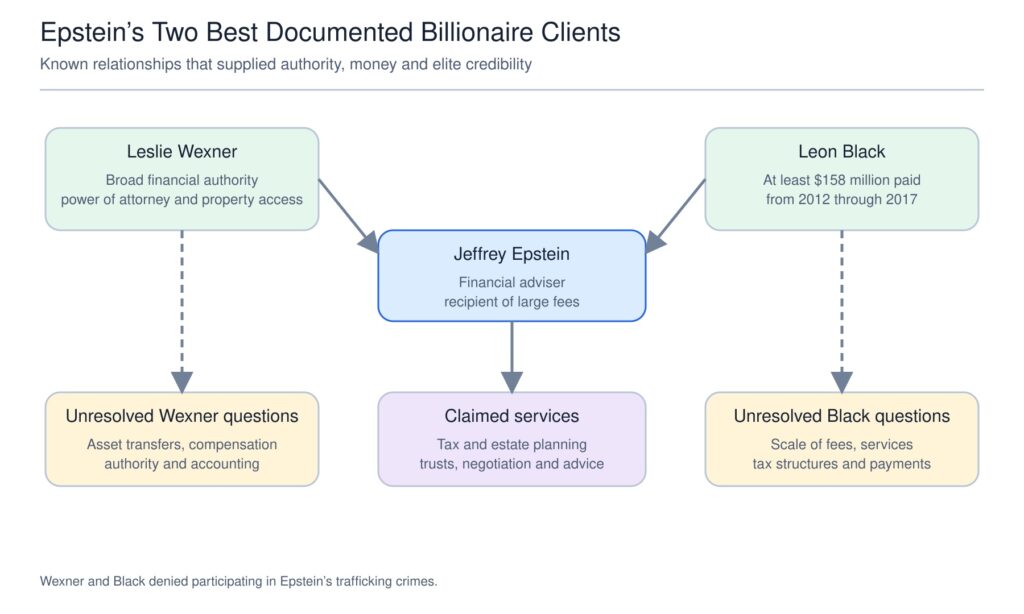
Wexner founded the retail empire that included The Limited and Victoria’s Secret. Epstein became one of his closest financial advisers and obtained unusually broad authority over Wexner’s financial and personal affairs.
Wexner granted Epstein power of attorney. That authority reportedly permitted Epstein to conduct transactions, sign documents, acquire property, borrow money, and act in Wexner’s name.
The relationship connected Epstein to:
- Valuable real estate
- Corporate executives
- Wealth managers
- Lawyers and accountants
- Philanthropic institutions
- Elite social networks
- The fashion and modeling industries
- International financial relationships
The Manhattan townhouse at 9 East 71st Street became one of the most visible assets associated with the relationship. The property had previously been connected to Wexner and later became Epstein’s primary New York residence, business location, and a documented site of abuse.
Wexner has said that Epstein misappropriated substantial sums from him. He has denied knowing about or participating in Epstein’s criminal conduct.
The central unresolved questions include:
- Why Wexner granted Epstein such extensive authority
- How Epstein earned Wexner’s trust
- How much money Epstein received through the relationship
- Which assets Epstein purchased or controlled
- Whether every asset transfer was properly documented
- Which transactions Wexner later considered unauthorized
- What Wexner’s lawyers and accountants knew
- When Wexner and his advisers became aware of allegations involving Epstein
- Whether Epstein used the relationship to attract other clients
Wexner’s claim that Epstein misappropriated money requires a complete transaction level accounting. The public has not received such an accounting.
Leon Black
Leon Black became Epstein’s largest publicly documented financial client after Epstein’s 2008 conviction.
An investigation commissioned by Apollo Global Management and conducted by Dechert found that Black paid Epstein $158 million between 2012 and 2017. The services were described primarily as tax and estate planning.
The Senate Finance Committee investigation found that Epstein played a role in transactions involving Black’s trusts and estate.
Senate investigators later identified approximately $170 million in payments from Black and entities associated with him. Investigators questioned why Black paid Epstein far more than his credentialed tax, legal, and financial advisers.
The Senate investigation reported:
- Epstein was not a licensed tax attorney
- Epstein was not a certified public accountant
- Some of Epstein’s advice required review by Black’s other advisers
- Some of Epstein’s claimed ideas originated with other professionals
- Approximately $100 million was paid without a conventional written services agreement
- Epstein received $20 million in connection with a trust transaction that reportedly produced substantial potential tax savings
- Black’s payments became a major source of Epstein’s income after his Florida conviction
In March 2026, the Senate Finance Committee released additional allegations involving payments, charitable structures, women, tax treatment, and surveillance. These were investigative findings and allegations, not criminal convictions.
Black has denied participating in Epstein’s trafficking crimes. He has not been criminally convicted of participating in Epstein’s trafficking operation.
Relevant Epstein Data records include:
- Survivor journal EFTA02731420
- Survivor evidence compilation EFTA00073205
- EFTA00087968
- EFTA00096366
- EFTA01246236
- EFTA02731576
- EFTA00156644
Financial Advice as Access to Private Information
A private adviser involved in taxes, inheritance, trusts, divorce, litigation, debt, reputation, and family disputes receives extraordinarily sensitive information.
Epstein could potentially learn:
- Where assets were located
- Which trusts controlled family wealth
- Which relatives were in conflict
- Which transactions created legal risk
- Which professionals controlled access to the client
- Which charitable structures reduced taxes
- Which relationships a client wanted concealed
- Which legal or reputational problems frightened the client
- Which introductions or favors the client needed
This information had value independent of ordinary investment performance.
The public record documents Epstein’s access to sensitive personal and financial information. It does not establish that every financial relationship involved blackmail.
A comprehensive financial blackmail operation remains an unresolved hypothesis unless supported by transaction records, communications, witness testimony, or evidence of explicit coercion.
Epstein’s Companies, Trusts, and Financial Entities
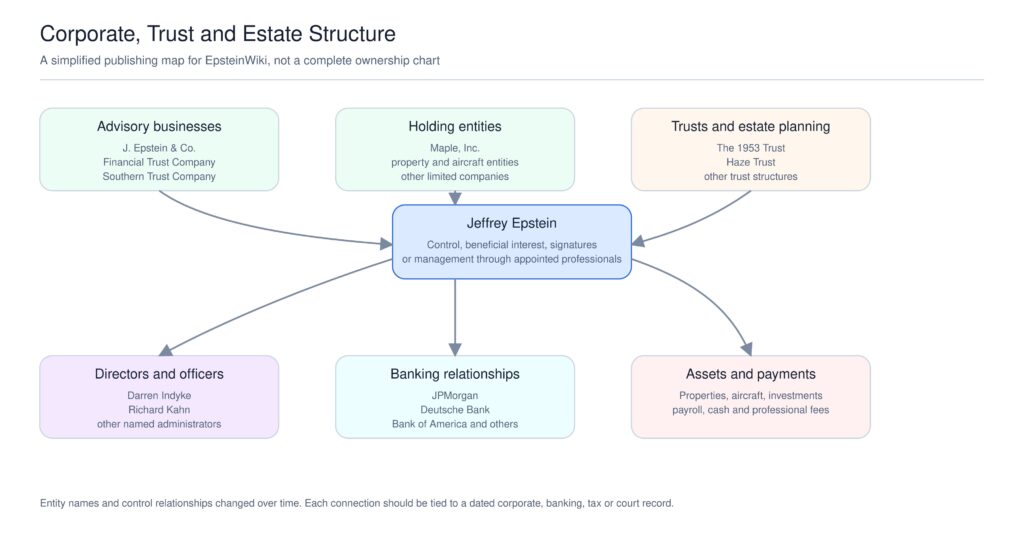
Epstein used numerous companies, trusts, charities, property entities, and aircraft entities.
Important names include:
- J. Epstein and Company
- Financial Trust Company
- Southern Trust Company
- Haze Trust
- The 1953 Trust
- Gratitude America
- Plan D
- NES LLC
- Maple Incorporated
- Hyperion Air
- JEGE entities
- Property holding companies
- Aircraft holding companies
These structures could perform lawful functions. Companies and trusts may own property, hold aircraft, employ staff, manage investments, receive fees, conduct charitable activity, and support estate planning.
The large number of entities also fragmented Epstein’s financial activity. This made it more difficult for outsiders to understand the complete source and movement of his money.
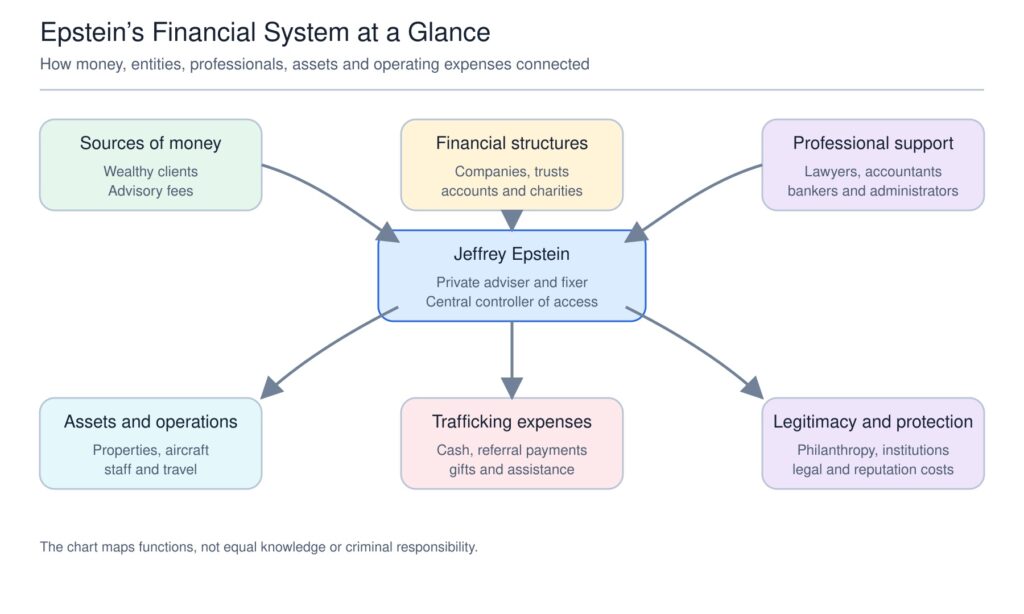
Figure 1. Epstein’s financial and professional infrastructure
This graphic connects Epstein to wealthy clients, advisory businesses, companies, trusts, banks, professional advisers, properties, transportation, cash payments, staff expenses, philanthropy, legal costs, and reputation management.
Southern Trust Company
Southern Trust Company became one of Epstein’s most valuable Virgin Islands entities.
Epstein reportedly described the company as conducting data analysis and other sophisticated business activity. The company received valuable tax benefits through the Virgin Islands Economic Development Commission program.
Questions remain about:
- The company’s actual products
- Its customers
- Its employees
- Its intellectual property
- The origin of its revenue
- The basis for its reported value
- Whether its tax benefits matched its actual Virgin Islands operations
- How its funds were used
An estate inventory identified Southern Trust as a major Epstein asset.
The existence and value of Southern Trust are documented. The complete economic substance of its business remains inadequately explained in the public record.
Haze Trust
Released documents identify Haze Trust transactions, reviews, alerts, and inquiries.
Relevant records include:
- Haze Trust alert record EFTA01369019
- Haze Trust urgent inquiry EFTA01386360
- Haze Trust transaction exhibit EFTA00080250
- Haze Trust high risk customer record EFTA00168946
- Consolidated entity and balance record EFTA01381149
These records justify a detailed reconstruction of the trust’s creators, trustees, beneficiaries, accounts, counterparties, transactions, and purpose.
They do not independently prove that every Haze Trust transaction involved money laundering.
Gratitude America
Gratitude America was presented as a charitable organization associated with Epstein.
Charitable entities can create social legitimacy, provide tax benefits, support relationships with institutions, and connect donors to universities, scientists, political figures, and nonprofit leaders.
Investigators must examine:
- The origin of every donation
- The recipient of every grant
- Whether donations served a genuine charitable purpose
- Whether the charity paid personal or business expenses
- Whether donations created tax benefits
- Whether charitable payments were used to conceal the purpose of transfers
- Whether donors or recipients understood Epstein’s criminal history
In March 2026, Senate investigators alleged that a payment involving Leon Black had been routed through a charitable structure in a manner intended to reduce disclosure and maximize tax deductions. That allegation requires examination through the underlying emails, tax filings, bank records, and legal documents.
Maple Incorporated and Property Entities
Maple Incorporated appears in records involving Epstein’s Manhattan townhouse.
Property holding companies can separate valuable real estate from an individual’s personal name. They may simplify transfers, protect privacy, manage liabilities, or support estate planning.
Epstein also used entities connected to other residences, aircraft, and assets.
Every property entity should be reconstructed through:
- Formation records
- Directors and officers
- Beneficial ownership
- Deeds
- Mortgages
- Tax records
- Insurance records
- Construction payments
- Property management expenses
- Transfers between related entities
The purpose is not to assume criminality. It is to establish who owned, controlled, financed, maintained, and benefited from each asset.
The 1953 Trust and Epstein’s Estate
Shortly before his death in August 2019, Epstein signed a will that transferred his assets into a trust known as the 1953 Trust.
The trust was named for Epstein’s birth year.
The timing immediately raised questions about:
- Intended beneficiaries
- Asset protection
- Privacy
- Estate administration
- Survivor claims
- The location of assets
- Whether all assets were disclosed
- Whether trust structures complicated recovery by survivors
Darren Indyke and Richard Kahn became coexecutors of Epstein’s estate.
The estate later established the Epstein Victims’ Compensation Program. The program provided compensation to eligible survivors without requiring each claimant to pursue conventional litigation.
The program offered an important route to compensation, but it did not answer every question about the origin of Epstein’s wealth, the conduct of his advisers, or the complete list of beneficiaries.
Darren Indyke
Darren Indyke served as Epstein’s longtime lawyer.
Records connect Indyke to:
- Companies
- Trusts
- Property matters
- Estate planning
- Corporate documents
- Administrative decisions
- Legal agreements
- Payments
- Epstein’s final will
- The administration of Epstein’s estate
Indyke’s significance lies in his duration and proximity to Epstein’s financial structure.
Legal representation alone does not establish knowing participation in trafficking or money laundering. The relevant questions concern specific transactions, communications, knowledge, warnings, decisions, and actions.
Investigators should identify:
- Every Epstein entity in which Indyke served as an officer or director
- Every trust in which he served as trustee or adviser
- Every account over which he held authority
- Every property transaction he reviewed
- Every payment he approved
- Every warning or allegation he received
- Every document he prepared concerning Epstein’s estate
Richard Kahn
Richard Kahn served as Epstein’s accountant and financial manager.
Records connect Kahn to:
- Payments
- Bank accounts
- Companies
- Trusts
- Property expenses
- Tax matters
- Charitable activity
- Employee expenses
- Epstein’s estate
Kahn later became a coexecutor of the estate with Indyke.
Accountants and financial managers can possess detailed knowledge of revenue, expenses, taxes, ownership structures, cash withdrawals, payments, and internal transfers.
The central questions are not answered merely by identifying Kahn as Epstein’s accountant. Investigators must determine what records he reviewed, what transactions he authorized, what concerns he observed, and what explanations he received.
Harry Beller
Harry Beller appears within Epstein’s financial and professional network.
His role requires additional document based investigation. Current evidence does not support assigning Beller a criminal role without transaction specific proof.
A responsible inquiry should identify:
- Engagement letters
- Accounting records
- Tax work
- Entity records
- Payment authorizations
- Communications with Epstein
- Communications with Indyke or Kahn
- Accounts or transactions Beller reviewed
- Work performed during significant financial periods
- Any warnings, questions, or compliance concerns
Beller should be treated as a research subject rather than presumed to be a participant in criminal conduct.
Epstein’s Banking Relationships
Epstein’s operation required access to established financial institutions.
Banks enabled him to:
- Receive large payments from wealthy clients
- Transfer funds internationally
- Withdraw large amounts of cash
- Pay employees
- Pay women and recruiters
- Maintain properties
- Operate aircraft
- Pay tuition and rent
- Fund travel
- Pay lawyers and settlements
- Move money among companies and trusts
- Maintain the appearance of financial legitimacy
The banking record is therefore central to understanding both Epstein’s wealth and the infrastructure supporting his trafficking operation.
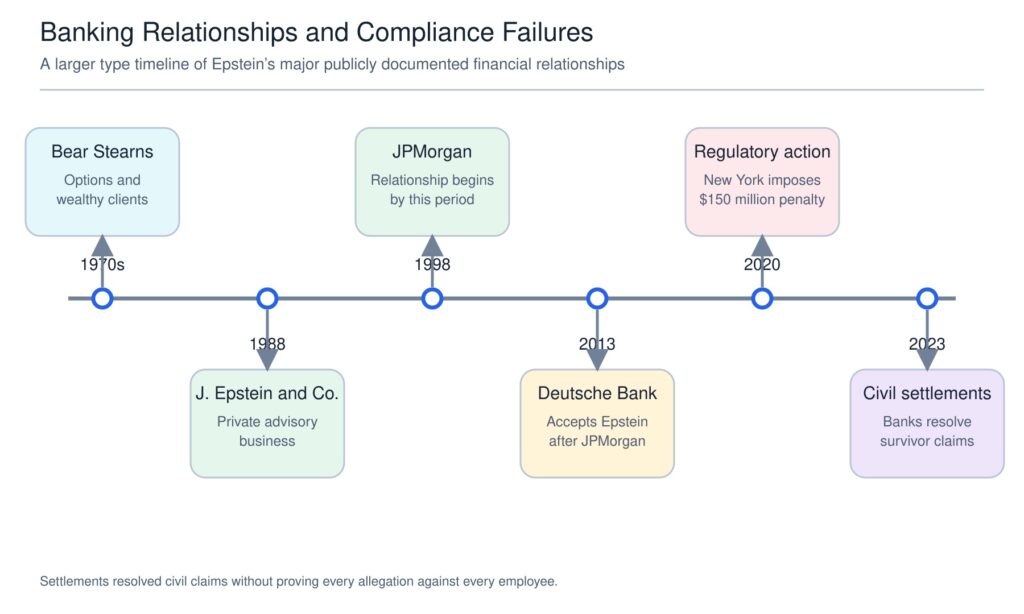
Figure 2. Epstein’s principal banking and financial timeline
This timeline follows Epstein’s progression from Bear Stearns to J. Epstein and Company, JPMorgan, Deutsche Bank, later account closures, regulatory action, and survivor related civil settlements.
JPMorgan
JPMorgan maintained Epstein as a client for years after employees raised concerns about his conduct, reputation, cash activity, and relationships.
Civil litigation alleged that Jes Staley helped preserve the relationship and maintained extensive personal contact with Epstein.
JPMorgan later entered settlements with survivors and the United States Virgin Islands. Settlements resolved civil claims without establishing every allegation as an adjudicated fact.
The banking activity included:
- Large client payments
- International wires
- Accounts connected to multiple entities
- Frequent cash withdrawals
- Payments to women
- Property and aircraft expenses
- Legal and settlement payments
- Transfers involving associates
Relevant Epstein Data records include:
- JPMorgan suspicious activity record EFTA00090637
- FBI interview concerning a possible suspicious activity report EFTA00128968
The central compliance question is why a bank continued providing extensive services to a convicted sex offender whose known conduct involved paying girls and young women in cash.
Deutsche Bank
After JPMorgan ended its relationship with Epstein, Deutsche Bank accepted him as a client.
In 2020, the New York Department of Financial Services imposed a $150 million penalty on Deutsche Bank for compliance failures involving Epstein and other matters.
Regulators identified problems involving:
- Payments to women
- Cash withdrawals
- Settlement expenses
- Legal payments
- Tuition payments
- Hotel expenses
- Rent payments
- Payments involving Russian models
- Inadequate monitoring
- Failure to respond appropriately to Epstein’s criminal history
Deutsche Bank later entered a civil settlement with survivors. The settlement did not establish that every employee knew about Epstein’s criminal conduct.
The case demonstrates how financial institutions can continue servicing a high risk customer even after serious public warning signs.
Bank of America and Payments From Leon Black
Senate investigators examined the handling of large transfers from Leon Black to Epstein.
The Senate Finance Committee later connected Bank of America’s settlement with survivors to questions involving payments from Black to Epstein.
The relevant issues include:
- The size of the payments
- The timing of bank reports
- Whether the transfers matched documented services
- Whether compliance personnel understood Epstein’s criminal history
- Whether payment descriptions were accurate
- Whether related transactions should have received additional review
Banking failures should be assessed through internal alerts, suspicious activity reports, customer reviews, communications, and regulatory findings.
Cash as Trafficking Infrastructure
Cash was central to Epstein’s recruitment system.
Survivor accounts and investigative records describe payments following sexualized massages and additional payments for recruiting other girls or young women.
Cash served several operational functions:
- Immediate payment
- Referral incentives
- Reduced visibility on ordinary account statements
- Easier distribution through employees
- Less formal documentation
- Increased dependency among financially vulnerable victims
Repeated large cash withdrawals by a registered sex offender whose known conduct involved paying girls for sexualized massages should have generated heightened scrutiny.
Cash activity does not automatically prove trafficking. In Epstein’s case, the known method of recruitment gave large cash withdrawals a particularly serious risk profile.
How the Financial System Supported Trafficking
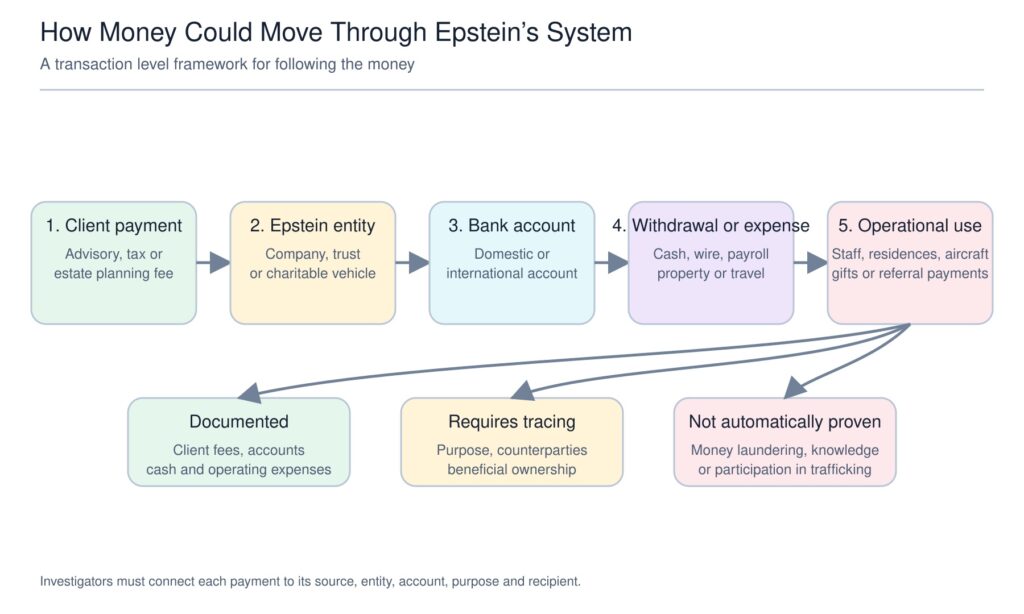
Epstein’s financial operation and trafficking system were not separate worlds.
Money funded:
- Victim payments
- Referral payments
- Employee salaries
- Household operations
- Modeling related activity
- Travel
- Aircraft
- Drivers
- Property maintenance
- Gifts
- Tuition
- Rent
- Educational assistance
- Lawyers
- Settlements
- Private investigators
- Reputation management
- Philanthropic relationships
Properties provided private locations. Aircraft moved Epstein, employees, visitors, and young women. Staff managed appointments and travel. Cash rewarded recruitment. Wealth created credibility. Donations opened institutional doors.
The fact that Epstein used money to support trafficking does not establish that every source of money knew how the funds would be used.
The central investigative task is tracing money from its source through the entity, account, withdrawal, employee, property, or recipient that used it.
Operation Chain Reaction
A released memorandum associated with Operation Chain Reaction described allegedly illegitimate wires connected to drug and prostitution activity. The document also referenced fourteen additional redacted investigative targets.
The memorandum is important because it establishes the existence of a broader investigative lead involving suspicious financial activity.
It does not establish that Epstein was convicted of money laundering. It also does not establish that every redacted person or entity participated in Epstein’s trafficking operation.
In February 2026, the Senate Finance Committee publicly questioned the Drug Enforcement Administration about what it described as a previously unexplained Epstein related investigation.
Further disclosure is necessary to determine:
- The identity of the investigative targets
- The accounts and institutions involved
- The purpose of the wires
- Whether the inquiry produced subpoenas
- Whether suspicious activity reports were reviewed
- Whether the inquiry connected to trafficking proceeds
- Why the investigation did not result in publicly identified charges
Current Money Laundering Assessment
Epstein was not federally convicted of money laundering.
The responsible conclusion is that the public evidence supports continued investigation rather than a categorical declaration that every unexplained transaction was laundering.
The record establishes:
- Epstein used a complex network of entities and trusts
- His businesses lacked ordinary transparency
- He received extraordinarily large payments from a small number of wealthy people
- Financial institutions identified serious risk indicators
- Banks failed to respond adequately to some suspicious activity
- Epstein withdrew substantial amounts of cash
- Payments to women and associates require transaction level analysis
- Client payments financed the environment in which trafficking occurred
- Some transactions remain unexplained or inadequately explained
- A complete public forensic accounting has never been released
To establish money laundering, investigators would need evidence showing that a transaction involved proceeds of unlawful activity and was conducted with the required criminal knowledge or purpose.
Complexity, secrecy, or an unusual payment may be suspicious without satisfying every element of a money laundering offense.
Professional Legitimacy
Epstein’s relationships with respected institutions made his financial operation appear legitimate.
He cultivated relationships with:
- Universities
- Scientists
- Attorneys
- Accountants
- Banks
- Philanthropic organizations
- Political figures
- Wealthy families
- Business executives
- International officials
- Cultural institutions
These relationships could provide access, introductions, reputation repair, and the appearance of professional credibility.
Institutional association does not establish knowledge of Epstein’s crimes. However, institutions must be evaluated according to when they learned about his criminal history, what warnings they received, what money they accepted, and whether they continued the relationship.
Unanswered Questions
The most important unresolved financial questions include:
- What was the complete origin of Epstein’s fortune?
- Who were all of Epstein’s clients?
- What services did he actually perform?
- Why were some payments far larger than those made to credentialed advisers?
- Which companies conducted genuine business operations?
- Who beneficially owned each company, trust, property, aircraft, and account?
- Which professionals prepared Epstein’s tax and trust structures?
- Which entities received client payments?
- How were funds moved among related companies?
- What happened to cash after it was withdrawn?
- Which payments supported recruitment or abuse?
- Which banks filed suspicious activity reports?
- Why were some reports delayed?
- What information did Indyke and Kahn possess?
- Who were the intended beneficiaries of the 1953 Trust?
- Did Epstein hold assets for other people?
- Did other people hold assets for Epstein?
- Did Epstein receive compensation for introductions, leverage, secrecy, or services that were not described in conventional agreements?
- Did any financial institution identify possible trafficking before ending its relationship with Epstein?
- What did Operation Chain Reaction uncover?
- Why has a complete forensic accounting not been released?
Documents Needed for a Complete Forensic Accounting
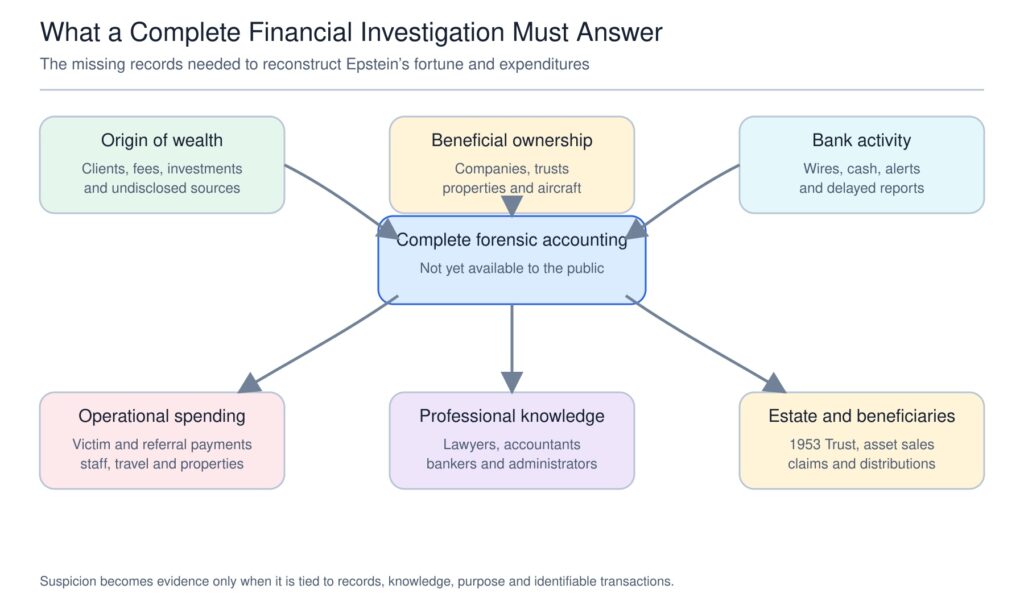
A complete investigation would require:
- Bank statements
- Wire transfer records
- Suspicious activity reports
- Cash withdrawal records
- Deposit records
- Credit card statements
- Tax returns
- Trust agreements
- Corporate formation records
- Beneficial ownership records
- General ledgers
- Engagement agreements
- Invoices
- Payment authorizations
- Payroll records
- Property records
- Aircraft records
- Charitable filings
- Estate records
- Communications among Epstein, Indyke, Kahn, bankers, lawyers, accountants, and clients
- Records identifying the purpose of payments to women and associates
- Records from foreign banks and offshore jurisdictions
Principal Epstein Data Evidence
Financial and Entity Records
- Operation Chain Reaction memorandum EFTA00173953
- Haze Trust alert record EFTA01369019
- Haze Trust urgent inquiry EFTA01386360
- Haze Trust transaction exhibit EFTA00080250
- Haze Trust high risk customer record EFTA00168946
- Consolidated entity and balance record EFTA01381149
- Epstein estate inventory EFTA00076491
- JPMorgan suspicious activity record EFTA00090637
- FBI suspicious activity interview EFTA00128968
Leon Black Records
- Survivor journal EFTA02731420
- Survivor evidence compilation EFTA00073205
- EFTA00087968
- EFTA00096366
- EFTA01246236
- EFTA02731576
- EFTA00156644
Related EpsteinWiki Articles
- Jeffrey Epstein
- Leslie Wexner
- Leon Black
- Jes Staley
- Darren Indyke
- Richard Kahn
- Harry Beller
- Southern Trust Company
- JPMorgan and Jeffrey Epstein
- Deutsche Bank and Jeffrey Epstein
- 9 East 71st Street
- The 2007 Nonprosecution Agreement
Source List
- Senate Finance Committee investigation into Leon Black and Jeffrey Epstein
- Senate findings concerning the financing of Epstein’s operations
- Senate questions concerning Black payments and surveillance allegations
- Senate inquiry concerning the DEA investigation
- Senate statement concerning Bank of America
- New York Department of Financial Services action against Deutsche Bank
- House Oversight subpoenas for JPMorgan and Deutsche Bank records
- House Oversight release of Epstein estate documents
- Department of Justice charges against Jeffrey Epstein
- Epstein Data document archive