
Mortimer Zuckerman
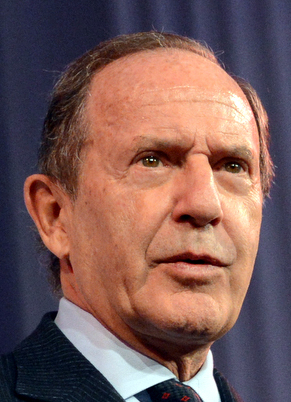
By Metropolitan Transportation Authority of the State of New York – 012913hometown25, CC BY 2.0, Link
Snapshot
Mortimer Benjamin “Mort” Zuckerman is a Canadian-born American real estate developer, media proprietor, and philanthropist. He cofounded Boston Properties in 1970 and built the company into one of the largest publicly traded office real estate businesses in the United States. He also owned or controlled major publications, including U.S. News & World Report, the New York Daily News, The Atlantic, and Fast Company.
Zuckerman had a documented personal, social, business, and proposed financial-advisory relationship with Jeffrey Epstein. The public record places them together by the late 1990s and shows continuing contact after Epstein’s 2008 conviction. Zuckerman appears in flight records, Epstein’s contact book, the 2003 birthday album assembled for Epstein, business reporting about the magazine Radar, calendars, emails, and draft Southern Trust engagement agreements.
The most significant records concern Epstein’s attempt to take a major role in Zuckerman’s estate planning. Draft agreements from 2013 proposed fees of $30 million and later $21 million. The available correspondence shows that Zuckerman shared extensive financial information and valued some of Epstein’s advice, but it also records Zuckerman rejecting the proposed structure. The evidence reviewed for this article does not establish that the agreement was signed, implemented, or paid.
Separate 2009 emails show Epstein using his access to Zuckerman while trying to influence a New York Daily News article about allegations against Epstein and Ghislaine Maxwell. The paper delayed the article, and the published version did not name Maxwell. Former Daily News journalist George Rush later said Zuckerman did not ask him to kill the story or make it favorable to Epstein. Rush said he was advised to remove Maxwell because of legal concerns.
No survivor identified in the sources reviewed for this article has accused Zuckerman of sexual abuse, trafficking, recruitment, or participation in Epstein’s crimes. Zuckerman has not been criminally charged or convicted in connection with Epstein. His documented relationship remains important because it continued after Epstein’s conviction and gave Epstein access to a billionaire’s finances, social network, and media ownership.
Key Takeaways
- Zuckerman and Epstein had a documented relationship spanning at least the late 1990s through 2016.
- Flight-log research identifies Zuckerman on four Epstein aircraft flights between New Jersey and Palm Beach in 1997 and 1998.
- Zuckerman contributed a personal message to Epstein’s 2003 birthday album.
- Zuckerman and Epstein jointly backed the 2004 relaunch of Radar magazine.
- Their contact continued after Epstein pleaded guilty in Florida in 2008 and became a registered sex offender.
- In October 2009, Epstein asked Zuckerman for help shaping New York Daily News coverage of civil allegations involving Epstein and Maxwell. The resulting article was delayed and did not name Maxwell.
- Zuckerman invited Epstein to a political fundraiser in 2012, according to released correspondence reported by The Independent.
- In 2013, Epstein pursued a large estate-planning engagement through Southern Trust Company. Drafts proposed fees of $30 million and later $21 million.
- Zuckerman sent Epstein extensive personal financial material and praised Epstein’s questions, but later wrote that he was not comfortable with the proposed structure.
- The released record does not establish a signed final agreement or a payment from Zuckerman to Southern Trust under the proposed engagement.
- Calendars and emails document dinners, breakfasts, appointments, and direct communication into 2015 and 2016.
- No reviewed source accuses Zuckerman of participating in Epstein’s sexual abuse or trafficking operation.
Identity and Public Career
Zuckerman was born in Montreal, Quebec, on June 4, 1937. He studied at McGill University, the Wharton School of the University of Pennsylvania, and Harvard Law School. He became a United States citizen in 1977.
He cofounded Boston Properties with Edward Linde in 1970. The company became a major owner and developer of office property in Boston, New York, Washington, San Francisco, and other large markets. BXP’s official biography identifies Zuckerman as cofounder and chairman emeritus. It states that he served as board chairman from the company’s 1997 public offering through May 2016, as executive chairman from 2013 through 2014, and as chief executive officer from 2010 through 2013.
Zuckerman also became one of the best-known media owners in the United States. His holdings included:
- U.S. News & World Report
- The New York Daily News
- The Atlantic
- Fast Company
His control of both real estate and media institutions gave him significant economic and public influence. That context matters when examining Epstein’s access to him. Epstein was not merely corresponding with a casual acquaintance. He was cultivating a person with a large personal estate, major corporate holdings, political relationships, charitable ties, and the power to affect news coverage.
Evidence Standard
This article separates verified records from interpretation.
A flight manifest establishes that a name was entered as a passenger. It does not establish the purpose of the trip or misconduct during the journey.
A contact-book entry establishes that Epstein’s circle retained contact information. It is not a list of criminal participants or clients.
A calendar entry establishes that an appointment or event was scheduled. It does not always prove that the event occurred.
An email establishes what the sender wrote. It does not automatically prove that every assertion in the message was true.
A draft contract establishes negotiation or preparation. An unsigned draft does not establish execution, performance, or payment.
This distinction is especially important in the Zuckerman record because some reporting described him as an Epstein financial client, while later reporting and the correspondence itself indicate that the proposed 2013 engagement was not completed.
Documented Relationship With Jeffrey Epstein
Flights in 1997 and 1998
Published flight-log research identifies Zuckerman on four flights aboard Epstein aircraft:
- June 28, 1997: Teterboro Airport to Palm Beach International Airport aboard N908JE. Listed passengers included Epstein, Ghislaine Maxwell, Lesley Groff, and Zuckerman.
- July 5, 1997: Palm Beach International Airport to Teterboro Airport aboard N212JE. Listed passengers were Epstein and Zuckerman.
- June 10, 1998: Teterboro Airport to Palm Beach International Airport aboard N908JE. Listed passengers included Epstein, Maxwell, Sarah Kellen, and Zuckerman.
- June 28, 1998: Palm Beach International Airport to Teterboro Airport aboard N908JE. Listed passengers included Epstein, Maxwell, Kellen, and Zuckerman.
The July 5, 1997 flight record identifies Epstein and Zuckerman on the Palm Beach to Teterboro trip. The broader Mort Zuckerman flight profile lists all four entries.
These flights document travel in Epstein’s company years before his Florida conviction. They do not establish why Zuckerman traveled, where he stayed, or whether he observed criminal activity.
Contact Records
Zuckerman appears in Epstein contact records under his name and Boston Properties. Publicly indexed versions list professional contact information and multiple telephone numbers.
Contact-book evidence supports the conclusion that Epstein’s circle could reach Zuckerman through several channels. It does not prove the frequency of communication, the subject of calls, or participation in a crime.
The 2003 Birthday Album
Zuckerman contributed a message to the album assembled for Epstein’s fiftieth birthday in 2003. Reporting on the released album describes his entry as a joke about searching the New York Daily News for information about Epstein, followed by a wish for happy times, best wishes, and peace.
The contribution places Zuckerman within the personal circle invited to mark Epstein’s birthday. It predates the Palm Beach investigation that became public in 2005 and Epstein’s 2008 conviction.
The album is evidence of social familiarity. Its existence does not establish that every contributor knew about Epstein’s abuse.
The New York Magazine Bid
In 2003, Epstein joined a group involving Zuckerman, Harvey Weinstein, and Michael Wolff in an unsuccessful attempt to acquire New York magazine. The bid did not prevail.
This episode is relevant because it shows that the relationship included prospective media transactions, not only dinners and social introductions.
Radar Magazine
In 2004, Zuckerman and Epstein agreed to finance a relaunch of Radar, a celebrity and popular-culture magazine founded by Maer Roshan. Contemporary reporting described them as backers of the project. A later bank document, EFTA01416670, also described Epstein and Zuckerman as equal partners who committed up to $25 million to the magazine.
Radar was short-lived in that form. The business relationship nevertheless provides an independently documented link between the two men before Epstein’s conviction.
Post-Conviction Contact
Epstein pleaded guilty in Florida in June 2008 to state charges involving prostitution and a minor. He served a jail sentence with extensive work release and was required to register as a sex offender.
Zuckerman’s contact with Epstein continued after that conviction. This is a central fact in the record. It does not prove participation in Epstein’s crimes, but it makes the later financial, social, and media interactions more consequential.
The 2009 Daily News Emails
In October 2009, New York Daily News reporter George Rush was preparing an article about civil allegations and a settlement involving Epstein. Released emails show Epstein taking his proposed response directly to Zuckerman, who then owned the newspaper.
In EFTA02437935, Zuckerman wrote that the paper was doing major editing over strong objections and that he hoped to see a copy. Epstein answered by asking that Ghislaine Maxwell be removed if possible. He also attacked the credibility of a plaintiff and thanked Zuckerman for his help.
The Daily News delayed publication. When the article appeared on December 19, 2009, it reported the settlement and noted that more than a dozen women had sued Epstein. It did not include Maxwell or the allegations against her.
Al Jazeera’s investigation concluded that Epstein tried to use his relationship with Zuckerman to shape coverage. That wording appropriately places the agency with Epstein. The evidence shows Epstein pressing for changes. It does not prove that Zuckerman accepted every demand.
Rush later supplied important contrary context. He said Zuckerman never asked him to cancel the article or publish favorable coverage. Rush recalled being advised to leave Maxwell out, but said the paper’s lawyers had libel concerns and he viewed the omission as a necessary compromise. He said he was relieved that the story was delayed rather than killed.
The evidence therefore supports a precise conclusion:
- Epstein used his access to the owner of the newspaper to seek changes.
- Zuckerman communicated with Epstein while editing was underway.
- The published article omitted Maxwell.
- The reporter said Zuckerman did not order him to kill the story or make it favorable to Epstein.
The record does not justify saying that Zuckerman personally suppressed the entire story. It does justify scrutiny of direct owner-level access by a convicted offender seeking to influence reporting about survivors and Maxwell.
Social Introductions
Business Insider reported that a 2009 email showed Epstein offering to introduce Zuckerman to an adult woman and Zuckerman responding enthusiastically. The underlying Justice Department record is EFTA02442959.
This exchange shows personal familiarity and Epstein acting as a social intermediary. The record described an adult. It does not establish sexual misconduct or a connection to trafficking.
Political and Social Invitations
Released correspondence reported by The Independent shows Zuckerman inviting Epstein to a November 2012 fundraiser at his home for Senator Max Baucus. Zuckerman wrote that Senator Chuck Schumer was likely to attend and described the gathering as a chance to interact with two senior Democrats.
The invitation demonstrates that Zuckerman was willing to include Epstein in an elite political setting several years after Epstein’s conviction.
The 2013 Estate-Planning Proposal
The 2013 financial records are the most substantial evidence of the relationship.
Dinner Before the Financial Review
An April 4, 2013 calendar lists a dinner involving Epstein, Zuckerman, Ehud Barak, Peter Mandelson, and Jes Staley. One direct calendar copy appears in EFTA00690803.
Another calendar record, EFTA02140824, lists an April 23 dinner involving Zuckerman, Woody Allen, Soon-Yi Previn, Bob Kerrey, Joel Klein, Nicole Seligman, and others.
These calendar entries show the social environment around the same period in which Epstein began pressing to examine Zuckerman’s finances. They do not prove that every scheduled attendee appeared or that the dinners concerned estate planning.
Transfer of Financial Information
According to Business Insider’s document review, Zuckerman sent Epstein hundreds of pages of private financial material. The records included asset valuations, spending information, trust structures, charitable giving, and documents connected to his divorce and family arrangements.
The transfer of such sensitive records gave Epstein detailed knowledge of Zuckerman’s estate and personal circumstances. It also created a substantial information imbalance. Epstein could use his own analysis of the material to portray the situation as urgent and present himself as uniquely capable of fixing it.
The $30 Million Draft
EFTA00585968 is a June 26, 2013 draft agreement between Zuckerman and Epstein’s Southern Trust Company.
The draft described financial estate-planning services, including analysis, evaluation, planning, and other work related to Zuckerman’s estate. It proposed a total fee of $30 million.
Other copies and related drafts appear in the released production. Their existence shows active preparation and negotiation. They do not establish that Zuckerman signed the agreement.
Epstein’s Urgency and Pressure
Emails reviewed by Business Insider show Epstein presenting Zuckerman’s financial position as requiring immediate and extensive intervention. Epstein described the trusts as needing a complete overhaul and said the project required expertise across tax, estate law, investments, real estate partnerships, securities, and divorce law.
Epstein warned that delay could place hundreds of millions of dollars at risk. He also used the history of their friendship in his appeal, referring to personal moments when he had been with Zuckerman during difficult and hopeful periods.
This pattern matters. Epstein combined technical claims, urgency, personal loyalty, and criticism of other advisers to argue that Zuckerman should put him in charge.
Zuckerman’s Positive Response
The correspondence was not one-sided. In EFTA00676180, dated October 13, 2013, Zuckerman told Epstein that his questions had been critical to understanding how much work remained before his finances were properly organized. He called Epstein an invaluable friend and a constructive provocateur.
This email establishes that Zuckerman valued Epstein’s involvement at that stage. It does not establish acceptance of the proposed fee or structure.
The Revised $21 Million Draft
EFTA00587066 is a December 16, 2013 draft agreement. It proposed that Southern Trust use a financial-information database to provide proprietary services concerning Zuckerman’s estate and affiliated interests.
The affiliates named in the draft included the Daily News, U.S. News & World Report, Boston Properties, and related companies, trusts, partnerships, and limited liability companies.
The proposed term ran from December 16, 2013, through October 15, 2014. The total proposed fee was $21 million:
- $15 million by December 31, 2013
- $6 million by February 28, 2014
The draft said Southern Trust would assist Zuckerman’s lawyers at Paul, Weiss, Rifkind, Wharton & Garrison. It attempted to place communications and shared material within confidentiality and legal-privilege protections. It also stated that Epstein and Southern Trust would not act as fiduciaries and could not bind Zuckerman or his affiliates.
The document contains signature lines for Southern Trust and Zuckerman, but the publicly reviewed copy does not show an executed Zuckerman signature. A draft fee schedule is not proof of payment.
Zuckerman Rejects the Structure
In EFTA00982552, Zuckerman wrote on January 31, 2014, that he did not feel comfortable with Epstein’s structure, had tried to make it fit, and could not proceed.
This is direct evidence against treating the draft contract as a completed transaction.
Business Insider reported that the deal was never consummated. An attorney for Terje Rød-Larsen, who appeared in versions of the proposal as a potential recipient of $1 million, said Zuckerman did not pursue Epstein’s advice or proposals and the arrangements were never implemented.
Forbes reported that newly released files identified Zuckerman and Ariane de Rothschild as Epstein clients and that they appeared together to account for $45 million in payments. However, the article’s discussion of Zuckerman relies on draft agreements, while the correspondence records his rejection. Without a signed agreement, wire record, ledger entry, invoice marked paid, or other transaction evidence tied to Zuckerman, EpsteinWiki should not state that Zuckerman paid Epstein $20 million, $21 million, or $30 million.
The safest current conclusion is that Epstein pursued an unusually large engagement, obtained extensive financial information, prepared multiple drafts, and continued pressing for a role, but the reviewed evidence does not establish payment.
Continued Contact in 2014, 2015, and 2016
Zuckerman’s rejection of the proposed structure did not immediately end the relationship.
In EFTA02396036, dated August 24, 2014, Zuckerman called Epstein very special and a great friend.
Scheduling records show attempts to arrange breakfasts and meetings in 2015. EFTA00338243, for example, concerns possible breakfast dates in October 2015. These records show continuing access and coordination, though a proposed appointment does not always prove a completed meeting.
Epstein also continued contacting people around Zuckerman. Reporting based on released emails shows him approaching Zuckerman’s nephews and advisers, criticizing their work, invoking Zuckerman’s health, and arguing that a team should take over the billionaire’s financial affairs.
By October 2016, the tone had deteriorated. In EFTA00816149, Epstein demanded a public apology and retraction because Zuckerman’s paper had called him a pedophile. Epstein described himself as Zuckerman’s close friend of many years.
The released file does not include a response from Zuckerman to that demand.
Media Power and Survivor-Centered Context
The Zuckerman record matters most where elite access intersects with survivor reporting.
Epstein had already pleaded guilty and registered as a sex offender when he took questions from a Daily News reporter directly to the newspaper’s owner. His proposed response attacked an accuser’s credibility and sought to remove Maxwell from the article.
That tactic fits a broader pattern visible throughout the Epstein record. Epstein and his representatives challenged survivors’ credibility, framed civil claims as money-seeking schemes, cultivated editors and owners, and used personal relationships to gain privileged access to decision-makers.
The proper focus is not whether one email proves total control over a newsroom. It does not. The important fact is that Epstein could bypass ordinary press channels and communicate with the owner while coverage about survivors was being edited.
Rush’s account prevents overstatement. He said the story was not killed and that legal concerns affected the decision to omit Maxwell. That context belongs beside the emails, not hidden from readers.
Survivor-centered reporting also requires care with Epstein’s language. His accusations against a plaintiff were self-serving claims from a convicted offender facing civil allegations. They should not be repeated as established facts about the survivor.
What the Evidence Establishes
The current record establishes that:
- Zuckerman and Epstein knew each other by the late 1990s.
- Zuckerman traveled on Epstein aircraft on four reported flights between New Jersey and Palm Beach in 1997 and 1998.
- Epstein retained multiple contact details for Zuckerman.
- Zuckerman contributed to Epstein’s 2003 birthday album.
- The two men participated in media ventures, including the unsuccessful New York magazine bid and financing for Radar.
- The relationship continued after Epstein’s 2008 conviction.
- Epstein sought Zuckerman’s help while attempting to influence Daily News coverage in 2009.
- Zuckerman invited Epstein to a political fundraiser in 2012.
- Zuckerman shared extensive private financial information with Epstein.
- Epstein and Southern Trust prepared estate-planning proposals seeking very large fees.
- Zuckerman praised Epstein’s questions and called him a valued friend.
- Zuckerman later rejected the proposed financial structure.
- Scheduling and correspondence records show continuing contact into 2015 and conflict over Daily News coverage in 2016.
What the Evidence Does Not Establish
The current record does not establish that:
- Zuckerman participated in Epstein’s sexual abuse, trafficking, or recruitment operation.
- Zuckerman knew about criminal conduct during the 1997 and 1998 flights.
- Every scheduled dinner, breakfast, or appointment occurred.
- A contact-book entry made Zuckerman a participant in a crime.
- Zuckerman signed the 2013 Southern Trust engagement agreement.
- Zuckerman paid Epstein or Southern Trust the proposed $30 million or $21 million fee.
- The Daily News killed the 2009 story. It published the story after a delay.
- Zuckerman personally ordered favorable coverage of Epstein.
- Zuckerman accepted Epstein’s request to remove Maxwell for the reason Epstein wanted. The reporter later cited legal concerns.
- Any survivor named in the reviewed sources accused Zuckerman of abuse or trafficking.
These limits are not minor disclaimers. They define the difference between documenting an important relationship and making an unsupported criminal accusation.
Unresolved Questions
Several questions remain open:
- Are there complete source copies of all four flight manifests, including adjacent log pages and pilot annotations?
- What was the purpose of each 1997 and 1998 trip?
- When did Zuckerman first learn the substance of the allegations against Epstein?
- Why did the relationship continue after Epstein’s 2008 conviction?
- What exact financial work did Epstein perform before Zuckerman rejected the proposed structure?
- Did Southern Trust, Epstein, or any intermediary receive a payment connected to that work outside the draft agreements?
- Why was Rød-Larsen proposed as the recipient of $1 million in some versions of the arrangement?
- Which scheduled dinners and meetings were completed, and what subjects were discussed?
- Who made the final editorial decision to omit Maxwell from the 2009 Daily News article, and what legal advice supported that decision?
- Did Zuckerman respond to Epstein’s 2016 demand for an apology and retraction?
- Are there additional communications in unreleased, redacted, or unindexed records that clarify the end of the relationship?
Evidence Index
EFTA00585968
- Date: June 26, 2013
- Type: Draft Southern Trust engagement agreement
- Role: Proposed $30 million estate-planning engagement for Zuckerman
- Establishes: Southern Trust prepared a detailed proposal naming Zuckerman and defining services and fees
- Does not establish: Signature, performance, or payment
- Direct source: EFTA00585968
EFTA00587066
- Date: December 16, 2013
- Type: Revised draft engagement agreement
- Role: Proposed $21 million Southern Trust engagement
- Establishes: A revised fee, service term, affiliate scope, confidentiality provisions, and proposed relationship with Paul Weiss
- Does not establish: Execution or payment
- Direct source: EFTA00587066
EFTA00676180
- Date: October 13, 2013
- Type: Email chain
- Role: Zuckerman praises Epstein’s questions and calls him an invaluable friend
- Establishes: Zuckerman valued Epstein’s financial input at that point
- Does not establish: Acceptance of a contract or fee
- Direct source: EFTA00676180
EFTA00982552
- Date: January 31, 2014
- Type: Email chain
- Role: Zuckerman rejects Epstein’s proposed structure
- Establishes: Zuckerman said he was uncomfortable with the structure and could not proceed
- Does not establish: Whether limited earlier work was compensated through another arrangement
- Direct source: EFTA00982552
EFTA02437935
- Date: October 9, 2009
- Type: Email chain
- Role: Daily News editing and Epstein’s request to remove Maxwell
- Establishes: Epstein sought editorial influence through Zuckerman while a story was being edited
- Does not establish: That Zuckerman ordered the story killed or accepted every request
- Direct source: EFTA02437935
EFTA02396036
- Date: August 24, 2014
- Type: Email
- Role: Personal expression of friendship from Zuckerman to Epstein
- Establishes: Friendly contact continued after the proposed financial structure was rejected
- Does not establish: Criminal knowledge or participation
- Direct source: EFTA02396036
EFTA00690803
- Date: April 4, 2013
- Type: Calendar
- Role: Dinner listing Zuckerman with Epstein, Ehud Barak, Peter Mandelson, and Jes Staley
- Establishes: The dinner was scheduled
- Does not establish: Attendance by every listed person or the subjects discussed
- Direct source: EFTA00690803
EFTA02140824
- Date: April 23, 2013
- Type: Calendar and scheduling record
- Role: Dinner listing Zuckerman, Woody Allen, Soon-Yi Previn, Bob Kerrey, Joel Klein, Nicole Seligman, and others
- Establishes: A scheduled social gathering within Epstein’s network
- Does not establish: Criminal conduct or complete attendance
- Direct source: EFTA02140824
EFTA00816149
- Date: October 6, 2016
- Type: Email
- Role: Epstein demands an apology and retraction from Zuckerman over newspaper coverage
- Establishes: Epstein invoked years of friendship while challenging coverage
- Does not establish: That Zuckerman agreed or responded
- Direct source: EFTA00816149
Related EpsteinWiki Pages
- Darren Indyke: Jeffrey Epstein’s Lawyer, Trustee, Financial Signatory, and Estate Coexecutor
- The Projects and the Epstein Forensic Finance Project
- United States v. Epstein, S.D.N.Y. 2019
- Donald Trump and Jeffrey Epstein Timeline
- Journalistic Investigative Archives
- Boris Nikolic
- Jean Luc Brunel’s Network and the Modeling Pipeline Behind Jeffrey Epstein
Sources
- BXP official Mortimer Zuckerman biography
- Business Insider: Inside Jeffrey Epstein’s plan to nab another billionaire client
- Al Jazeera: Epstein pressed billionaire media mogul to influence coverage
- Forbes: How Jeffrey Epstein got so rich and two more billionaire clients
- The Independent: Epstein invitations to political gatherings
- The Daily Beast: George Rush on his Epstein interview
- Time: Epstein’s full birthday book
- House Oversight Committee release of Epstein estate records
- Epstein Data direct EFTA evidence archive
Editorial Note
This article documents a consequential relationship without treating association as guilt. The record supports scrutiny of Zuckerman’s flights, business partnership, post-conviction friendship, media access, social invitations, and proposed financial engagement with Epstein. It does not support accusing Zuckerman of sexual abuse or trafficking.
Any future update should prioritize signed agreements, bank records, complete flight manifests, full email chains, and testimony from people with direct knowledge. Drafts and schedules must remain labeled as drafts and schedules. Survivor allegations must be attributed to the person who made them and must never be strengthened beyond the source.
Last reviewed: August 24, 2026