
Michael Wolff and Jeffrey Epstein: The Journalist, the Reputation Campaign, and the Claimed 100-Hour Recording Archive
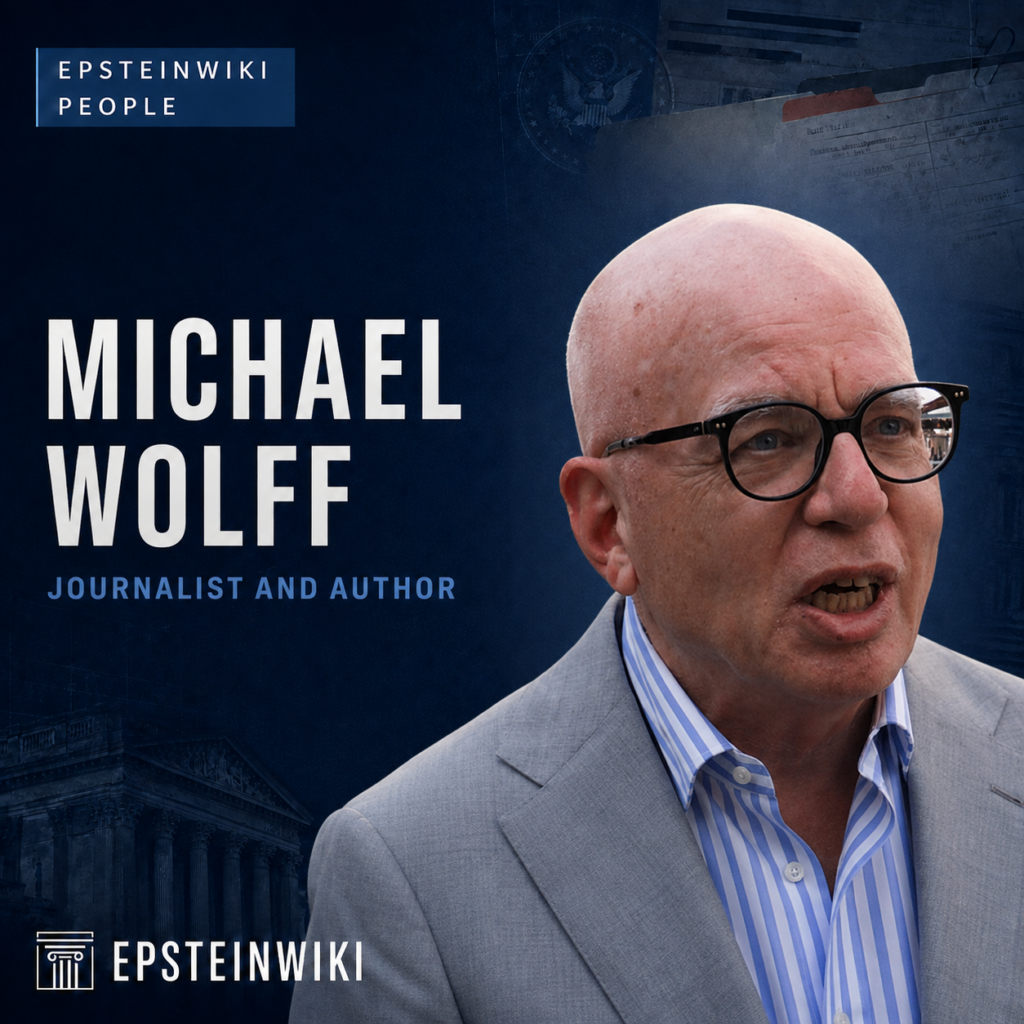
Michael Wolff did not simply interview Jeffrey Epstein from a safe distance and publish what he learned. The released correspondence shows a relationship that became far more entangled.
Wolff told Epstein he had defended him to reporters. He monitored journalists investigating him. He forwarded press inquiries to him. He used the phrase “neutralize her” in advice concerning Tina Brown. He advised Epstein on how to use Donald Trump as political and public relations leverage. He arranged introductions to powerful people. He participated in crisis strategy discussions with Epstein’s lawyers and public relations advisers. He helped develop articles, books, and documentary ideas that could have altered how the public saw a convicted sex offender.
At the same time, Wolff says he recorded close to 100 hours of conversations with Epstein across more than 30 sessions. This is his own estimate, not an independently verified inventory. Those recordings reportedly contain Epstein’s descriptions of Donald Trump, Bill Clinton, Steve Bannon, wealthy financiers, politicians, academics, and the private world surrounding his homes. See Wolff’s July 20, 2025 interview with Jonathan Alter.
Only fragments have been released.
That leaves an extraordinary public interest archive in the hands of the same journalist whose emails show him helping Epstein manage the very story the tapes could now expose.
Michael Wolff at a Glance
| Category | Documented information |
|---|---|
| Full name | Michael Wolff |
| Born | August 27, 1953 |
| Profession | Journalist, columnist, media commentator, and author |
| Notable books | Burn Rate, The Man Who Owns the News, Fire and Fury, Siege, Landslide, Too Famous, and All or Nothing |
| First known Epstein contact | Wolff says they met around the turn of the century |
| Early Epstein travel | Wolff says he traveled aboard Epstein’s aircraft to a TED conference |
| 2003 business connection | Contemporary reporting identifies Wolff as an organizer of Zuckerman’s unsuccessful bid for New York, with Epstein among the participants |
| Documented email period | At least 2009 through 2019 |
| Released correspondence | Epstein Data indexes approximately 2,000 messages in the Wolff and Epstein archive |
| Recorded interviews | Wolff says he possesses close to 100 hours from more than 30 sessions |
| Interview locations | Primarily Epstein’s Manhattan townhouse, with additional sessions in Paris and restaurants |
| Media strategy | Emails show Wolff advising Epstein about journalists, public relations, Donald Trump, and reputation management |
| Legal status | No public record located showing that Wolff has been charged with an Epstein related crime |
| Central unresolved issue | Whether the complete tapes, notes, drafts, and documentary footage will be preserved and made available to investigators |
How Michael Wolff Entered Epstein’s World
Wolff places his first meeting with Epstein around 2000 in connection with a TED conference. His accounts vary: in his July 2025 interview he recalled approximately 2001, while his March 2026 account dates the flight to 2000. The travel and dates remain his account, not an independently verified passenger record.
By that period, Wolff was already known as a writer fascinated by media, wealth, access, and the private conduct of powerful people. Epstein offered entry into all four.
Epstein knew financiers, politicians, scientists, journalists, attorneys, models, academics, royalty, and technology executives. His Manhattan townhouse operated as a private salon where people from those worlds could meet away from ordinary public scrutiny.
Wolff later described Epstein as a valuable source with a remarkable supply of gossip and elite information. Epstein, in turn, acquired a journalist who understood media ownership, publishing, public relations, tabloid culture, political reporting, and the vulnerabilities of prominent people.
These later recollections do not independently establish either man’s motives at the start of the relationship.
The Attempt to Buy New York Magazine
Contemporary Observer reporting identifies Mort Zuckerman as leader and Wolff as an organizer of an unsuccessful 2003 bid for New York magazine. The group included Epstein, Harvey Weinstein, Donny Deutsch and Nelson Peltz.
Bruce Wasserstein won the acquisition.
The episode is significant because it places Wolff and Epstein in a potential media ownership venture years before the surviving email archive begins. It also demonstrates that their relationship was not confined to source and reporter interviews.
Epstein’s possible participation in a magazine acquisition would have given him influence over a major New York publication covering politics, business, society, culture, and the wealthy circles in which he operated.
No evidence reviewed for this article establishes that the proposed group acquired any editorial authority because the bid was unsuccessful.
In his November 2025 account, Wolff said he contacted Zuckerman to protect his job and that Zuckerman brought Epstein and Weinstein into the effort. That is Wolff’s explanation; the failed bid alone does not establish commercial trust or shared motives.
The Post Conviction Relationship
Epstein pleaded guilty in Florida in 2008 to state charges involving prostitution and a minor. He served a controversial sentence that allowed extensive work release and became a registered sex offender.
Wolff’s relationship with him continued.
In a November 30, 2009 email, EFTA00742873, page 1, Epstein directed a redacted recipient to arrange for Wolff and his girlfriend to visit. The original does not identify the recipient, specify a visit date or establish that a visit occurred.
On February 25, 2011, Wolff told Epstein he had been defending him to the press. This is Wolff’s own description, not independent corroboration of particular conversations with reporters.
The DOJ original, EFTA02366794, page 1, can be compared with Ellie Leonard’s 2009–2012 correspondence compilation.
Wolff wrote that he had been “defending” Epstein to the world’s press and described doing so as a pleasure.
This is a critical point in the chronology. Epstein’s criminal conviction was already public. Wolff was communicating directly with him and representing himself as someone protecting Epstein’s reputation among journalists.
That goes beyond passively listening to a source.
Gifts, Access, and Reciprocity
The correspondence documents reciprocal favors and gifts.
A May 25, 2011 staff email, EFTA01864858, page 1, says sneakers would be delivered to Wolff’s office. In his May 31 reply, forwarded in EFTA00433257, page 1, Wolff expressed thanks in a message to Groff, said he was trying them on and confirmed that they fit.
The correspondence supports delivery and receipt of the sneakers. It does not establish their price or Epstein’s motive for the gift.
Epstein also provided Wolff with:
- Access to his homes.
- Travel aboard his aircraft.
- Introductions to political and intellectual figures.
- Information about Donald Trump and the Trump White House.
- Contact with Steve Bannon, Roger Ailes, Ehud Barak, Deepak Chopra, Ken Starr, Tom Barrack, and other prominent figures.
- Material for articles and books.
- Extensive conversations, including what Wolff describes as close to 100 recorded hours.
Wolff provided Epstein with media intelligence, strategic advice, introductions, draft language, information about other journalists, and access to the publishing world.
The 2011 Reputation Campaign
The 2011 correspondence shows Wolff becoming involved in efforts to improve Epstein’s public image.
The originals document proposals and advice. A June 21, 2011 email, EFTA02541228, page 1, outlines phased website, search and media work. A July 19 email, EFTA02522690, page 1, discusses co-management, and a November 8 chain, EFTA01995301, page 1, discusses fees and a wider plan. They do not establish payment, full implementation or achieved results.
The correspondence included discussions about:
- Journalists who might write about Epstein.
- Publications that could carry a favorable profile.
- Public relations firms.
- Epstein’s philanthropy and intellectual interests.
- The criminal case and plea agreement.
- Ways to counter negative reporting.
- Prominent people who could lend credibility.
On January 3, 2012, EFTA00927221, page 1, Epstein instructed Ian Osborne not to begin work until it had been reviewed. This limits claims about implementation at that point, without proving that no later work occurred. The third-party correspondence collection is a useful index, not proof that every original message survives.
The July 2011 Tina Brown Emails
One of the most troubling exchanges concerns journalist and editor Tina Brown.
On July 20, 2011, Wolff wrote to Epstein about Tina Brown and Wayne Barrett. The original wording is “lots of way to neutralize her.” The email also advised against cooperating with Barrett and discussed a counter-narrative. DOJ original, EFTA02691062, page 1.
A separate July 22 follow-up, EFTA02020413, page 1, says Wolff had made inquiries about Brown and Barrett and proposes speaking later. It is not the source of the July 20 quotation.
The message does not specify what “neutralize” meant or establish that any action against Brown followed.
It should not be transformed into an unsupported allegation of physical harm.
It is nevertheless a startling phrase for a journalist to use while privately advising a convicted sex offender about another member of the press.
The records document private media advice and a proposed follow-up discussion. They do not establish what Epstein implemented or the outcome.
The Unpublished New York Magazine Profile
From approximately 2014 into 2015, Wolff developed a major profile of Epstein for New York magazine.
In the January 27, 2015 email, EFTA01747774, page 1, Wolff described about 1,200 words of current text and projected a final length of 7,000–8,000 words. This is a proposed length, not a measured completed draft. The document does not identify the publication.
The checked correspondence documents proposed photography, requests for information, anticipated fact-checking and withdrawal discussions. Epstein’s April 1 review acknowledgment, EFTA01732263, page 1, supports prior access to the contents, but does not establish the extent or disposition of his edits.
Relevant records include:
- EFTA01746720
- EFTA01746747
- EFTA01746756
- EFTA01747050
- EFTA01747281, January 28 call-scheduling request only; no manuscript text
- EFTA01747774
The article was never published.
Rye Howard Stone’s “Yes, My Method” reports that Wolff routed a fact check through Epstein and coordinated with him as the story was abandoned. The relevant document trail includes EFTA02505950, EFTA02506485, and EFTA02394877.
On March 30, 2015, Wolff told Epstein not to indicate that he was very familiar with the profile’s contents. See the original email, EFTA02506485, page 1. The message followed his explanation of the anticipated fact-checking process, EFTA02505950, page 1. These emails record Wolff’s instruction and the checking he expected; they do not establish what Epstein subsequently told the fact-checker or what the checker knew.
The checked emails do not establish a contractual veto, include the magazine’s internal deliberations or show who exercised its final editorial authority. Source review and the magazine’s editorial decision-making are distinct questions.
The Draft’s Treatment of Epstein’s Victims
Ben Smith reported in Semafor on November 16, 2025 that Wolff confirmed authorship of an unpublished profile described as 8,684 words. The official House production metadata lists distinct manuscripts: HOUSE_OVERSIGHT_022746–022765, 20 pages, “NYM--JE 1.rtf”; and HOUSE_OVERSIGHT_024229–024250, 22 pages, “Jeffrey latest--new revise.rtf.” It does not date them or establish revision order. The reported word count should not be applied to every version.
Smith criticized the manuscript’s descriptions of victims as favoring Epstein’s account. That is an attributed assessment of the draft. Its assertions about survivors are not independently established facts and should not be repeated as such. Quotations and page references must identify the version being discussed.
That framing matters because Epstein’s legal and public relations teams repeatedly attempted to move scrutiny away from the adult who paid teenage girls and toward the conduct, background, or supposed dishonesty of the girls themselves.
Any draft should be examined in its complete form. A passage cannot fairly represent an entire unpublished article without context.
The available reporting nevertheless raises serious questions about whether Wolff’s access to Epstein had begun to shape his treatment of the survivors.
The February 2014 Column Exchange
In the transcribed February 8, 2014 exchange, Wolff worried that another column about Woody Allen would appear opportunistic. The remark concerns how others might perceive that coverage, not a description of his Epstein reporting method.
The original DOJ release, EFTA01934896, page 1, confirms the February 8, 2014 wording and its column-related context. The concern is about how others might perceive further coverage, rather than an admission or a description of Wolff’s Epstein reporting method.
The wording expresses concern about appearances. It should not be converted into an admission of stalking or a general statement of reporting method.
Any assessment of Wolff’s reporting methods requires evidence beyond this isolated phrase.
Monitoring Other Journalists
The emails show Wolff repeatedly informing Epstein about reporters who were investigating him.
These were not isolated press clippings. Wolff sometimes contacted publishers, evaluated journalists, forwarded inquiries, assessed the likelihood of publication, and discussed possible responses.
Among the reporters and projects discussed were:
- John Connolly.
- James Patterson’s Filthy Rich.
- Vanity Fair.
- The New York Times.
- ABC News.
- The BBC.
- Tina Brown.
- Julie K. Brown and the Miami Herald.
- RadicalMedia.
- New York magazine.
Relevant records include EFTA01806023, EFTA01806024, EFTA02347714, and EFTA02347715.
A journalist may legitimately ask other journalists what they are working on. The ethical problem arises when that information is passed to the subject so the subject can anticipate, influence, derail, or counter the reporting.
James Patterson’s Filthy Rich
Wolff monitored the development of James Patterson, John Connolly, and Tim Malloy’s book Filthy Rich, which examined Epstein’s crimes and the justice system’s failure to hold him accountable.
The emails show Wolff investigating the project and reporting what he learned to Epstein.
The released correspondence shows the publisher acknowledging Wolff’s signed NDA on August 3, 2016, then declining to share material on August 15. Wolff forwarded that reply to Epstein on August 18. All three messages appear on page 1 of EFTA00821185.
The seven-page original chain records the pursuit of a manuscript; it does not establish delivery. Its August 2 conditional offer appears on page 2. EFTA01806023 concerns an earlier publisher inquiry, not proof that the manuscript was delivered.
This review has not established that Wolff received the manuscript, disclosed it to Epstein, or breached the NDA.
The correspondence does show that Epstein gained information about an investigative book through a journalist he trusted.
Turning Donald Trump Into “Political Currency”
Donald Trump became central to the Wolff and Epstein relationship.
On December 15, 2015, Wolff wrote to Epstein that he had heard CNN planned to ask Trump about his relationship with Epstein that night, either on air or afterward. Epstein asked about crafting an answer, and Wolff replied on December 16. The email records Wolff’s account of CNN’s plans, not independent confirmation of what CNN intended to ask.
Wolff advised Epstein to let Trump answer.
If Trump denied visiting Epstein’s aircraft or home, Wolff wrote, the denial could give Epstein valuable public relations and political currency.
The direct receipts are HOUSE_OVERSIGHT_032228 and HOUSE_OVERSIGHT_032229. The December 15–16 exchange is also reproduced in the official House Oversight Democrats release, page 3. It establishes the written advice about a possible Trump denial; it does not establish that the proposed strategy was carried out.
This was not merely a journalist asking Epstein what he thought of Trump. Wolff was advising Epstein on how Trump’s possible denial could be converted into leverage.
The message is one of the clearest examples of Wolff acting as a strategist.
“You’re the Trump Bullet”
By early 2016, Wolff was urging Epstein to consider a more aggressive Trump strategy.
In February 2016, he warned Epstein that The New York Times had asked about the Trump relationship and that Hillary Clinton’s campaign was examining the subject. Wolff advised Epstein to consider acting first.
The receipts include HOUSE_OVERSIGHT_032238, EFTA02368954, and EFTA02368955.
Days later, Wolff described Epstein as “the Trump bullet.”
That statement appears in HOUSE_OVERSIGHT_032242.
In October 2016, Wolff again urged Epstein to consider speaking publicly about Trump. The relevant message is HOUSE_OVERSIGHT_033179.
The correspondence supports a narrow but important conclusion: Wolff and Epstein discussed using Epstein’s knowledge of Trump as a media and political weapon during the 2016 election.
It does not independently prove that every claim Epstein made about Trump was true.
Asking Epstein What to Ask Trump
In May 2016, Wolff told Epstein he was about to interview Trump and asked whether Epstein had anything he thought Wolff should ask.
The receipt is HOUSE_OVERSIGHT_032263.
Journalists routinely ask sources for suggested questions. The context makes this request more sensitive.
Epstein had a long personal history with Trump. Wolff was privately advising Epstein about political leverage while seeking questions that could be used in an interview with Trump.
That created a triangular relationship:
- Epstein supplied private information about Trump.
- Wolff gained access and material.
- Wolff supplied Epstein with intelligence about media interest and political risks.
- Trump became both Wolff’s subject and Epstein’s potential source of leverage.
Epstein as a Source for Fire and Fury
In February 2017, Wolff told Epstein he was writing a Trump book and expected to be paid a substantial amount for it.
The message is preserved in HOUSE_OVERSIGHT_032471.
Wolff asked Epstein for introductions, including access to Tom Barrack. The related request appears in HOUSE_OVERSIGHT_032474.
Epstein became one of Wolff’s sources for Fire and Fury: Inside the Trump White House. Wolff has said the extensive recorded conversations included Epstein’s descriptions of Trump’s personality, finances, marriages, sexual conduct, social circle, and White House.
When the book became an international bestseller in January 2018, Epstein and Wolff celebrated its impact through email.
In EFTA00920972, they discussed the reaction to the book and Trump’s anger.
Epstein asked whether he appeared in it. Wolff reassured him that he was mentioned only briefly as someone who had once been friendly with Trump and Tom Barrack, without further implication.
Roger Ailes, Steve Bannon, and the Political Information Loop
Wolff also acted as a bridge between Epstein and powerful figures around Trump.
The correspondence shows Wolff discussing or attempting introductions involving:
- Roger Ailes.
- Steve Bannon.
- Tom Barrack.
- Ken Starr.
- Deepak Chopra.
- Saudi officials.
- Ehud Barak.
- Members of the Trump circle.
In January 2017, Wolff tried to arrange contact between Epstein and Roger Ailes. Wolff also shared information from lengthy private conversations with Ailes and Bannon.
The 2017 correspondence is compiled in Ellie Leonard’s Michael Wolff’s Emails to Jeffrey Epstein, 2017.
Messages show Wolff forwarding Bannon communications to Epstein and keeping Epstein informed about Bannon’s thinking. Examples include HOUSE_OVERSIGHT_030647, HOUSE_OVERSIGHT_030653, HOUSE_OVERSIGHT_030655, and HOUSE_OVERSIGHT_030873.
Epstein was therefore receiving information from inside or near Trumpworld through Wolff even though Epstein and Trump had reportedly ended their direct friendship years earlier.
Wolff’s Role in Epstein’s 2018 Crisis Strategy
The publication of Julie K. Brown’s Perversion of Justice investigation in the Miami Herald transformed Epstein’s legal and public risk.
The series documented survivors’ accounts, exposed the concealed federal agreement, and renewed scrutiny of the institutions that protected Epstein.
The released emails show Wolff participating in strategy discussions as the crisis intensified.
On December 1, 2018, Wolff outlined a structured response, while allowing for the possibility of doing nothing. He proposed considering an interview and seeking input from people described as “Kathy,” “SB,” and “Hiltzig or somebody.” The record does not expand these references or name the publication at issue; it does not establish that a plan was implemented.
The substantive correspondence appears on pages 1–2 of the official EFTA02613104 file, bearing Bates numbers EFTA02613104–EFTA02613105. Pages 3–4 are disclaimer continuations, not additional strategy messages.
The December 3, 2018 scheduling chain, EFTA00486083, page 1, records arrangements for an 11:30 a.m. call involving Epstein, Wolff, Kathy Ruemmler and Darren Indyke. It does not establish that the call took place or what was discussed.
A journalist interviewing a subject may speak with that subject’s lawyers. Participating in a coordinated response strategy presents a different ethical question.
The Ken Starr Strategy Chain
After Brown’s reporting, Kenneth Starr drafted language defending the plea agreement and former United States Attorney Alexander Acosta.
The message moved through a group that included Epstein, Alan Dershowitz, Ruemmler, Indyke, Hiltzik, and Wolff.
Wolff asked whether there was an opportunity to invoke Epstein’s connection to Bill Clinton.
The receipts include:
The question illustrates the range of possible counter narratives being considered. Clinton’s name could provide prestige, deflection, political pressure, or proof that Epstein remained connected to influential people.
The released email does not establish that the proposed Clinton strategy was implemented.
The “Indictment Draft” Attachment
On June 15, 2018, Wolff sent Epstein an attachment labeled “Indictment_Draft_6 15” and asked him to pass it to someone identified as Brad.
The email is included in Ellie Leonard’s 2018 through 2019 compilation.
The title of the attachment has produced speculation that Wolff possessed a draft criminal indictment. That conclusion is not supported without the attachment itself.
It could have been:
- A fictional or journalistic draft.
- A legal memorandum.
- A draft section of a book or article.
- A proposed document prepared by Wolff.
- Material written by another person.
- An actual legal document.
Until the attachment is located and authenticated, the filename alone cannot establish that Wolff received leaked grand jury or prosecutorial material.
It remains an important unresolved document that investigators should obtain and examine.
“You Should Pay Him Off”
The August 11, 2018 transcription places the exchange after Epstein shared a Page Six story about Bannon and Wolff asked who had disclosed the information.
Epstein wrote “doorman.” Wolff responded, “you should pay him off.”
The official releases EFTA01007038, page 1, and EFTA02604502, page 1, contain the same underlying email chain with different rendering and redactions. The latter retains the Page Six link, confirming the press-story context; the PDFs are not identical copies.
The surrounding messages provide press-leak context, but do not establish who supplied the story or whether any payment occurred.
It does not establish:
- Whether the statement was serious.
- What payment Wolff contemplated.
- Whether the doorman possessed relevant evidence.
- Whether any legal proceeding involved the doorman.
- Whether a payment occurred.
- Whether any subsequent action followed the remark.
The reviewed exchange does not establish that a legal witness was involved. It should not be presented as proof of witness tampering.
Forwarding Press Inquiries to Epstein
In June 2018, a producer from RadicalMedia contacted Wolff about a possible series examining wealth and justice, including Epstein.
The producer believed Wolff’s relationship with Epstein dated to the 1990s and asked Wolff to discuss Epstein as a businessman, philanthropist, and public figure.
Wolff forwarded the inquiry to Epstein and arranged to meet him.
Similar patterns appear elsewhere in the archive. Journalists or producers contacted Wolff believing he could provide independent insight. Wolff sometimes passed their interest to the person they were investigating.
This gave Epstein advance notice and an opportunity to shape the response.
The Bannon Media Training Sessions
In 2019, Steve Bannon recorded hours of video interviews with Epstein.
According to Wolff’s later book Too Famous, the sessions were intended to prepare Epstein for a possible interview with 60 Minutes and a larger reputation campaign.
Bannon reportedly coached Epstein on:
- How to look into the camera.
- How to remain on message.
- How to deny being a pedophile.
- Which theories and statements to avoid.
- How to appear credible to a television audience.
The proposed 60 Minutes broadcast should be distinguished from footage later made public. CBS reported that DOJ’s January 30, 2026 release included nearly two hours of Bannon interviewing Epstein, linking EFTA01600824.mov, Data Set 10. This review has not independently watched or timed that file. It is not evidence that investigators obtained Wolff’s separately described archive, and its runtime should not be added to Wolff’s released-audio total.
The Guardian’s account of the Bannon sessions reports that Bannon recorded approximately 15 hours of footage.
Released messages show Wolff and Epstein discussing Bannon, media planning, and documentary development. In June 2019, an exchange asked whether Michael Wolff should be used for the documentary. The relevant record is EFTA01214166.
Wolff’s precise control over the Bannon footage remains unclear.
The Proposed Rehabilitation Documentary
Wolff and Epstein also discussed a documentary project that could present Epstein alongside elderly or celebrated public figures.
Potential participants reportedly included:
- Woody Allen.
- Noam Chomsky.
- James Watson.
- Tim Zagat.
- Other scientists, intellectuals, and public figures.
The idea would have placed Epstein within a world of famous thinkers and accomplished older men. Whatever its stated subject, such a production could have provided enormous reputational value.
Epstein would no longer appear primarily as a convicted sex offender. He could appear as a curious intellectual conversing with respected cultural figures.
The project was not completed before Epstein’s 2019 arrest.
Congress’s Questions About the Recordings
On September 17, 2025, Representative Ted Lieu asked FBI Director Kash Patel at a House Judiciary hearing whether he or the FBI had approached Wolff and whether the FBI had subpoenaed the Epstein recordings. Patel said he had not personally asked to speak with Wolff. On whether the FBI had interviewed him, Patel said, “I’m not saying they haven’t. I just don’t know.” He also did not know whether the tapes had been subpoenaed. Lieu requested a follow-up answer. See the official hearing transcript, printed page 51, PDF page 59.
The transcript establishes that Congress asked these questions, not that the FBI took no action. The four-page follow-up question file added December 4, 2025 contains no Wolff-specific question or response. As of November 6, 2026, the reviewed public sources do not establish a full-archive production, a later Wolff subpoena or a responsive answer to Lieu. Private requests or productions cannot be ruled out.
A recording can document what Epstein said without independently proving his account. Any inquiry should distinguish Wolff’s firsthand observations, Epstein’s statements and outside corroboration, while protecting survivors’ identities.
The Claimed 100-Hour Recording Archive
In his July 20, 2025 interview with Jonathan Alter, Wolff said he recorded close to 100 hours of conversations with Epstein across more than 30 sessions. The runtime and session count are Wolff’s account. A complete surviving inventory, custody history and independent count have not been established in this review.
Most sessions reportedly occurred at Epstein’s Manhattan townhouse. Others took place at restaurants and Epstein’s Paris residence.
The recordings appear to cover:
- Donald Trump.
- Trump’s marriages and social life.
- Trump’s finances and business practices.
- The Trump White House.
- Bill Clinton.
- Ghislaine Maxwell.
- Steve Bannon.
- Wealthy financiers and business leaders.
- Academics and scientists.
- Epstein’s criminal case.
- Epstein’s efforts to repair his reputation.
- Epstein’s views of women, power, sex, and elite society.
Wolff has released only selected excerpts.
The recordings are primary source material in the limited sense that they preserve Epstein’s own voice. Epstein’s statements are not automatically true. He was self interested, manipulative, and capable of using gossip as leverage.
The tapes could still provide:
- Exact language.
- Context absent from emails.
- Names of witnesses and intermediaries.
- Descriptions that can be compared with independent records.
- Evidence of Epstein’s reputation strategy.
- Evidence of what Wolff asked and how he responded.
- Information about people who were never publicly identified.
- A record of Epstein’s final months.
Questions About Access to the Recordings
Wolff has resisted calls to release all of the recordings.
In the public exchange described by Rye Howard-Stone in “Yes, My Method”, Wolff said the interviews were reporting material rather than intended for broadcast. Stone separately discussed context and survivor privacy. Those arguments should not all be attributed to Wolff without a direct source.
Those concerns are real.
This review has not established a complete recording inventory, ownership arrangements, everyone who holds copies, or whether material has been provided privately to investigators.
Stone reports that Wolff stood by his reporting methods. This review has not authenticated the complete original comment thread or every screenshot reproduced in Stone’s account.
Stone’s criticism raises a question about preservation and independent review. It does not establish that Wolff has exclusive custody or permanent unilateral control of every recording.
Ellie Leonard’s Reconstruction of the Email Archive
Ellie Leonard has performed some of the most substantial independent work on the Wolff and Epstein correspondence.
Leonard’s April 30, 2026 note describes 1,830 pages of emails, while her article refers to 1,830 search hits. Pages, search hits and the structured archive’s message entries are different units; these figures should not be treated as a count of unique documents.
Leonard organized the correspondence chronologically and preserved original spelling errors.
Her central collections include:
- Michael Wolff’s Emails to Jeffrey Epstein, 2009 through 2012
- Michael Wolff’s Emails to Jeffrey Epstein, complete collection
- Michael Wolff’s Emails to Jeffrey Epstein, 2017
- Michael Wolff’s Emails to Jeffrey Epstein, 2018 through 2019
- Michael Wolff’s Emails, a Dramatic Reading
Leonard argues in The Beginning of the End of Co Conspirator, Michael Wolff that Wolff’s conduct deserves congressional scrutiny.
The term “co conspirator” in Leonard’s headline expresses her investigative conclusion. Wolff has not been convicted or publicly charged as a criminal co conspirator in an Epstein case.
Wolff’s Public Explanation
Wolff has defended his conduct as source cultivation.
He has argued that reporters often maintain uncomfortable relationships with objectionable people to learn what they know. He has also said that gaining Epstein’s trust allowed him to record material that would otherwise never exist.
That defense has force. Epstein’s recorded statements about Trump and other powerful people are now part of the public record because Wolff remained close to him.
The emails create a harder question. Source cultivation does not require every favor documented in the archive.
The record includes:
- Telling Epstein he had defended him to reporters.
- Advising him on political leverage.
- Discussing how to neutralize a journalist.
- Monitoring other investigations.
- Forwarding press inquiries.
- Sharing drafts.
- Participating in public relations calls.
- Suggesting a doorman be paid.
- Helping plan reputation projects.
The issue is not whether journalists may speak privately with terrible people. The issue is when access becomes assistance.
What Wolff Says He Witnessed Inside Epstein’s Homes
Wolff has said that he did not witness sexual abuse.
He described seeing women around Epstein, sometimes characterizing them as decorative members of an elite social environment. He has said they appeared educated and sophisticated rather than obviously coerced.
That observation is limited by what Epstein chose to show him.
Epstein maintained different presentations for different visitors. A journalist arriving for a scheduled interview might see an intellectual salon while a teenage girl arriving for a paid massage experienced something entirely different.
Absence of visible abuse during Wolff’s visits does not disprove survivor accounts or establish that abuse was not occurring elsewhere in the house.
Epstein’s Alleged Photographs of Trump
Wolff has said Epstein kept compromising or embarrassing photographs of Donald Trump in a safe at the Manhattan townhouse.
According to Wolff, Epstein occasionally displayed a collection of photographs involving Trump and women whose ages were not clear.
American Freakshow’s April 2026 article reports not identifying a matching record in the released files. That search result does not establish whether the photographs existed, what they showed or who holds them.
The photograph claim remains attributed to Wolff. In his July 2025 interview, he said he did not know whether the pictures remained in the safe, had been destroyed or were obtained by the FBI.
The available evidence does not establish:
- The number of photographs.
- Their dates.
- The identities or ages of the women.
- Whether the images showed criminal conduct.
- Whether the FBI recovered them.
- Whether Epstein removed them before the search.
- Whether copies exist.
Wolff’s complete recordings may contain more detailed descriptions of what he says he saw.
Epstein’s Claims About Trump
Selected recordings released by Wolff contain Epstein discussing his former friendship with Trump.
Epstein claimed that:
- He and Trump had been close for many years.
- He understood Trump’s private conduct and marriages.
- Trump sought his advice.
- Trump socialized with him around women.
- Trump’s White House could be understood through Epstein’s knowledge of Trump’s personality.
These are statements by Epstein, presented by Wolff. They require corroboration.
American Freakshow’s Donald Trump and Jeffrey Epstein Timeline provides independent documentation of the social relationship through photographs, flight records, press reports, events, and witness accounts.
The Guardian’s reporting on Wolff’s released tapes confirms that Epstein discussed Trump at length in the recorded interviews.
Trump has denied wrongdoing involving Epstein and has repeatedly attacked Wolff’s credibility.
The “Dog That Hasn’t Barked” Emails
In April 2011, Epstein wrote to Maxwell that Trump was the “dog that hasn’t barked.” Epstein claimed that a redacted victim had spent hours at his home with Trump and had never mentioned him publicly.
In January 2019, Epstein wrote to Wolff that Trump knew about “the girls” because, according to Epstein, Trump had asked Maxwell to stop.
These are Epstein’s claims. They are not judicial findings.
The emails became major public evidence because they showed what Epstein privately told Maxwell and Wolff about Trump.
Wolff’s role matters because he was not only receiving the information. Earlier correspondence shows him discussing how Epstein could use his Trump knowledge as political and public relations leverage.
The Melania Trump Claims and Litigation
Wolff later repeated claims involving Melania Trump and Epstein, including an allegation that Epstein played a role in introducing Melania to Donald Trump.
Melania Trump denied the allegation.
After legal threats, Wolff filed suit in New York state court; Melania Trump removed the action to federal court. On May 22, 2026, United States District Judge Mary Kay Vyskocil dismissed it on prudential-abstention grounds. The court expressly found that it had subject-matter jurisdiction but declined to exercise it. See Wolff v. Trump, No. 1:25-cv-10752, Document 25, pages 1–2 and 45.
The dismissal did not adjudicate whether Epstein introduced Donald and Melania Trump. It rejected Wolff’s attempt to obtain federal relief in the form presented.
The case is covered in The Guardian’s report on the dismissal and Courthouse News.
American Freakshow examined the underlying claim and its evidence limits in Jeffrey, Donald, and Melania and Weak Link in the Epstein Coverup.
Wolff and Epstein’s Final Days
Wolff remained in contact with Epstein into 2019.
After Epstein’s July 6 arrest, Wolff says he expected to meet him for breakfast the following morning. That meeting never happened because Epstein was detained.
Wolff later claimed he received one of Epstein’s final messages before Epstein died at the Metropolitan Correctional Center on August 10, 2019.
In his July 2025 interview with Jonathan Alter, Wolff said Epstein’s reply to a message relayed through his lawyers was “Still hanging around.” This is Wolff’s account, not an independently authenticated message record.
The claim is reported by The Independent and discussed in Wolff’s podcast appearances.
The public record reviewed for this article does not include authenticated metadata proving that this was Epstein’s final message. It remains Wolff’s account.
The Office of the Chief Medical Examiner ruled Epstein’s death a suicide. Wolff has said he does not have evidence proving murder, while also expressing dissatisfaction with the information released about the death.
Too Famous and Wolff’s Retrospective Account
In 2021, Wolff published Too Famous, a collection that included his account of Epstein’s final period.
The essay described Epstein’s reputation meetings, lawyers, public relations advisers, Bannon’s media coaching, and the atmosphere inside the Manhattan townhouse.
It provided valuable information about how Epstein and his advisers contemplated a public comeback.
It also allowed Wolff to narrate his own role after Epstein was dead and unable to challenge the account.
Reviews questioned whether Wolff was documenting the rehabilitation campaign or excusing his proximity to it. The Guardian’s review of Too Famous criticized Wolff’s treatment of notorious subjects, including Epstein.
The 2024 Tape Releases
Two public Fire and Fury podcast editions contain selected Epstein excerpts: Episode 22, October 31, 2024 (28:36), and Epstein: From Beyond the Grave, November 3–4, 2024 (26:09). These are whole-episode runtimes, including host discussion, not durations of unique Epstein audio.
The publisher’s automated transcripts place an excerpt at approximately 00:56–01:39 in Episode 22 and several excerpts in the bonus. Transcript timestamps are approximate; this review did not independently authenticate the audio. The bonus acknowledges overlap with Daily Beast clips, so the releases cannot simply be added together as unique material.
The excerpts focused heavily on Trump.
Wolff said Epstein had been a major source for his Trump reporting and possessed intimate knowledge of Trump’s private life.
The Daily Beast, November 2, 2024, reported reviewing a 1h44m August 2017 townhouse interview. That does not establish full publication.
The July 20, 2025 Washington Monthly interview is with Wolff, not an hour of Epstein audio. In November 2025, Megyn Kelly reported privately hearing additional recordings but holding no copy. That account establishes neither publication nor a unique-audio runtime. The reviewed records do not supply a complete session manifest or a reliable total of released material.
The tapes establish that Epstein talked about Trump. They do not establish that every Epstein statement was accurate.
The 2025 and 2026 Document Releases
House Oversight and Justice Department releases exposed the scale of Wolff’s private correspondence with Epstein.
The emails changed the public understanding of their relationship.
Before the releases, Wolff could describe himself primarily as a journalist who cultivated a dangerous source. The documents revealed that he also:
- Gave public relations advice.
- Monitored other reporters.
- Helped evaluate counter narratives.
- Shared drafts and fact checks.
- Discussed political leverage.
- Participated in crisis planning.
- Developed potential rehabilitation projects.
- Maintained the relationship for years after Epstein’s conviction.
The disclosures prompted journalism ethics experts to question whether Wolff crossed the line from source cultivation into service to the source. Al Jazeera and The Guardian examined those concerns.
The Campaign to Preserve and Subpoena the Recordings
The Wolff recordings may contain evidence relevant to congressional oversight, civil litigation, historical research, or continuing investigation.
Resistance Kitty’s Subpoena the Epstein Tapes campaign calls for legal preservation of Wolff’s reported 100 hours and Bannon’s reported 15 hours of video.
Preservation does not require immediate public release of raw recordings.
A responsible legal process could:
- Create verified forensic copies.
- Preserve original metadata.
- Protect survivor identities.
- Restrict access to sensitive personal material.
- Permit congressional or judicial review.
- Identify statements relevant to criminal or civil investigations.
- Compare recordings with released emails and documents.
- Establish whether any portions were edited, lost, destroyed, or transferred.
The preservation objective is to identify and safeguard original recordings, document custody and permit appropriate review while protecting survivors and private information.
Timeline
| Date | Documented event |
|---|---|
| Late 1990s or early 2000s | Wolff says he meets Epstein and later travels aboard his aircraft to a TED conference. |
| 2003 | Contemporary reporting identifies Wolff as an organizer of Zuckerman’s unsuccessful New York bid, with Epstein among the participants. |
| 2008 | Epstein pleads guilty in Florida and becomes a registered sex offender. |
| November 2009 | Epstein asks a redacted recipient to arrange a visit by Wolff and his girlfriend; completion is not established. |
| February 2011 | Wolff tells Epstein he has been defending him to the press. |
| May 2011 | Epstein sends Wolff sneakers through his staff. |
| July 2011 | Wolff tells Epstein there are ways to “neutralize” Tina Brown. |
| 2011 onward | Wolff discusses public relations firms and reputation strategies with Epstein. |
| February 2014 | A transcribed Woody Allen column exchange records Wolff’s concern about appearing opportunistic. |
| 2014 through 2015 | Wolff develops a major New York magazine profile of Epstein. |
| 2015 | The proposed profile is not published. |
| December 2015 | Wolff warns Epstein that CNN may question Trump and advises him to let Trump create political leverage through a denial. |
| 2015 through 2016 | Wolff monitors the Patterson and Connolly book project. |
| February 2016 | Wolff warns that The New York Times and Hillary Clinton’s campaign are examining Epstein’s Trump connection. |
| February 2016 | Wolff calls Epstein “the Trump bullet.” |
| May 2016 | Wolff asks Epstein what he should ask Trump during an interview. |
| August 2016 | An NDA acknowledgment appears in the transcribed effort to obtain Filthy Rich; receipt is not established. |
| October 2016 | Wolff urges Epstein to consider speaking publicly about Trump. |
| January 2017 | Wolff discusses arranging contact between Epstein and Roger Ailes. |
| February 2017 | Wolff tells Epstein he is writing a lucrative Trump book and asks for introductions. |
| 2017 | Wolff conducts extensive recorded interviews with Epstein for Trump reporting. |
| January 2018 | Epstein and Wolff discuss the explosive release of Fire and Fury. |
| June 2018 | Wolff sends an attachment titled “Indictment_Draft_6 15.” |
| August 2018 | Wolff tells Epstein he should pay off a doorman. |
| November and December 2018 | Wolff participates in planning Epstein’s response to the Miami Herald investigation. |
| December 2018 | December 3 correspondence schedules an 11:30 a.m. call; occurrence and subject are not established. |
| December 2018 | Wolff asks whether Epstein’s Clinton connection should be invoked. |
| 2019 | Wolff, Epstein, Bannon, lawyers, and advisers discuss media and documentary strategies. |
| July 6, 2019 | Epstein is arrested at Teterboro Airport. |
| August 9, 2019 | Wolff says he receives a final message from Epstein. |
| August 10, 2019 | Epstein dies in federal custody. |
| 2021 | Wolff publishes his account of Epstein’s final period in Too Famous. |
| October and November 2024 | Wolff releases selected portions of the Epstein recordings concerning Trump. |
| 2025 | Congressional releases reveal strategic emails between Wolff and Epstein. |
| 2026 | Larger Justice Department releases expose a broader archive of their correspondence. |
| April 2026 | Ellie Leonard publishes chronological collections of the emails. |
| May 2026 | Rye Howard Stone publicly challenges Wolff’s control of the recordings. |
| May 2026 | A federal judge dismisses Wolff’s lawsuit against Melania Trump. |
| August 2026 | Resistance Kitty launches a campaign seeking preservation and lawful review of the Wolff and Bannon recordings. |
Evidence Matrix
| Claim | Supporting evidence | Strength | Limitation |
|---|---|---|---|
| Wolff maintained a long relationship with Epstein after his conviction | Wolff and Epstein Email Archive | Strong | Does not establish knowledge of every crime |
| Wolff told Epstein he defended him to the press | Ellie Leonard’s 2009 through 2012 collection | Strong | Does not identify every reporter or statement |
| Wolff discussed neutralizing Tina Brown | EFTA02691062, page 1 | Strong | “Neutralize” is not defined |
| Wolff gave Epstein advance media intelligence | HOUSE_OVERSIGHT_032228 | Strong | Does not show how Wolff obtained the information |
| Wolff advised Epstein to exploit a Trump denial | HOUSE_OVERSIGHT_032229 | Strong | Strategy was discussed, but its execution is unclear |
| Wolff called Epstein the “Trump bullet” | HOUSE_OVERSIGHT_032242 | Strong | Meaning must be read within the political strategy thread |
| Wolff asked Epstein what to ask Trump | HOUSE_OVERSIGHT_032263 | Strong | Journalists commonly consult sources |
| Wolff monitored Filthy Rich | EFTA01806023, p. 1 and EFTA00821185, p. 1 | Original pages checked | Receipt of the manuscript and any NDA breach remain unestablished |
| Wolff discussed a proposed profile with Epstein | EFTA01746720 and related records | Strong | Final editorial decision maker remains uncertain |
| Response advice and separate call scheduling | EFTA02613104, pp. 1–2 and EFTA00486083, p. 1 | Original pages checked | Proposals and scheduling do not establish implementation or attendance |
| The released exchange includes a payment suggestion | EFTA01007038 | Original pages checked | Press-leak context; no payment or legal-witness involvement established |
| Wolff has close to 100 hours of Epstein recordings | Washington Monthly interview | Documented as Wolff’s self-report | No complete independent inventory located in the reviewed public sources |
| Epstein’s statements on the tapes are true | Requires independent corroboration | Unproven as a general claim | Epstein was an interested and unreliable narrator |
| Wolff participated in Epstein’s sexual abuse | No reliable public evidence located | Unproven | No survivor accusation identified in the reviewed record |
| Wolff committed witness tampering or obstruction | No public charge or judicial finding located | Unproven | Several communications warrant scrutiny but are context dependent |
What the Reviewed Sources Support
The documentary record supports the following conclusions:
- Wolff had a sustained relationship with Epstein before and after Epstein’s 2008 conviction.
- Wolff traveled aboard Epstein’s aircraft.
- Wolff and Epstein explored business, publishing, article, book, and documentary projects.
- Wolff told Epstein he had defended him to the press.
- Epstein provided Wolff with gifts, access, introductions, information, and extensive interviews.
- Wolff monitored journalists and publishers investigating Epstein.
- Wolff forwarded press inquiries and reporting intelligence to Epstein.
- Wolff shared article material with Epstein and gave him substantial visibility into a proposed profile.
- Wolff advised Epstein on public relations and political strategy.
- Wolff warned Epstein that Trump might be questioned about their relationship.
- Wolff discussed using Trump’s possible denial as leverage.
- Wolff described Epstein as a potential “Trump bullet.”
- Wolff asked Epstein for questions before interviewing Trump.
- Epstein became an important source for Wolff’s Trump reporting.
- Wolff participated in a crisis strategy discussion with Epstein and his advisers.
- Wolff suggested paying a doorman, although the context and intent remain unresolved.
- Wolff recorded approximately 100 hours of conversations with Epstein, according to his own account.
- Only selected excerpts of those tapes have been released.
- Wolff has not been publicly charged with an Epstein related crime.
- No public survivor accusation of sexual abuse by Wolff was identified in the records reviewed for this article.
What Is Not Proven?
The released evidence does not establish that:
- Wolff sexually abused or trafficked anyone.
- Wolff knew the full scope of Epstein’s abuse when their relationship began.
- Wolff knowingly concealed a specific sexual offense from police.
- Wolff’s “neutralize” comment referred to violence or illegal conduct.
- The doorman was a witness in a legal proceeding.
- A payment to the doorman occurred.
- The “Indictment Draft” was an authentic government indictment.
- Wolff violated the Filthy Rich nondisclosure agreement.
- Every statement Epstein made on Wolff’s recordings was true.
- Epstein possessed criminally compromising photographs of Trump.
- Epstein introduced Donald and Melania Trump.
- Epstein’s final message to Wolff has been independently authenticated.
- Wolff destroyed or altered any recording.
Those possibilities require evidence beyond inference from the available correspondence.
What Remains Unknown?
Critical questions remain unanswered:
- Where are the original recordings stored?
- How many complete recordings exist?
- Have forensic copies been created?
- Who else possesses copies?
- Are transcripts available?
- Were any portions lost, erased, edited, or overwritten?
- Do the tapes identify additional survivors or witnesses?
- Do they contain descriptions of conduct that should have been reported to law enforcement?
- What did Wolff ask Epstein about the girls and women moving through his homes?
- Did Wolff challenge Epstein’s descriptions of his victims?
- What statements did Epstein make about Maxwell’s recruitment activities?
- What did Epstein say about the 2007 Non Prosecution Agreement?
- What did Epstein say about Acosta, Dershowitz, Starr, Ruemmler, and other attorneys?
- What did he say about Les Wexner, Leon Black, Jes Staley, Bill Gates, Glenn Dubin, and other financial contacts?
- What did he say about Bill Clinton and Donald Trump?
- What did he say about intelligence services, blackmail, cameras, and recordings?
- Did Wolff provide any recordings to federal investigators?
- Did Congress request or subpoena the tapes?
- What was contained in the “Indictment_Draft_6 15” attachment?
- Who decided to end the New York magazine profile?
- What promises, if any, did Wolff make to Epstein about publication?
- Did Epstein exercise editorial control over any Wolff project?
- What documentary footage exists beyond the Bannon recordings?
- Why did Wolff release selected Trump excerpts while withholding the larger archive?
Primary Receipts
- Wolff and Epstein Email Archive, 2009 through 2019
- Epstein Data investigation of Michael Wolff
- Epstein Data search for Michael Wolff
- EFTA01934896, February 8, 2014 column exchange, page 1
- EFTA02691062, July 20, 2011: Brown/Barrett advice, page 1; EFTA02020413, July 22 follow-up, page 1
- EFTA01746720, proposed New York magazine profile
- EFTA01746747, profile and financial fact checking
- EFTA01746756, Wolff requests article material
- EFTA01747050, photography discussions
- EFTA01747774, profile development
- EFTA02505950, profile fact checking record
- EFTA02506485, related profile correspondence
- EFTA02394877, cancellation related correspondence
- EFTA01806023, Wolff investigates the Patterson project
- EFTA01806024, related publisher correspondence
- EFTA02347714, John Connolly reporting inquiry
- EFTA02347715, related Connolly correspondence
- HOUSE_OVERSIGHT_032228, CNN debate warning
- HOUSE_OVERSIGHT_032229, political currency advice
- HOUSE_OVERSIGHT_032231, ABC News assessment
- HOUSE_OVERSIGHT_032238, New York Times and Clinton campaign warning
- HOUSE_OVERSIGHT_032242, “Trump bullet” message
- HOUSE_OVERSIGHT_032263, Wolff asks what to ask Trump
- HOUSE_OVERSIGHT_033179, proposed public Trump strategy
- HOUSE_OVERSIGHT_032471, Wolff announces Trump book
- HOUSE_OVERSIGHT_032474, Wolff requests a Tom Barrack introduction
- EFTA00920972, Fire and Fury correspondence
- EFTA02613104, structured crisis strategy
- EFTA02613105, December 1 response proposal, page 2 of EFTA02613104
- EFTA02613106, disclaimer continuation, page 3 of EFTA02613104
- EFTA02613107, disclaimer continuation, page 4 of EFTA02613104
- EFTA00486083, December 3, 2018 call scheduling, page 1
- HOUSE_OVERSIGHT_030255, Ken Starr strategy chain
- HOUSE_OVERSIGHT_030315, Wolff asks about invoking Clinton
- HOUSE_OVERSIGHT_030318, related strategy chain
- EFTA01007038, “you should pay him off” email
- EFTA01214166, documentary discussion involving Wolff and Bannon
- EFTA02522247, 2018 Wolff and Epstein correspondence
- EFTA02522791, 2018 email metadata
- HOUSE_OVERSIGHT_030987, Wolff sends Epstein draft Trump material
- HOUSE_OVERSIGHT_030880, Wolff asks Epstein to review draft text
Relevant EpsteinWiki Sleuth Research
- Ellie Leonard’s complete Wolff and Epstein email collection provides the central chronological reconstruction of the released correspondence.
- Ellie Leonard’s 2009 through 2012 archive documents Wolff’s post conviction defense of Epstein and the early public relations work.
- Ellie Leonard’s 2017 archive documents the Roger Ailes, Steve Bannon, Trump, and Fire and Fury period.
- Ellie Leonard’s 2018 through 2019 archive documents the crisis strategy, attorneys, draft documents, media inquiries, and final reputation campaign.
- Ellie Leonard’s dramatic reading makes a portion of the correspondence accessible in audio form.
- Ellie Leonard’s call for congressional scrutiny argues that Wolff’s role and possession of the tapes require investigation.
- Rye Howard Stone’s “Yes, My Method” directly examines Wolff’s journalistic defense and his continued control over the recordings.
- Rye Howard Stone’s forensic recovery report identifies Wolff in recovered contact material and demonstrates why unindexed Epstein records remain important.
- American Freakshow’s Donald Trump and Jeffrey Epstein timeline provides independently sourced context for evaluating Epstein’s claims about Trump.
- American Freakshow’s Jeffrey, Donald, and Melania evaluates Wolff’s allegation concerning Melania Trump and the evidence limits surrounding it.
- American Freakshow’s Weak Link in the Epstein Coverup examines the legal pressure surrounding Wolff’s Melania claims.
- American Freakshow’s The Accountant’s Suitcases compares Wolff’s claims about photographs in Epstein’s safe with the released FBI evidence trail.
- Resistance Kitty’s Subpoena the Epstein Tapes campaign calls for preservation and lawful review of the Wolff and Bannon recordings.
No Michael Wolff centered reporting directly relevant to this article was located in the searched archives of Lisa Tait, Bekah Day, Butterfly Bureau, Katie Phang, or Greg Conners. Unrelated posts have not been inserted into the source list.
Related EpsteinWiki Articles
- Jeffrey Epstein
- Donald Trump
- Ghislaine Maxwell
- Steve Bannon
- Kathryn Ruemmler
- Kenneth Starr
- Alan Dershowitz
- Darren Indyke
- Lesley Groff
- Tom Barrack
- R. Alexander Acosta
- Julie K. Brown
- 2007 Non Prosecution Agreement
- Epstein’s Reputation Management Network
- Epstein’s Social Media and Digital Footprint
- Epstein Files Transparency Act
- United States v. Jeffrey Epstein