
Ghislaine Maxwell: Sexual Abuse Allegations and the International Evidence Record
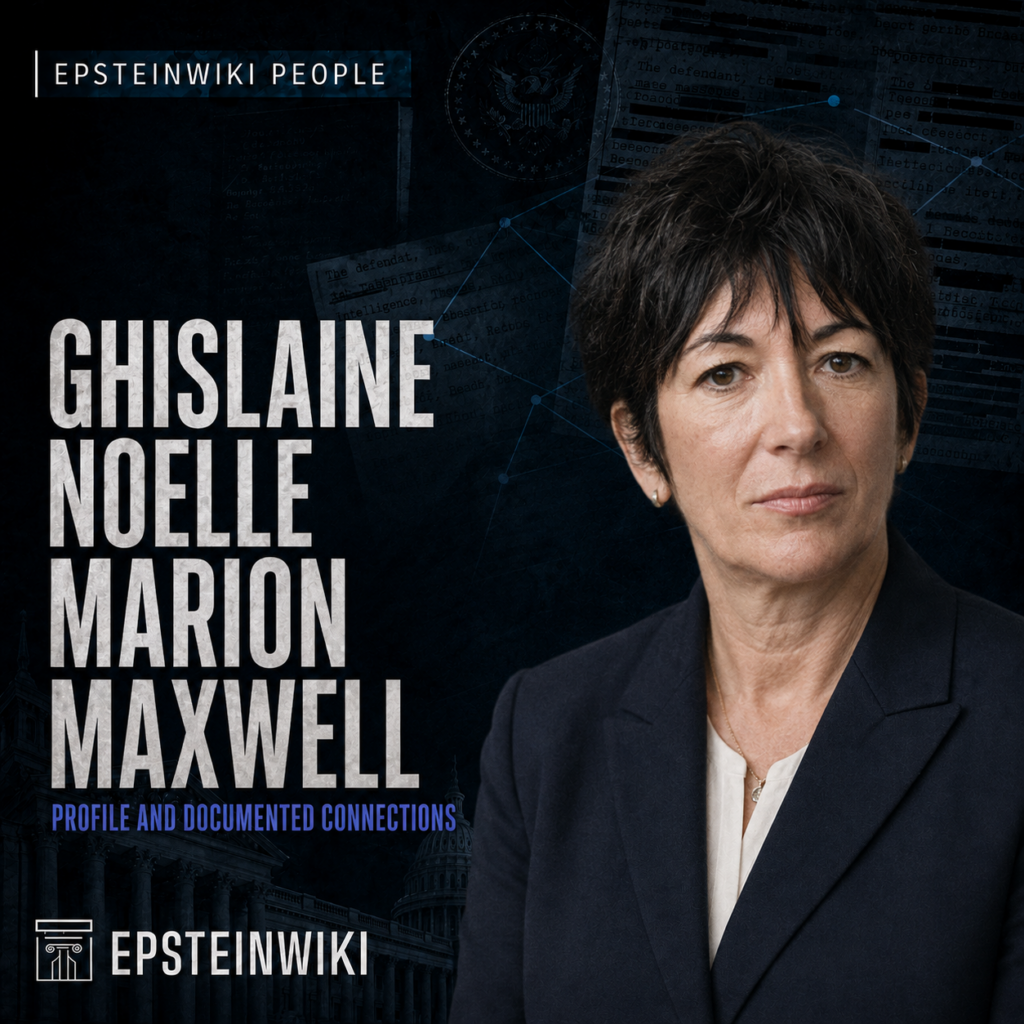
Ghislaine Maxwell was convicted for her role in Jeffrey Epstein’s sexual exploitation of underage girls. Survivors have also accused her of personally touching or assaulting them, recruiting them, arranging encounters with Epstein, and helping control the circumstances in which abuse occurred. The allegations span the United States, Britain, and the United States Virgin Islands, with additional accounts involving recruitment in South Africa and proposed recruitment in Thailand.
The records do not establish the same thing for every person or place. This article identifies what each person alleged Maxwell did, whether the account was tested at her criminal trial, and where a civil claim or police review ended without a criminal finding.
Snapshot
| Evidence category | What it establishes |
|---|---|
| Criminal verdict | A jury found Maxwell guilty on five counts involving the exploitation of minors. Judgment was entered on three counts after the court resolved overlapping conspiracy counts. |
| Trial testimony | Jane, Kate, Annie Farmer, and Carolyn testified about abuse and Maxwell’s role. |
| Allegations of Maxwell’s own sexual touching | Jane, Annie Farmer, and Carolyn described touching by Maxwell at trial. Maria Farmer alleged that Maxwell and Epstein sexually assaulted her in Ohio. |
| Other named civil accusers | Virginia Giuffre, Sarah Ransome, Elizabeth Stein, Teresa Helm, Jennifer Araoz, and Juliette Bryant made distinct allegations concerning Maxwell’s role. |
| Britain | Kate testified about Maxwell’s London home. Giuffre alleged trafficking to London. British journalists documented further claims, which police reviewed without bringing a case. |
| International locations | Bryant described recruitment in South Africa followed by abuse elsewhere. Giuffre described an instruction involving Thailand. France appears in a separate allegation concerning a man Giuffre was allegedly directed to meet. |
| Current criminal status | Maxwell’s 20 year sentence remains in force. |
The federal court’s August 2026 opinion summarizes the trial evidence and later legal challenges. law.justia.com
Key Takeaways
- Maxwell’s conviction establishes criminal responsibility for helping Epstein exploit minors. Her association with him alone was not the basis of the verdict.
- Multiple witnesses described Maxwell as an active groomer and facilitator. Three trial witnesses also described sexual touching by Maxwell herself.
- Maria Farmer’s allegation of a joint assault by Epstein and Maxwell in Ohio was not a separate count tried before the jury.
- British allegations are substantial enough to require their own section. The Metropolitan Police reviewed claims involving Maxwell and trafficking to London but did not bring a criminal case.
- The South African, French, Thai, and Caribbean records concern different acts. A survivor’s nationality, a flight destination, or Maxwell’s presence in a country does not prove that she committed abuse there.
- Civil settlements and victim impact statements document allegations and legal proceedings. They are not additional criminal convictions.
The Federal Case and Its Legal Outcome
The second superseding indictment, EFTA01659462, alleged that Maxwell and Epstein recruited, groomed, transported, and sexually exploited girls from approximately 1994 through 2004. The indictment described conduct associated with New York, Florida, New Mexico, and London. It alleged that Maxwell made girls comfortable with Epstein, helped arrange sexualized massages, and participated in some abuse. The indictment recorded allegations; the jury’s verdict determined the criminal counts. epstein-data.com
On December 29, 2021, the jury found Maxwell guilty of five counts: conspiracy to entice minors to travel for illegal sexual activity; conspiracy to transport minors for criminal sexual activity; transportation of a minor for criminal sexual activity; sex trafficking conspiracy; and sex trafficking of a minor. It acquitted her on the separate substantive enticement count. Because the court found the conspiracy counts overlapping, judgment was entered on one conspiracy count and the two substantive counts. Two severed perjury charges were later dismissed. Maxwell was not convicted of perjury. law.justia.com
The court sentenced her to 20 years in prison in June 2022. The appeals court affirmed. The Supreme Court declined to review the case in 2025, and the district court denied her later petition to set aside the sentence in August 2026. The appellate opinion, judgment, and sentencing transcript document those stages. epstein-data.com
Trial Witnesses: What Each Woman Said Maxwell Did
Jane
Jane testified that she met Epstein and Maxwell when she was 14. She described abuse by Epstein and direct involvement by Maxwell. The court’s later review of the trial transcript states that Maxwell instructed Jane how to touch Epstein sexually during a purported massage and touched Jane’s breasts herself. Jane’s account also involved travel between Epstein’s properties. Her protected name should remain protected. The August 2026 court opinion identifies the testimony supporting this description. law.justia.com
Kate
Kate testified about meeting Maxwell at 17 in London. She described Maxwell building a relationship with her, presenting her with massage oils at Maxwell’s London home, and encouraging a sexualized encounter with Epstein. Kate’s testimony is evidence of alleged grooming and facilitation in Britain. It should not be described as identical to the accounts of witnesses who said Maxwell touched their breasts. www.itv.com
Annie Farmer
Annie Farmer testified under her own name. She described traveling to Epstein’s New Mexico ranch in 1996 at age 16 after being led to expect a gathering connected to academic opportunities. Farmer said she instead found herself alone with Epstein and Maxwell. She testified that Maxwell directed her to undress for a massage, exposed her breasts, and touched them. Farmer also described a separate encounter with Epstein during the visit.
The New Mexico allegation in EFTA01659474, government sentencing memorandum, and sentencing transcript provide the relevant criminal record. Maxwell denied giving Farmer a massage. The trial judge instructed jurors that the alleged New Mexico touching was not itself the particular illegal sexual activity charged in the indictment. That instruction limited how jurors could use the evidence; it did not erase Farmer’s account. epstein-data.com
Carolyn
Carolyn testified that she began going to Epstein’s Palm Beach home at 14 and was paid for repeated sexualized massages. The sentencing judge described Maxwell using knowledge of Carolyn’s prior abuse to keep her involved and touching Carolyn’s breasts herself. The sex trafficking count concerned Carolyn. The jury instructions identify the relevant count, and the sentencing transcript records the judge’s description of Maxwell’s conduct. law.justia.com
Virginia and Melissa in the trial evidence
A later federal opinion identifies six girls whose abuse formed the focus of the prosecution evidence: Jane, Kate, Annie, Carolyn, Virginia, and Melissa. The first four testified at trial. Virginia Giuffre and Melissa should not be listed as two additional live survivor witnesses. Nor should the court’s grouping be turned into a claim that the jury made a separate finding about every incident each woman experienced. law.justia.com
Other Allegations of Direct Abuse or Sexual Control
Maria Farmer in Ohio
Maria Farmer alleged that Epstein and Maxwell sexually assaulted her together in 1996 while she was working on an art project at a property associated with Leslie Wexner in Ohio. She said she sought help and later reported the pair to authorities. Farmer was an adult at the time. Her allegation was not a separate count in Maxwell’s trial.
Farmer’s sworn affidavit and sentencing statement are the principal records. Maxwell’s lawyers contested whether Farmer qualified as a victim of the particular federal offenses of conviction, which concerned minors. Ellie Leonard’s investigation of the Farmer sisters examines their separate accounts. epstein-data.com
Sarah Ransome in New York and the Virgin Islands
Sarah Ransome alleged that Maxwell pressured or coerced her into sexualized massages for Epstein and that both threatened harm or damage to her prospects if she refused. Her allegations concerned Epstein’s New York residence and Little Saint James in the United States Virgin Islands. She described Maxwell as exerting control over the women around Epstein. Ransome brought civil litigation that settled without a trial verdict on those allegations and later submitted a statement for Maxwell’s sentencing. Maxwell’s lawyers disputed her status as a victim of the counts of conviction. theguardian.com
Ransome also made separate claims about supposed recordings of prominent people that she later said she had invented. Those claims must not be used to support her allegations against Maxwell or repeated as established evidence. Her account of her own experience and the unsupported recording claims are distinct subjects. newyorker.com
Elizabeth Stein in New York
Elizabeth Stein described meeting Maxwell as a young adult in New York and alleged years of grooming, sexual assault, and trafficking involving Maxwell and Epstein. She submitted a sentencing statement and later sued Maxwell and Epstein’s estate. Her civil allegations were not among the individual counts tried in Maxwell’s criminal case. The filing seeking an opportunity for Stein and Ransome to speak at sentencing establishes their participation in that proceeding; Stein has also described her experience publicly. epstein-data.com
Civil Allegations About Recruitment and Facilitation
Virginia Giuffre
Virginia Giuffre alleged that Maxwell approached her while she was a teenager working at Mar a Lago, presented work for Epstein as a massage opportunity, and helped groom and traffic her. Giuffre also alleged that Epstein and Maxwell directed encounters with other people. Maxwell publicly disputed her account. Giuffre sued Maxwell for defamation in 2015 over statements attacking her credibility. That case settled without a trial verdict resolving every underlying sexual allegation. The civil case records and Giuffre’s filings establish what she claimed. www.justice.gov
Teresa Helm
Teresa Helm alleged that she was recruited in California in 2002 for what was presented as a traveling masseuse job, flown to New York, introduced to Maxwell, and sexually assaulted by Epstein at his Manhattan home. Her complaint attributed a role in the recruitment process to Maxwell. It does not support rewriting Epstein’s alleged assault as a personal assault by Maxwell. EpsteinWiki’s case analysis of Helm v. Indyke identifies the relevant complaint paragraphs. EPSTEIN WIKI
Jennifer Araoz
Jennifer Araoz sued Epstein’s estate, Maxwell, and others over Epstein’s alleged abuse of her as a teenager. Her complaint alleged that Maxwell and staff helped maintain or facilitate the arrangement that gave Epstein access to girls. That is a civil allegation of participation in the system, not an assertion that Araoz testified at Maxwell’s trial or that every defendant personally assaulted her. time.com
Johanna Sjoberg
Johanna Sjoberg told Palm Beach investigators that Maxwell approached her while she attended Palm Beach Atlantic College and offered household work. She said the work developed into paid massages for Epstein, who directed sexualized activity. Sjoberg was an adult when she met him. The police material in EFTA01712877 supports an allegation of recruitment by Maxwell. It does not establish that Maxwell personally sexually assaulted Sjoberg. EpsteinWiki has a document analysis of the interview. epsteinwiki.com
Other protected identities
Civil complaints and investigative files use pseudonyms for additional women. Names and numbering systems can differ between cases. The trial’s Jane, numbered victims in an indictment, a Jane Doe in a separate civil complaint, and the complainants behind a British news investigation must not be assumed to be different people or the same person without a source establishing the match. A 2020 civil complaint, for example, alleged that a girl encountered Epstein and Maxwell at Interlochen when she was 13. The public description of that complaint should not be merged into Jane’s trial testimony merely because both involve the camp. people.com
Britain: London Conduct and Additional Claims
Kate’s trial testimony places alleged grooming at Maxwell’s London townhouse. Giuffre separately alleged that Epstein and Maxwell trafficked her to London in March 2001 and directed an encounter with Andrew. Andrew denied sexually assaulting Giuffre and settled her civil suit without admitting liability. Maxwell’s alleged role in arranging travel and the allegation against Andrew are separate questions. www.itv.com
A 2021 Channel 4 News investigation collected more than half a dozen claims involving women or girls allegedly targeted, groomed, trafficked, or abused in Britain by Epstein and Maxwell. That is a count of reported claims with potentially overlapping people and acts. It is not a finding that Maxwell personally sexually assaulted more than half a dozen people in Britain. The contemporary account of the investigation describes its scope. www.theguardian.com
The Metropolitan Police’s December 2025 statement confirms that it received allegations involving Epstein and Maxwell in 2015, including trafficking to central London in March 2001. It interviewed Giuffre and contacted other potential victims. After consulting prosecutors, the force decided in 2016 against a full trafficking investigation, largely because it considered authorities outside Britain better placed to investigate the wider conduct. It reviewed that decision in 2019, 2021, and 2022 and reported no change. No British prosecution of Maxwell resulted from those reviews. That procedural outcome does not decide whether every underlying account is true or false. news.met.police.uk
South Africa: Juliette Bryant and the Cape Town Approach
Juliette Bryant has said that she met Epstein in Cape Town in 2002 after another woman introduced him in the context of a possible modeling opportunity. Bryant alleges that she was subsequently transported to Epstein’s properties, including Little Saint James, and sexually abused. She brought a civil action concerning that experience and submitted a statement in the Maxwell sentencing proceedings. The Bryant civil filing and her public account document the route from South Africa into Epstein’s network. www.justice.gov
Bryant’s account does not justify saying Maxwell was the woman who first approached her in Cape Town. Maxwell’s alleged responsibility within the broader system and the identity of Bryant’s initial recruiter must remain separate. Her South African origin also should not be used to relocate abuse she described at Epstein’s island to South Africa.
United States Virgin Islands: Island Abuse and Investigation
Giuffre, Ransome, Bryant, and other survivors have described abuse connected to Epstein’s island properties. Ransome alleged that Maxwell directed and controlled her participation in sexualized encounters. Bryant described being taken to the island after her introduction to Epstein in South Africa. The particular actions attributed to Maxwell differ between their accounts. www.cbsnews.com
In 2020, prosecutors for the United States Virgin Islands said in a court filing that they were investigating Maxwell’s participation in alleged trafficking and abuse within Epstein’s enterprise. That statement documented an investigation, not a separate territorial conviction of Maxwell. The report reproducing the prosecutors’ position also describes their effort to obtain information from former island employees. abcnews.com
France: The Giuffre Allegation and the French Investigation
Giuffre alleged that Epstein and Maxwell directed her to have sex with a man she described as the owner of a French hotel chain. A released allegation summary, EFTA00022133, records that claim. The man is not reliably identified in the cited material. Guessing his identity from the description would turn an unverified lead into a public accusation. epstein-data.com
Le Monde’s investigation of Saint Tropez describes Epstein and Maxwell’s presence and examines recruitment and abuse allegations in Epstein’s wider French network. French authorities opened a new investigation following later releases of Epstein records. These facts warrant a France section. They do not establish that Maxwell was convicted in France or that every French allegation involving Epstein or Jean Luc Brunel implicated her personally. www.lemonde.fr
Thailand: An Alleged Instruction to Meet a Girl
Giuffre described a 2002 trip to Thailand for massage training and alleged that she was instructed to meet a girl and bring her back to Epstein. In Maxwell’s civil deposition, counsel asked whether Maxwell gave Giuffre that instruction. Maxwell denied knowing Giuffre was going to Thailand and denied giving her such directions. The deposition transcript preserves the exchange. www.courthousenews.com
That exchange documents a disputed allegation of proposed international recruitment. It does not establish that Maxwell traveled to Thailand, that a girl was brought back, or that Thai authorities charged her.
Sentencing Statements and Their Limits
Eight victims submitted impact statements, according to the federal court’s later summary. The public sentencing record includes statements or related filings concerning Annie Farmer, Kate, Virginia Giuffre, Maria Farmer, Sarah Ransome, Teresa Helm, Juliette Bryant, and Elizabeth Stein. Maxwell’s defense contested the legal status of several women as victims of the specific counts of conviction and sought limits on some statements. The government’s submission, defense objection, Ransome and Stein filing, and sentencing transcript preserve that dispute. law.justia.com
A statement can document serious harm without establishing that its author was the subject of an individual count. The article therefore identifies the statements without converting each into a separate conviction.
How the Scheme Worked
The criminal court described a recurring pattern. Maxwell and Epstein identified vulnerable girls. Maxwell appeared to offer adult supervision, gifts, opportunities, or work. Sexual touching was introduced gradually, often through supposed massages. Epstein and Maxwell used their properties, staff, travel, and money to make the encounters possible. In the later Palm Beach period, girls were paid and encouraged to bring other girls. The government sentencing memorandum and 2026 court account of the trial evidence explain this pattern. law.justia.com
The court also described Maxwell’s authority over household employees and rules discouraging staff from discussing what they observed. Maxwell acknowledged managing Epstein’s properties and staff but denied the criminal meaning prosecutors assigned to that role. Her defense sentencing memorandum and the government’s memorandum show the competing accounts. law.justia.com
Maxwell’s Response
Maxwell pleaded not guilty, disputed accusations of abuse, challenged witness accounts, and argued that the government prosecuted her in Epstein’s place after his death. Her defense raised questions about delayed charges, missing evidence, and the earlier federal agreement involving Epstein in Florida. Courts rejected the arguments that would have overturned her New York conviction. The acquittal on one count and dismissal of the severed perjury counts remain part of the record and must be reported alongside the guilty verdicts. law.justia.com
Evidence Appearances
- EFTA01659394: Original federal indictment.
- EFTA01659462: Second superseding indictment.
- EFTA01659474: Indictment page describing the New Mexico allegation.
- EFTA01659472: Indictment page concerning gifts sent to a minor victim.
- EFTA01712877: Released Palm Beach material containing the Sjoberg police account.
- EFTA00022133: Released summary of allegations concerning people Giuffre said Epstein and Maxwell directed her to meet.
- HOUSE_OVERSIGHT_018027: Maria Farmer affidavit page.
- DOJ-OGR-00008457: Criminal jury instructions.
- DOJ-OGR-00010536: Government sentencing memorandum.
- DOJ-OGR-00010447: Maxwell defense sentencing memorandum.
- DOJ-OGR-00010592: Defense objection concerning sentencing statements.
- DOJ-OGR-00010663: Government submission of victim impact statements.
- DOJ-OGR-00010692: Filing concerning Ransome and Stein.
- DOJ-OGR-00011520: Sentencing transcript.
- DOJ-OGR-00000002: Appellate opinion.
- DOJ-OGR-00000034: Criminal judgment.
Related EpsteinWiki Articles
- Helm v. Indyke
- EFTA01712877: Johanna Sjoberg’s Police Account
- Testimony Concerning Alleged Sexual Exploitation
- Ghislaine Maxwell Entities
Sources
- United States Attorney’s Office, Maxwell sentencing announcement.
- Federal appellate opinion.
- Federal court opinion of August 2026.
- Maxwell sentencing transcript.
- Giuffre v. Maxwell civil case records.
- Metropolitan Police statement concerning trafficking allegations.
- Channel 4 investigation described in The Guardian.
- Bryant v. Indyke civil filing.
- Maxwell’s civil deposition concerning Thailand.
- Le Monde investigation of Saint Tropez.
- Ellie Leonard’s investigation of the Farmer sisters.