
Leon Botstein and Jeffrey Epstein: Money, Travel, Bard College, Smolny, and the Evidence Behind the Investigations

Snapshot
The October 7 congressional letter brought Leon Botstein’s relationship with Jeffrey Epstein back into the headlines with a disputed question: “Is [Jane Doe] for me, or are you keeping her for yourself.” Lawmakers say it came from Botstein’s Bard presidential account. Botstein denies writing or sending it and denies knowing about or participating in Epstein’s crimes.
Botstein’s resignation from his remaining Bard roles was reported that day. His presidency had already ended on June 30, after 51 years. The October resignation closed a second chapter in a controversy that retirement had failed to resolve.
The disputed email is one part of a much larger record. School donations, $150,000 in reported consulting payments, island travel arrangements, a watch repayment plan, concert access, and educational referrals show why the relationship requires examination beyond Botstein’s explanation that he was seeking donations.
At the center is a question about institutional power: did access to a respected college president and conductor help Epstein reassure families and sustain exploitation? The records establish particular contacts and transactions. Whether Botstein knowingly enabled abuse remains an investigative question.
This profile reviews the public record available as of October 8, 2026. It distinguishes records, reported findings, allegations, and denials. Some underlying scans and complete financial files remain unverified. Survivor identities are protected.
Important Points and Key Takeaways
- The relationship continued after Epstein’s conviction. Institutional contact dates to 2011, followed by sustained engagement over years.
- Money moved through different arrangements. Institutional donations, personal consulting payments, donor introductions, and watch financing should not be combined into one misleading total.
- The $150,000 onward donation remains an evidentiary issue. Botstein said he gave the consulting money to Bard. WilmerHale could not confirm that transfer from the available records.
- Prestige and access are central. Educational referrals, concerts, parental reassurance, and admissions conversations could help Epstein appear credible. Knowledge and criminal intent require separate proof.
- The outside review was critical but found no illegal conduct. Its scope and adequacy were subsequently challenged by congressional investigators.
- The central email is disputed. Lawmakers attribute the message to Botstein’s Bard account. Botstein denies authoring or sending it. Account attribution and personal authorship require separate examination.
- The alleged grooming involved career promises. The letter describes Epstein offering educational and musical opportunities while allegedly directing Jane Doe toward massage courses, sexual exploitation, and financial dependence.
- The alleged travel was international. Lawmakers describe arrangements involving Europe, Canada, New York, Florida, New Mexico, and Epstein’s Caribbean island. They do not publish a complete itinerary.
- The parents were part of the alleged legitimacy building. The letter describes concert tickets and instructions to give the parents special treatment.
- Survivor privacy is a central issue. Lawmakers say DOJ left Jane Doe’s name exposed hundreds of times and released images showing her face. They supplied the identifying document list privately to DOJ.
- Two October letters serve different purposes. Raskin and Dean seek federal investigation. Raskin separately seeks institutional records from Bard and addresses whistleblower allegations.
- Botstein’s departures happened in stages. His retirement as president took effect June 30, 2026. His resignation from remaining Bard positions was reported October 7.
- A request for investigation does not establish guilt. The dispute concerns whether the evidence warrants investigation, what the records mean, and who wrote the message.
Why the Story Is Receiving Renewed Media Attention
The immediate trigger is the October 7 congressional disclosure and Botstein’s departure from his remaining Bard positions. It is a new development within a relationship that had already received scrutiny over payments, meetings, island travel, and campus access.
Inside Higher Ed’s October 7 report records his denial of the email and Bard’s commitment to review the allegations and cooperate with Congress. Democracy Now’s October 8 coverage reports the demand for a criminal inquiry. OperaWire focuses on the consequences for his professorship and music programs.
University Herald’s October 8 report states that Botstein has not been charged in connection with Epstein. It also reports an earlier Bard denial that the redacted message concerned the college or Botstein. Congress’s subsequent account attribution directly challenges that earlier position; personal authorship remains disputed.
Several outlets are reporting the same congressional disclosure. Their repetition does not supply multiple independent authentications of the disputed message. The strongest public source for the lawmakers’ allegation remains their letter, including its embedded image.
The present controversy involves four separate questions:
- Whether Botstein authored the disputed message and what it meant.
- Whether Epstein used Botstein’s authority to facilitate exploitation.
- Whether Bard’s leadership adequately investigated and managed the relationship.
- Whether the separate campus misconduct allegations are supported by evidence.
The public materials examined for this report do not establish that DOJ or the FBI has opened a criminal case against Botstein. The demand for an investigation should therefore be described as a demand, rather than an announced federal prosecution.
Who Leon Botstein Is and Why His Position Matters
Bard’s institutional biography identifies Botstein as a conductor, music historian, and educator who earned his undergraduate degree at the University of Chicago and graduate degrees at Harvard. He served as Bard’s president from 1975 to 2026. His musical roles included the American Symphony Orchestra, Bard Music Festival, SummerScape, and The Orchestra Now.
Botstein’s authority reached across classrooms, concert halls, and admissions networks. The correspondence examined below concerns educational programs, performances, advisers, and families seeking reassurance about young musicians’ futures.
That access is the thread connecting the financial records to the survivor accounts. Each episode raises a different question about what Epstein requested, what Bard provided, and what its leadership understood.
How the Epstein Relationship Began
Botstein’s February 10, 2026 statement dates the initial institutional contact to an unsolicited $75,000 gift to Bard High School Early College in 2011. He said the gift prompted him to pursue further support and described a subsequent gift and computers.
He characterized the relationship as fundraising, said Epstein was not his friend, and described repeatedly promised major donations that never materialized. He also expressed regret for involving himself and Bard with Epstein.
The records allow that explanation to be tested. They document both institutional gifts and personal financial arrangements, alongside favors involving educational and musical opportunities.
The relationship developed after Epstein’s 2008 conviction. It cannot reasonably be described as an association that ended when Epstein first became a known sex offender.
The School Donations and the Parent Who Made the Introduction
Queens Daily Eagle’s February 11 investigation identifies Anthony Barrett as an intermediary. Barrett was a parent of two Bard High School Early College students and worked for Ossa Properties, the company associated with Epstein’s brother Mark. That connection supplies important context for the description of an unsolicited gift.
The donation record is more detailed than a single $75,000 payment:
| Record and date | Amount or event | What it establishes |
|---|---|---|
| EFTA00284556, 2011 charitable giving summary | $50,000 dated January 25 and $25,000 dated October 24 | Two entries naming Bard High School Early College total $75,000. The sheet alone does not identify the paying entity or specify a campus. |
| EFTA00947246, November 2, 2012 | Epstein approves $50,000 after Kahn asks about a Queens donation | Correspondence authorizing a further gift. Authorization alone does not prove settlement. |
| EFTA01669910, internal page EFTA01670180 | $50,000 check dated November 9, posted November 20, 2012 | The indexed bank record identifies Enhanced Education and Bard High School Early College. It supports payment beyond a mere promise. |
| EFTA01119775, foundation summary | $125,000 listed for Bard High School Early College | A separate foundation document corroborates the aggregate amount, although it is not a complete Bard ledger. |
These records support $125,000 in school support across 2011 and 2012. They do not establish that Botstein personally received those institutional gifts. They also do not justify adding the same foundation summary to the individual payments as if it were a new donation.
The dates for computer donations need particular care. Queens Daily Eagle attributed a 2012 computer gift to Botstein’s spokesperson. Raskin’s June letter cited reporting placing dozens of laptops in 2015. Earlier public descriptions also combined an initial gift with 66 computers. The number of shipments, dates, valuation, and recipient campuses require a reconciled institutional inventory. Treating these accounts as one firmly dated event would conceal a discrepancy.
The 2011 giving sheet does not name the campus. The Queens attribution in the local reporting should not automatically be applied to every entry in a systemwide donation summary.
How Epstein Publicized the Bard Connection
Epstein’s March 2013 publicity release, preserved in an archived reproduction, presented him as a financier and education philanthropist. It named Bard High School Early College among programs he supported. Its source line identified Epstein’s own publicity websites.
The documentary references include EFTA00584419, which the searchable archive associates with the school promotion, and EFTA00585843, which includes Bard early college material. These are publicity leads; the original scans were not visually verified for this profile.
The significance is concrete: Epstein could turn school support into a public credential. His own promotional material is evidence of how he presented the association, not independent proof of every claim he made or an endorsement by Bard. The release’s description of the schools should also be treated as publicity language rather than an authoritative account of their governance.
Money, Computers, Consulting Fees, and Disclosure
Inside Higher Ed’s May 18, 2023 report documented $150,000 paid to Botstein by Gratitude America in 2016. Botstein said he donated the funds to Bard within a $1 million gift and received no personal benefit. The report also recorded that his earlier account had identified a $75,000 gift and 66 laptops without mentioning the consulting payments.
EFTA01791081 contains internal correspondence about checks to Botstein and Jeremy Rubin. An earlier statement that checks remained outstanding is corrected by Richard Kahn, who says checks had been received and cashed. The correction matters: the earlier message alone would give an incomplete picture of the payments.
The same 2023 report records a disclosure problem that predates the 2026 controversy. Botstein said he had not mentioned the foundation money in an earlier interview because he did not remember the payments until reporters asked. He said someone else signed the contract and Epstein’s name did not appear on his records. That explanation makes the contract and accounting trail especially important.
The financial categories should remain separate:
| Category | What is documented or reported | What remains unresolved |
|---|---|---|
| Direct institutional gifts | The 2011 entries total $75,000, with a further $50,000 payment in 2012. Computers were separately reported. | A complete reconciled ledger of gifts, dates, entities, and recipient programs is not published in these sources. |
| Personal consulting payments | The reported total is $150,000 from Gratitude America in 2016. | The public record reviewed here does not establish every service delivered or every payment’s complete contractual basis. |
| Claimed onward donation | Botstein said he contributed the consulting money to Bard. | WilmerHale could not confirm the transfer from the available records because the funds were combined with personal contributions. |
| Leon Black’s 2014 gift | Botstein described a $250,000 arts gift after the 2012 trip. WilmerHale said he understood Epstein prompted the contribution. | The review says that connection was not disclosed to the board. |
| Watch financing | EFTA00841314 records a $51,615 repayment balance and proposed installments. | A complete final repayment or forgiveness reconciliation is not established here. |
EFTA01348714 provides a specific payment record. Its indexed transcription identifies Gratitude America check 364, dated August 1, 2016, payable to Leon Botstein for $37,500. The memo identifies it as the third of four quarterly payments. This supports the reported installment structure, but one check cannot establish all four settlements or an onward donation.
Four installments of $37,500 would total $150,000. That calculation is consistent with reporting; it does not replace the complete payment ledger.
These amounts cannot simply be added together as one personal payment or one institutional donation. They involve different recipients and different financial relationships.
What WilmerHale Found and What It Could Not Verify
WilmerHale’s April 30, 2026 public summary concluded that Botstein’s conduct in the relationship was not illegal, while criticizing his leadership decisions and inaccurate minimization of the relationship.
It described approximately 25 townhouse visits, a two day island visit, Epstein’s campus visits, and assistance involving women and their parents. It said Botstein had received information about Epstein’s criminal history, rejected a faculty member’s objection to engagement, and failed to recognize risks of legitimizing Epstein or exposing students.
The summary also identified failures to disclose the Epstein origin of Enhanced Education donations, Epstein’s role in Black’s contribution, and the consulting arrangement. It could not confirm that consulting fees reached Bard because they were combined with personal gifts.
This was a review commissioned by Bard’s trustees. Its conclusion is relevant evidence, but it is not a court acquittal and does not establish that every potentially relevant record or allegation was examined. Its scope became a subject of congressional challenge.
The Watch Purchase and Repayment Arrangement
EFTA00841314, continuing on EFTA00841315, documents an April 2018 exchange involving Botstein’s office, Epstein, and Richard Kahn. It addresses repayment for a watch.
The correspondence identifies:
- A $5,000 deposit attributed to Botstein.
- Two earlier wires of $47,000 and $4,615.
- A $51,615 repayment balance.
- A $10,000 check that Kahn says arrived.
- A proposal for eight quarterly installments over two years.
The two wire amounts add to $51,615. The thread therefore supports a financing and repayment arrangement rather than a simple claim that Epstein gave Botstein a free watch.
Botstein’s February statement says he arranged an antique watch purchase for Epstein, Epstein changed his mind, and Botstein decided to buy it himself.
Kate Manne’s February 20 analysis also raised a possible later forgiveness of remaining debt, linking EFTA02602579. That remains a secondary interpretation here. A complete repayment history and the full underlying exchange are needed before treating the watch as either fully repaid or definitively forgiven.
The December 2012 Island Trip and Leon Black
EFTA00399132 records coordination between Botstein’s office and Epstein’s office for travel to St. Thomas, transport to Epstein’s island, and a return journey. The correspondence refers to travel with Leon Black and his family.
EFTA00399276 adds a reserved December 22, 2012 commercial return from St. Thomas to Newark. It also contains Epstein’s instruction that Botstein be told he would travel with Black.
Botstein’s February statement describes a fundraising dinner involving Black’s family, illness, and a commercial flight home. WilmerHale’s later summary describes a two day visit to Little St. James.
Botstein’s February 10 statement says the trip led to a $250,000 gift from Black for Bard’s arts programs about 18 months later. This is his account of the fundraising result. The contribution is separate from the school gifts and consulting payments.
The travel records and review support a relationship involving substantial access. They do not establish that Botstein committed a sexual offense on the trip. The precise sequence of dinner, lodging, illness, and island activity should not be reconstructed beyond what the individual sources support.
Campus Access, Performances, and Security Coordination
EFTA02047292 documents a planned July 27, 2016 visit by helicopter for an opera matinee and possible dinner. The president’s office coordinated tickets and introduced Epstein’s pilot Larry Visoski to campus security. The thread describes arrangements involving buildings and grounds personnel and the local fire company.
That record demonstrates institutional coordination. A convicted sex offender was being accommodated through normal campus offices and cultural programming.
However, the correspondence does not prove that each employee understood Epstein’s exploitation of women. Nor should a planned visit automatically be counted as a completed visit without corroboration.
Higher Ed Dive’s account of the review reports additional invitations involving a guest cottage, conservatory performances, and Bard High School Early College. Invitations, accepted visits, and actual contact with students must be counted separately.
Tickets, transportation, and security arrangements made the proposed visit possible. The correspondence does not describe a safeguarding assessment.
The High School Invitation and the Limits of the Visit Evidence
EFTA00406270, continuing through EFTA00406272, contains August 2012 exchanges between Catherine Luiggi in Botstein’s office and Lesley Groff. They discuss meeting dates and whether Epstein would come to BHSEC Queens. The proposed meeting involved Botstein and two people from the high school program.
Groff proposed Epstein’s Manhattan home instead. The chain shows that access to a school location was offered through the president’s office. It does not establish that Epstein entered the campus or met students there.
Botstein and his spokesperson have said Epstein never visited any BHSEC campus. The distinction is consequential: an invitation can raise safeguarding questions even if it was never accepted. Reporting that a completed school visit occurred would require different evidence.
Likewise, the July 2016 helicopter correspondence concerns Bard College’s cultural programs, not a high school visit. These locations and events should not be conflated.
The accessible correspondence is machine extracted. Its dates and logistical content can be compared across the chain, but exact quotations should be checked against the scan. A search index that lists an event does not independently prove attendance.
Friendship Language and Support During Public Scrutiny
The Times Union’s February 12 investigation reports supportive messages in January 2015 and December 2018 during renewed scrutiny of Epstein. The referenced records are EFTA02514415 and EFTA02611686.
The 2015 message used friendship language. Botstein’s spokesperson characterized the messages as courtesy and said he lacked detailed context about the allegations.
These exchanges complicate the description of a purely impersonal donor relationship. They support scrutiny of his awareness and public explanations but do not, by themselves, establish knowledge of a particular trafficking offense.
Nabokov References and the Academic Material in the Files
Some reporting has emphasized Botstein’s references to Vladimir Nabokov, the author of Lolita. That topic is part of the media controversy, but a literary reference cannot by itself establish sexual intent or misconduct.
EFTA01144807 contains a scholarly essay by Botstein on Nabokov, Stravinsky, poetry, and science. An indexed copy identifies the academic text. EFTA01088921 also contains an essay version in the released files.
Botstein’s statement reproduced by OperaWire says Epstein asked about Nabokov and points to Botstein’s 2013 essay. This is his explanation for the literary correspondence.
The existence of an essay attachment is documentable. Whether a particular email contains additional inappropriate language requires review of that specific message. The subject matter of a novelist’s work should not be used as a substitute for that review.
Young Musicians, Career Assistance, and Survivor Accounts
Kate Manne’s February analysis, drawing on Emily Sachar’s reporting, describes Epstein using Botstein’s musical standing to reassure a European violin student and her mother. It discusses housing assistance, an arranged dinner, and requests for assessments of the student’s musical prospects. The young woman was subsequently identified by lawyers as an Epstein survivor.
Greg Conners’ April 29 research separately examines records involving young musicians, financial assistance, gifts, housing, and Groff’s logistical coordination. It provides broader research context rather than proof that Botstein knowingly participated in abuse.
Three questions must be kept distinct:
- Did Epstein invoke Botstein’s name or arrange professional access?
- Did Botstein provide assistance that helped Epstein appear legitimate?
- Did Botstein know about exploitation or intentionally participate in it?
The violin student discussed in earlier reporting and Jane Doe in the October letter should not be treated as the same person without evidence. Their accounts involve different descriptions and timelines.
Smolny, Russia, and Educational Access
Raskin’s June 17 letter questions Epstein’s use of Bard’s Smolny connections for women seeking education or dealing with visa issues. It cites EFTA02491562, EFTA01619225, and EFTA01617696.
Raskin argues that the public review failed to examine Smolny adequately. His account describes adviser referrals and proposed educational pathways in 2018 and 2019.
Those are congressional allegations and document references. They do not establish that every proposal resulted in admission, a visa, travel, or abuse, or that every employee knew Epstein’s purpose.
The Allen Family Admissions Correspondence
Vimal Patel’s reporting published by The Irish Times describes Epstein connecting Woody Allen and Soon Yi Previn’s family with Botstein during their daughter’s application to Bard. The correspondence includes assistance arranging a visit and a later message thanking Epstein for helping obtain admission.
Bard’s response was that the applicant was accepted on her qualifications and that Epstein’s introduction was unnecessary. Botstein’s spokesperson said he routinely reassured families and that Epstein exaggerated his own influence.
The relevant congressional references include EFTA00710494 and EFTA01208496.
This episode illustrates competing claims about influence. A thank you message establishes that someone credited Epstein; it does not establish that the admissions committee improperly changed its decision. Nor does this admissions episode establish that the student was an Epstein survivor.
Another Admissions Referral Involving the Lang Family
Le Monde’s February 25 reporting describes Epstein helping with a proposed Bard application for a granddaughter of former French minister Jack Lang. The report says Epstein dictated a letter that Lang signed and supported the request with Botstein. It also says the applicant ultimately chose business and management studies.
This is another reported example of Epstein presenting himself as an educational intermediary. It does not establish that the applicant enrolled at Bard, that admissions rules were bypassed, or that she was a trafficking survivor. The account remains a reporting based lead rather than an independently inspected admissions file in this report.
Institutional Protest and Policy Changes
Inside Higher Ed’s July 1 report describes current and former Fisher Center employees calling on Bard to stop engaging Botstein in performing arts roles after his retirement. The report documents opposition to his continued authority rather than a criminal finding.
The Times Union’s September 2 report documented a proposed yearlong sabbatical and stronger donation and conflict policies. It reported additional donor review and disclosure of outside consulting above $10,000.
Bard’s policy directory provides access to gift acceptance, conflict of interest, whistleblower, and misconduct policies. Policy revisions show an institutional response. They do not establish that every historical transaction was audited, that promised survivor donations were completed, or that complaints were resolved.
The Recorded Dinner and Botstein’s Criticism of the Review
Inside Higher Ed’s May 21 report draws on a recording of a Shabbat dinner at Botstein’s home. It describes him defending donor cultivation, denying friendship with Epstein, criticizing media incentives, and attacking the outside review’s quality.
He called the investigation “very sloppy and very biased.” He also maintained that pursuing Epstein for money had been reasonable and that his retirement would end the institutional problem. These were his views, not the publication’s findings.
Bard’s student affairs vice president objected to recording and sharing conversations from a religious gathering open to the college community. That response addressed how the recording became public; it did not itself resolve the underlying financial or safeguarding questions.
The recorded remarks are important because they show Botstein’s response after the review, before the October allegations. They also help explain why the retirement announcement did not end scrutiny.
What Raskin and Dean Sent to DOJ and the FBI
The four page federal letter is signed by Raskin, the ranking member of the House Judiciary Committee, and Dean, a member of Congress. It copies Judiciary Chairman Jim Jordan and Bard leaders Brandon Weber and Jonathan Becker.
The authors say members of Congress examined unredacted records at DOJ and found material that contradicts the government’s position that it lacked evidence warranting investigation of uncharged third parties.
Their principal requests are:
- Investigate Botstein and other people identified in the letter.
- Release the complete records covered by the Epstein Files Transparency Act.
- Protect survivor identities in released materials.
- Stop redacting other names without a lawful basis.
- Abandon disputed privilege claims used to withhold records.
- Allow congressional staff access to the files.
The letter accuses federal officials of failing to act on evidence they should have known about for at least 18 months. That is the authors’ allegation. The correspondence does not provide a complete internal DOJ or FBI chronology proving when particular officials reviewed each record or what investigative steps they took.
The Alleged Grooming of Jane Doe
The federal letter’s account describes Jane Doe as a young foreign model and aspiring vocalist. It does not establish her age in the published narrative. Calling her a minor would therefore go beyond this source.
The lawmakers describe the following sequence during 2014:
- Epstein offered advice and assistance with education and career plans in the United States.
- Her interests included nursing and the arts.
- Epstein instead pressured her toward sex education and massage courses.
- He arranged visas and paid educational and medical expenses.
- He allegedly employed her while sexually abusing her.
- He tried to persuade her to become a mistress rather than obtain employment outside his control.
The intended recipient of that proposed mistress arrangement is unclear. The letter does not identify Botstein as that person. It would be inaccurate to turn an unspecified arrangement into a confirmed allegation about a particular recipient.
In the lawmakers’ account, the promises were the mechanism of control. Help with school, visas, medical expenses, and work made Jane Doe dependent on the person allegedly abusing her.
Travel Arrangements and Lesley Groff’s Reported Role
Raskin and Dean describe private flight arrangements made by Epstein’s assistant Lesley Groff for Jane Doe. They identify travel involving Europe, Canada, New York, Florida, New Mexico, and Epstein’s Caribbean island.
They characterize the circumstances as apparent trafficking across state and international boundaries by the middle of 2014. The published letter does not include a flight manifest, dates for every journey, aircraft registrations, or the underlying travel documents.
Travel can establish movement and coordination. Determining whether a specific journey constituted trafficking also requires evidence about exploitation, knowledge, coercion, age where relevant, and the applicable offense. The letter’s characterization should not be mistaken for a court’s determination of each journey.
The lawmakers also describe a photograph of Jane Doe giving a nude massage to another woman. They identify that woman only as possibly Ghislaine Maxwell. The published letter does not establish her identity conclusively. The image is not reproduced here.
The May 2014 Email at the Center of the Dispute
The congressional letter quotes the message as follows:
“Is [Jane Doe] for me, or are you keeping her for yourself.”
The page two embedded image shows a forwarded message dated May 15, 2014. The sender appears as President with the address blacked out. The lawmakers say their unredacted review identified President@Bard.edu. They say the message came from the Bard presidential account and concerned a meeting scheduled for Saturday, May 17, 2014, when Botstein was supposed to assess Jane Doe’s singing ability.
The image includes additional sentences after the disputed question. The sender says he needs help, is available only on Saturday, and will help her but needs assistance from the recipient. The lawmakers’ quotation highlights the opening question; the reproduced image supplies more context. The additional sentences neither authenticate personal authorship nor explain conclusively what the question meant.
The message appears within a forward from Epstein to himself. The visible forwarded header gives an inner time of 12:45 AM. The outer forward is dated May 15 at 12:33:06 +0000. These displayed times should not be compared as if their time zones were necessarily identical.
Their interpretation is that the wording and surrounding records warrant a criminal investigation. However, the public letter does not reproduce a complete authenticated email export, all headers, every message in the surrounding thread, or account access records.
The central evidentiary questions remain:
- Who composed and sent the message?
- What do the original headers and account records establish?
- What conversation preceded and followed it?
- Did the scheduled meeting occur, and what happened during it?
- What did Botstein know about Jane Doe’s relationship with Epstein?
- What evidence supports or contradicts the lawmakers’ interpretation?
Evidence Images from the Published Congressional Letter
Figure 1: The disputed email and survivor protection explanation. Page two of the October 7 federal letter reproduces the redacted email image beneath the lawmakers’ account. It shows the May 15 date, the President display name, the disputed question, and the additional request for help. The survivor’s name and the account address are concealed in this reproduction.

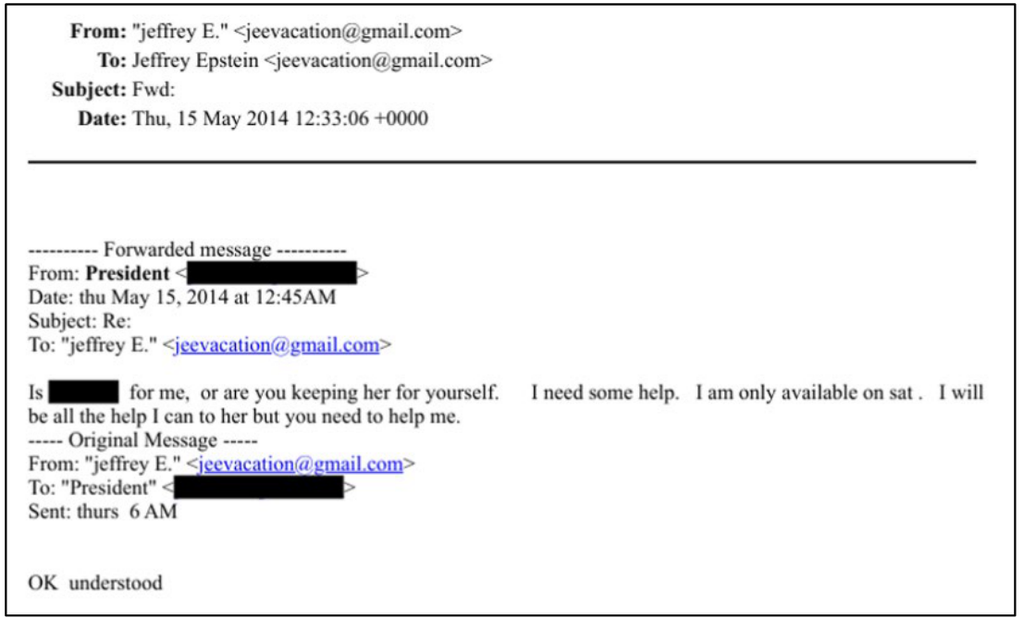
Figure 2: Concert access and the demand for investigation. Page three of the same letter describes the scheduled musical assessment, four tickets, parental reassurance, and the alleged inconsistent redactions. This page is a congressional narrative rather than an original concert booking record.

The images document what Congress published. They do not represent a forensic authentication of the email or a judicial determination of the allegations. No survivor photograph or identifying record is reproduced.
Concert Tickets, Parents, and Institutional Credibility
The letter describes a subsequent concert arrangement involving four orchestra tickets, apparently for Jane Doe’s parents and the parents of another woman who worked for Epstein.
Epstein allegedly asked Botstein to greet the parents and provide special treatment at a Bard concert abroad. A Bard administrator later forwarded correspondence and photographs identifying the group as Epstein’s guests.
The lawmakers’ concern is parental trust. A greeting from a respected conductor and special treatment at a concert could make Epstein’s promises seem credible to families who had reason to question him.
The published account does not establish that every administrator involved knew about exploitation. Nor does it identify every guest or provide a complete event chronology. Institutional assistance and knowing participation in a crime are distinct questions.
Why the Survivor’s Evidence IDs Are Withheld
Footnote five of the federal letter explains that the authors omitted citations to the relevant survivor records because DOJ had left her name visible in hundreds of places. They provided a list privately to DOJ so the records could be corrected.
Consequently, the public letter does not disclose the central email’s EFTA number or the complete identifying document list. Assigning an evidence ID without verification would create a false citation. Publishing a record that exposes Jane Doe would also repeat the privacy failure under scrutiny.
The congressional letter is therefore the public source for this specific account. The separate evidence links below concern institutional contact and travel logistics. They are not substitutes for the withheld Jane Doe records.
Evidence Appearances and Public Document Index
| Record | What the public material supports | Evidentiary limit |
|---|---|---|
| EFTA00284556 | Two 2011 entries for school support totaling $75,000. | The summary does not specify campus or name the payer. |
| EFTA00947246 | Epstein’s November 2012 authorization of $50,000 for BHSEC Queens. | An instruction is distinct from a cleared payment. |
| EFTA01669910, internal EFTA01670180 | $50,000 school check and November 20, 2012 posted debit in the indexed bank packet. | Description based on transcription; the original image requires confirmation for exact visual details. |
| EFTA01119775 | Enhanced Education’s summary lists $125,000 for BHSEC. | Aggregate summary; do not count it again as an additional gift. |
| EFTA01348714 | August 1, 2016 check for $37,500, third quarterly installment of four. | Does not establish all settlements or tracing to Bard. |
| EFTA00406270 | August 2012 correspondence proposing a school location. | Does not establish a completed school visit. |
| EFTA00399132, with continuation pages through EFTA00399136 | December 2012 correspondence involving Botstein’s office, travel to St. Thomas, transport to Epstein’s island, and a proposed return journey. The chain also refers to travel on Leon Black’s aircraft. | Travel arrangements support planned access. This chain alone does not establish criminal conduct or prove every planned movement occurred. |
| EFTA02047292, continuing on EFTA02047293 | July 25, 2016 correspondence coordinating a proposed July 27 helicopter visit to Bard, an opera performance, dinner, and campus security arrangements. | Institutional coordination does not establish that the participants knew about trafficking. |
| EFTA00399276 | Reserved commercial return journey from St. Thomas on December 22, 2012 and Black travel coordination. | Reservation and coordination do not alone prove boarding. |
| EFTA01791081, continuing on EFTA01791082 | Correspondence correcting earlier information about Gratitude America checks to Botstein and Rubin. | Read the correction with the earlier messages; it does not trace an onward donation to Bard. |
| EFTA00841314, continuing on EFTA00841315 | Watch financing, repayment balance, receipt of a check, and proposed installments. | Does not establish final repayment of the complete balance. |
| EFTA02514415 and EFTA02611686 | Supportive communications identified in Times Union reporting. | Awareness of publicity is not identical to knowledge of a particular offense. |
| EFTA02491562, EFTA01619225, and EFTA01617696 | Smolny related document references cited by Raskin. | Congressional interpretation; completed admissions, travel, and knowledge must be established individually. |
| EFTA00710494 and EFTA01208496 | Allen family admissions correspondence cited in congressional scrutiny. | Bard disputed that Epstein influenced the admission decision. |
| October 7 federal letter | The lawmakers’ account of the disputed email, alleged grooming, travel, parental reassurance, and survivor exposure. | The central survivor document IDs are withheld. The letter reports congressional review rather than a judicial finding. |
| October 7 Bard letter | Raskin’s institutional records request and account of whistleblower allegations. | The allegations require independent investigation and do not establish guilt. |
The public evidence index combines directly reviewed correspondence with clearly identified references from reporting and congressional letters. None of the background IDs is represented as the disputed May 2014 Jane Doe email. A document reference does not establish every interpretation attached to it.
The Separate Letter to Bard and Whistleblower Allegations
Raskin’s October 7 letter to Bard addresses board chair Brandon Weber and acting president Jonathan Becker. It says more than a dozen whistleblowers provided information about alleged sexual misconduct and institutional failures.
The reported allegations include:
- Botstein groping women and asking sexualized questions during tenure interviews.
- Protection of faculty accused of misconduct.
- Influence over Title IX adjudication, including after Botstein relinquished his formal role.
- An unnamed senior professor allegedly inviting a male student into bed and supplying alcohol to the point of alcohol poisoning.
Raskin seeks Bard and Smolny records involving Epstein and his associates, materials reviewed by WilmerHale, and records concerning misconduct complaints and Title IX investigations. Specific requests were also supplied privately.
These are separate campus misconduct allegations. They require their own evidence and should not be treated as corroboration of the disputed email.
Bard’s Earlier Review and Botstein’s Two Departures
Bard’s May 1 board announcement confirms that trustees received WilmerHale’s findings on April 30. Botstein then submitted his retirement as president, effective June 30, 2026.
The announcement also committed Bard to strengthening donor vetting, fundraising, and conflict policies and directing Epstein associated funds toward organizations supporting survivors of sexual harm.
Raskin’s June 17 letter questioned whether the review adequately examined institutional involvement, survivor harm, admissions, and connections involving Smolny. It sought records and a transcribed interview with Botstein.
Inside Higher Ed’s October 7 reporting confirms the resignation from remaining Bard roles, Botstein’s denial, and Bard’s promised review and cooperation. The Guardian separately reports Bard’s position that presidential unilateral Title IX authority ended in the 2015 to 2016 academic year.
The description of the first departure also requires context. Inside Higher Ed’s May 20 report, following Guardian reporting, says trustees voted to end Botstein’s presidency in late April. Neither his May 1 retirement letter nor the initial board statement disclosed that vote.
The same report records the departures of trustees James Cox Chambers, Mark Brossman, and Mostafiz ShahMohammed. It reports disagreement among remaining trustees about the vote and succession planning. Their departures should not automatically be assigned a single cause; the report says the reason for their timing was unclear.
A Bard alum also submitted a complaint asking the New York attorney general to investigate board governance. A submitted complaint is not proof that the attorney general opened an investigation or accepted the allegations.
The June retirement and October resignation are separate events. A resignation is not an admission of guilt.
Timeline of the Documents and Institutional Response
| Date | Event | Source and status |
|---|---|---|
| 2011 | Giving summary records two school entries totaling $75,000. | EFTA00284556. Accounting transcription. |
| August 2012 | Botstein’s office proposes a BHSEC Queens meeting. | EFTA00406270. Invitation, not attendance. |
| November 2012 | $50,000 gift authorization followed by a dated and posted school check. | EFTA00947246 and internal EFTA01670180. |
| December 2012 | Island travel arrangements involving Botstein’s office. | EFTA00399132. Documentary logistics. |
| May 2014 | Disputed email and proposed May 17 singing assessment. | October federal letter. Congressional attribution disputed by Botstein. |
| Later in 2014 | Alleged travel, dependency, and parental reassurance described by lawmakers. | October federal letter. Underlying survivor references withheld. |
| July 2016 | Bard helicopter visit coordination. | EFTA02047292. Documentary logistics. |
| August 1, 2016 | $37,500 consulting installment check. | EFTA01348714. Indexed payment record. |
| April 2018 | Watch balance and repayment proposal discussed. | EFTA00841314. Repayment correspondence. |
| May 2023 | Reporting discloses the $150,000 payment and Botstein’s explanation for his earlier omission. | Inside Higher Ed’s account of Times reporting. |
| July 2025 | DOJ and FBI state their review found no evidence warranting investigation of uncharged third parties. | Joint memorandum. Government position. |
| April 30, 2026 | Bard trustees receive WilmerHale findings. | Bard board announcement. |
| June 17, 2026 | Raskin requests records and questions the review’s scope. | Congressional letter to Bard. |
| June 30, 2026 | Botstein’s retirement as president takes effect. | Bard board announcement. |
| October 7, 2026 | Raskin and Dean seek federal investigation; Raskin separately writes to Bard. | Two congressional letters. |
| October 7, 2026 | Botstein’s resignation from remaining Bard positions is reported. | Inside Higher Ed reporting, including his denial and Bard’s response. |
The DOJ Position the Letter Challenges
The July 2025 DOJ and FBI memorandum says the agencies found no incriminating client list, no credible evidence of blackmail of prominent individuals, and no evidence sufficient to predicate investigation of uncharged third parties. It also acknowledges more than 1,000 victims.
Raskin and Dean challenge the third conclusion. Their argument is that the Botstein related material is sufficient to justify investigation, even without evidence already sufficient to prosecute.
These are separate propositions. The existence of many victims does not automatically establish the criminal liability of every associate. Conversely, the absence of an incriminating client list does not answer every question about possible facilitators or individual offenses.
The letter also cites Patel’s September 2025 testimony and Blanche’s July 2025 defense of the memorandum. Those references show that its criticism concerns a continuing public position rather than only a single document.
Investigation Standards and What the Letter Does Not Prove
The Attorney General’s Guidelines for Domestic FBI Operations distinguish assessments, preliminary investigations, and full investigations. Preliminary investigations may begin from information or allegations indicating possible federal criminal activity. Full investigations require a stronger articulable factual basis reasonably indicating a qualifying circumstance, with applicable approval requirements.
Raskin and Dean invoke these guidelines to argue that the records warrant investigation. That argument does not establish probable cause for a particular charge or guilt beyond a reasonable doubt.
The published record leaves several questions unresolved:
- The authorship and full context of the central email.
- Whether any alleged conduct satisfies a specific criminal statute.
- What Botstein knew about Jane Doe’s exploitation.
- Whether federal authorities conducted nonpublic investigative work.
- Which officials reviewed the records and when.
- Whether particular redactions were erroneous, unlawful, or intentional.
- Whether any prosecution remains available under the relevant jurisdiction and limitation rules.
The letter warns that delay can endanger evidence and prosecution opportunities. It does not identify a definitive expiration date for a specific Botstein charge.
Survivor Protection and the Transparency Act
The Epstein Files Transparency Act prohibits withholding, delaying, or redacting records merely because of embarrassment, reputational harm, or political sensitivity. It permits specified protections, including survivor identifying information, medical privacy, child sexual abuse material, certain harmful images, narrowly tailored temporary protection for active federal proceedings, and properly classified information. It requires written redaction justifications.
The lawmakers allege an inversion of those priorities: Jane Doe’s identity exposed while Botstein’s address was concealed. They request an explanation of who directed that treatment and why.
The letter does not supply a complete redaction audit or prove a particular official’s motive. Nonetheless, its allegation identifies a concrete issue for oversight: whether the release process protected survivors consistently and applied a lawful basis to other redactions.
Its demand to reveal everyone’s name except victims should also be distinguished from the statute’s actual list of permitted withholdings. The law contains additional specified exceptions.
Other People the Lawmakers Ask Authorities to Investigate
The federal letter names additional people in its call for investigation:
- Leon Black.
- Jes Staley.
- Les Wexner.
- Sultan Ahmed bin Sulayem.
- Richard Kahn.
- Darren Indyke.
- Lesley Groff.
- Larry Visoski.
The letter does not establish each person’s criminal liability or present a complete case against each. Their inclusion records the lawmakers’ investigative demand, not a shared finding of guilt.
The concluding allegation that federal inaction protects another politically powerful individual is also the authors’ interpretation. The letter itself does not establish that motive through internal decision records.
Independent Sleuth Coverage and Related EpsteinWiki Reading
Butterfly Bureau’s September 2 news update documented Botstein’s sabbatical and Bard’s donor policy changes before the October letters. It provides context for the earlier institutional response, not independent authentication of the disputed email.
EpsteinWiki’s May 4 news update provides earlier coverage of the Bard inquiry. The October correspondence should be read alongside that history while preserving the distinction between reporting, institutional conclusions, and allegations.
Related research resources include:
What the Reviewed Record Establishes
The documented relationship extended across money, travel, cultural programming, and educational access. It continued after Epstein’s conviction. Bard’s outside review criticized Botstein’s judgment and disclosures while finding no illegal conduct in the relationship it examined.
The October letters introduce a sharper allegation: that Epstein used Botstein’s standing to reinforce a young woman’s dependence and reassure her parents. The disputed email makes authorship, context, and knowledge central to that inquiry. Botstein’s denial belongs alongside the allegation, not buried beneath it.
Three conclusions can be stated without overstating the evidence:
- The financial and logistical records warrant a fuller account than a single donation or occasional donor meeting.
- The congressional allegations require examination of the underlying records, including evidence that could support or contradict them.
- Botstein’s departure does not answer the outstanding questions about Bard’s oversight, financial disclosures, or survivor protection.
The remaining work is specific: authenticate the communication, trace the money, establish what assistance was delivered, and determine what the people involved knew. That is how the record can move from public controversy toward accountable findings.
Evidence Scope and Outstanding Records
This profile combines the original October federal letter and its embedded image, published institutional statements, accessible document transcriptions, congressional evidence references, and attributed reporting. It is an extensive public record review, not a certified inventory of every Botstein reference in every release.
The distinction matters because email chains are often duplicated, OCR can misread names and amounts, and a person’s name can appear in attachments that have little bearing on the relationship. Reported counts of thousands of appearances must not be presented as thousands of meetings or unique exchanges.
Some source pages expose searchable text while their original scans remain inaccessible. The evidence index identifies the relevant records without treating every linked PDF as visually authenticated. The congressional email image was visually reviewed. The accounting and logistical records described from searchable transcriptions require the original pages for final quotation and handwriting verification.
The most important outstanding evidence includes:
- Complete email headers, server records, and account access information for the disputed May 2014 message.
- The full surrounding chain, with survivor identifying information protected.
- Records showing whether the scheduled assessment occurred and who attended.
- Concert booking correspondence and administrator records for the parental visit.
- A reconciled Bard ledger identifying each donor entity, gift date, program, and restriction.
- The consulting agreement, work product, complete payment ledger, and documents tracing any onward donation.
- The complete watch repayment ledger and the original exchange cited in the possible forgiveness claim.
- Visitor records, manifests, and attendance evidence separating proposed trips from completed travel.
- Admissions and Smolny files establishing what assistance was actually provided.
- The complete scope, interview list, and supporting materials of the Bard commissioned review.
- Complaint and adjudication records needed to test the campus whistleblower allegations.
- Federal decision records needed to establish what investigators reviewed and what actions they took.
These gaps do not erase documented contacts or make the allegations trivial. They determine which conclusions are currently supportable and which remain unresolved.
Source List
- Botstein’s February 10, 2026 community statement, PDF. His account of the Black gift and fundraising relationship.
- Archived reproduction of Epstein’s March 15, 2013 publicity release. Promotional use of the Bard school connection.
- EFTA00584419 and EFTA00585843. School publicity references, with original scan verification outstanding.
- University Herald, October 8, 2026. Charge status and earlier Bard denial.
- Queens Daily Eagle, February 11, 2026. School donations, Barrett, invitation, and response.
- EFTA00284556. Two 2011 school donation entries.
- EFTA00947246. November 2012 gift authorization.
- EFTA01669910. Bank packet containing the school check on internal page EFTA01670180.
- EFTA01119775. Enhanced Education summary naming $125,000 of school support.
- EFTA00406270. 2012 high school meeting proposal.
- EFTA01348714 and indexed transcription. August 2016 consulting installment check.
- EFTA01144807 and EFTA01088921. Academic essay material.
- OperaWire, February 2026 statement. Botstein’s explanation of literary correspondence.
- Le Monde, February 25, 2026. Lang family educational referral.
- Inside Higher Ed, May 20, 2026. Board vote and governance dispute.
- Inside Higher Ed, May 21, 2026. Recorded response to the review.
- Inside Higher Ed, October 7, 2026. Current resignation, denial, and institutional response.
- Democracy Now, October 8, 2026. Current coverage of the investigation demand.
- OperaWire, October 8, 2026. Consequences for Bard music roles.
- Bard institutional biography. Education and institutional roles.
- Botstein’s February 10, 2026 statement, reproduced by WAMC. His account of fundraising, travel, payments, and the watch.
- WilmerHale public summary, April 30, 2026. Review findings and limitations.
- Inside Higher Ed, May 18, 2023. Consulting payment disclosure.
- EFTA01791081. Check status correction.
- EFTA00841314. Watch repayment correspondence.
- EFTA00399276. Return travel reservation.
- Times Union, February 12, 2026. Supportive messages and Botstein’s response.
- Higher Ed Dive, May 5, 2026. Review and campus access reporting.
- Kate Manne, February 20, 2026. Independent analysis with primary references.
- Greg Conners, April 29, 2026. Research on musician related assistance and logistics.
- The Irish Times, February 5, 2026. Vimal Patel’s reporting on admissions correspondence and Bard’s response.
- Inside Higher Ed, July 1, 2026. Institutional protest and continued roles.
- Times Union, September 2, 2026. Sabbatical and policy changes.
- Bard policy directory. Institutional policies.
- Raskin and Dean to Blanche and Patel, October 7, 2026. Primary congressional letter.
- Raskin to Weber and Becker, October 7, 2026. Institutional inquiry and whistleblower allegations.
- Raskin to Bard trustees, June 17, 2026. Earlier oversight request.
- EFTA00399132 on Epstein Data. December 2012 travel correspondence.
- EFTA02047292 on Epstein Data. July 2016 Bard visit coordination.
- DOJ and FBI memorandum, July 2025. Government review conclusions.
- Attorney General’s Guidelines for Domestic FBI Operations. Investigative standards cited by lawmakers.
- Epstein Files Transparency Act. Disclosure and withholding provisions.
- Bard trustees’ announcement, May 1, 2026. Retirement timing and institutional commitments.
- The Guardian, October 7, 2026. Resignation, denial, and Bard response.
- Butterfly Bureau, September 2, 2026. Earlier independent coverage.
- EpsteinWiki, May 4, 2026. Related internal coverage.