
Mohammed bin Salman
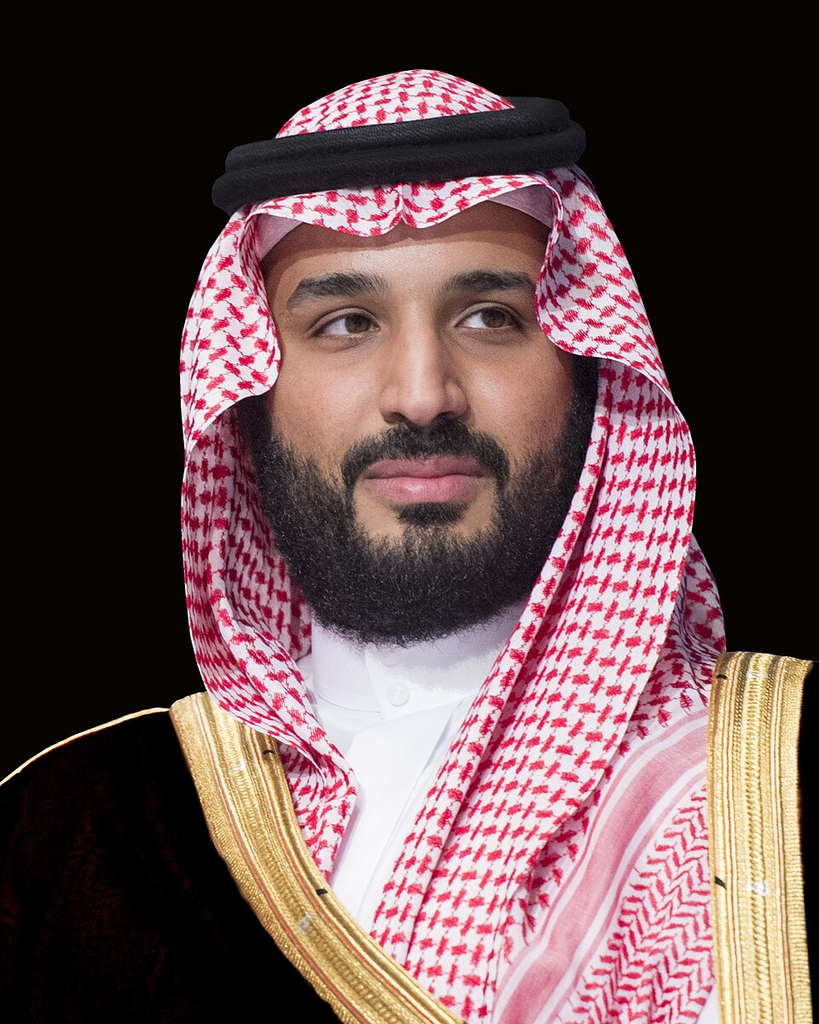
By Saudi Press Agency (SPA), CC BY-SA 4.0, Link
Snapshot
Released emails, aviation records, photographs, and investigative reporting establish that Jeffrey Epstein pursued access to Mohammed bin Salman, commonly known as MBS, during the period when the Saudi prince was becoming the dominant political figure in Saudi Arabia.
The strongest evidence concerns a November 2016 visit to Riyadh.
Epstein’s staff prepared for the trip by referring to an invitation from Mohammed bin Salman and Saudi official Raafat Al Sabbagh. Aviation records place Epstein’s Gulfstream aircraft in Riyadh for approximately forty eight hours. A later letter drafted by Epstein said that he and MBS had met and laughed on November 7, 2016.
Additional records show Epstein offering financial advice concerning Saudi Arabia, the proposed public sale of Saudi Aramco, sovereign financial structures, and exposure to United States litigation. Epstein also claimed that MBS sent him a traditional tent with carpets after the Saudi visit.
A photograph of Epstein with MBS was reportedly displayed prominently inside Epstein’s Manhattan townhouse. Epstein later told a journalist that he knew and had hosted the prince.
These records support the conclusion that Epstein secured at least some form of access to MBS and attempted to convert that access into financial and geopolitical influence. They do not establish that MBS participated in Epstein’s sexual offenses, knew about his trafficking operation, hired him as an official adviser, paid him, visited his properties, or traveled aboard his aircraft.
No public survivor allegation accuses MBS of participating in Epstein’s abuse.
Who Is Mohammed bin Salman
Mohammed bin Salman bin Abdulaziz Al Saud is the son of Saudi Arabia’s King Salman.
He became defense minister in January 2015 and was named deputy crown prince in April 2015. He was elevated to crown prince in June 2017, replacing Mohammed bin Nayef.
MBS became closely associated with Saudi Vision 2030, an economic transformation program intended to reduce the Kingdom’s dependence on oil, attract foreign investment, expand the private sector, and develop new industries.
The proposed sale of part of Saudi Aramco was originally presented as a central element of that program.
When Epstein traveled to Riyadh in November 2016, MBS was deputy crown prince, defense minister, and second deputy prime minister. He had not yet become crown prince.
That timeline matters because several later accounts refer to him by the title he subsequently acquired.
Epstein’s Search for Saudi Access
Epstein cultivated political leaders, diplomats, financiers, academics, scientists, and wealthy families around the world.
His strategy frequently involved presenting himself as someone who could:
- Explain complicated financial structures
- Introduce government officials to investors
- Arrange meetings with powerful people
- Provide informal political intelligence
- Connect sovereign wealth with technology and finance
- Operate outside ordinary institutional channels
Saudi Arabia offered an unusually valuable opportunity. The Kingdom controlled enormous financial resources and was considering one of the largest corporate transactions in history through the proposed sale of Saudi Aramco shares.
Released records show Epstein entering discussions about those plans during 2016, the same year his staff began preparing for his trip to Riyadh.
Raafat Al Sabbagh
One of Epstein’s most important Saudi contacts was Raafat Al Sabbagh.
Released emails identify Al Sabbagh as a participant in discussions involving Saudi economic policy, Aramco, Epstein’s travel, and access to senior Saudi officials.
In May 2016, Epstein proposed creating a currency linked to Saudi oil rather than simply selling Aramco shares. Contemporary correspondence indicates that Al Sabbagh was in the United States and met Epstein during this period.
Epstein and Al Sabbagh occasionally referred to an unnamed “boss.” Some later communications suggest that this may have meant Mohammed bin Salman, but the earlier messages do not always identify the person directly.
That distinction is important. A reference to an unnamed boss cannot automatically be attributed to MBS unless the surrounding record supplies enough information to make the identification reliable.
The New Arab’s review of the released correspondence traces the discussions from Epstein’s May 2016 proposal through the later letter explicitly addressed to MBS.
Aziza Al Ahmadi
Aziza Al Ahmadi also appears repeatedly in Epstein’s Saudi correspondence.
The records portray her as an intermediary involved in travel arrangements, financial proposals, and communications with people associated with Saudi government departments.
Al Ahmadi worked with Epstein on documents concerning the Kingdom’s finances and the proposed Aramco transaction. She was also involved in the November 2016 visa arrangements.
Reuters reported that it could not independently establish Al Ahmadi’s precise role in Epstein’s activities. She should therefore be described as an intermediary appearing in the released correspondence, not as a confirmed representative of MBS unless a particular document identifies her that way.
The Invitation From MBS
On November 1, 2016, one of Epstein’s assistants wrote about obtaining a Saudi visa.
The assistant said that Al Ahmadi had suggested taking Epstein’s passport to the Saudi consulate and explaining that Epstein had an invitation from Mohammed bin Salman and Raafat Al Sabbagh. The message described the visit as urgent.
Epstein replied affirmatively.
EFTA02192195 contains the invitation and visa communication. It is some of the strongest documentary evidence connecting Epstein’s planned Saudi visit directly to MBS.
Related and overlapping records include EFTA01739088, EFTA02191969, and EFTA02193026.
These documents establish that Epstein’s staff understood him to have an invitation connected with MBS and Al Sabbagh. They do not contain a message written personally by MBS, and they do not independently establish who authorized the invitation within the Saudi government.
The records nevertheless go beyond a general claim that Epstein wanted to visit Saudi Arabia. His staff invoked MBS by name while obtaining official travel documents for a trip that subsequently occurred.
The November 2016 Flight to Riyadh
Aviation records place Epstein’s Gulfstream G550 at King Khalid International Airport in Riyadh on November 7, 2016.
According to Business Insider’s analysis of aviation tracking data, the aircraft landed at approximately 6:35 in the evening local time after traveling from Paris.
The aircraft remained in Riyadh for approximately forty eight hours before returning toward Paris on November 9.
The tracking data identifies the aircraft but does not provide a passenger manifest. Aviation data alone therefore cannot prove that Epstein was physically aboard every section of the journey.
The invitation records, staff communications, later correspondence, and Epstein’s own description of the visit make his presence in Riyadh considerably more plausible than the aircraft record would by itself.
MBS was also in Riyadh during this period. Saudi public reporting placed him at government events on November 8 and in a meeting concerning investment opportunities on November 9.
The presence of both men in the same city does not independently prove a meeting. The later correspondence supplies the more direct evidence.
Epstein’s Statement That He Met MBS
In October 2017, Epstein and Al Ahmadi worked on a financial letter explicitly addressed to Mohammed bin Salman.
The proposed opening referred to November 7 as the first anniversary of a meeting between Epstein and MBS. Epstein wrote that they had met and laughed, that MBS had since become crown prince, and that Epstein had remained a friend.
The New Arab reproduced the relevant released correspondence.
This statement closely matches the date on which Epstein’s aircraft arrived in Riyadh.
Taken together, the evidence shows:
- Epstein’s staff referred to an invitation from MBS.
- Epstein obtained or sought a Saudi visa on that basis.
- Epstein’s aircraft landed in Riyadh on November 7, 2016.
- Epstein later described November 7 as the date when he and MBS met.
This is substantially stronger than a single unsupported claim.
However, the released document appears to involve the preparation of a letter. The public record does not establish whether the final version was delivered, whether MBS read it, or whether he accepted Epstein’s description of their relationship.
The Tent and Carpets
After the Saudi trip, Epstein told Hyatt executive chairman Tom Pritzker that MBS had sent him a tent with carpets.
A traditional tent can represent hospitality in Saudi and wider Arab culture. The claimed gift therefore fits the context of a visit hosted or recognized by Saudi contacts.
CBS News reported on Epstein’s message and the surrounding travel records.
An earlier planning message from Epstein’s staff had asked whether it was necessary to reserve the Four Seasons in Riyadh or whether “the king” would handle his accommodation.
These communications show how Epstein and his staff described the trip. They do not independently establish that King Salman arranged Epstein’s lodging or that MBS personally selected, authorized, or dispatched the tent.
The gift remains an attributed claim made by Epstein. No publicly released Saudi invoice, shipping document, royal correspondence, or statement from MBS independently verifies its origin.
The Photograph Displayed in Manhattan
After Epstein’s death, reporting drew attention to a photograph of Epstein with Mohammed bin Salman that had been displayed inside Epstein’s Manhattan townhouse.
CBS News reported that the image was prominently displayed. Earlier reporting by The New York Times described Epstein’s claims of knowing and hosting MBS.
EFTA00076625 preserves reporting concerning the MBS image inside the townhouse.
Journalist Edward Jay Epstein, who is not related to Jeffrey Epstein, also recalled seeing photographs involving Jeffrey Epstein, MBS, and Mohammed bin Zayed during an April 2013 visit to the townhouse. His account appeared in Air Mail.
The recollection included images of the men in casual settings, including beach clothing and snorkeling equipment. The released public record does not provide reliable dates, locations, original image files, or complete context for every photograph described.
A photograph can establish that two people were together when the image was created. Without verified metadata, it cannot establish when they met, the nature of the relationship, or what either person knew about the other.
The prominent display is also consistent with Epstein’s broader habit of using photographs with powerful people as social proof.
Epstein’s Claim That He Hosted MBS
Epstein told a New York Times reporter that he personally knew MBS and had hosted him.
Business Insider summarized the claim while reporting on the Riyadh flight and the portrait displayed in Epstein’s townhouse.
The word “hosted” is ambiguous. It could mean that Epstein entertained MBS at a residence, dinner, meeting, or another private gathering. The available reporting does not establish where or when every claimed visit occurred.
No publicly released visitor log, security record, calendar entry, photograph with verified location data, or statement from MBS confirms that he visited Epstein’s Manhattan townhouse.
Epstein’s claim is relevant because it forms part of a larger pattern supported by the invitation, Riyadh travel, and photograph. It should not be treated as independently verified merely because Epstein repeated it to a journalist.
Epstein’s Saudi Financial Proposals
Epstein’s interest in MBS was not limited to social access.
Released correspondence shows Epstein attempting to influence Saudi financial policy during a period when the Kingdom was developing Vision 2030 and preparing a possible public sale of Saudi Aramco.
In EFTA02449301, Epstein sent Al Ahmadi, Al Sabbagh, and former Norwegian diplomat Terje Rod Larsen a detailed assessment of Saudi financial risks.
Epstein warned that international financiers would view the Kingdom as a source of money to exploit. He argued that Saudi Arabia should avoid exposing strategic assets to foreign shareholders and litigation.
The document discusses:
- Saudi sovereign financial structures
- Aramco ownership
- Foreign investors
- Legal exposure in the United States
- The use of oil and other assets in international transactions
- Alternatives to a conventional public sale
The email proves that Epstein produced and circulated financial advice to people associated with Saudi discussions. It does not establish that MBS commissioned the advice or that the Saudi government adopted it.
The Aramco Proposal
Saudi Arabia originally considered selling approximately five percent of Saudi Aramco as part of its economic transformation program.
Epstein opposed a conventional listing on an American or European stock exchange.
He argued that public shareholders would gain legal and financial rights that could expose the Kingdom to external scrutiny, market pressure, and litigation. He was particularly concerned about the Justice Against Sponsors of Terrorism Act, known as JASTA.
JASTA expanded the circumstances in which foreign states could face civil claims in United States courts for alleged support of terrorism. Epstein warned that plaintiffs might attempt to attach publicly traded Saudi assets or shares to satisfy a judgment.
Reuters found dozens of communications in which Epstein discussed the proposed Aramco offering.
In September 2016, he warned Al Ahmadi and Rod Larsen that a public listing could expose Saudi assets to lawsuits and seizure attempts.
In October 2017, Epstein proposed that Saudi Arabia give China an option to acquire a stake valued at approximately $100 billion rather than conduct a conventional public offering.
Epstein also suggested structures involving debt, oil, property, currencies, and a digital currency designed to comply with Islamic financial principles.
These were proposals. Reuters could not determine how much influence Epstein achieved or whether Saudi decision makers followed his advice.
The Letter Addressed to MBS
The October 2017 draft was more direct than the earlier financial correspondence because it named Mohammed bin Salman as the intended recipient.
Epstein described a traditional public listing as unwise and argued that Saudi Arabia should structure financing in a way that preserved sovereign control.
He proposed alternatives involving China, debt, strategic resources, and specialized financial instruments.
The letter’s opening also described Epstein as remaining a friend of MBS after their claimed November 2016 meeting.
The document is important for two separate reasons:
- It shows Epstein attempting to communicate financial advice directly to MBS.
- It records Epstein’s own description of a prior personal meeting.
It does not establish that MBS requested the letter, received it, responded to it, or regarded Epstein as a friend.
Was Epstein an Official Saudi Adviser
No released contract establishes that Epstein served as an official adviser to MBS, Saudi Arabia, the Public Investment Fund, or Saudi Aramco.
The available public evidence does not contain:
- An employment agreement
- An advisory contract
- A government appointment
- A Saudi payment to Epstein
- A fee schedule
- A completed investment mandate
- A statement from MBS acknowledging Epstein as an adviser
- Evidence that Saudi Arabia implemented a policy because Epstein recommended it
Saudi officials previously denied that Epstein advised the government on financial matters. Following later document releases, officials did not provide detailed public responses to several media inquiries.
The most accurate description is that Epstein offered or attempted to provide financial advice through intermediaries connected with Saudi discussions. The evidence does not justify describing him as a formally retained adviser to MBS.
Aramco’s Eventual Public Sale
Saudi Arabia delayed the international Aramco offering that had originally been planned for 2018.
Aramco was ultimately listed on the Saudi exchange in December 2019, several months after Epstein’s death. The transaction did not follow Epstein’s proposed China option or every element of his alternative structure.
Some of Epstein’s correspondents later suggested that his warnings about the original plan had been correct.
Those comments establish that Epstein had expressed an opinion about the offering. They do not prove that MBS followed his advice or that Epstein caused the delay.
Saudi economic policy involved government ministries, financial advisers, international banks, legal concerns, market conditions, oil prices, and political considerations. Similar concerns about valuation and legal exposure were discussed by many financial professionals.
The 2017 Saudi Purge
In November 2017, Saudi authorities detained princes, ministers, and business leaders at the Ritz Carlton in Riyadh as MBS consolidated control.
New York Times journalist Landon Thomas Jr. asked Epstein whether his Saudi friends had survived the purge.
Epstein replied that they all had, adding a reference to divine assistance.
HOUSE_OVERSIGHT_022947 contains the exchange. CBS News also reported the communication.
The message shows that Epstein presented himself as having multiple Saudi contacts. It does not identify every contact, prove that they were close to MBS, or establish that Epstein intervened on anyone’s behalf.
Epstein Followed MBS’s Washington Visit
MBS made a major visit to the United States in March 2018. The trip included meetings with political leaders, technology executives, investors, and media figures.
On February 28, Epstein sent a message to a correspondent who appears from the context to have been Steve Bannon, stating that MBS was coming to Washington on March 19.
The reply referred to a planned breakfast involving Jared Kushner.
EFTA02518865 preserves the exchange.
The document proves that Epstein was tracking MBS’s travel and discussing the visit with someone connected to United States politics.
It does not establish that Epstein arranged the breakfast, attended it, met MBS in Washington, or had access to confidential travel information. MBS’s visit was a significant diplomatic event that became publicly known.
The Louvre Message
In April 2018, Epstein discussed another possible encounter involving MBS.
A message attributed to Epstein stated that MBS had the Louvre and hundreds of guards to himself. Epstein then indicated that he was heading toward the location.
French President Emmanuel Macron publicly appeared with MBS at the Louvre that evening.
CBS News examined the message and the corresponding public event. French officials did not confirm to CBS that Epstein entered the museum or met the prince.
The message proves that Epstein claimed he was going to the Louvre while MBS was there. It does not prove that he entered the secured area, participated in the meeting, or spoke with MBS.
Peter Thiel and the MBS Recommendation
In May 2017, technology investor Peter Thiel asked Epstein whom he should meet in the Middle East.
Epstein recommended MBS in Saudi Arabia and Hamad bin Jassim in Qatar.
EFTA01045377 contains the exchange.
The email shows that Epstein presented MBS as a valuable potential contact. It also demonstrates how Epstein used the names of political leaders when advising influential people.
The message does not establish that Epstein arranged a meeting between Thiel and MBS or that he had authority to speak for the prince.
The Khashoggi Messages
Saudi journalist Jamal Khashoggi was killed inside the Saudi consulate in Istanbul on October 2, 2018.
After the killing, Epstein exchanged messages about MBS, Mohammed bin Zayed, international reporting, and rumors concerning possible recordings of the operation.
EFTA00508822 contains messages from November 2018 in which Epstein shared reporting about MBS and discussed the prince’s political position.
Overlapping records include EFTA01614485, EFTA01614519, and EFTA01615413.
These messages occurred after Khashoggi’s killing. They largely concern news reports, political analysis, and speculation circulating at the time.
The records do not establish that Epstein knew about the operation in advance, possessed an original recording, participated in Saudi decision making, or obtained information directly from MBS.
The Khashoggi communications should not be treated as evidence that Epstein had a role in the killing.
The Planned 2019 Saudi Visit
Messages reviewed by CBS News indicate that Epstein was considering another trip involving Saudi Arabia during the summer of 2019.
The trip did not occur because federal authorities arrested Epstein in July 2019.
A planned visit shows that Epstein continued to view Saudi Arabia as part of his international network. It does not establish whom he intended to meet or whether MBS had approved another visit.
The Austrian Passport and Saudi Residence
When federal investigators searched Epstein’s Manhattan property in 2019, they discovered an expired Austrian passport bearing Epstein’s photograph under a different name.
The passport listed Saudi Arabia as the holder’s residence and contained travel stamps from the 1980s.
EFTA00021627 contains material concerning the passport, the false identity, and travel stamps involving Saudi Arabia and several European countries.
The passport is evidence that Epstein had a much older connection to Saudi Arabia or wanted authorities to believe that he did.
It is not evidence of an early relationship with MBS.
MBS was born in 1985 and was a child during the period associated with the passport. The passport therefore cannot reasonably be used to prove that MBS knew Epstein at that time.
The false identity has generated extensive speculation about intelligence activity. The passport alone does not establish that Epstein worked for Saudi, American, Israeli, British, or any other intelligence service.
MBS and MBZ Are Different People
Mohammed bin Salman and Mohammed bin Zayed are frequently confused in discussions of the Epstein records.
They are different people from different countries.
Mohammed bin Salman, abbreviated MBS, is the crown prince of Saudi Arabia.
Mohammed bin Zayed, abbreviated MBZ, is the president of the United Arab Emirates and ruler of Abu Dhabi.
Hamad bin Jassim, sometimes abbreviated HBJ, is a former prime minister of Qatar.
Sultan Ahmed bin Sulayem is an Emirati business executive formerly associated with DP World.
An email, photograph, flight, or meeting involving one of these individuals cannot be transferred to another merely because they appear in the same regional network or have similar names.
Epstein maintained or pursued contacts throughout Saudi Arabia, the United Arab Emirates, Qatar, and other Middle Eastern states. Those relationships must be evaluated separately.
No Evidence of MBS Visiting Epstein’s Properties
No verified public record establishes that MBS visited:
- Little Saint James
- Epstein’s Palm Beach residence
- Zorro Ranch
- Epstein’s Paris apartment
- Epstein’s New Mexico properties
- Epstein’s Manhattan townhouse
Epstein claimed that he had hosted MBS, but the available public evidence does not identify a confirmed property, date, visitor log, or security record.
No released passenger manifest places MBS aboard Epstein’s aircraft.
The documented Riyadh journey involved Epstein traveling toward MBS’s country, not evidence of MBS traveling aboard Epstein’s plane.
No Public Survivor Allegation Involving MBS
No publicly identified Epstein survivor has accused Mohammed bin Salman of sexual abuse, trafficking, recruitment, or participation in Epstein’s criminal operation.
No criminal indictment, civil judgment, or judicial finding connects MBS to Epstein’s sexual offenses.
No released record reviewed for this article establishes that MBS:
- Received women or girls from Epstein
- Visited Epstein’s island
- Participated in sexual activity arranged by Epstein
- Funded Epstein’s trafficking operation
- Helped conceal Epstein’s offenses
- Interfered with an Epstein investigation
- Knew the full nature of Epstein’s abuse
The absence of such evidence does not answer every question about the relationship. It establishes the boundary between documented access and unsupported criminal accusation.
Why MBS Was Valuable to Epstein
Access to MBS offered Epstein several forms of prestige.
MBS controlled or influenced major decisions involving Saudi investment, energy, technology, defense, diplomacy, and economic reform.
A relationship with the prince could help Epstein present himself as:
- An adviser to governments
- A specialist in sovereign finance
- A bridge between political leaders and investors
- A source of privileged geopolitical information
- A person trusted by rulers and royal families
- An intermediary capable of arranging rare introductions
The invitation, Riyadh trip, photograph, financial letters, and later claims all enhanced that image.
Epstein did not need an official Saudi title to benefit. The appearance of access could itself be converted into credibility with other wealthy and powerful people.
What the Evidence Establishes
The available evidence establishes that:
- Epstein communicated with intermediaries involved in Saudi financial and travel discussions.
- Epstein offered detailed advice concerning Saudi finances and Saudi Aramco.
- Epstein’s staff referred to an invitation from Mohammed bin Salman and Raafat Al Sabbagh.
- Epstein sought a Saudi visa using that claimed invitation.
- Epstein’s Gulfstream aircraft landed in Riyadh on November 7, 2016.
- The aircraft remained in Riyadh for approximately forty eight hours.
- Epstein later described November 7 as the date when he and MBS met.
- Epstein drafted or helped prepare a financial letter explicitly addressed to MBS.
- Epstein claimed that MBS sent him a tent with carpets following the Saudi visit.
- A photograph of Epstein with MBS was reportedly displayed inside Epstein’s Manhattan residence.
- Epstein told a journalist that he knew and had hosted MBS.
- Epstein recommended MBS as a potential contact when Peter Thiel asked whom to meet in the Middle East.
- Epstein tracked MBS’s 2018 visit to Washington.
- Epstein claimed he was heading toward the Louvre while MBS was visiting it.
- Epstein continued discussing MBS and Saudi affairs after the Khashoggi killing.
- Epstein planned another Saudi visit in 2019 that did not occur.
What the Evidence Does Not Establish
The evidence does not establish that:
- MBS participated in Epstein’s sexual offenses.
- MBS knew about Epstein’s trafficking operation.
- MBS traveled aboard Epstein’s aircraft.
- MBS visited Little Saint James or another Epstein property.
- MBS hired Epstein as an official adviser.
- The Saudi government paid Epstein.
- Saudi Arabia implemented Epstein’s Aramco proposals.
- MBS personally issued Epstein’s visa.
- MBS personally arranged Epstein’s accommodation.
- MBS personally sent the claimed tent and carpets.
- Every meeting or visit claimed by Epstein occurred.
- Epstein attended the Louvre gathering involving MBS and Macron.
- Epstein possessed confidential knowledge about the Khashoggi killing.
- Epstein’s Austrian passport proves a Saudi intelligence relationship.
- A photograph with MBS proves knowledge of or participation in criminal conduct.
Investigative Assessment
The evidence supporting contact between Epstein and MBS is stronger than a single photograph or an isolated name in an address book.
The invitation communication, visa arrangements, Riyadh flight, matching date, later description of a personal meeting, and financial letter addressed to MBS form a connected documentary sequence.
That sequence supports a reasonable conclusion that Epstein obtained access to MBS in or around November 2016.
The exact depth of the relationship remains uncertain.
Epstein described himself as a continuing friend, claimed to have hosted MBS, and displayed their photograph. Those actions may reflect a genuine relationship, Epstein’s tendency to exaggerate elite access, or a mixture of both.
The evidence concerning financial influence is more limited. Epstein clearly produced proposals and circulated them through Saudi connected intermediaries. No public record proves that MBS retained him, paid him, accepted his advice, or made policy decisions because of it.
The appropriate classification is:
Documented access and attempted financial influence, without evidence connecting MBS to Epstein’s trafficking crimes.
Key Takeaways
- Epstein’s Saudi contacts helped arrange a November 2016 visit associated with an invitation bearing MBS’s name.
- Epstein’s aircraft landed in Riyadh on the date he later identified as the day he met MBS.
- Epstein attempted to advise Saudi contacts about Aramco, sovereign finance, foreign investors, and litigation risks.
- A later financial letter was addressed explicitly to MBS.
- Epstein claimed that MBS sent him a tent and carpets after the Saudi visit.
- Epstein displayed a photograph involving MBS inside his Manhattan townhouse.
- Epstein used MBS’s name when advising other influential people about Middle Eastern contacts.
- Some later messages document Epstein following MBS’s public movements and political problems, but do not prove direct communication.
- No released contract establishes that Epstein was an official adviser to MBS or Saudi Arabia.
- No public survivor allegation, criminal charge, or court finding connects MBS to Epstein’s sexual offenses.
Related EpsteinWiki Articles
- Jeffrey Epstein
- Little Saint James
- Zorro Ranch
- Epstein Flight Logs
- Terje Rod Larsen
- Steve Bannon
- Peter Thiel
- Jared Kushner
- United States Department of Justice Epstein Library
- How to Read an Epstein Document
Primary Evidence Sources
- EFTA02192195 contains the November 2016 communication stating that Epstein had an invitation from Mohammed bin Salman and Raafat Al Sabbagh. It documents the basis presented for the visa request.
- EFTA01739088 contains related correspondence concerning the Saudi trip and invitation process.
- EFTA02191969 preserves overlapping visa and consular logistics associated with the trip.
- EFTA02193026 contains additional communications concerning Epstein’s Saudi travel documentation.
- EFTA02449301 contains Epstein’s detailed financial advice concerning the Kingdom, Aramco, foreign investors, and legal exposure.
- EFTA01045377 records Epstein recommending MBS when Peter Thiel asked whom he should meet in the Middle East.
- EFTA02518865 records Epstein discussing MBS’s March 2018 Washington visit with an apparent political contact.
- EFTA00508822 contains post Khashoggi messages about MBS, MBZ, press reports, and political consequences.
- EFTA01614485 preserves overlapping communications concerning MBS and the aftermath of the Khashoggi killing.
- EFTA01614519 contains related political discussion involving MBS and MBZ.
- EFTA01615413 contains another portion of the later MBS discussion.
- EFTA00076625 preserves reporting concerning the MBS photograph or portrait displayed in Epstein’s Manhattan residence.
- EFTA00021627 concerns Epstein’s expired Austrian passport under a false identity and its listed Saudi residence.
- HOUSE_OVERSIGHT_022947 records Epstein’s response when asked whether his Saudi contacts had survived the 2017 purge.
External Sources
- CBS News investigation into Epstein’s relationship with Saudi Arabia
- Business Insider investigation of Epstein’s November 2016 flight to Riyadh
- Reuters review of Epstein’s Middle Eastern network and Aramco discussions
- The New Arab investigation of Epstein’s Saudi financial proposals
- Air Mail account describing photographs involving Epstein, MBS, and MBZ
- The New York Times reporting on Epstein’s mansion and claims of elite access
- United States Department of Justice Epstein Library
- Official Saudi Vision 2030 website
- Official Saudi Aramco website
- United States Congress record for the Justice Against Sponsors of Terrorism Act