
Marvin Minsky: The Scientist Who Gave Epstein Intellectual Credibility
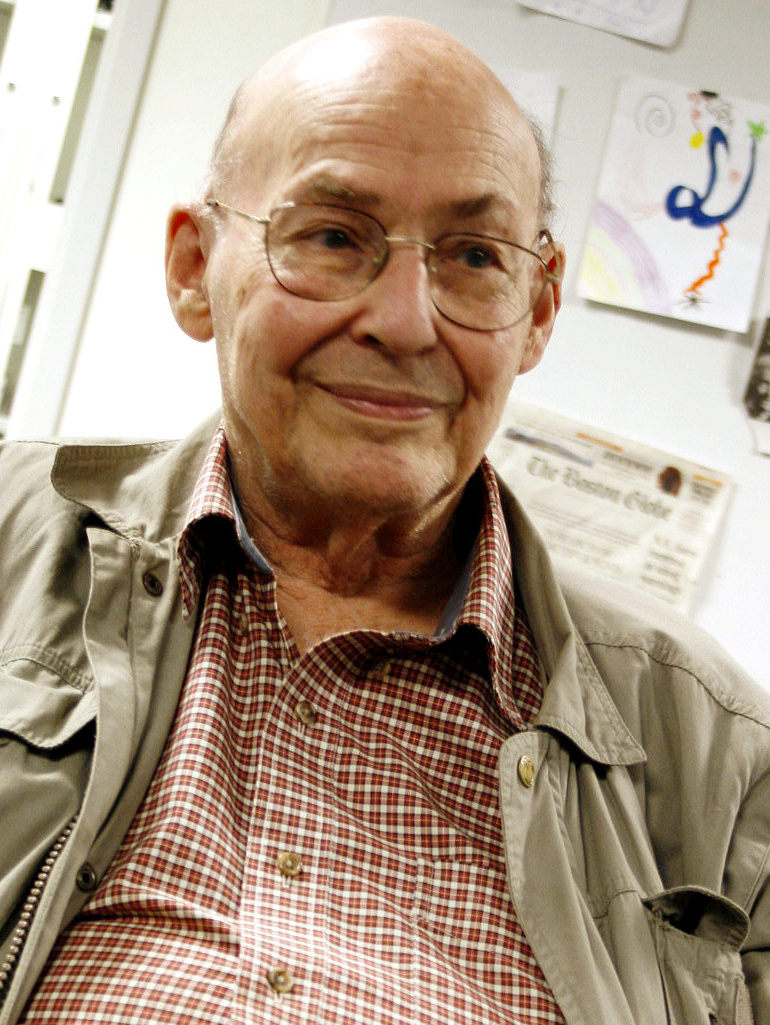
By The original uploader was Sethwoodworth at English Wikipedia. – Transferred from en.wikipedia to Commons by Mardetanha using CommonsHelper., CC BY 3.0, Link
Jeffrey Epstein did not need to understand artificial intelligence to exploit its prestige. He needed scientists whose names made him appear serious.
Marvin Lee Minsky was one of the most influential computer scientists of the twentieth century. He helped establish the field of artificial intelligence, cofounded the Massachusetts Institute of Technology’s Artificial Intelligence Laboratory, advised generations of researchers, and received some of the highest honors available in computer science.
He was also an early recipient of Jeffrey Epstein’s money.
In 2002, Epstein gave MIT $100,000 to support Minsky’s research. It was Epstein’s first documented donation to MIT. Minsky worked with Epstein to organize a private artificial intelligence conference, traveled within Epstein’s network, communicated with him for years, and was described by MIT professor Nicholas Negroponte as Epstein’s “closest friend.”
MIT’s internal correspondence later claimed that Minsky even visited Epstein while Epstein was serving his sentence in Florida. The available MIT report did not independently verify that visit, but the claim came from people familiar with both men.
At the center of the record is a far more serious allegation. Virginia Giuffre testified that Marvin Minsky helped build the field of artificial intelligence. Jeffrey Epstein helped finance his work, brought him into private gatherings, traveled with him, and used Minsky’s reputation to advertise himself as a patron of serious science.
Their association began before Epstein’s first public criminal investigation. It reportedly continued after Epstein became a registered sex offender.
At the center of the record is Virginia Giuffre’s allegation that Ghislaine Maxwell directed her to have sex with Minsky on Little Saint James. Giuffre later provided a more detailed account in her posthumously published memoir.
Minsky died in January 2016, before the accusation became public. He therefore never answered it himself.
His widow, Gloria Rudisch, denied that the encounter occurred. She said she accompanied her husband during their visits to Epstein and was always with him.
The public record does not contain a criminal charge, civil judgment, or judicial finding against Minsky. It does contain a documented relationship involving money, travel, scientific events, correspondence, and Epstein’s repeated use of Minsky’s name to build his own reputation.
Who Was Marvin Minsky?
Marvin Lee Minsky was born in New York City on August 9, 1927.
He served in the United States Navy during World War II, earned a mathematics degree from Harvard University in 1950, and completed a doctorate in mathematics at Princeton University in 1954.
After serving as a junior fellow at Harvard, Minsky joined the Massachusetts Institute of Technology faculty in 1958. The following year, he and John McCarthy founded what became the MIT Artificial Intelligence Laboratory.
Minsky’s work ranged across:
- Artificial intelligence
- Cognitive science
- Neural networks
- Robotics
- Machine perception
- Human learning
- Computational theories of the mind
His books included The Society of Mind and The Emotion Machine. He received the Association for Computing Machinery’s Turing Award in 1969 and became one of the most influential figures in the history of artificial intelligence.
That stature made him particularly valuable to Epstein.
Epstein did not possess Minsky’s scientific credentials. Association with Minsky allowed Epstein to present himself as a legitimate participant in advanced research rather than a wealthy outsider purchasing proximity to famous minds.
How Minsky Entered Epstein’s Scientific Network
The exact date and circumstances of Minsky’s first meeting with Epstein remain uncertain.
The verified record establishes that the two men were associated by the early 2000s. By 2002, they had worked together to organize an artificial intelligence conference, and Epstein made a substantial donation to MIT for Minsky’s research.
The relationship was part of a wider strategy.
Epstein cultivated scientists through:
- Private dinners
- Travel
- Research grants
- Conferences
- Invitations to his homes
- Introductions to wealthy patrons
- Direct access without conventional grant bureaucracy
Scientists supplied Epstein with something money alone could not create: intellectual credibility.
Minsky was one of the earliest and most prestigious scientists publicly associated with Epstein.
The 2001 Flight Records
Epstein related aviation records contain two flight entries associated with Minsky.
Epstein Data’s Marvin Minsky entity profile identifies two flights and connections involving Epstein, Maxwell, Adriana Ross, Henry Jarecki, and other passengers.
Publicly indexed summaries describe travel between Teterboro Airport in New Jersey and Santa Fe, New Mexico. The records appear to represent two legs of the same journey rather than two unrelated trips.
Flight records require careful interpretation.
A passenger manifest establishes recorded travel. It does not establish what happened at the destination or whether the passenger knew about Epstein’s crimes.
The records are important because they independently corroborate that Minsky’s relationship with Epstein included travel rather than only an institutional donation.
The available entries should not be described as Little Saint James flights unless the specific route and manifest establish travel to the Virgin Islands.
Virginia Giuffre’s Allegation
The most serious allegation concerning Minsky appears in Virginia Giuffre’s sworn testimony.
During her 2016 deposition, Giuffre was questioned about men to whom she said Epstein and Maxwell had directed her.
The questioning included the following exchange:
“Were you directed to have sex with Marvin Minsky?”
Giuffre answered affirmatively.
The questioning identified the location as Epstein’s private island in the United States Virgin Islands.
The allegation became widely public in August 2019 after records from Giuffre v. Maxwell were unsealed. The Verge reported that Giuffre said she was directed to have sex with Minsky when he visited Epstein’s Virgin Islands property.
The deposition was sworn testimony. It was not a judicial finding that an encounter occurred.
Giuffre’s Account in Nobody’s Girl
Giuffre provided a more detailed account in her posthumously published memoir, Nobody’s Girl: A Memoir of Surviving Abuse and Fighting for Justice.
In the book, Giuffre identified Minsky as an older computer scientist whom Epstein and Maxwell directed her to sexually service on the island. She remembered hearing water outside the room and using that sound to mentally distance herself from the alleged encounter.
Giuffre described herself as seventeen at the time.
That detail is important because Giuffre was born on August 9, 1983. An encounter while she was seventeen would have occurred between August 2000 and August 2001. Any attempt to associate the allegation with a particular Minsky conference or island event must fit that date range.
The exact date has not been independently established in the located records.
Ellie Leonard discusses Giuffre’s account and the wider academic network in “Epstein University”.
Giuffre’s memoir is evidence of her account. It is not independent corroboration because it comes from the same person who gave the deposition testimony.
What Giuffre’s Allegation Establishes
Giuffre’s testimony establishes that she identified Minsky under oath as someone to whom Epstein and Maxwell directed her on Little Saint James.
Her memoir adds a narrative description of the alleged encounter.
The allegation should not be minimized as Minsky merely being “named in the files.” Giuffre did not mention him as a guest, donor, or casual acquaintance. She identified him as an alleged recipient of sexual trafficking.
At the same time, an encyclopedia must distinguish an allegation from an adjudicated fact.
No located public record shows:
- A criminal charge against Minsky
- A civil lawsuit against Minsky or his estate
- A judicial finding that the encounter occurred
- An admission from Minsky
- A contemporaneous complaint to law enforcement identifying Minsky
- A known witness to the alleged encounter
- A payment record directly tied to the alleged encounter
- A surviving message discussing the alleged encounter
Minsky died before the allegation was publicly unsealed and never responded personally.
Gloria Rudisch’s Denial
Minsky’s widow, physician Gloria Rudisch, rejected the allegation after it became public.
Rudisch said that she and Minsky had visited Epstein several times but that she was always with her husband. She denied that Minsky had sex with Giuffre or with other women at Epstein’s properties.
Her statement is a denial from a person who said she was present during the couple’s Epstein visits.
It does not independently establish Minsky’s whereabouts during every moment of every visit. It does provide the principal rebuttal from Minsky’s family.
Because Minsky had died three years before the allegation was publicized, Rudisch’s statement became the only direct public response from his household.
The evidentiary record therefore contains a direct conflict:
- Giuffre said Epstein and Maxwell directed her to have sex with Minsky on the island.
- Rudisch said she was always with Minsky during their Epstein visits and denied that the encounter occurred.
No court resolved that conflict.
The Problem With Calling the Allegation “Unproven”
The allegation was never adjudicated, but “unproven” should not be used as a synonym for false.
Trafficking frequently occurs without eyewitnesses, written agreements, or conventional documentation. Epstein and Maxwell created environments in which girls and young women could be moved among bedrooms, guest cottages, massage rooms, aircraft, and private properties with little independent oversight.
Minsky’s death also prevented later questioning.
A careful account should therefore say:
- Giuffre made the allegation under oath.
- She later repeated and expanded it in her memoir.
- Rudisch denied it.
- Minsky never responded because he died before public unsealing.
- No court adjudicated the claim.
- Located records do not independently prove or disprove the alleged encounter.
Anything stronger would go beyond the evidence.
The $100,000 Epstein Donation
In 2002, Epstein made a $100,000 donation to MIT through one of his charitable foundations to support Minsky’s research.
The donation was made four years before Epstein’s first arrest for sex offenses. It was the first known Epstein donation to MIT.
MIT’s independent investigation found:
“In 2002, four years before Epstein’s first arrest for a sex offense, Epstein made a $100,000 donation to MIT through a charitable foundation to support the research of Professor Marvin Minsky.”
The investigation also found no evidence that Epstein made additional MIT donations specifically to support Minsky.
The full finding appears in the Goodwin Procter report concerning Epstein’s interactions with MIT.
This distinction matters. Epstein eventually gave MIT a total of $850,000 between 2002 and 2017, but only the initial $100,000 was designated for Minsky’s research.
It would be inaccurate to say that Minsky personally received or controlled all $850,000.
What the Donation Did for Epstein
The value of the donation was not limited to the research it funded.
It gave Epstein a durable credential.
Years later, Epstein affiliated websites repeatedly advertised that he supported Minsky, MIT, artificial intelligence, and the Media Lab. The Goodwin Procter investigation found that Epstein’s publicity materials claimed he sponsored leading scientists including Minsky and Seth Lloyd.
The report also found that Epstein sometimes exaggerated or falsely claimed credit for MIT projects he had not actually funded.
Minsky’s name served as a reputational asset. Epstein could present himself as an early supporter of one of artificial intelligence’s founders.
A $100,000 donation purchased more than scientific work. It provided a story Epstein could continue telling about himself for more than a decade.
The 2002 Artificial Intelligence Conference
MIT’s investigation found that Minsky worked with Epstein to organize an off campus artificial intelligence conference in 2002.
The report states:
“Professor Minsky had worked with Epstein to organize an off-campus conference on artificial intelligence that same year.”
The institutional report does not identify the location in that passage. Secondary accounts have described the gathering as taking place in the Virgin Islands or on Little Saint James, but those claims should be tied to specific conference records rather than assumed from Epstein’s island ownership.
This 2002 conference should not automatically be identified as the event during which Giuffre alleged she was sent to Minsky.
Giuffre said she was seventeen. Because she turned eighteen in August 2001, a 2002 conference would not fit that stated age.
The date discrepancy does not disprove Giuffre’s allegation. It means the alleged encounter and the documented 2002 conference should not be merged without additional evidence.
The 2011 Scientific Gathering
Released records also place Minsky within plans for another Epstein associated scientific gathering in 2011.
A December 2011 logistics document states that Minsky’s participation and travel arrangements were confirmed alongside other scientists, including Harvard researcher Martin Nowak.
The receipt is EFTA02030239 on Epstein Data.
Secondary reporting has described this gathering as the “Mindshift Conference” and associated it with Little Saint James. Reported participants included prominent scientists and intellectuals from artificial intelligence, physics, biology, and related fields.
By 2011, Epstein was a convicted sex offender.
Minsky’s participation in an Epstein organized event after the conviction would therefore carry a different ethical context from the 2002 grant.
The 2011 gathering cannot be the encounter Giuffre described as occurring when she was seventeen.
Contact After Epstein’s Conviction
The available record indicates that Minsky remained in contact with Epstein after Epstein’s 2008 conviction.
A March 2011 email from Minsky to Epstein states that Minsky had returned home earlier than expected. The receipt is EFTA01797751 on Epstein Data.
Another released schedule from September 2010 included an appointment with “Gloria and Marvin Minsky.” The receipt is EFTA02420500 on Epstein Data.
An indexed Epstein Data document also preserves correspondence identifying Minsky as working on “quite interesting projects.” See EFTA02585228.
These records establish continued social or professional contact. They do not prove knowledge of Epstein’s trafficking operation.
They do establish that the 2008 conviction did not end the relationship.
Did Minsky Visit Epstein in Jail?
MIT’s report contains claims that Minsky visited Epstein while Epstein was serving his Florida sentence.
In a 2013 email, MIT Media Lab cofounder Nicholas Negroponte described Minsky as Epstein’s “closest friend” and wrote that Minsky had visited Epstein in jail.
Years later, Media Lab director Joi Ito wrote:
“Even when Jeffrey was in prison, I think Marvin visited him in prison.”
The wording matters.
Negroponte stated the visit as fact. Ito qualified his recollection with “I think.” The Goodwin Procter report reproduced those statements but did not independently verify a jail visitation record in the cited passages.
The safest conclusion is that senior MIT figures believed Minsky had visited Epstein during his sentence. A definitive claim requires a corresponding visitor log, work release record, or contemporaneous communication.
“His Closest Friend Is Marvin Minsky”
In February 2013, Joi Ito sought advice about accepting Epstein’s money after learning about his criminal history.
Ito described Epstein as having “a tainted past” but said a mutual contact had assured him that Epstein was “awesome.”
Negroponte responded:
“I know him quite well. The person who is his closest friend is Marvin Minsky, who even visited him in jail.”
Negroponte then added that he would accept money from controversial former Italian Prime Minister Silvio Berlusconi, “so why not Jeff.”
This exchange is important for two reasons.
First, it shows that Minsky’s relationship was used within MIT to reassure another academic about Epstein.
Second, it shows how reputational laundering worked. Epstein’s connection to a respected scientist became evidence offered in favor of accepting Epstein himself.
Minsky was not merely receiving legitimacy from Epstein’s money. Epstein was receiving legitimacy from Minsky’s friendship.
Minsky as Epstein’s Academic Bridge
Greg Conners describes Minsky as an “academic and intellectual bridge” in “The Bridges Epstein Built: People”.
That description fits the verified evidence.
Minsky could connect Epstein to:
- MIT
- The artificial intelligence community
- Cognitive scientists
- Computer scientists
- Scientific conference participants
- Research projects
- Other respected academics
- Institutional fundraising networks
Epstein did not need Minsky to commit a documented administrative act on his behalf. The association itself created value.
Once Epstein could credibly say that he funded, hosted, traveled with, or exchanged ideas with Minsky, approaching the next scientist became easier.
Epstein’s Scientific Salon
Epstein repeatedly assembled scientists in settings that blurred academic work with private hospitality.
These gatherings occurred at:
- His Manhattan townhouse
- His New Mexico ranch
- Harvard and MIT associated spaces
- Private dinners
- Conferences
- Little Saint James
- Other private residences
The format allowed Epstein to act as host, patron, intellectual participant, and gatekeeper.
For scientists, the gatherings offered travel, unrestricted conversation, elite contacts, and potential funding.
For Epstein, they produced a room full of credentials.
Minsky’s participation helped establish the model that Epstein later expanded through people such as:
- Martin Nowak
- Seth Lloyd
- Joi Ito
- Nicholas Negroponte
- Lawrence Krauss
- Stephen Hawking
- Murray Gell-Mann
- Steven Pinker
- George Church
Minsky’s role was significant because it began early and carried extraordinary prestige.
Epstein’s Claims About Funding Minsky
Epstein repeatedly publicized the Minsky connection.
The Goodwin Procter report found that Epstein affiliated websites claimed:
- Epstein sponsored leading artificial intelligence scientists, including Minsky.
- Epstein supported “Marvin Minsky and MIT’s AI and Media Labs.”
- The Jeffrey Epstein VI Foundation had supported Minsky and other prominent scientists.
Some of Epstein’s wider publicity claims about MIT were inaccurate. MIT complained about press releases in which Epstein took credit for projects he had not funded.
The Minsky grant itself was real. The problem was how Epstein expanded one verified donation into a larger mythology about his importance to science.
The distinction is crucial:
- Epstein did provide $100,000 for Minsky’s research in 2002.
- MIT’s investigation found no additional MIT donations specifically supporting Minsky.
- Epstein continued using Minsky’s name in promotional material years later.
- Epstein’s broader claims about his MIT funding were not always reliable.
The Proposed Minsky Chair
After Minsky’s death, Joi Ito proposed that Epstein sponsor an endowed MIT chair named in Minsky’s honor.
The proposal was made in February 2016 and would have cost several million dollars.
Epstein did not fund the chair.
The proposal demonstrates how Minsky’s name remained part of MIT’s fundraising relationship with Epstein even after Minsky died and after Epstein’s conviction was widely knowable.
The idea also joined three powerful forms of legitimacy:
- Minsky’s scientific reputation
- MIT’s institutional reputation
- Epstein’s money
The chair was never created with Epstein’s funding, but the solicitation shows that Minsky’s legacy continued to operate as a bridge between MIT and Epstein.
Epstein at MIT During Minsky’s Memorial
Minsky died from a cerebral hemorrhage on January 24, 2016, at age eighty eight.
MIT held a memorial event on March 17, 2016. Epstein was in Cambridge that day.
Emails documented in the Goodwin Procter report show that Joi Ito asked whether Epstein could attend. Epstein reportedly asked whether he was “allowed to come.”
Ito proposed two options. One was to place Epstein in a private room where he could meet people “out of the public eye.” Another was to permit him to participate publicly.
Negroponte objected to treating Epstein as someone who needed to be hidden and said Epstein should be welcomed.
After discussions with Minsky’s family, MIT decided that Epstein could be present at the Media Lab but should not attend the memorial or reception.
Epstein was confined to Ito’s secluded office. After the event, a Media Lab employee circulated photographs with the instruction:
“Feel free to post on social media as long as Jeffrey Epstein does not appear in any of the photos!”
This occurred while press coverage was again examining Epstein’s plea agreement and allegations involving underage girls.
The episode exposes MIT’s contradiction. Epstein’s presence was considered valuable enough to accommodate, but damaging enough to conceal.
Richard Stallman’s Intervention
When Giuffre’s allegation against Minsky became public in 2019, computer scientist Richard Stallman challenged how the allegation was being described.
In an MIT email discussion, Stallman argued that the available deposition language did not prove that Minsky knowingly assaulted Giuffre. He speculated that a trafficked girl might have appeared willing and objected to descriptions of the alleged encounter as “sexual assault.”
The comments generated intense criticism because they focused on hypothetical consent while discounting the coercive system Giuffre described.
A person trafficked by adults can appear compliant as a survival response. Apparent cooperation does not resolve whether coercion, grooming, threats, or exploitation shaped the encounter.
Stallman resigned from his positions at MIT and the Free Software Foundation in September 2019, saying he was acting because of pressure arising from misunderstandings and mischaracterizations.
His resignation did not establish whether Giuffre’s allegation against Minsky was true. It demonstrated how institutional discussion could move rapidly from the actions of powerful men to an argument over the behavior of a trafficked teenager.
MIT’s Institutional Investigation
MIT commissioned the law firm Goodwin Procter to investigate its relationship with Epstein after public reporting exposed concealed post conviction donations.
The investigation reviewed more than 610,000 emails and documents and conducted seventy three interviews with fifty nine people.
The report found that:
- Epstein made ten donations to MIT totaling $850,000 between 2002 and 2017.
- The first was a $100,000 gift for Minsky’s research in 2002.
- MIT found no evidence of other Epstein donations specifically for Minsky.
- Epstein later made $750,000 in post conviction donations associated with other researchers and Media Lab purposes.
- Senior administrators knew about Epstein’s conviction by 2013.
- MIT accepted later donations under an informal framework.
- Some later gifts were recorded as anonymous.
- Epstein repeatedly publicized his association with MIT.
- Epstein visited MIT numerous times after his conviction.
- Epstein was present at the Media Lab during Minsky’s memorial but was kept away from the public event.
The investigation called MIT’s actions “collective and significant errors in judgment.”
The report did not investigate or adjudicate Giuffre’s allegation against Minsky.
Evidence Matrix
| Claim | Evidence | What it supports | Limitation |
|---|---|---|---|
| Minsky knew Epstein by the early 2000s | MIT report, conference records, donation | Established professional and social association | Exact first meeting remains unknown |
| Minsky traveled in Epstein’s network | Epstein flight records | Recorded travel associated with Epstein | Does not establish misconduct at the destination |
| Giuffre identified Minsky | Sworn deposition | Direct allegation that Maxwell directed Giuffre to him | No judicial finding or independently verified encounter record |
| Giuffre described an encounter in her memoir | Nobody’s Girl | Expanded first person account | Same source as the underlying allegation, not independent corroboration |
| Rudisch denied the allegation | Public statement | Principal response from Minsky’s household | Does not independently document every moment of the visits |
| Epstein funded Minsky’s research | MIT financial investigation | Verified $100,000 donation in 2002 | Funds went through MIT, not proof of personal payment |
| Minsky helped organize a 2002 conference | MIT report | Active collaboration with Epstein | Report passage does not specify Little Saint James |
| Minsky participated in later Epstein gatherings | Travel and conference records | Relationship extended beyond the initial donation | Attendance does not prove knowledge of trafficking |
| Minsky remained in contact after conviction | Emails, schedules, MIT accounts | Relationship continued after Epstein became a sex offender | Contact alone does not prove complicity |
| Minsky visited Epstein in jail | Statements by Negroponte and Ito | Senior MIT figures believed a visit occurred | Located report passage does not cite a visitor log |
| Epstein used Minsky’s name publicly | Archived websites and MIT report | Minsky’s reputation became an Epstein publicity asset | Epstein sometimes exaggerated his institutional support |
| Epstein was at MIT during Minsky’s memorial | MIT report and emails | Continued institutional accommodation after Minsky’s death | Epstein was not permitted to attend the memorial itself |
Documented Timeline
1927
Marvin Lee Minsky is born in New York City.
1958
Minsky joins the MIT faculty.
1959
Minsky and John McCarthy establish the project that becomes the MIT Artificial Intelligence Laboratory.
1969
Minsky receives the Turing Award.
By 2001
Available travel records place Minsky within Epstein’s aviation and social network.
2000 to 2001
Giuffre alleges that, while she was seventeen, Epstein and Maxwell directed her to have sex with Minsky on Little Saint James. The exact date remains unverified.
2002
Minsky works with Epstein to organize an off campus artificial intelligence conference.
2002
Epstein donates $100,000 through a charitable foundation to support Minsky’s research at MIT.
2008
Epstein pleads guilty in Florida to charges involving prostitution and a minor and becomes a registered sex offender.
2010
Epstein’s schedule includes an appointment with “Gloria and Marvin Minsky.”
March 2011
Minsky corresponds directly with Epstein after returning home earlier than expected.
December 2011
A travel and conference document lists Minsky among confirmed participants for an Epstein associated scientific gathering.
2013
Nicholas Negroponte describes Minsky as Epstein’s “closest friend” and states that Minsky visited Epstein in jail.
2014 and 2015
Epstein affiliated websites continue advertising Minsky as one of the scientists Epstein supported.
January 24, 2016
Minsky dies at age eighty eight.
February 2016
Joi Ito considers seeking Epstein funding for an endowed MIT chair named after Minsky.
March 17, 2016
Epstein is present at the MIT Media Lab during Minsky’s memorial but is kept away from the memorial and reception.
May 2016
Giuffre identifies Minsky during sworn deposition testimony.
August 2019
The unsealing of Giuffre v. Maxwell records makes the allegation against Minsky widely public.
September 2019
Richard Stallman resigns following backlash over emails discussing the Minsky allegation and the concept of consent within Epstein’s trafficking system.
January 2020
MIT releases the Goodwin Procter investigation documenting the Minsky donation, Epstein’s later MIT relationships, and Epstein’s presence during the memorial.
October 2025
Giuffre’s posthumous memoir, Nobody’s Girl, provides a more detailed account of the alleged encounter.
January 2026
Additional Justice Department releases expose more communications and records involving Epstein’s academic network.
What Is Proven?
The released evidence establishes that:
- Minsky knew Epstein.
- Their relationship existed by the early 2000s.
- Minsky traveled within Epstein’s network.
- Minsky helped organize an artificial intelligence conference with Epstein.
- Epstein donated $100,000 to MIT for Minsky’s research in 2002.
- Minsky remained in contact with Epstein after Epstein’s conviction.
- Minsky was included in later Epstein associated scientific gatherings.
- Senior MIT figures described Minsky as a close friend of Epstein.
- Senior MIT figures believed Minsky had visited Epstein during his incarceration.
- Epstein repeatedly used Minsky’s name to promote his scientific credentials.
- Epstein was present at MIT during Minsky’s memorial but was excluded from the public event.
- Giuffre identified Minsky under oath as someone to whom she was directed.
- Giuffre later described the alleged encounter in her memoir.
- Rudisch denied that the encounter occurred.
What Is Alleged?
Giuffre alleged that Maxwell directed her to have sex with Minsky on Little Saint James while Giuffre was seventeen.
Her memoir describes an alleged sexual encounter in a room where she could hear the water outside.
Minsky never responded because he died before the allegation became public.
Rudisch denied that any encounter occurred and said she was always with Minsky during their Epstein visits.
No court adjudicated the allegation.
What Remains Unknown?
The released record does not conclusively establish:
- When Minsky first met Epstein
- The exact date of the alleged encounter
- Which island visit Giuffre described
- The travel records corresponding to that alleged encounter
- Whether Minsky knew Giuffre’s age
- What Epstein or Maxwell told Minsky about Giuffre
- Whether anyone witnessed the alleged encounter
- Whether Minsky visited Little Saint James more than once
- Whether the 2002 conference occurred on Little Saint James
- Whether Minsky knew about Epstein’s abuse before the Florida investigation
- Why Minsky continued associating with Epstein after the conviction
- Whether Minsky visited Epstein in jail, absent the corresponding visitor record
- Whether Minsky encouraged other MIT figures to accept Epstein’s money
- Whether MIT ever examined the Giuffre allegation separately from its donation investigation
- Whether law enforcement investigated the allegation against Minsky
- Whether Minsky appears in additional unreleased or insufficiently indexed records
Why the Minsky Record Matters
Minsky’s importance to Epstein cannot be measured only in dollars.
The $100,000 grant was real, but Minsky’s greater value was symbolic.
He gave Epstein entry into artificial intelligence, MIT, elite scientific conferences, and a community in which intellectual prestige could be exchanged for money, travel, introductions, and institutional access.
That legitimacy persisted. Years after the original grant, Epstein was still advertising Minsky’s name. MIT figures later cited Minsky’s friendship as a reason to treat Epstein with respect. Even after Minsky’s death, an Epstein funded chair bearing his name was proposed.
Giuffre’s allegation creates a darker question.
The same private environment Epstein presented to scientists as a place for unconstrained intellectual conversation was described by survivors as a controlled site of sexual exploitation.
The scientific gathering and the trafficking environment were not necessarily separate places. On Little Saint James, they could exist within the same compound.
The public record does not permit a final judgment about the alleged encounter. It does permit a firm conclusion about the relationship.
Minsky was not an accidental name in Epstein’s files. He was an early grant recipient, conference collaborator, traveler, correspondent, and source of intellectual legitimacy whose association continued after Epstein’s conviction.
Primary Epstein Data Receipts
- Marvin Minsky entity profile and flight connections
- EFTA01797751: Minsky’s March 2011 email to Epstein
- EFTA02030239: Minsky listed among confirmed scientific gathering participants
- EFTA02420500: Schedule listing Gloria and Marvin Minsky
- EFTA02585228: Correspondence concerning Minsky’s projects
- EFTA02482824: Epstein communication referencing Minsky
- EFTA02585431: 2014 correspondence involving Minsky and Joscha Bach
- Epstein Data flight database
- Epstein Data full text corpus
Additional Reporting and Sleuth Research
- Goodwin Procter report concerning Epstein’s interactions with MIT
- MIT’s summary of the independent investigation
- The Verge report on Giuffre’s allegation against Minsky
- ABC News report on the unsealed Giuffre deposition
- Ellie Leonard: “Epstein University”
- Ellie Leonard: “Epstein Had Plans for a Second Island”
- Ellie Leonard: “Reading the Epstein Files, Virginia Giuffre’s Testimony, Part 4”
- Greg Conners: “The Bridges Epstein Built: People”
- The Tech report on Richard Stallman’s resignation
- The Tech report on the expanded 2026 MIT records
No directly relevant standalone investigation by American Freakshow, Bekah Day, Lisa Tait, Katie Phang, or Butterfly Bureau was located for this specific article. They have not been added merely to enlarge the source list.
Related EpsteinWiki Articles
- Jeffrey Epstein
- Ghislaine Maxwell
- Virginia Giuffre
- Little Saint James
- Massachusetts Institute of Technology
- MIT Media Lab
- Joi Ito
- Nicholas Negroponte
- Richard Stallman
- Seth Lloyd
- Martin Nowak
- Lawrence Krauss
- Stephen Hawking
- Murray Gell-Mann
- Steven Pinker
- George Church
- Epstein’s Science Network
- Academic Reputation Laundering