William “Bill” Henry Gates III
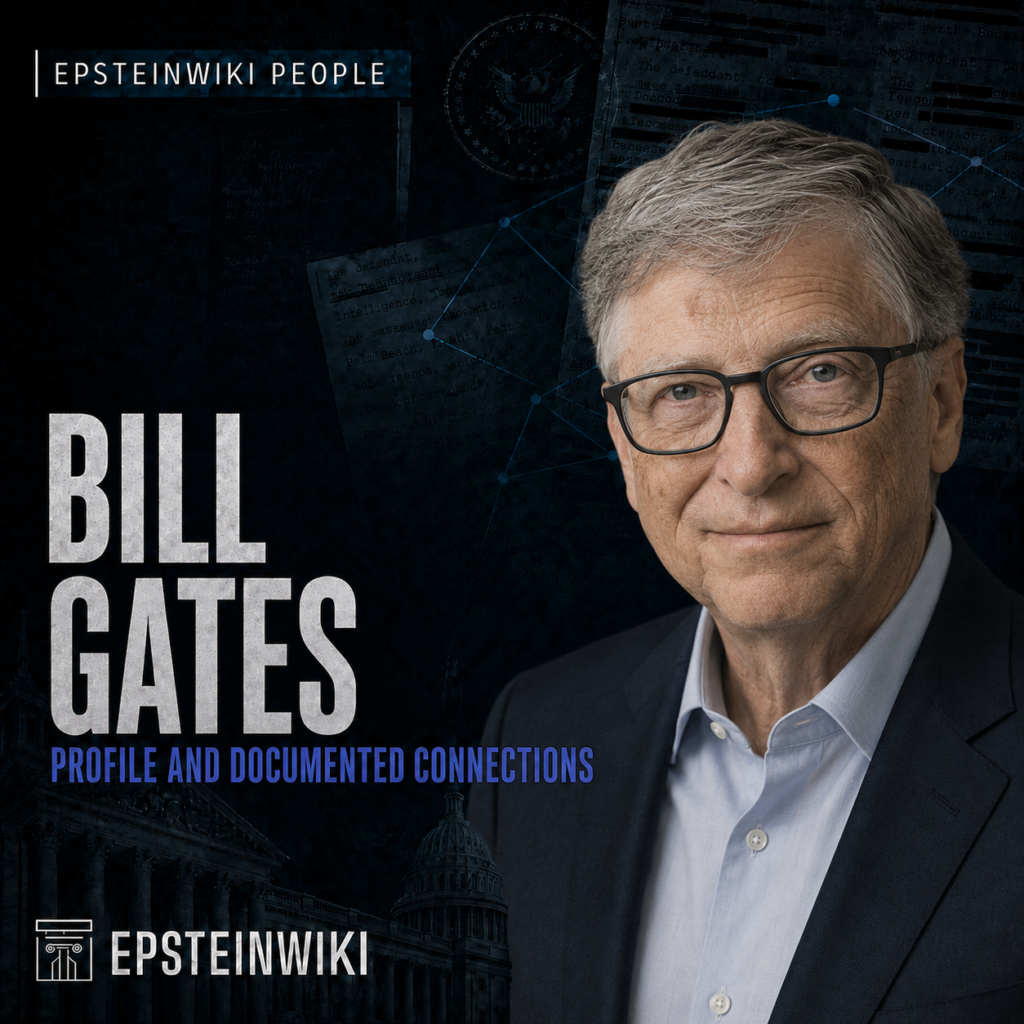
The Microsoft cofounder met Jeffrey Epstein repeatedly from 2011 through 2014, after Epstein’s sex offense conviction, while pursuing a proposed global health donor fund. The documentary record now includes Gates’s sworn congressional testimony, foundation records, calendars, emails, photographs, one private flight, meetings at Epstein residences, and evidence that Epstein considered using knowledge of Gates’s affairs as leverage.
William “Bill” Henry Gates III entered Jeffrey Epstein’s documented orbit in January 2011. Epstein had already pleaded guilty to Florida prostitution related offenses, served jail time, and registered as a sex offender. Gates testified that he knew Epstein had a criminal conviction of a sexual nature and a bad reputation before their first dinner. He did not ask Epstein about the conviction and did not investigate its details. (House Oversight interview, pages 13 to 17)
The relationship was not limited to one dinner or a few accidental encounters. Gates told Congress that he had about three encounters with Epstein in 2011, two in 2012, five or six in 2013, and five or six in 2014, with some of the later contacts conducted by Skype. He later summarized the total as roughly twelve to fourteen in person encounters plus two Skype calls. (House Oversight interview, pages 81 and 120)
Gates visited Epstein’s Manhattan townhouse several times, met him once at his Paris residence, flew once on an aircraft with Epstein from New Jersey to Palm Beach, and joined him for meetings in New York, Washington, Seattle, and Strasbourg. Gates denied visiting Little Saint James, Zorro Ranch, or Epstein’s Palm Beach house. He said Epstein invited him to the island several times and that he declined. (House Oversight interview, pages 45 to 55 and 125 to 127)
Gates’s principal explanation is that Epstein claimed he could persuade extremely wealthy clients to give billions of dollars to global health. The proposed vehicle was a donor advised fund. It was discussed for years, involved Gates Foundation personnel and JPMorgan, and never produced the promised donors or a completed fund. The foundation’s independent review later identified roughly thirty meetings involving Epstein and ten foundation leaders or staff from 2011 through 2014. (WilmerHale executive summary, pages 1 and 2)
The record also contains a personal leverage story. Gates admitted affairs with Mila Antonova, Karima Nigmatulina, and Dr. Alice Jacobs. Gates said Epstein learned sensitive information from adviser Boris Nikolic and later invoked support provided to Antonova while seeking reimbursement or renewed access. Drafts Epstein sent to himself mixed admitted facts with allegations Gates emphatically denied. Gates described the pattern as possible contemplated blackmail, while stressing that Epstein never successfully blackmailed him and received no payment from him. (House Oversight interview, pages 31 to 39, 68 to 95, and 108 to 110)
No criminal charge, civil judgment, or public survivor accusation reviewed for this article alleges that Gates participated in Epstein’s trafficking or sexually abused an Epstein victim. Gates denied witnessing criminal conduct, receiving women or massages from Epstein, or having sexual contact with anyone Epstein introduced. That absence must be recorded, but it does not erase his sustained, knowing association with a convicted sex offender or the institutional access and legitimacy that association provided. (House Oversight interview, pages 9 to 11 and 18 to 21)
Content Warning
This article discusses sexual abuse, trafficking, coercive control, infidelity, possible blackmail, institutional failures, and degrading claims about women. It separates documented conduct from allegations, denials, inference, and unresolved questions.
Executive Snapshot
Full name: William Henry Gates III. Gates stated his full name under oath during his June 10, 2026 congressional interview. (House Oversight interview, page 7)
Common name: Bill Gates
Born: October 28, 1955. Gates’s official foundation biography identifies him as Microsoft cofounder and current foundation chair. (Gates Foundation biography)
Public roles: Microsoft cofounder, former Microsoft chief executive, founder of Gates Ventures, investor, author, philanthropist, and Chair and board member of the Gates Foundation. (Gates Foundation biography)
Documented Epstein period: January 31, 2011 through December 2014, followed by emails and pressure attempts from Epstein through at least January 2019. (House Oversight interview, pages 13 to 21, 100 to 102, and 135 to 137)
Documented contact volume: Gates estimated about twelve to fourteen in person encounters plus two Skype calls. A separate foundation review identified roughly thirty meetings between Epstein and ten foundation leaders or staff, including Gates. Those are different counts with different scopes. (House Oversight interview, page 120; WilmerHale executive summary, page 2)
Primary intermediaries: Boris Nikolic, Melanie Walker, Larry Cohen, Terje Rød Larsen, JPMorgan personnel, and Gates Foundation staff. Their roles were not identical. Nikolic made the first introduction, Walker promoted Epstein to people around Gates, Cohen handled logistics and later communications, Rød Larsen connected Epstein to the International Peace Institute, and JPMorgan evaluated the proposed donor vehicle. (House Oversight interview, pages 13 to 17, 22 to 30, 40 to 45, and 111 to 112; Jes Staley interview, pages 74 to 76)
Properties and travel: Multiple visits to Epstein’s Manhattan townhouse, one meeting at Epstein’s Paris residence, and one flight with Epstein from Newark to Palm Beach. Gates denied visiting Epstein’s island, New Mexico ranch, or Palm Beach house. (House Oversight interview, pages 45 to 55 and 125 to 127)
Known advance warning: Gates knew of Epstein’s sex related conviction and bad reputation before the first meeting. Foundation staff repeatedly raised reputational concerns with senior leadership, including Gates. (House Oversight interview, pages 13 to 17 and 60 to 67; WilmerHale executive summary, page 2)
Connection rating: 4 out of 5, sustained direct and institutional association
Why the rating is 4: Gates repeatedly met Epstein for four years after learning of his sex offense conviction, brought foundation personnel into the project, visited two Epstein residences, traveled once on an aircraft with him, and continued after warnings from staff and Melinda French Gates. The evidence does not establish participation in trafficking, sexual abuse, recruitment, or an Epstein related financial payment by Gates or the foundation. (House Oversight interview, pages 9 to 21, 60 to 67, and 116 to 120; WilmerHale executive summary)
Legal status: No Epstein related criminal charge or adjudicated civil finding against Gates was identified in the sources reviewed. Gates voluntarily provided documents and sat for a proffer with the United States Virgin Islands Attorney General, then voluntarily appeared for a transcribed House interview in 2026. (House Oversight interview, pages 4, 7, and 131)
Most important qualification: Documents written by Epstein are evidence of what Epstein recorded, claimed, drafted, or contemplated. They are not automatic proof that his claims about Gates were true. Gates admitted some underlying facts, including the affairs, but denied allegations about an infection, covert medication, illegal drugs, and other lurid details. (House Oversight interview, pages 31 to 39 and 68 to 78)
Why This Article Requires Multiple Evidence Tracks
The Gates record contains at least six distinct forms of evidence. Each proves something different.
- Sworn testimony: Gates answered questions under the federal false statements statute during a voluntary House interview. His testimony is direct evidence of what he admitted, denied, remembered, or claimed not to remember. It is not a judicial verdict. (House Oversight interview, pages 4 and 7)
- Dated records: Calendars, emails, wire instructions, receipts, photographs, and travel records establish dates, communications, planned meetings, or payments more reliably than later memory, while still requiring authentication and context. (DOJ Epstein Library)
- Epstein drafts: Several of the most sensational messages were sent by Epstein to himself and written in another person’s voice. They show rehearsal or record making, not delivery to Gates. The transcript itself notes that similar drafts could differ materially from authentic correspondence. (House Oversight interview, pages 31 to 39, 68 to 78, and 93 to 95)
- Institutional review: WilmerHale reviewed foundation records and interviewed more than fifty current and former personnel. Its scope excluded Gates’s personal communications, Gates Ventures, the Gates Foundation Trust, and Gates’s personal interactions with Epstein. Its findings therefore apply to the foundation inquiry it conducted, not every aspect of Gates’s relationship. (WilmerHale executive summary, page 1 and footnote 1)
- Journalism: Reporting by The New York Times, The Wall Street Journal, Dagens Næringsliv, Reuters, and others revealed meetings and pressure attempts before many underlying records were broadly accessible. Later sworn testimony confirmed some reporting and contradicted or narrowed other parts. (The New York Times, October 12, 2019; The Wall Street Journal, May 21, 2023)
- Inference: Patterns may support a reasoned interpretation, such as Epstein cultivating leverage. Inference must remain labeled because the records do not reveal every motive, communication, or unrecorded event. Gates ultimately said the released emails created a serious probability that Epstein contemplated blackmailing him. (House Oversight interview, pages 108 to 110)
Background Before Epstein
Gates cofounded Microsoft with Paul Allen in 1975, served as chief executive until 2000, and shifted his primary focus toward philanthropy after leaving day to day Microsoft work in 2008. His current work includes the Gates Foundation, Gates Ventures, Breakthrough Energy, and health and climate projects. (Gates Foundation biography; House Oversight interview, pages 12 and 13)
The Gates Foundation was already a globally influential institution when Gates met Epstein. This matters because Epstein was not simply cultivating a wealthy private citizen. He was seeking access to an organization capable of directing large grants, convening governments and donors, and lending credibility to intermediaries. The foundation’s current description confirms that its chair shapes strategy, advocates for its issues, and sets overall direction. (Gates Foundation leadership profile)
Gates testified that Boris Nikolic first worked on diagnostics at the foundation and later served as a science adviser in Gates’s private office. The dual role placed Nikolic between Gates’s personal, philanthropic, and investment worlds. WilmerHale identified the first Epstein introduction as coming through an adviser who held roles at both the foundation and Gates’s personal office. (House Oversight interview, pages 22 to 30; WilmerHale executive summary, page 1)
January 31, 2011: The First Dinner
Nikolic arranged Gates’s first known dinner with Epstein at the Manhattan townhouse on January 31, 2011. Gates testified that the dinner itself involved Gates, Nikolic, and Epstein. Eva Andersson Dubin and one of her daughters stopped by afterward. (House Oversight interview, pages 13 to 17 and 45 to 47)
Gates already knew Epstein had a criminal conviction involving sexual conduct. He did not know, or said he did not know, the full scope of the Palm Beach investigation, the nonprosecution agreement, or Epstein’s registered offender status. He did not ask Epstein about the case. (House Oversight interview, pages 13 to 21)
Epstein presented himself as a person who knew scientists, business leaders, wealthy families, and people engaged in estate and tax planning. Gates said he did not understand the source of Epstein’s wealth and never considered him a friend or professional adviser. (House Oversight interview, pages 13 to 17)
The next day, Gates emailed Melanie Walker that Epstein’s lifestyle was “very different and kind of intriguing,” while adding that it would not work for him. Gates later explained that he meant Epstein’s conversations with scientists and economists and his dilettante approach to many fields. The original 2019 report and Gates’s 2026 confirmation establish the wording; his later explanation supplies his interpretation. (The New York Times, October 12, 2019; House Oversight interview, pages 95 and 96)
2011: Early Expansion and the Donor Fund Idea
On May 2, 2011, Gates attended another dinner at the Manhattan townhouse with Epstein, Nikolic, JPMorgan executive Jes Staley, and former Treasury Secretary Lawrence Summers. A released photograph shows the five men. Gates said this was his first and only meeting with Staley and his first extended conversation with Summers. (House Oversight interview, pages 113 to 115)
Gates described the discussion as broad, including the economy, current events, and foundation work. He testified that the donor project did not become a serious focus until 2013, although philanthropy may have been mentioned earlier. WilmerHale, using foundation records, found that Epstein recommended a donor advised fund in 2011 and that Gates proposed in August 2011 that foundation staff discuss the concept with him. (House Oversight interview, pages 113 to 116; WilmerHale executive summary, pages 1 and 2)
The apparent difference can be reconciled only partially. Gates may have distinguished early conceptual discussion from the later intensive effort. The foundation review dates the institutional proposal to 2011, while Gates remembered the serious fundraising push as beginning in 2013. Neither source should be silently substituted for the other. (WilmerHale executive summary, pages 1 and 2; House Oversight interview, pages 13 to 17 and 113 to 116)
Gates described a third 2011 encounter in which Epstein stopped by his office. He counted it among the three contacts that year but provided little substantive detail. (House Oversight interview, pages 81 and 114)
2012: Four Seasons and United Nations Contacts
Gates recalled two 2012 meetings after a gap of more than a year. One took place at the Four Seasons in New York. A photograph from about August 2012 shows Gates with Eva Dubin and Karyna Shuliak after a meeting they did not attend. Gates said Nikolic was probably present for the underlying meeting. (House Oversight interview, pages 47 to 49 and 106 to 107)
The second 2012 encounter was a dinner at Epstein’s townhouse during United Nations General Assembly week. Gates identified attendees as Epstein, Terje Rød Larsen, Thorbjørn Jagland, and possibly Nikolic. Gates said the discussion involved world affairs, the United Nations, the foundation, and polio eradication. (House Oversight interview, pages 47 to 49)
These meetings placed Epstein inside Gates’s global health and diplomatic networks before the donor project reached its most active stage. They also introduced a second institutional path, the International Peace Institute, where Rød Larsen served as president. (WilmerHale executive summary, page 2)
2013: The Relationship Intensifies
Gates estimated five or six encounters in 2013. The year included meetings at a hotel and Epstein residences, a private flight, a Strasbourg presentation, Epstein’s intervention in Nikolic’s departure, and increasingly concrete work on donor outreach. (House Oversight interview, pages 45 to 55 and 81 to 87)
On February 27, Gates met Epstein and others at the Four Seasons, then later attended dinner at the Manhattan townhouse. A photograph depicts Gates with a woman identified by committee staff as Svetlana Pozhidaeva. Gates said she was not in the meeting and that Epstein asked him to pose with her afterward. (House Oversight interview, pages 49 to 52 and 102 to 106)
After the dinner, illusionist David Blaine performed. A released image shows Gates, Epstein, a Norwegian attendee whom Gates believed was Rød Larsen or Jagland, and women Gates described as Epstein’s administrative assistants. Gates said the women were not at the dinner and that he was not introduced to them. (House Oversight interview, pages 105 and 106)
An Epstein schedule listed a possible February 28 meeting and a March 1 lunch with Gates and Woody Allen. Gates said the February 28 meeting did not happen and that he had never met Woody Allen. A schedule entry is evidence of planning, not proof that an event occurred. (House Oversight interview, pages 49 to 52)
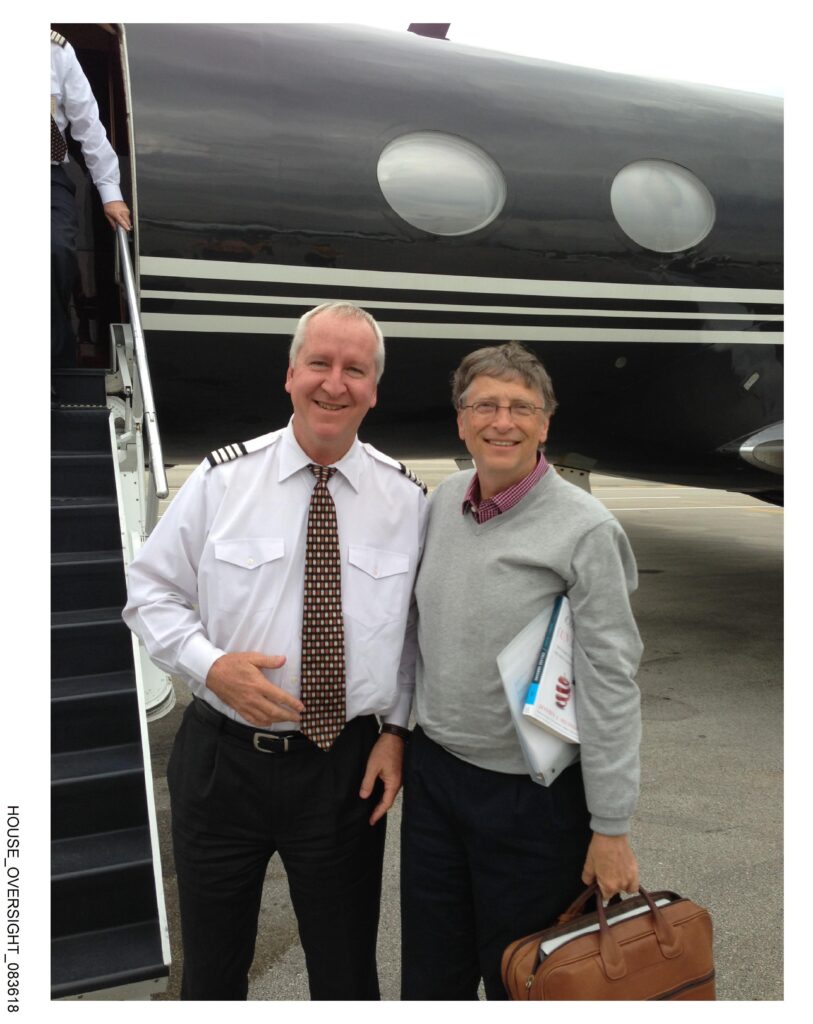
On March 1 or March 2, Gates flew with Epstein from Newark to Palm Beach on a Gulfstream. Gates said two female assistants occupied the forward cabin, his security met him on arrival, and he traveled to Wellington to see his daughter. He denied visiting Epstein’s Palm Beach residence and said this was his only flight with Epstein. (House Oversight interview, pages 52 to 55)
Claims that Gates repeatedly visited Little Saint James are not supported by the available flight evidence. Reuters and PolitiFact separately found that viral claims of numerous island trips misread or fabricated the record. Gates’s admitted flight to Palm Beach should not be erased, but Palm Beach is not Little Saint James. (Reuters fact check; PolitiFact review)
On March 27, Gates and Epstein met Thorbjørn Jagland at Jagland’s official residence in Strasbourg. Rød Larsen presented work related to the International Peace Institute and polio eradication. Norwegian reporting later established the meeting after Jagland initially denied contact with Epstein. Gates denied that a Nobel Peace Prize effort was the purpose. (Dagens Næringsliv investigation; House Oversight interview, pages 111 and 112)
In October 2013, after foundation diligence, the Gates Foundation executed a grant agreement with IPI. The foundation ultimately provided about $8 million from 2013 through 2019. Gates testified that the work supported polio eradication and that he did not understand why Rød Larsen forwarded foundation related geopolitical information to Epstein. (WilmerHale executive summary, page 2; House Oversight interview, pages 111 and 112)
The IPI grant is a documented institutional outcome connected to an Epstein introduction. It is not evidence that grant money went to Epstein. WilmerHale found no evidence that the foundation paid Epstein and said the foundation conducted diligence on IPI. (WilmerHale executive summary, pages 1 and 2)
Paris, the Crazy Horse Invitation, and Reputation Awareness
Gates acknowledged one meeting at Epstein’s Paris residence in 2013. He recalled several hours with Epstein, Nikolic, staff, and a chef. Gates denied meeting modeling agent Jean Luc Brunel or seeing nude photographs there. (House Oversight interview, pages 52 to 55 and 125 to 127)
On June 8, Nikolic invited Gates to attend the Crazy Horse erotic revue and go backstage through Epstein. Gates declined. The email chain records Gates’s concern that being seen there, especially with a convicted sex offender, would create a reputational problem. (EFTA00873390; EFTA00873391; EFTA00873392; House Oversight interview, pages 54 to 56)
The exchange is important because it demonstrates contemporaneous knowledge. Gates was not merely aware in retrospect that Epstein’s conviction made the association risky. He was actively assessing where public visibility with Epstein could harm his reputation while continuing private meetings. (EFTA00873390; House Oversight interview, pages 54 to 56 and 60 to 67)
Boris Nikolic’s Departure and Epstein’s Pressure Drafts
In 2013 Gates decided Nikolic should leave his private office. Gates testified that the departure accelerated after he told Melinda French Gates that Nikolic knew about two of his affairs. Nikolic wanted to move into venture capital and had a valuable profit sharing arrangement tied to two investments. (House Oversight interview, pages 22 to 30 and 78 to 80)
Epstein inserted himself into the negotiations even though Gates said he had not asked for his involvement. On June 16, 2013, Epstein sent Nikolic a proposed message to Gates that referred to a marital crisis, sensitive information, trust, and Epstein acting as Nikolic’s representative. Nikolic replied that the draft was “great” but preferred a face to face discussion and expressed concern about putting the word divorce in an email. (EFTA00873874; House Oversight interview, pages 27 to 31)
On July 18, Epstein sent himself drafts written as if Nikolic were addressing Gates. The drafts contained admitted facts and sensational allegations. Gates admitted affairs with Antonova and Nigmatulina, acknowledged that Nikolic once served as an alibi while Gates met Nigmatulina in London, and later admitted a separate earlier affair with Dr. Alice Jacobs. (EFTA01966988; EFTA01967528; House Oversight interview, pages 31 to 39 and 68 to 78)
Gates denied the drafts’ claims that he had contracted a sexually transmitted infection, used illegal drugs, sought antibiotics to medicate Melinda without her knowledge, or sent intimate anatomical descriptions to Nikolic. He also denied instructing Nikolic to delete emails. No adjudicated finding cited in this article establishes those allegations as true. (House Oversight interview, pages 31 to 39 and 68 to 78)
The drafts also imagined a much larger departure package for Nikolic, including years of severance, a large investment share, and a house. Gates said those terms were not agreed. He testified that the actual extra severance was about six to nine months of compensation, while Nikolic’s preexisting investment share was worth more than $5 million. (EFTA01967528; House Oversight interview, pages 78 to 80)
Gates’s counsel highlighted a separate pair of messages to demonstrate the danger of treating Epstein’s drafts as verbatim records. An authentic Gates email appears at EFTA01936299. A later Epstein to Epstein version appears at EFTA01936283 and, according to counsel, altered the substance. The committee entered the comparison into the interview record. (House Oversight interview, pages 38 and 39)
Gates wrote that he would not improve Nikolic’s package to prevent disclosure and would bear the personal pain if information became public. The committee identified that message as EFTA01964053. Gates relied on it as evidence that the pressure did not change his offer. (House Oversight interview, pages 70 and 71 and page 83)
On August 8, Epstein flew to Seattle and met Gates and Larry Cohen at the Gates Ventures office about Nikolic’s departure. Gates called the meeting worthless and said he did not change the offer. The next day, Nikolic asked Gates to thank Epstein, writing that Epstein had “saved” them both. Gates replied that Epstein had been helpful and promised a thank you, but told Congress that his reply was not sincere and was intended to close the negotiation. (EFTA01959891; House Oversight interview, pages 84 to 87)
The same discussion referenced a $500,000 gift Gates had made to Nikolic years earlier when Nikolic joined the foundation. Gates said the gift compensated Nikolic for consulting work he gave up, was unrelated to the 2013 departure, and had been properly reported for gift tax. Epstein’s effort to raise tax questions was, in Gates’s account, another attempt to insert himself as an adviser. (House Oversight interview, pages 87 and 88)
Mila Antonova: Aid Converted Into Claimed Debt
Gates testified that he met Russian bridge player Mila Antonova at a tournament and had an affair with her before his Epstein relationship. Nikolic knew about the affair and later introduced Antonova to Epstein while she was seeking support for an online bridge project. (House Oversight interview, pages 31 to 39 and 88 to 91; The Wall Street Journal investigation)
The Antonova record includes an Epstein calendar appointment, a $10,000 gift chain, instructions for two $7,000 transfers, apartment arrangements, coding school support, immigration assistance, and later messages in which Epstein sought acknowledgment or reimbursement. A detailed receipt level chronology appears in the EpsteinWiki profile of Mila Antonova. (EFTA02122268; EFTA02357103; EFTA00998689; EFTA00998799)
Housing related records include EFTA02089819, EFTA02244643, and further correspondence summarized in the Antonova profile. The existence of apartment access does not establish sexual conduct or criminal participation by Antonova. (Mila Antonova profile)
Epstein told Nikolic in June 2016 that Nikolic could tell “your boy” that Epstein still heard from Mila and had put her through computer school. The context supports reading “your boy” as Gates, but the message does not name him. (EFTA02460103)
Antonova thanked Epstein and Nikolic in 2017 for assistance that helped her obtain software skills, work authorization, and greater stability. Her gratitude documents the support’s effect on her. It does not show that she authorized Epstein to use the support as leverage against Gates. (EFTA02367549; EFTA02641851)
Epstein later forwarded or invoked Antonova’s circumstances while communicating with Nikolic and Cohen. Relevant records include EFTA02642503, EFTA02641692, EFTA01039131, EFTA02574755, EFTA00922837, EFTA00818853, EFTA02606561, and EFTA02606604. The messages include demands for a decision, references to friendship, reimbursement requests, and a warning that Gates was “playing with fire.”
Gates denied asking Epstein to support Antonova and said he instructed Cohen not to reimburse him. He characterized the requests as attempts to pressure him into renewed contact. Gates said Epstein received no payment. (House Oversight interview, pages 18 to 21, 88 to 95, and 118)
There is an unresolved date conflict. Gates testified that the first reimbursement request arrived at the end of 2014 or early 2015, close to the end of direct contact. Released dated messages show clear demands in 2017 and January 2019. The available record may contain an earlier message, or Gates’s memory may be inaccurate. The conflict cannot responsibly be resolved without the missing communication history. (House Oversight interview, pages 18 to 21 and 88 to 91; EFTA02606561; EFTA02606604)
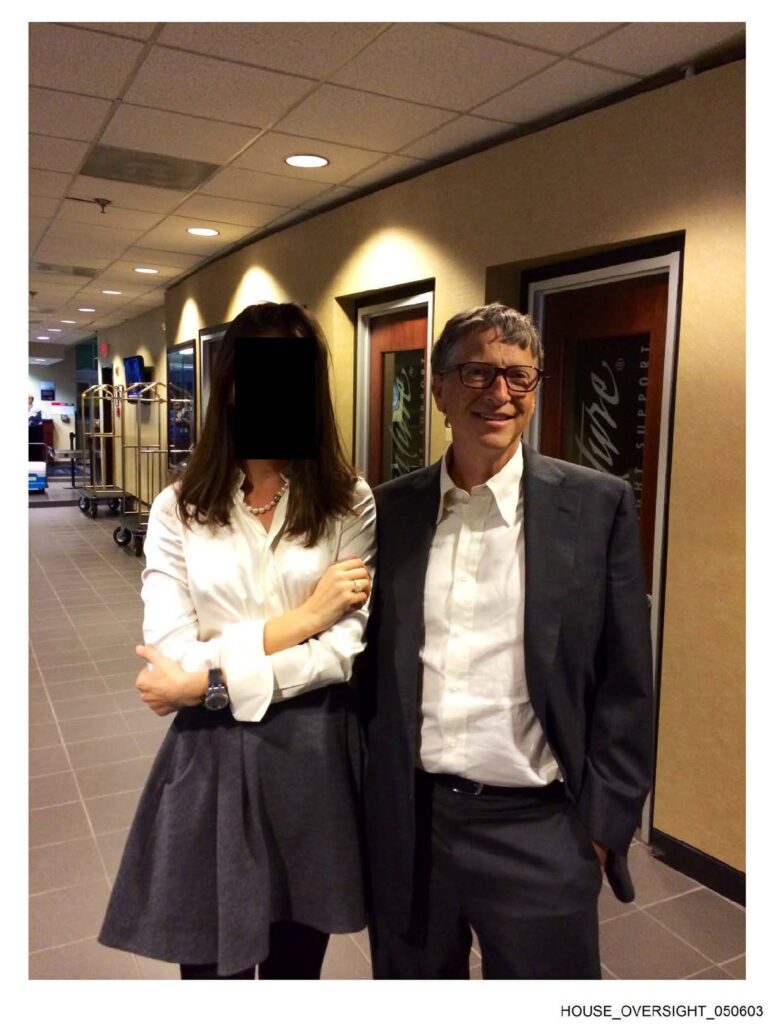
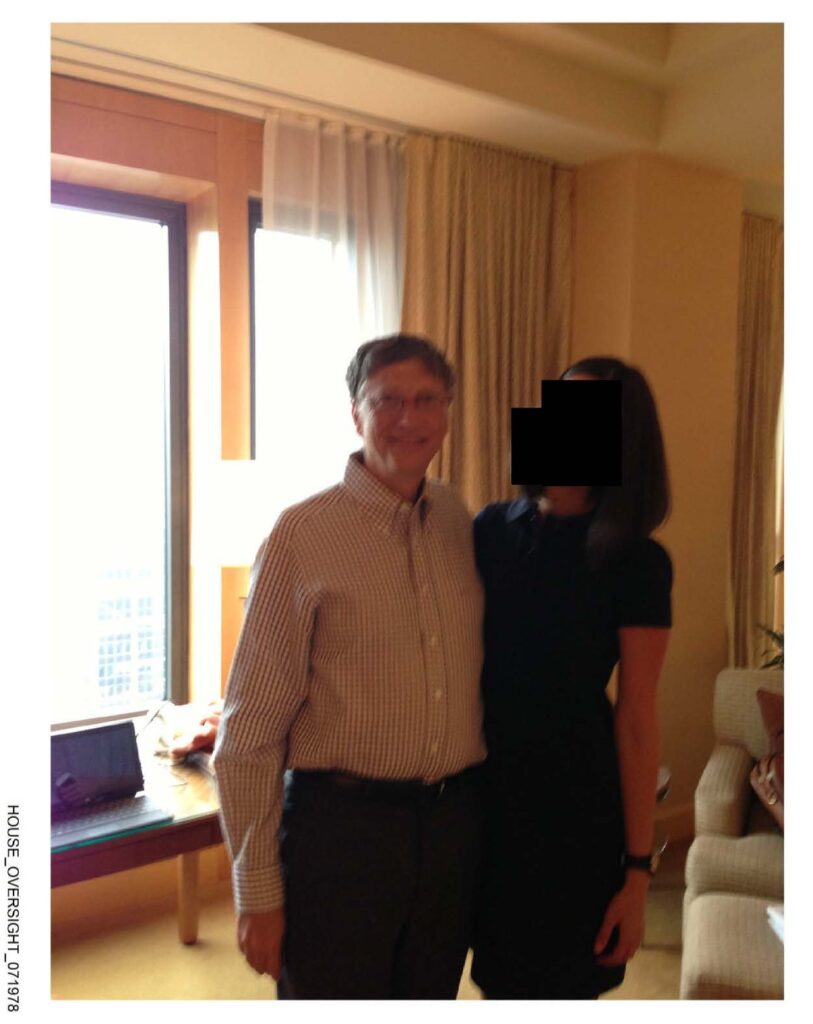
House Oversight also released photographs identified as Gates and Antonova in a hotel setting. The images are indexed on EpsteinWiki as Photograph 050603 and Photograph 071978. Photographs establish appearance and setting only to the extent their identification and provenance are reliable. They do not establish who took them, why Epstein possessed them, or what occurred before or afterward.
Melanie Walker and the Flow of Sensitive Information
Melanie Walker worked at the Gates Foundation and later consulted for Gates’s private office. She had known Epstein for years and promoted him to people around Gates. Gates said Walker contacted him after the first dinner to ask for his impressions, but that he did not know the extent of her relationship with Epstein. (House Oversight interview, pages 40 to 45; The Wall Street Journal, June 7, 2026)
Released messages show Walker discussing Gates, his staff, and information that could embarrass him. In a September 2017 exchange, Epstein suggested that Walker signal she had told him everything and mention “blue dresses.” Walker replied that she had “blue dress emails” and other embarrassing material. Gates said he had never seen the exchange, did not know what the phrase meant, and speculated that it might invoke Monica Lewinsky. (EFTA01620736; EFTA01620737; EFTA01620738; EFTA01620739; EFTA01620740; EFTA01620741; EFTA01620742; House Oversight interview, pages 41 to 45 and 108 to 110)
A separate Walker message stated, “Bill wants Me to go back and work w him for a bit.” The message is evidence of what Walker told Epstein, not proof of what Gates asked unless corroborated by Gates or employment records. (EFTA01617415)
The Wall Street Journal reported that Walker warned Gates in August 2014 to maintain a healthy distance from anything personal involving Epstein. Gates said he did not remember the warning. WilmerHale later found that two employees shared sensitive information and forwarded emails to Epstein without informing Gates or foundation staff, in violation of foundation policy. The public summary did not name those employees. (The Wall Street Journal, June 7, 2026; WilmerHale executive summary, page 1)
Gates told Congress it was possible Epstein encouraged Walker’s messages as part of a future leverage attempt. He emphasized that he remained unaware of the exchange and continued a cordial relationship with Walker until 2020. This is Gates’s interpretation, not an adjudicated finding about Walker’s intent. (House Oversight interview, pages 108 to 110)
The Donor Advised Fund
Epstein claimed that his position with wealthy clients during estate planning gave him unusual access to decisions about charitable giving. Gates said that claim made billions in potential global health donations seem plausible. (House Oversight interview, pages 63 to 67 and 110 to 111)
WilmerHale found that the donor advised fund concept was discussed from 2011 through 2014. Meetings addressed donor engagement, entity design, and tax benefits. Foundation staff warned senior leadership more than once about the risks of associating with Epstein because of his conviction. (WilmerHale executive summary, pages 1 and 2)
JPMorgan considered a role. Jes Staley testified that Mary Erdoes handled the proposed vehicle and that the bank would have approached wealthy clients. Staley said the project never happened and JPMorgan did not compensate Epstein for it. (Jes Staley interview, pages 74 to 76)
Kathy Ruemmler testified that Epstein cold called her in July 2014 and said he and Gates were working on a large donor advised fund that needed someone to handle legal, tax, and securities issues. She said the fund never materialized. Her testimony corroborates that Epstein presented the project to outsiders as an active Gates related undertaking. (Kathy Ruemmler interview)
On September 8, 2014, Epstein arranged a series of New York meetings. Gates confirmed meetings involving Tom Pritzker, Leon Black, Josh Harris, Mark Zuckerberg, Mort Zuckerman, and Ruemmler, while denying that a listed meeting with Summers occurred that day. Gates said the potential donors were polite but showed no near term intention to make major global health gifts. (House Oversight interview, pages 96 to 100 and 115 to 117)
Leon Black separately testified that Epstein introduced Gates at Black’s office for a roughly two hour philanthropy discussion. Black’s account independently confirms that Epstein used his network to place Gates in donor meetings. (Leon Black interview, pages 24 and 25)
In December 2014, Epstein hosted a breakfast at his Manhattan residence with Gates, foundation personnel, and potential donors. WilmerHale found that the guests appeared uninformed about the fund and that Epstein had misrepresented their awareness and willingness to participate. The foundation ended work on the proposal soon afterward. (WilmerHale executive summary, page 2)
Gates said his final email told Epstein that the fundraising effort would not work. Cohen then made clear that Gates would not meet or communicate with him again. Epstein continued sending messages, many of which Gates said he did not read. (House Oversight interview, pages 135 to 137)
MIT and the $2 Million Donation
In 2014, Gates made a $2 million donation to the MIT Media Lab. Epstein claimed credit for arranging it. An independent MIT investigation found no evidence supporting Epstein’s claim and no evidence that the donation was Epstein’s money. Gates’s representatives told investigators that his support for MIT predated and operated independently of Epstein. (MIT fact finding report, pages 11 and 12; MIT summary)
Gates gave Congress a more nuanced account than a simple claim of total coincidence. He said MIT was a longstanding beneficiary and the gift was not made in Epstein’s name or for an Epstein program. He also said the timing was “somewhat related” because he told Epstein about the donation in hope that Epstein would stop asking Gates to make gifts in his name. (House Oversight interview, pages 91 to 93)
The strongest supported conclusion is therefore narrow. Epstein did not supply or launder the $2 million, and MIT found no evidence that he arranged it. Gates nevertheless acknowledged using news of the donation as part of managing Epstein’s requests. (MIT fact finding report, pages 11 and 12; House Oversight interview, pages 91 to 93)
Women in Epstein’s Orbit and the Limits of Gates’s Denial
Gates denied that Epstein offered him women, arranged sexual contact, provided a massage, or discussed sexual preferences with him. Gates also denied witnessing sexual activity, assault, trafficking, or any other crime. (House Oversight interview, pages 18 to 21 and 56 to 59)
Gates initially emphasized that women he saw appeared to be adults and were presented as assistants. Committee members challenged the implication that adult status meant nonvictim status. They told Gates that some adult employees were abused or trafficked and that one assistant interviewed by the committee reported rape and sexual assault. Gates then acknowledged that women he encountered may have been victims even though he did not know it at the time. (House Oversight interview, pages 56 to 59 and 63 to 67)
The distinction is crucial. There is no evidence in the cited record that Gates witnessed an assault. There is evidence that Epstein placed women from his controlled environment near Gates, asked Gates to pose for photographs with some of them, and traveled with assistants on the admitted flight. Visible normality was one of the conditions under which Epstein maintained elite relationships. (House Oversight interview, pages 52 to 59 and 102 to 106; Ellie Leonard’s testimony analysis)
Lesley Groff testified that she assumed Gates and Epstein were friendly and that Epstein tended to travel to meet Gates elsewhere rather than host him as often as other visitors. Groff did not claim knowledge of what occurred in the meetings or of women attending them. (Lesley Groff interview, pages 163 and 164)
Ghislaine Maxwell
Gates testified that he met Ghislaine Maxwell briefly at a hotel restaurant when she was with Gateway founder Ted Waitt. He described it as a short introduction with no substantive conversation. (House Oversight interview, pages 121 and 122)
After investigators cited Maxwell’s separate statement that she met Gates at a TED event, Gates recalled that she attended a dinner of roughly forty or fifty people around a TED conference. He was unsure whether he shook her hand and denied a conversation. He said those were the only two occasions on which he remembered being in the same place as Maxwell. (House Oversight interview, pages 124 and 125)
Gates denied discussing Maxwell with Epstein or Walker. No cited source establishes a business, financial, or social relationship between Gates and Maxwell beyond those brief encounters. (House Oversight interview, pages 121 to 125)
Epstein’s Southern Trust Contract
A May 28, 2013 Southern Trust Company contract listed “Bill Gates and affiliated trusts” among a collective set of possible clients or covered parties. Gates denied being a Southern Trust client and said he had never been a client of Epstein or any Epstein entity. (EFTA01111961; House Oversight interview, pages 127 and 128)
Gates initially called the reference dishonest and misleading, then qualified that characterization because the document did not directly say he was an actual client. The document proves that Gates and affiliated entities were named in an Epstein company contract. It does not, without performance records, invoices, payments, or assent, prove that Gates retained Southern Trust. (EFTA01111961; House Oversight interview, pages 127 and 128)
Melinda French Gates’s Objections
Melinda French Gates met Epstein once. She later told CBS that she regretted the meeting immediately, found him abhorrent, and experienced nightmares afterward. She said Bill Gates’s meetings with Epstein were among multiple factors surrounding the end of the marriage, while declining to make the divorce depend on one cause. (CBS News interview, March 3, 2022)
Bill Gates testified that her only Epstein meeting was a dinner in 2013. He said she already viewed Epstein negatively, had a still worse impression after meeting him, and showed better judgment than he did. He nevertheless continued the fundraising effort through 2014. (House Oversight interview, pages 116 to 120 and 135 to 137)
Gates also testified that foundation staff and his former wife were not merely raising abstract concerns years later. Warnings existed during the active relationship. WilmerHale confirmed repeated staff warnings to senior leadership, including Gates. (WilmerHale executive summary, page 2)
Public Statements and How They Changed
After The New York Times documented repeated meetings in 2019, Gates’s representatives described the connection as limited and regretted. The article established that Gates had met Epstein many times despite his conviction. (The New York Times, October 12, 2019)
In 2021 Gates told CNN that meeting Epstein was a “huge mistake” and said he hoped Epstein could help raise billions for global health. He described the contact as several dinners. (The Wall Street Journal, August 5, 2021)
The 2026 testimony supplied a materially larger count: approximately twelve to fourteen in person encounters plus two Skype calls. It also established nonphilanthropic discussions about Nikolic’s departure. Gates conceded that an earlier statement saying he met Epstein solely for philanthropy was oversimplified and inaccurate in that absolute form. (House Oversight interview, pages 93 to 95 and 120)
In February 2026 Gates apologized to foundation staff, acknowledged two affairs with Russian women, said he had done and seen nothing illicit, and explained that Epstein requested the photographs with assistants. The foundation said Gates took responsibility for his actions. (Reuters, February 25, 2026)
The Gates Foundation separately said it regretted that employees interacted with Epstein, that no fund was created, that Epstein was never employed by the foundation, and that the foundation made no payment to him. (Gates Foundation statement, February 2026)
In an August 27, 2026 interview with The Atlantic, Gates said Epstein had found his “weak point” by promising tens or hundreds of billions for global health. He again denied being blackmailed or paying Epstein and said his intent had been philanthropic. He also said he was never introduced to women. The narrower testimony record shows that he was not formally introduced to several photographed assistants, while he did encounter women in Epstein’s company, pose beside them, and travel on a flight with two assistants. The statements can coexist only if “introduced” is read literally rather than as a claim of no contact or proximity. (The Atlantic, August 27, 2026; House Oversight interview, pages 52 to 59 and 102 to 106)
The 2026 House Interview
Gates appeared voluntarily on June 10, 2026. The House Committee on Oversight and Government Reform released the transcript on June 23. He was advised that knowingly false statements could violate federal law. (Committee release; House Oversight interview, pages 4 and 7)
Gates admitted the relationship’s duration, approximate contact count, prior knowledge of the conviction, the Newark to Palm Beach flight, visits to Epstein residences, rejected island invitations, the affairs, the Nikolic pressure context, the MIT donation’s secondary signaling purpose, and the foundation fundraising effort. He denied criminal conduct, victimization, payments to Epstein, visits to the island, ranch, or Palm Beach home, and most of Epstein’s lurid self addressed allegations. (House Oversight interview)
Gates said he had voluntarily cooperated with a United States Virgin Islands Attorney General inquiry, provided documents, and sat for a proffer focused largely on financial and banking matters connected to JPMorgan. He said neither the Southern District of New York nor Maxwell investigators had previously contacted him. (House Oversight interview, page 131)
The interview was investigative testimony, not a criminal trial. No committee finding in the transcript adjudicated whether Gates knew of ongoing abuse. Gates’s categorical denial and the committee members’ skepticism are both part of the record. (House Oversight interview, pages 9 to 11 and 63 to 67)
The 2026 WilmerHale Review
The Gates Foundation commissioned WilmerHale in March 2026. The firm conducted more than fifty interviews and reviewed extensive written materials over about five months. (WilmerHale executive summary, page 1)
The review found no evidence that the foundation participated in or knew of Epstein’s ongoing trafficking or criminal activity. It found no evidence that the foundation paid Epstein and no evidence that foundation meetings involved illegal conduct or subjects unrelated to philanthropy. (WilmerHale executive summary, pages 1 and 2)
The same review documented serious governance failures. It found roughly thirty meetings between Epstein and ten foundation leaders or staff, repeated internal warnings, meetings at Epstein’s home and on foundation premises, and unauthorized disclosure of sensitive information by two employees. (WilmerHale executive summary, pages 1 and 2)
Its most important scope limitation appears in a footnote. WilmerHale did not review Gates’s personal communications or Epstein’s interactions with him in a personal capacity. It also excluded separate entities including Gates Ventures and the Gates Foundation Trust. The review therefore cannot resolve the Antonova pressure campaign, Nikolic’s private office departure, or every personal communication. (WilmerHale executive summary, page 1, footnote 1)
The foundation adopted new vetting, risk escalation, dual role, conflict of interest, and information handling procedures. Those reforms amount to an institutional acknowledgment that earlier controls were inadequate even though the review found no participation in criminal conduct. (Gates Foundation review announcement; WilmerHale executive summary, page 3)
Public and Institutional Consequences
Gates canceled a February 2026 keynote at India’s AI Impact Summit amid renewed Epstein scrutiny. The foundation said the choice was intended to keep attention on the summit’s priorities. The cancellation is a reputational consequence, not evidence of criminal conduct. (Reuters, February 19, 2026)
Warren Buffett omitted the Gates Foundation from his 2026 annual charitable distribution and redirected about $6 billion in Berkshire Hathaway shares to four family foundations. Reuters reported that the change followed renewed disclosures and ended a two decade pattern under which the Gates Foundation had received more than $47 billion in Berkshire shares. (Reuters, July 14, 2026)
Buffett later called Gates’s association with Epstein “distasteful” while also saying people make mistakes in judging others and that his past Gates Foundation donations had been a good decision. The decision therefore should not be described as a factual finding that Gates participated in Epstein’s crimes. (Reuters, July 15, 2026; The Washington Post, July 15, 2026)
Claims the Evidence Supports
Supported: Gates knowingly began meeting Epstein after learning of a sex related conviction and bad reputation. (House Oversight interview, pages 13 to 17)
Supported: The contact was sustained and more extensive than “several dinners,” reaching about twelve to fourteen in person encounters plus two Skype calls by Gates’s estimate. (House Oversight interview, page 120)
Supported: Gates visited Epstein’s Manhattan and Paris residences and flew once with him from Newark to Palm Beach. (House Oversight interview, pages 52 to 55 and 125 to 127)
Supported: Gates declined several island invitations and denied ever visiting Little Saint James. Available flight evidence does not support viral claims of repeated island visits. (House Oversight interview, pages 125 and 126; Reuters fact check)
Supported: Gates and foundation staff worked for years on a proposed donor advised fund involving Epstein. The fund was never created and the promised donors did not materialize. (WilmerHale executive summary, pages 1 and 2)
Supported: Epstein introduced Gates to IPI, which later received foundation grants after diligence. No cited evidence shows that grant money went to Epstein. (WilmerHale executive summary, page 2)
Supported: Epstein drafted messages that contemplated using sensitive information about Gates. Gates admitted three affairs but denied the drafts’ other lurid claims. (EFTA01966988; EFTA01967528; House Oversight interview, pages 31 to 39 and 68 to 78)
Supported: Epstein invoked money and assistance provided to Antonova while pressing Gates’s circle. Gates denied authorizing that assistance and said he never reimbursed Epstein. (EFTA02642503; EFTA00818853; House Oversight interview, pages 88 to 95 and 118)
Supported: Gates met women in Epstein’s environment and posed for photographs at Epstein’s request. Gates denied knowing they were victims. Committee members told him that some adult assistants were abused. (House Oversight interview, pages 102 to 106 and 120 to 121)
Not established: That Gates visited Epstein’s island, received sexual services, sexually abused an Epstein victim, recruited anyone, participated in trafficking, or knew of ongoing crimes. (House Oversight interview, pages 9 to 21 and 125 to 127; WilmerHale executive summary)
Not established: That every allegation in Epstein’s self addressed drafts was true. The documentary record demonstrates that Epstein sometimes created altered or embellished versions of communications. (EFTA01936299; EFTA01936283; House Oversight interview, pages 38 and 39)
Chronology
Before 2011: Epstein is convicted, jailed, and registered as a sex offender. Gates later says he knew of a sex related conviction before meeting him but did not investigate the details. (House Oversight interview, pages 13 to 21)
January 31, 2011: Nikolic brings Gates to dinner at Epstein’s Manhattan townhouse. (House Oversight interview, pages 13 to 17)
February 1, 2011: Gates tells Walker that Epstein’s lifestyle was different and intriguing but not for him. (House Oversight interview, pages 95 and 96)
May 2, 2011: Gates dines with Epstein, Nikolic, Staley, and Summers at the townhouse. (House Oversight interview, pages 113 to 115)
August 2011: Gates proposes that foundation staff discuss Epstein’s donor fund concept. (WilmerHale executive summary, page 1)
2012: Gates attends a Four Seasons meeting and a townhouse dinner with Rød Larsen and Jagland during United Nations week. (House Oversight interview, pages 47 to 49)
February 27, 2013: Gates meets Epstein at the Four Seasons, later dines at the townhouse, and attends a David Blaine performance. (House Oversight interview, pages 49 to 52 and 102 to 106)
March 1 or 2, 2013: Gates takes his only admitted flight with Epstein, from Newark to Palm Beach. (House Oversight interview, pages 52 to 55)
March 27, 2013: Gates and Epstein meet Jagland in Strasbourg and receive an IPI presentation. (Dagens Næringsliv; WilmerHale executive summary, page 2)
June 8, 2013: Gates declines the Crazy Horse invitation and records his reputation concern. (EFTA00873390)
June 16, 2013: Epstein and Nikolic discuss a draft message invoking sensitive information during Nikolic’s departure. (EFTA00873874)
July 18, 2013: Epstein sends himself drafts containing facts, allegations, and proposed demands connected to Nikolic. (EFTA01966988; EFTA01967528)
August 8, 2013: Epstein flies to Seattle for a meeting about Nikolic’s exit. (House Oversight interview, pages 84 to 87)
August 9, 2013: Nikolic asks Gates to thank Epstein, and Gates agrees in writing. (EFTA01959891)
October 2013: The foundation executes its first IPI grant agreement after diligence. (WilmerHale executive summary, page 2)
November and December 2013: Antonova enters Epstein’s direct financial orbit through a Nikolic arranged meeting and a documented $10,000 gift. (EFTA02122268; EFTA02357103)
December 3, 2013: Gates meets Epstein at the Reagan National Airport fixed base operator and poses for a photograph with a woman committee staff identified as Pozhidaeva. (House Oversight interview, pages 100 to 104)
February 27 and May 21, 2014: Gates participates in two Skype calls with Epstein about donors and the proposed fund. (House Oversight interview, pages 122 to 124)
August 2014: Walker reportedly warns Gates to keep healthy distance from personal matters involving Epstein. Gates says he does not remember the email. (The Wall Street Journal, June 7, 2026; House Oversight interview, pages 60 to 63)
September 8, 2014: Epstein arranges donor meetings with several wealthy figures. No major commitment results. (House Oversight interview, pages 96 to 100)
December 2014: Epstein’s final donor breakfast exposes that invitees were not prepared to commit. Gates ends direct contact. (WilmerHale executive summary, page 2; House Oversight interview, pages 135 to 137)
2016 through 2019: Epstein repeatedly invokes Antonova’s education, immigration, housing, and financial support while contacting Gates’s circle. (EFTA02460103; EFTA02642503; EFTA00818853; EFTA02606561)
October 2019: The New York Times publishes its investigation of the repeated meetings. (The New York Times)
2021: Gates publicly calls the meetings a huge mistake. (The Wall Street Journal)
2022: Melinda French Gates says she found Epstein evil and confirms that Bill Gates’s meetings were one factor among many in the divorce. (CBS News)
May 2023: The Wall Street Journal reports the Antonova pressure story. (The Wall Street Journal)
January and February 2026: DOJ releases expand the record. Gates denies sensational draft allegations, apologizes to staff, and admits two Russian affairs. (DOJ Epstein Library; Reuters, February 25, 2026)
June 10, 2026: Gates gives a voluntary transcribed House interview. (House Oversight interview)
July 2026: WilmerHale completes the foundation review, and the foundation adopts new controls. Buffett ends the annual donation pattern involving the Gates Foundation. (Gates Foundation review announcement; Reuters, July 14, 2026)
Core Document Ledger
EFTA00873390 through EFTA00873392: Crazy Horse invitation and Gates’s reputation based refusal.
EFTA00873874: Epstein and Nikolic draft language invoking sensitive information during Nikolic’s departure.
EFTA01966988: Epstein to Epstein draft containing admitted facts and disputed allegations about Gates.
EFTA01967528: Second self addressed draft concerning Nikolic, private information, and proposed financial treatment.
EFTA01936299 and EFTA01936283: Authentic Gates communication and a later Epstein version cited to demonstrate alteration risk.
EFTA01964053: Gates’s statement that he would not change the Nikolic deal to prevent disclosures.
EFTA01959891: Nikolic’s request that Gates thank Epstein after the Seattle meeting and Gates’s reply.
EFTA01111961: Southern Trust contract naming Gates related entities among a collective set of clients or possible clients, which Gates denied reflected an actual relationship.
EFTA01620736 through EFTA01620742: Walker and Epstein exchange concerning disclosure, blue dresses, and embarrassing material.
EFTA01617415: Walker statement that Bill wanted her to return and work with him for a time.
EFTA02122268: Nikolic organized calendar appointment involving Mila.
EFTA02357103: $10,000 gift and banking chain tied to Antonova.
EFTA00998689 and EFTA00998799: Instructions and receipt evidence for Bridge Union transfers.
EFTA02089819 and EFTA02244643: Apartment logistics connected to Antonova.
EFTA02460103: Epstein’s message about putting Mila through computer school and relaying that information.
EFTA02367549 and EFTA02641851: Antonova’s description of assistance and her later life update.
EFTA02642503, EFTA02641692, EFTA01039131, EFTA02574755, EFTA00922837, EFTA00818853, EFTA02606561, and EFTA02606604: The developing acknowledgment, publicity, friendship, decision, threat, and reimbursement pressure sequence.
EFTAR101795558: January 13, 2019 email to Gates referring to a December 3, 2013 airport meeting and an unspecified earlier request. Gates said he did not think he had seen it and believed it could relate to Epstein’s false claim that Gates requested Antonova support. (House Oversight interview, pages 100 to 102)
Outstanding Questions
- What is the complete Gates and Epstein communication set, including messages Gates says he stopped reading, and which records remain withheld or redacted? (DOJ Epstein Library limitations notice)
- What exact date did Epstein first seek reimbursement for Antonova related expenses, and is there a missing 2014 or 2015 message that reconciles Gates’s testimony with the dated 2017 and 2019 demands? (House Oversight interview, pages 18 to 21 and 88 to 91)
- Who were the two employees WilmerHale found had passed sensitive foundation information to Epstein, what did they disclose, and what consequences followed? The public summary does not name them. (WilmerHale executive summary, page 1)
- Why did Epstein request photographs of Gates with women presented as assistants, and how did those photographs enter the estate archive? Gates described the requests but could not identify every person or setting. (House Oversight interview, pages 102 to 106)
- What did Gates, Nikolic, Cohen, Walker, and foundation executives each understand about Epstein’s 2008 case at each stage of the relationship? The record proves general awareness but not identical knowledge. (House Oversight interview, pages 13 to 21 and 60 to 67; WilmerHale executive summary, page 2)
- What full diligence was performed on Epstein himself, as distinct from later diligence on IPI? The foundation’s new governance reforms suggest earlier broker vetting was insufficient. (Gates Foundation review announcement)
- Did Epstein’s self addressed drafts remain private rehearsals, or were any versions delivered orally, through Nikolic, through Walker, or through another intermediary? The current record proves drafting and veiled comments, but not delivery of the most explicit versions. (EFTA00873874; EFTA01966988; House Oversight interview, pages 93 to 95)
- What additional records exist concerning the IPI information that Rød Larsen forwarded to Epstein, and did any of it contain protected or sensitive operational detail? Gates said the forwarding made no sense to him. (House Oversight interview, pages 111 and 112)
- What was the exact date and guest list for the final December 2014 breakfast, and what did each attendee understand before arriving? WilmerHale found that the guests appeared uninformed about the proposed fund. (WilmerHale executive summary, page 2)
- Will the foundation publish a fuller version of WilmerHale’s work, subject to appropriate survivor and employee privacy protections? The three page executive summary does not provide interview citations, underlying documents, or employee identities. (WilmerHale executive summary)
Assessment
The evidence supports a conclusion more serious than an incidental acquaintance and narrower than participation in Epstein’s trafficking.
Gates knowingly engaged a convicted sex offender for four years because he believed Epstein could unlock enormous charitable gifts. He continued after learning of reputational concerns, after declining a public erotic venue invitation because of the optics, after Melinda French Gates objected, after staff warnings, and after Epstein inserted himself into a sensitive employment negotiation. (EFTA00873390; House Oversight interview, pages 60 to 67 and 135 to 137; WilmerHale executive summary, page 2)
Epstein gained meetings with senior foundation personnel, access to Gates’s private advisers, proximity to global health strategy, introductions to donors and diplomats, and the reputational value of association with one of the world’s most prominent philanthropists. The promised billions never materialized, but the access was real. (WilmerHale executive summary, pages 1 and 2; House Oversight interview, pages 96 to 100 and 110 to 117)
The record also shows Epstein accumulating private information and considering how to use it. Some information was true, some was disputed, and some arrived through people close to Gates. The Antonova support campaign demonstrates how Epstein could turn aid to one person into a claimed debt owed by another. (EFTA01966988; EFTA02642503; EFTA00818853)
At the same time, the evidence reviewed does not establish that Gates participated in sexual abuse, trafficking, recruitment, or payments to Epstein. WilmerHale found no foundation knowledge of ongoing crimes and no foundation payment. Gates’s denials on those points remain uncontradicted by a public survivor accusation or adjudicated finding identified here. (WilmerHale executive summary; House Oversight interview, pages 9 to 21)
The central accountability finding is therefore about judgment, access, institutional safeguards, and truthfulness in later public descriptions. Gates’s own 2026 testimony establishes that “several dinners” understated the contact, that philanthropy was the primary rather than sole topic, and that warnings did not end the relationship until the donor promise finally collapsed. (House Oversight interview, pages 93 to 100, 120, and 135 to 137)
Sources
Primary and Institutional Sources
- House Committee on Oversight and Government Reform, Interview of William H. Gates, June 10, 2026
- House Oversight release of the Gates and Groff transcripts, June 23, 2026
- WilmerHale Review of the Gates Foundation’s Engagement with Jeffrey Epstein, July 21, 2026
- Gates Foundation announcement and governance response, July 21, 2026
- Gates Foundation statement on released DOJ records, February 2026
- United States Department of Justice Epstein Library
- MIT Goodwin Procter fact finding report
- MIT summary of the fact finding report
- House interview of Lesley Groff
- House interview of Jes Staley
- House interview of Kathy Ruemmler
- House interview of Leon Black
- Official Bill Gates foundation biography
Major Reporting and Analysis
- The New York Times, Bill Gates Met With Jeffrey Epstein Many Times, Despite His Past, October 12, 2019
- The Wall Street Journal, Jeffrey Epstein Appeared to Threaten Bill Gates Over Affair With Russian Bridge Player, May 21, 2023
- The Wall Street Journal, The Hidden Figure With Close Ties to Bill Gates and Jeffrey Epstein, June 7, 2026
- Dagens Næringsliv, Bill Gates and Jeffrey Epstein Met With Nobel Committee Chair
- CBS News interview with Melinda French Gates, March 3, 2022
- Reuters report on Gates’s House testimony, June 10, 2026
- Reuters report on the completed foundation review, July 21, 2026
- Reuters report on Buffett’s 2026 donation decision, July 14, 2026
- Reuters fact check on false island claims
- Ellie Leonard, Gates, Groff, and Kellen testimony analysis
- EpsteinWiki, Mila Antonova
- The Atlantic, Bill Gates on the Dangers of AI, August 27, 2026
EFTA Records
The receipt links in the Core Document Ledger above point directly to each identified EFTA record at Epstein Data. The list includes all EFTA identifiers materially relied upon in this article. Readers should compare each record with the testimony and institutional findings rather than treating any isolated Epstein authored statement as conclusive.