William “Bill” Jefferson Clinton
The 42nd president of the United States moved through Jeffrey Epstein’s social, political, travel, and philanthropic network from the 1990s into the 2000s. The record includes a 1993 White House photograph, White House visitor records, political and charitable donations, international travel on Epstein aircraft, photographs with Epstein and Ghislaine Maxwell, Clinton Foundation activity, disputed accounts concerning Epstein properties, and more than six hours of sworn congressional testimony in 2026.
William Jefferson Clinton’s connection to Jeffrey Epstein cannot be reduced to a name in an address book or one photograph. Epstein appeared at a White House donor event in 1993. Visitor records place him at the White House repeatedly between 1993 and 1995, usually for meetings with officials other than the president. Clinton later traveled on Epstein aircraft across multiple continents during 2002 and 2003. Clinton’s staff, foundation personnel, supporters, guests, Secret Service agents, Epstein, Maxwell, and women working around Epstein appeared on different legs. (Clinton deposition transcript; Sky News document review)
Clinton said the flights supported humanitarian work involving HIV and AIDS treatment, economic development, and disaster recovery. He testified that former Treasury Secretary and Harvard president Lawrence Summers introduced the opportunity, telling him that Epstein would provide an aircraft if Clinton spent time discussing politics and economics with him. Clinton said he regarded Epstein as interesting but odd and eventually concluded that Epstein was not deeply interested in the work. (Clinton deposition transcript, beginning at 22:49)
The number of flights is frequently misstated. Public claims of twenty six or twenty seven “flights” ordinarily count individual flight legs, including short refueling and routing segments, not twenty six separate journeys. Clinton’s 2019 office statement described four trips in 2002 and 2003. In 2026, Clinton remembered all or parts of four or five international trips plus a separate flight from Florida to New York. The logs and testimony should therefore be read leg by leg and trip by trip. (Clinton deposition transcript, 20:38 to 22:06 and 3:54:23 to 3:54:54; FactCheck.org review)
Clinton denied visiting Little Saint James, Epstein’s Palm Beach house, or Zorro Ranch in New Mexico. He denied sexual activity with anyone introduced by Epstein or Maxwell, denied seeing sexual misconduct on the aircraft, and denied knowing about Epstein’s crimes before they became public. The public record also contains contrary or potentially contrary accounts concerning Clinton at Epstein’s Manhattan house and on Little Saint James. Those accounts vary in foundation and reliability. Some are first person statements, some are secondhand recollections, and some are records of claims rather than proof that the claims were true. (Clinton deposition transcript, 1:22:02 to 1:23:00 and 2:04:46 to 2:09:26)
No Epstein related criminal charge or adjudicated civil finding against Clinton was identified in the sources reviewed for this article. No survivor cited here accused Clinton of sexually abusing her. That legal and evidentiary status is essential. It does not erase the scale of the association, Maxwell’s access to Clinton’s family and institutions, the presence of survivors within the travel environment, or the unresolved conflicts between records and later recollections. (Associated Press, December 19, 2025; Reuters, February 27, 2026)
Content Warning
This article discusses child sexual abuse, rape allegations, sex trafficking, exploitation, institutional access, disputed testimony, and photographs involving survivors. It separates dated records, sworn testimony, allegations, denials, reporting, inference, and adjudicated findings.
Executive Snapshot
Full name: William Jefferson Clinton. Clinton used his full name when appearing for a filmed House deposition on February 27, 2026. (House Oversight release)
Common name: Bill Clinton
Born: August 19, 1946, in Hope, Arkansas. (White House biography)
Public roles: Governor of Arkansas, 42nd president of the United States from 1993 through 2001, founder of the Clinton Foundation, author, speaker, and international philanthropic advocate. (White House biography; Clinton Foundation leadership biography)
Documented Epstein period: Political and White House records begin in the early 1990s. Clinton’s best documented direct travel period was 2002 through 2003. Maxwell remained in Clinton family and Clinton Global Initiative circles after Epstein’s first arrest and conviction, including Chelsea Clinton’s 2010 wedding and a 2013 Clinton Global Initiative commitment. (Sky News document review; Clinton deposition transcript, 3:34:39 to 3:42:33)
White House access: Records reviewed through Freedom of Information Act requests have been described as showing at least seventeen Epstein entries on fourteen days between 1993 and 1995. An entry records authorized access or a visit. It does not by itself prove a meeting with Clinton. Clinton testified that he did not dispute the count but did not know of the visits at the time. (Clinton deposition transcript, 50:49 to 51:02 and 2:19:05 to 2:19:28)
Air travel: Flight records and Clinton’s testimony establish repeated international travel on Epstein aircraft in 2002 and 2003. Counts in the public record vary because some count legs, others count trips, and some logs use “same as above” rather than rewriting every passenger. Clinton acknowledged that twenty six legs was a plausible way of describing the records, while emphasizing that the routing included many stops. (Clinton deposition transcript, 1:35:20 to 1:54:00 and 3:54:23 to 3:54:54)
Documented properties: Clinton acknowledged visiting Epstein’s Manhattan residence or office in connection with at least one 2002 meeting, but testified that Epstein was not present for one visit. He denied visiting Little Saint James, the Palm Beach house, and Zorro Ranch. (Clinton deposition transcript, 1:31:40 and 4:15:39 to 4:16:36)
Primary intermediaries: Lawrence Summers, Doug Band, Ghislaine Maxwell, Ted Waitt, and Clinton Foundation personnel. Summers described Epstein’s aircraft offer. Band managed Clinton’s post presidential logistics and knew Epstein and Maxwell. Maxwell traveled, cultivated relationships around Clinton, and later worked on Clinton Global Initiative commitments. Waitt’s relationship with Maxwell deepened her access to Clinton family circles. (Clinton deposition transcript, 22:49 to 26:50 and 2:38:15 to 2:39:18; Ted Waitt interview transcript)
Connection rating: 4 out of 5, sustained direct, travel, family, and institutional association
Why the rating is 4: Clinton traveled repeatedly on Epstein aircraft, spent time with Epstein and Maxwell across several countries, appeared with them in photographs, benefited from donated transportation, and remained connected to Maxwell through family and foundation circles. Epstein also used or benefited from the prestige of Clinton’s name. The cited record does not establish that Clinton participated in Epstein’s trafficking, sexually abused an Epstein survivor, visited Little Saint James, or received a criminal benefit from Epstein. A rating of 5 would collapse the distinction between substantial access and proven participation in abuse. (Clinton deposition transcript; Associated Press photo report)
Legal status: Clinton has not been charged with an Epstein related crime and has not been found civilly liable for Epstein related abuse in any source reviewed here. In 2026 he testified under oath before the House Committee on Oversight and Government Reform after a subpoena dispute and threatened contempt proceedings. A deposition is an evidence gathering procedure, not a criminal charge or adjudication. (House Oversight deposition announcement; House Oversight video release)
Central unresolved issue: The record proves broad access and repeated contact but does not fully resolve what Clinton knew, what his staff knew, why Epstein’s services were accepted repeatedly, why Maxwell retained access after Epstein’s conviction, or how disputed property allegations should be reconciled with travel and security records.
Why This Article Requires Multiple Evidence Tracks
The Clinton record contains evidence types that cannot responsibly be merged into one undifferentiated narrative.
- Contemporaneous records: Flight logs, White House visitor records, photographs, donation filings, telephone records, schedules, and emails establish contacts, dates, or representations. They do not always identify purpose, knowledge, or conduct. (DOJ Epstein Library)
- Clinton’s sworn testimony: The 2026 deposition records what Clinton admitted, denied, remembered, or could not remember. It is evidence from the subject of the article, not an independent verdict. (Clinton deposition transcript)
- Other sworn testimony: Doug Band, Ted Waitt, and other witnesses supplied accounts of travel, logistics, Maxwell, and institutional access. Their testimony can corroborate or conflict with Clinton’s recollection. (Doug Band interview transcript; Ted Waitt interview transcript)
- Survivor accounts: Maria Farmer, Virginia Giuffre, and Chauntae Davies enter the Clinton record in different ways. Farmer described secondhand knowledge of alleged visits to Epstein’s house. Giuffre made an island claim that Clinton denied. Davies was present on the Africa trip and described Clinton publicly without accusing him of abuse. These accounts should not be conflated. (Clinton deposition transcript, 2:04:46 to 2:09:26; New York Magazine interview with Chauntae Davies)
- Epstein’s statements: Epstein’s claim that Clinton was never on the island is evidence of what Epstein said. It is not neutral exoneration because Epstein had reasons to manage public narratives. The same caution applies to Epstein’s boasts about friendship and influence. (FactCheck.org review of the island claim)
- Institutional characterizations: A 2017 Deutsche Bank review described Epstein as maintaining a close relationship with Clinton and Prince Andrew. That description shows how bank reviewers classified Epstein’s political exposure. It does not prove the relationship remained active in 2017. (EFTA01356008)
- Journalism and later reconstruction: Investigative reporting identified flight, White House, foundation, and Maxwell records. Reporting can reveal genuine documents while still requiring the underlying evidence and exact wording to be checked. (ABC News timeline; Ellie Leonard on early Epstein reporting)
- Inference: Repeated travel and elite access support the inference that association with Clinton enhanced Epstein’s social legitimacy. They do not, without more, prove Clinton knew of or participated in Epstein’s crimes. (New York Magazine, October 28, 2002)
Background Before the Documented Relationship
Clinton served as Arkansas attorney general, governor of Arkansas, and president of the United States. His presidency began on January 20, 1993 and ended on January 20, 2001. After leaving office he developed the William J. Clinton Foundation into an international platform focused on public health, economic development, climate, and disaster response. (White House biography; Clinton Foundation biography)
Epstein’s cultivation of Clinton mattered because a former president offered access to governments, donors, celebrities, journalists, and humanitarian institutions. The association also generated publicity. New York Magazine’s October 2002 profile stated that Epstein became far more publicly visible after lending his Boeing 727 for Clinton’s Africa trip. (New York Magazine, October 28, 2002)
This article does not use Clinton’s unrelated sexual misconduct history as proof of Epstein related conduct. Prior allegations against Clinton may explain public scrutiny, but propensity reasoning cannot substitute for evidence about Epstein. The Epstein connection must be assessed on its own record.
1992 and 1993: Political Donations and the White House Donor Event
Records reviewed by Sky News show two Epstein donations of $1,000 each to Clinton’s 1992 presidential campaign. The sums were small relative to total campaign fundraising, but they document political support before the best known aircraft trips. (Sky News document review)
In September 1993, Epstein and Maxwell attended a White House event connected to restoration fundraising and the White House Historical Association. A photograph shows Bill and Hillary Clinton greeting Epstein and Maxwell in a receiving line. Records also associate Epstein and Maxwell with a $10,000 contribution to the White House Historical Association on the date of the event. (Sky News document review)
Clinton testified in 2026 that neither he nor Hillary Clinton independently remembered shaking Epstein’s hand at the event. He described it as a nonpolitical historical preservation fundraiser and treated the image as proof of a brief receiving line encounter, not proof of a substantive relationship at that time. (Clinton deposition transcript, 16:04 to 20:38)
The photograph proves that Epstein and Maxwell gained presidential level ceremonial access in 1993. It does not show the length or substance of any conversation.
1993 Through 1995: White House Visitor Records
White House visitor records have been reported as recording at least seventeen Epstein entries across fourteen days between 1993 and 1995. Some dates included two entries. The records identified contacts with White House aides and officials, including Mark Middleton. A visitor record is evidence that access was arranged. It does not automatically establish that Epstein met the president during each visit. (Clinton deposition transcript, 50:49 to 51:02 and 1:26:48 onward; Sky News document review)
Clinton testified that he did not dispute the reported count. He said he was not aware of the visits when they happened, did not know whom Epstein was meeting, and did not know of any request from Epstein to meet him personally during those visits. (Clinton deposition transcript, 2:19:05 to 2:21:14)
The White House record is important for two separate reasons. First, it moves Epstein’s access to the beginning of the Clinton administration rather than the better known 2002 travel period. Second, it documents repeated access to the executive branch even where it does not prove repeated presidential meetings.
1995: Palm Beach Dinner and Maria Farmer’s Account
Reporting has placed Epstein and Maxwell at a small 1995 fundraising dinner at Ron Perelman’s Palm Beach home that Clinton attended. Clinton was questioned in 2026 about reporting that later characterized the event as an “intimate” dinner. The deposition exchange became contentious because counsel disputed whether Clinton’s 2019 statement had claimed that he met Epstein only twice. (Clinton deposition transcript, 3:57:42 to 4:04:33)
Maria Farmer told investigators and later spoke publicly about Epstein and Maxwell’s abuse and about her 1996 attempt to alert law enforcement. In Clinton’s 2026 deposition, Representative Melanie Stansbury summarized Farmer’s claim that Clinton visited Epstein’s house three or four times while president, based on photographs Maxwell allegedly showed Farmer and discussions with staff. This was not presented as Farmer personally seeing Clinton at the house. Clinton responded that he did not remember doing so and did not believe he did. (Clinton deposition transcript, 2:04:46 to 2:05:39)
The evidentiary distinction matters. Farmer’s account is a survivor’s report of photographs and staff information. It is not the same as an eyewitness account of Clinton inside the house. The alleged photographs and staff testimony have not been publicly matched to dates in the cited record. Clinton’s denial is categorical in belief but qualified by memory.
Clinton also testified that no one in his administration told him about Farmer’s 1996 report to the FBI. That answer addresses his asserted personal knowledge. It does not establish what the FBI or other officials did with her information. (Clinton deposition transcript, 3:23:58 to 3:24:05)
2001 and 2002: Lawrence Summers and the Aircraft Offer
Clinton testified that Lawrence Summers called him in late 2001 or early 2002. Summers had served in Clinton’s economic team and as Treasury secretary and was then president of Harvard. According to Clinton, Summers described Epstein as a successful investment adviser who had made a substantial commitment to brain research at Harvard and wanted to talk about economics and politics. (Clinton deposition transcript, 22:49 to 26:07 and 46:27 to 47:49)
Clinton said Summers conveyed an offer: Epstein would transport Clinton, staff, Secret Service agents, and other supporters on planned humanitarian trips if Clinton spent time talking with Epstein during longer flight legs. Clinton accepted. This account makes the arrangement an exchange of access and conversation for transportation, even if it was not a conventional paid contract. (Clinton deposition transcript, 46:27 to 47:49)
Clinton said his work focused on driving down the price of HIV and AIDS medicines, building treatment networks, and responding to disasters. He testified that more familiar supporters later offered transportation and that he stopped using Epstein’s aircraft after 2003. (Clinton deposition transcript, 22:49 to 26:50)
The arrangement benefited both sides. Clinton’s foundation received expensive long distance air transport. Epstein received sustained access to a former president, staff, guests, and international events. New York Magazine reported in 2002 that the Clinton trip transformed Epstein’s public visibility. (New York Magazine, October 28, 2002)
Counting the Aircraft Record Correctly
The most repeated number is twenty six flight legs. Some later reporting uses twenty seven. Other accounts say Clinton flew at least sixteen or seventeen times. The variation reflects different source sets, passenger notation, and counting rules. A flight from one airport to another is one leg even when it is only a segment of one international mission. (Axios, February 27, 2026; Associated Press, February 27, 2026)
Clinton’s 2019 office statement described four trips, one to Europe, one to Asia, and two to Africa, in 2002 and 2003. His 2026 memory was broader: all or parts of four or five international trips plus one Florida to New York flight. He also reviewed logs for March 2002, May 2002, July 2002, September 2002, and November 2003. (Clinton deposition transcript, 20:38 to 22:06, 1:35:20 to 1:54:00, and 3:24:05 to 3:29:28)
Clinton testified that Secret Service agents accompanied him on every Epstein aircraft trip. Doug Band likewise testified that the Secret Service always traveled with the former president. Protection does not prove that agents investigated Epstein’s private conduct, passengers, or properties. It does show that Clinton was not traveling alone or secretly. (Clinton deposition transcript, 1:35:20 to 1:35:31 and 3:10:22 to 3:10:57; Doug Band interview transcript, pages 35 and 36)
March 2002: European Travel
During the 2026 deposition, committee counsel reviewed March 2002 flight records involving European routing and a larger group that included Clinton, staff, Epstein, Maxwell, Naomi Campbell, Doug Band, and Secret Service personnel on at least part of the travel. Clinton remembered Campbell as a friend of Band’s who joined one European trip. (Clinton deposition transcript, 1:35:20 to 1:41:00)
Clinton explained that he was working on Indian earthquake reconstruction, humanitarian projects, and other post presidential initiatives. He did not identify sexual misconduct or suspicious conduct on the flights. (Clinton deposition transcript, 1:37:57 to 1:41:00)
May 2002: Asia
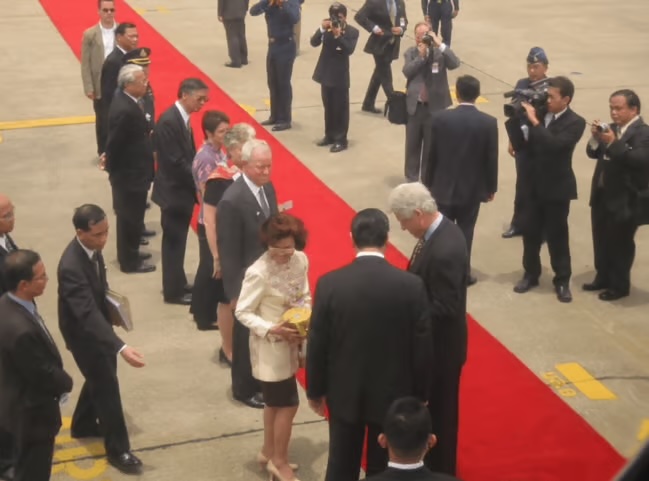
Flight records reviewed at the deposition showed five legs between May 22 and May 25, with stops involving Hong Kong, mainland China, Singapore, and Thailand. Several entries used “same as above” to carry the passenger group forward. Clinton described the trip as connected to health network fundraising and Indian earthquake reconstruction. (Clinton deposition transcript, 1:41:07 to 1:44:27)
Clinton could not identify several women listed by first name and suggested one may have been a flight attendant. He denied witnessing or becoming aware of sexual abuse on the trip. The record establishes proximity. It does not establish that Clinton knew the employment, recruitment, or victim status of every woman aboard. (Clinton deposition transcript, 1:43:34 to 1:44:27)
July 2002: Morocco, Portugal, and the Royal Wedding
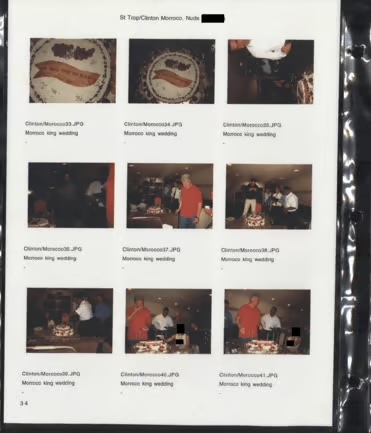
The committee presented two July 13 flight legs from Morocco to Portugal and Portugal to New York. Epstein, Maxwell, and Clinton appeared in the group under discussion. Clinton remembered attending the wedding of Morocco’s King Mohammed VI and believed Chelsea Clinton and Huma Abedin traveled with him, but he did not remember whether Epstein and Maxwell attended or whether he invited them. (Clinton deposition transcript, 1:45:24 to 1:48:29)
The deposition record contains a transcription error referring to July 2022. The context, surrounding logs, and questioning clearly concern July 2002. This kind of error is why the flight records, not an isolated transcript sentence, control the date.
September 2002: The Africa Trip
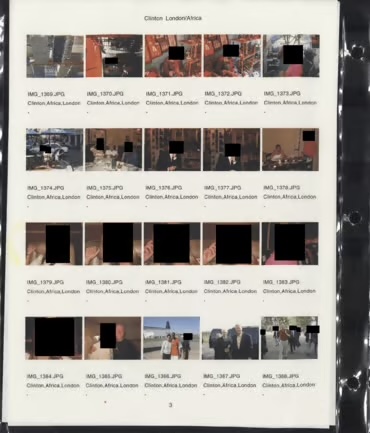
The best known trip began in New York, ended in London, and stopped in Ghana, Nigeria, Rwanda, Mozambique, and South Africa. Passengers on different legs included Clinton, Epstein, Maxwell, Kevin Spacey, Chris Tucker, Doug Band, foundation personnel, Secret Service agents, and women working around Epstein. (Clinton deposition transcript, 1:48:29 to 1:54:00)
Clinton described public health and development work, meetings connected to HIV and AIDS projects, time with Nelson Mandela, and a gathering hosted by Charlayne Hunter Gault and her husband. He remembered the mission and public events better than the specific aircraft seating or passenger names. (Clinton deposition transcript, 1:50:00 to 1:52:08)
The trip generated the publicity that helped introduce Epstein to a much larger public audience. In its October 2002 profile, New York Magazine quoted Clinton praising Epstein as a successful financier and committed philanthropist whose insights and generosity he appreciated. The praise predated Epstein’s public criminal case, but it helped supply elite validation. (New York Magazine, October 28, 2002)
Chauntae Davies and the Massage Photograph
Chauntae Davies was an Epstein survivor and was present during the 2002 Africa trip. A photograph shows her massaging Clinton’s neck in an airport waiting area. Davies has said Clinton was a gentleman on the trip and has not accused him of sexual abuse or misconduct. (New York Magazine interview with Davies; Clinton deposition transcript, 1:52:08 to 1:54:00)
Clinton testified that his neck had spasmed, that help was offered, and that he accepted. He said the picture was the only massage he could identify and did not recall another. In 2026, after being told that Davies was a survivor abused by Epstein during that period and that Epstein used massage work as a recruitment mechanism, Clinton said the knowledge made him feel bad about the photograph and circumstances. (Clinton deposition transcript, 2:08:07 to 2:09:26 and 2:25:30 to 2:26:33)
The photograph does not establish sexual conduct by Clinton. It does establish that a survivor was placed in a service role around powerful guests while Epstein’s abuse system remained concealed or unacknowledged by those guests.
November 2003: Europe, Russia, and China
The final international trip Clinton specifically reviewed in his deposition occurred in November 2003. The routing included Brussels, Oslo, a stop in Russia, Hong Kong, Chengdu, and Beijing. Clinton described European institutional work, a Norwegian supported AIDS plan for Russia, and public health advocacy in China. (Clinton deposition transcript, 3:24:05 to 3:29:28)
Clinton denied seeing or learning of sexual abuse during that trip. He identified it as probably the last Epstein aircraft trip he took. (Clinton deposition transcript, 3:24:05 to 3:29:28)
Epstein’s Manhattan Property
Clinton’s 2019 statement acknowledged one meeting with Epstein in Clinton’s Harlem office and a brief visit to Epstein’s New York apartment in 2002. In his 2026 testimony, Clinton described at least one residence visit at which Epstein was not present and said the purpose involved foundation work or travel logistics. (Clinton deposition transcript, 1:31:40 and 3:57:42 to 4:04:33)
Maria Farmer’s separate account, summarized during the deposition, alleged several presidential era visits based on photographs and staff discussions. Clinton said he did not remember and did not believe he made those visits. The currently cited record therefore establishes at least one acknowledged post presidential property visit and a disputed claim about earlier visits. (Clinton deposition transcript, 2:04:46 to 2:05:39)
Little Saint James: Claim, Denial, and Evidentiary Conflict
Clinton has repeatedly denied visiting Little Saint James. His 2019 office statement said he had never been there. In 2026 he repeated the denial under oath and denied taking a helicopter with Maxwell to the island. Public flight logs do not establish that Clinton traveled to the island. (Clinton deposition transcript, 1:22:28 to 1:23:00 and 2:06:54 to 2:07:36; FactCheck.org, August 1, 2025)
Representative Stansbury told Clinton that Virginia Giuffre had made statements placing him on the island and read a brief entry supplied by Giuffre’s family that referred to Clinton meeting on the island with two girls, Maxwell, and Epstein. Clinton answered that it was not true. The date and underlying diary context were not entered into the public exchange. (Clinton deposition transcript, 2:05:45 to 2:07:04)
Epstein himself wrote in a later communication that Clinton was never on the island. That statement aligns with Clinton’s denial but comes from Epstein, whose credibility and motive to manage damaging narratives require caution. (FactCheck.org, August 1, 2025)
No publicly identified flight record, Secret Service record, dated photograph, or corroborated eyewitness account cited here independently places Clinton on Little Saint James. The Giuffre related statement remains part of the record and must not be erased, but it is disputed and presently uncorroborated in the cited materials.
Palm Beach and Zorro Ranch
Clinton denied visiting Epstein’s Palm Beach home. He said he did not think Epstein or Maxwell invited him there. He also denied visiting Zorro Ranch in New Mexico. Clinton remembered Epstein mentioning the ranch and said there may have been a loose invitation, but he did not go. (Clinton deposition transcript, 3:54:23 to 3:54:39 and 4:15:39 to 4:16:44)
The lack of a cited record placing Clinton at either property distinguishes these denials from the acknowledged Manhattan visit and repeated aircraft travel.
Ghislaine Maxwell’s Relationship With Clinton
In her 2025 Justice Department interview, Maxwell characterized Clinton as her friend rather than Epstein’s. When asked about that statement in 2026, Clinton said he felt closer to Maxwell than to Epstein. He described the relationship as warmer but not sexual. (Clinton deposition transcript, 2:38:15 to 2:39:18)
Clinton connected that closeness to Ted Waitt, the Gateway founder who had a long romantic relationship with Maxwell. Waitt testified in 2026 about his continuing friendship with the Clintons and said he still spoke with Bill Clinton once or twice a year and remained close with Chelsea Clinton and Marc Mezvinsky. He also testified that Maxwell and Doug Band had been friends. (Ted Waitt interview transcript, pages 35, 36, 101 through 103, and 107 through 108)
Waitt’s testimony helps explain a channel of continuing access independent of Epstein. It does not establish that Clinton knew Maxwell’s role in Epstein’s crimes. Clinton said he did not know Maxwell remained involved with Epstein after his arrest and conviction. (Clinton deposition transcript, 4:06:21 to 4:07:19 and 4:09 onward)
Maxwell at Chappaqua and Chelsea Clinton’s Wedding
Maxwell told the Justice Department that she had been invited to Clinton’s Chappaqua home. Clinton testified that he did not remember a visit but accepted that it was possible because Hillary Clinton hosted events there while serving as a senator and the family knew Maxwell. Clinton said it was not common for people simply to arrive unannounced. (Clinton deposition transcript, 2:41:59 to 2:43:35)
Maxwell attended Chelsea Clinton and Marc Mezvinsky’s wedding in 2010. Clinton acknowledged her attendance. He said Maxwell was then associated with Waitt and that the family did not know she remained involved with Epstein. (Clinton deposition transcript, 3:34:39 onward and 4:06:21 onward)
Attendance at the wedding documents family social access two years after Epstein’s Florida conviction. It does not establish Clinton’s knowledge of Maxwell’s crimes. It does undermine any narrative that all contact with Epstein’s closest associate ended with the 2003 aircraft trips.
Maxwell, the Clinton Global Initiative, and TerraMar
Clinton rejected the claim that Epstein was part of the original group that conceived the Clinton Global Initiative. He said the idea developed with Doug Band and a small internal team after Davos. He acknowledged that Epstein may have had some later involvement but denied that Epstein participated in the initiative’s creation. (Clinton deposition transcript, 3:36:14 to 3:38:51)
Maxwell told the Justice Department that she was central to the initiative’s startup. Clinton testified that he did not know that at the time but now understood that she had worked hard. He was also asked about reporting that Maxwell arranged a $1 million payment to Publicis Groupe in 2004 that may have related to the first initiative conference. Clinton said he had no knowledge or recollection of the payment. (Clinton deposition transcript, 3:39:07 to 3:40:20)
In 2013, the Clinton Global Initiative recognized Maxwell’s TerraMar Project as a commitment to action partner. Clinton remembered the ocean related commitment and said Maxwell’s recognition was part of the ordinary process for participants who made commitments. He denied a personal role in selecting or recognizing her. (Clinton deposition transcript, 3:40:20 to 3:42:33)
The institutional issue is not simply whether Clinton personally chose Maxwell. The record shows that a woman who had been central to Epstein’s operation retained access to a major Clinton institution after Epstein’s conviction and received public validation through its platform.
2006: The $25,000 Foundation Donation
An IRS Form 990 for the COUQ Foundation, an Epstein linked entity, recorded a $25,000 contribution to the William J. Clinton Foundation one day before Epstein’s July 2006 indictment. Clinton testified that foundation staff told him records showed the donation, but he did not remember it personally. (Clinton deposition transcript, 3:39:03 and 4:24:31 to 4:24:37; Washington Post, February 27, 2026)
The timing is documented and striking. The record cited here does not establish that Clinton or foundation personnel knew an indictment was imminent when the contribution was made or received. It also does not show that the donation purchased a specific favor.
Post Conviction Contact Through Maxwell
The documentary period after Epstein’s 2008 conviction centers more heavily on Maxwell than Epstein. Records and Clinton’s testimony addressed a possible 2009 party at Maxwell’s home, her 2010 attendance at Chelsea Clinton’s wedding, the 2013 TerraMar commitment, and a 2014 group dinner in Los Angeles. Clinton’s memory varied by event. (Clinton deposition transcript, 3:33:58 to 3:42:33 and 4:06:21 onward)
Clinton acknowledged that Maxwell’s continued access was a mistake in hindsight. He said the family knew her through Waitt and did not know she remained connected to Epstein. That explanation is a claim about the family’s knowledge. It does not eliminate the institutional due diligence question created by her proximity to a convicted sex offender. (Clinton deposition transcript, 3:03:08 onward and 4:06:21 onward)
Photographs Released in 2025 and 2026
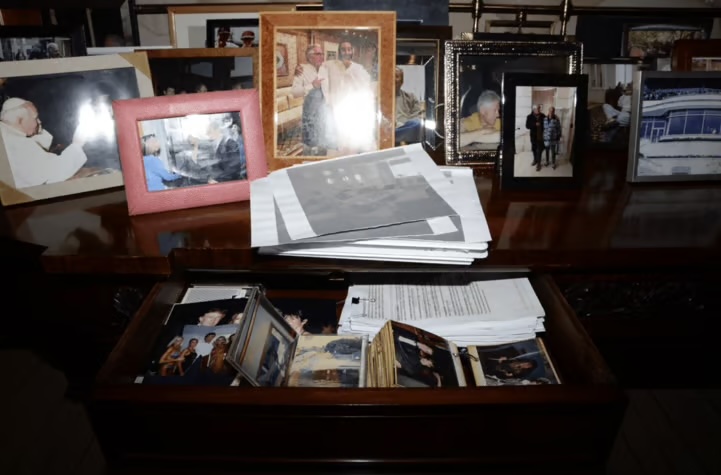
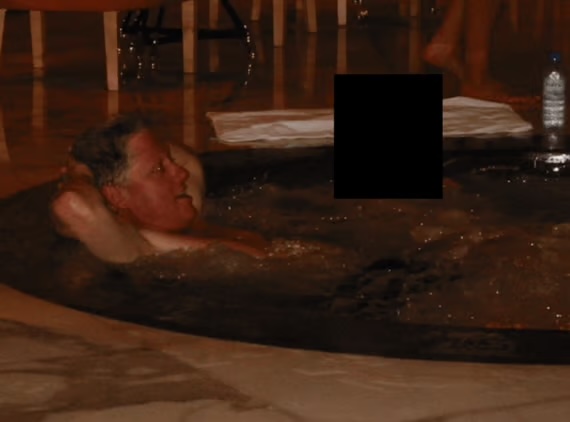
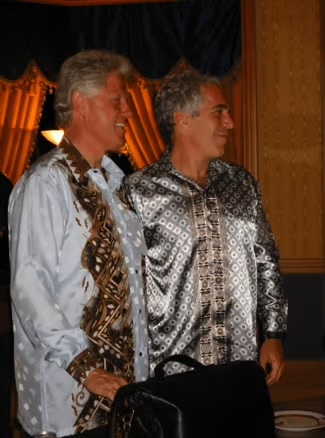
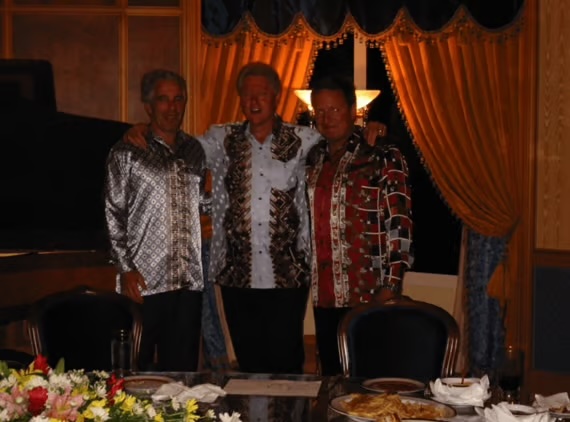
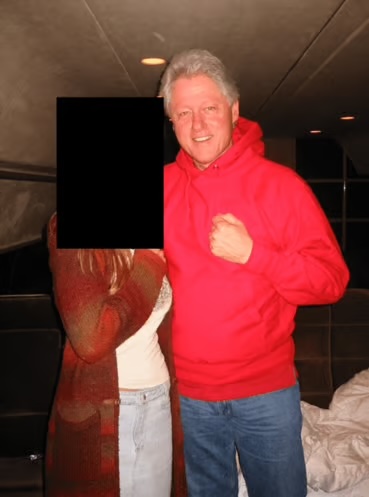
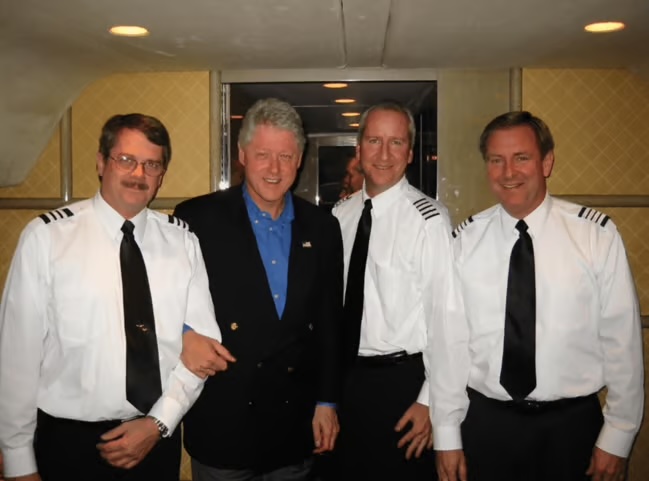
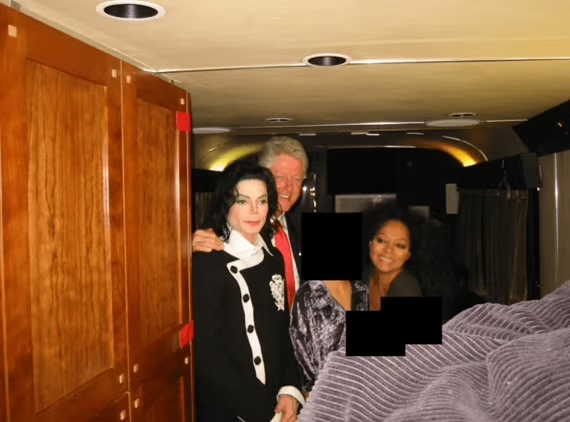
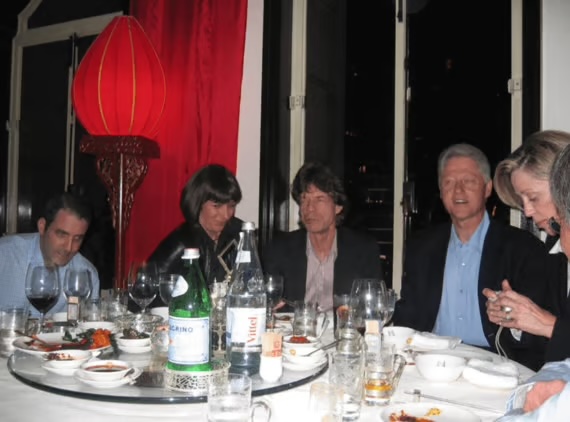
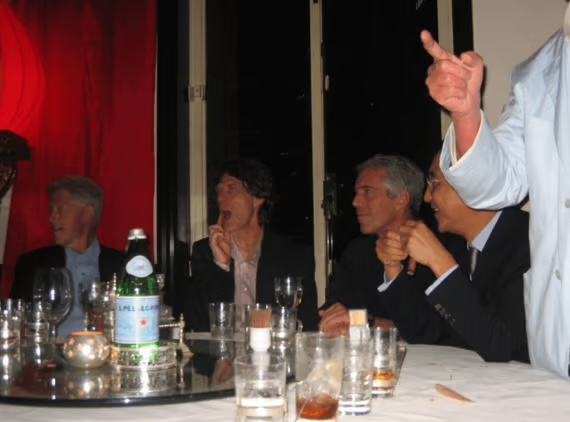
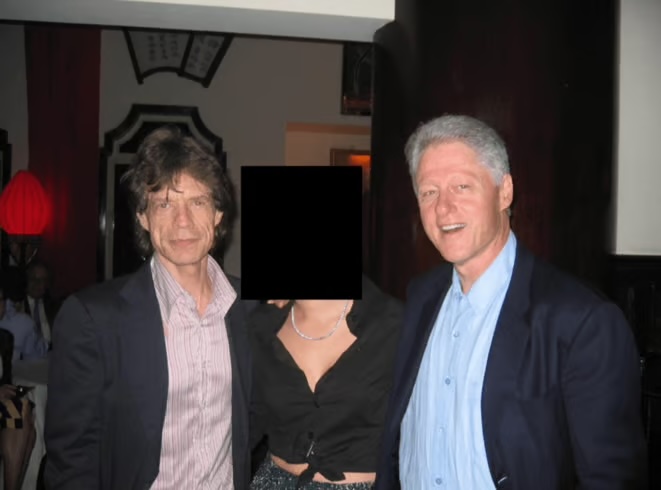
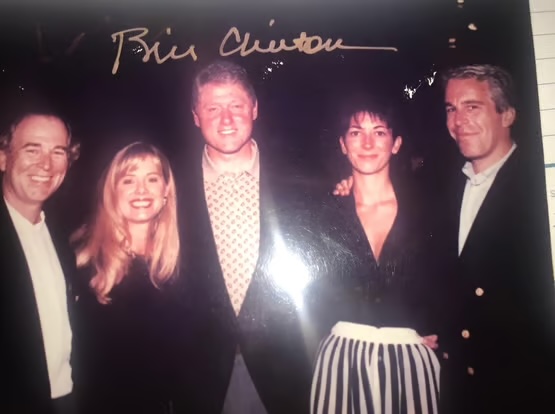
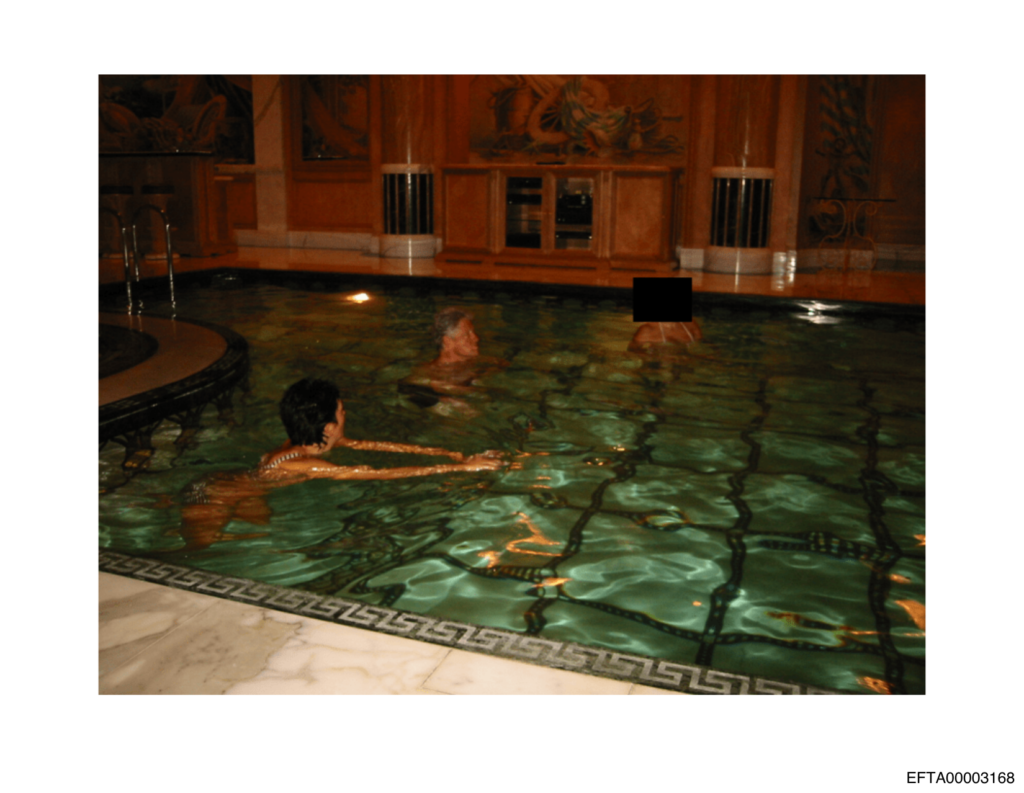
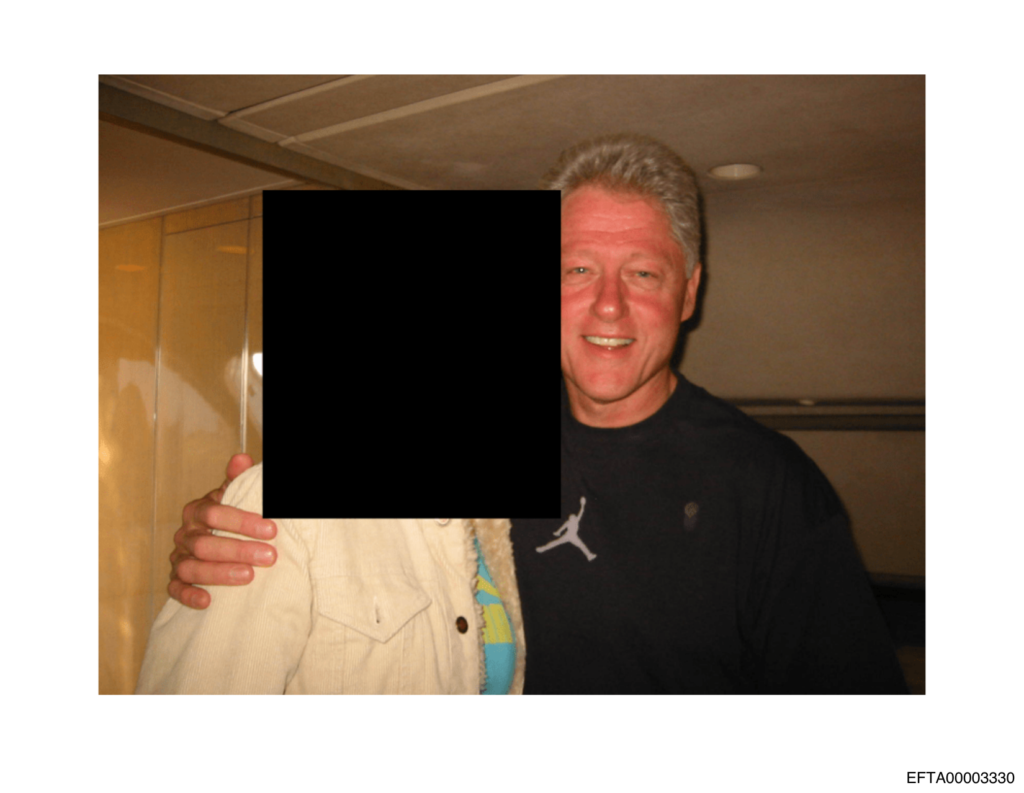
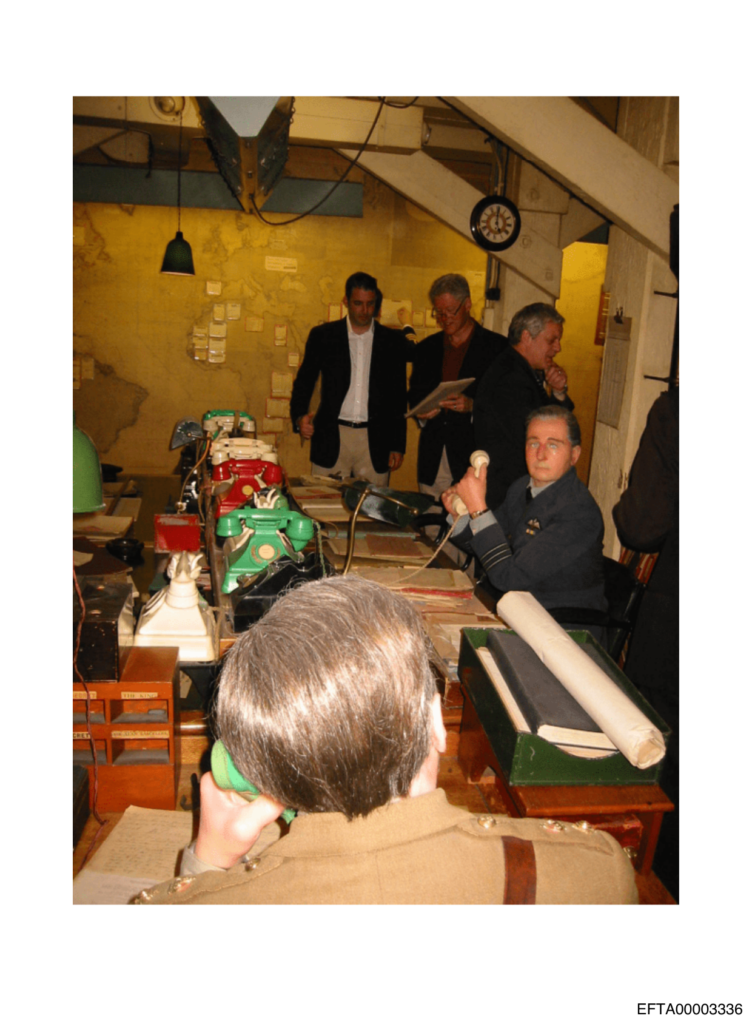
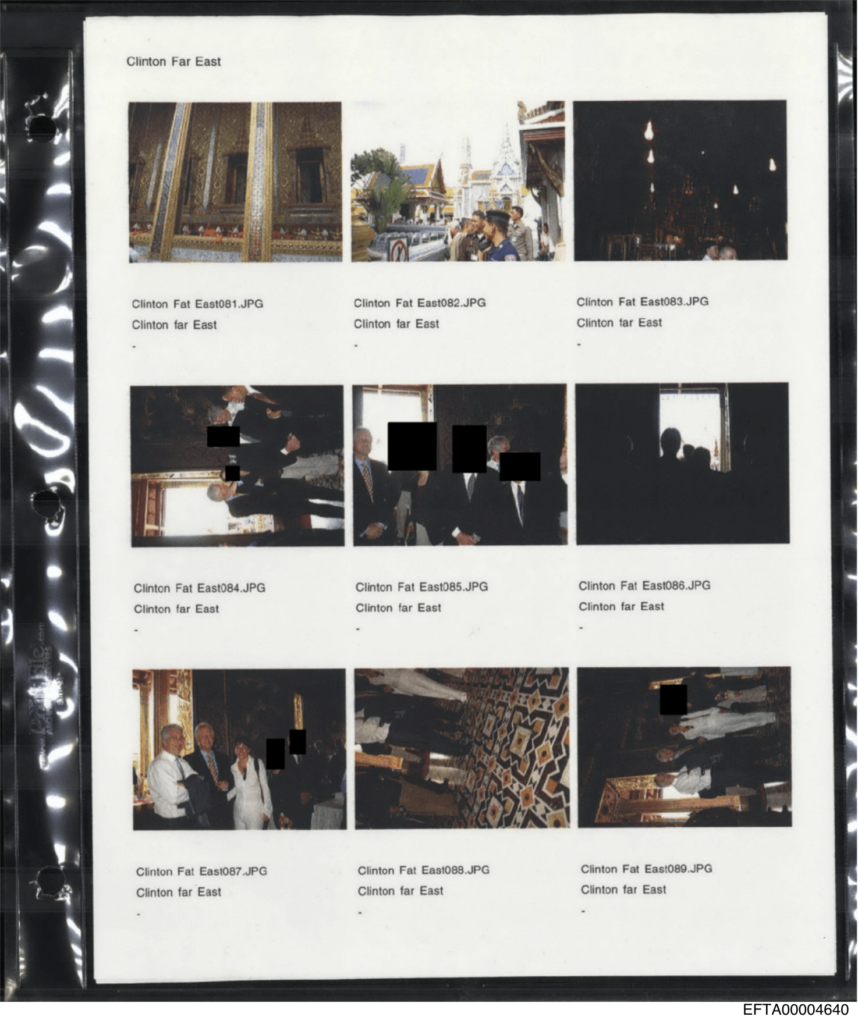
The Justice Department releases included several photographs of Clinton. They showed him with Epstein, on an aircraft, in a pool with Maxwell and another person whose face was redacted, and with public figures including Mick Jagger and Michael Jackson. Some images showed redacted individuals seated near Clinton. (Associated Press, December 19, 2025)
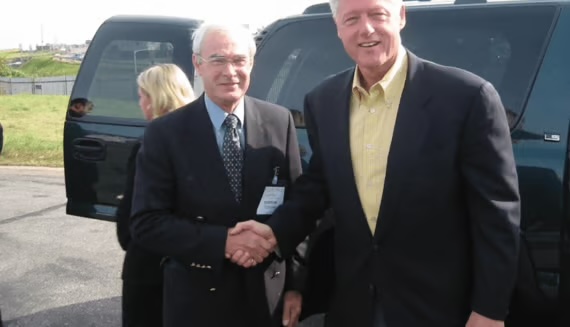
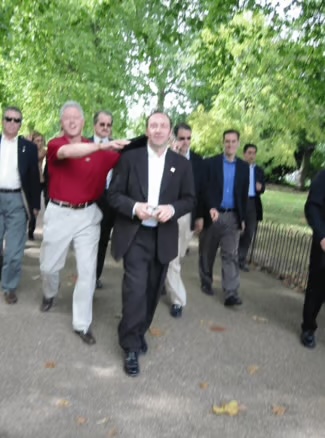
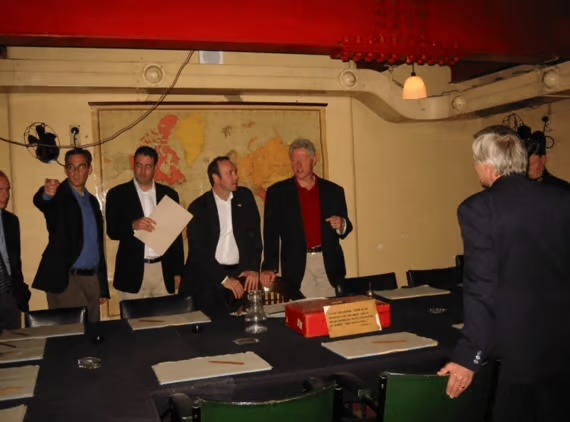
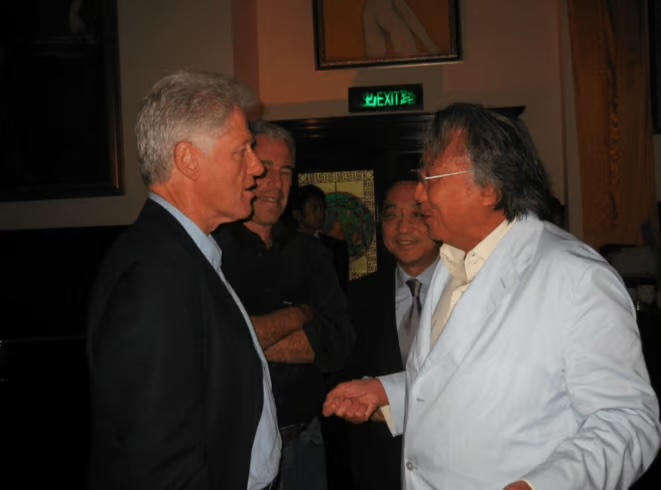
Photographs establish physical proximity at the captured moment. They do not prove sexual conduct, trafficking knowledge, or the identity or age of every redacted person. They are nevertheless significant because they visually corroborate the social and travel intimacy described in logs and testimony.
Doug Band was questioned about a photograph of Clinton in a pool or hot tub with a redacted woman. Band said he did not recall the scene and first saw the photograph when it became public. The absence of his memory neither authenticates nor disproves the surrounding account. (Doug Band interview transcript)
Financial Institution Characterizations
A 2017 Deutsche Bank know your customer review for Epstein related entities listed negative media and politically exposed person risk. It stated that Epstein maintained a close relationship with Bill Clinton and Prince Andrew. Reviewers recorded that approval had been obtained and that their review identified no red flags requiring further escalation. (EFTA01356008)
This document does not prove an active Clinton relationship in 2017. It proves that Deutsche Bank personnel used Clinton’s name when describing Epstein’s political relationships during risk review. The reference illustrates how elite associations could function as part of Epstein’s institutional profile even years after direct contact allegedly ended.
Telephone and Contact Records
The EFTA corpus includes large telephone record sets associated with Epstein offices and residences. These records can establish calls between lines, dates, durations, and routing. They cannot ordinarily establish who personally used a shared office line or what was said. (EFTA01242527; EpsteinWiki guide to the telephone record set)
Records described in the Clinton research set include Clinton Foundation related numbers. Each match must be evaluated at the line level. A call to a foundation switchboard is not the same as a direct call with Clinton, and a contact record is not proof of criminal discussion.
Survivor Accounts and Allegations
The public record requires separate treatment of three survivor related tracks.
Maria Farmer: Farmer’s allegation, as presented to Clinton in 2026, was that he visited Epstein’s house while president. Her basis was described as photographs shown by Maxwell and staff discussions, not her own observation of Clinton inside the house. Clinton denied remembering or believing that he visited. (Clinton deposition transcript, 2:04:46 to 2:05:39)
Virginia Giuffre: Giuffre related material was presented as placing Clinton on Little Saint James. Clinton denied the claim. No dated photograph, flight record, or independent corroboration cited here resolves the conflict. Giuffre did not accuse Clinton of sexually abusing her. (Clinton deposition transcript, 2:05:45 to 2:07:36; FactCheck.org, August 1, 2025)
Chauntae Davies: Davies traveled in the Africa party and appears massaging Clinton’s neck in a photograph. She described Clinton as a gentleman and did not accuse him of abuse. Her survivor status changes the meaning of the environment and the power arrangement, but it must not be converted into an accusation she did not make. (New York Magazine interview with Davies; Clinton deposition transcript, 2:08:07 to 2:09:26)
Other FBI files contain allegations or tips naming prominent people. An FBI Form 302 records what an interviewee told agents. It does not mean the FBI verified the claim. Where the identity, context, or corroboration is unavailable, this article treats the record as an investigative lead rather than fact. (EFTA00090339; EFTA01688916; EFTA02858445)
Epstein’s Fifth Amendment Invocation
During earlier civil litigation, Epstein was asked about Clinton and invoked the Fifth Amendment rather than answering. An invocation protects against compelled self incrimination and is not a factual admission that the proposition in a question is true. Clinton’s lawyers emphasized that distinction during the 2026 deposition. (Clinton deposition transcript, approximately 1:03 through 1:05)
The episode shows that lawyers considered Clinton relevant enough to ask about. It does not independently prove an island visit, sexual conduct, or knowledge of trafficking.
Public Statements and Changes in Detail
After Epstein’s July 2019 arrest, Clinton spokesman Angel Ureña issued a statement saying Clinton knew nothing about Epstein’s crimes. It described four trips on Epstein aircraft in 2002 and 2003, all connected to foundation work, with staff, supporters, and Secret Service present. It also acknowledged a Harlem office meeting and a brief New York apartment visit, denied visits to Little Saint James, Zorro Ranch, or the Palm Beach residence, and said Clinton had not spoken with Epstein in well over a decade. (Clinton deposition transcript, 3:57:42 to 4:04:33; FactCheck.org, August 15, 2019)
Critics repeatedly shortened the statement into a claim that Clinton met Epstein only twice. During the 2026 deposition, Clinton’s counsel disputed that reading and insisted the two occasions referred to the New York visits described after the travel paragraph, not the entire relationship. The full statement is therefore necessary. (Clinton deposition transcript, 3:57:42 to 4:04:33)
Clinton’s 2024 memoir said Epstein was arrested in 2005. During the deposition, counsel and committee members corrected the date to 2006, and Clinton acknowledged the book contained a mistake. He continued to say his last remembered direct contact occurred in 2003. (Clinton deposition transcript, 3:31:40 to 3:32:18 and 3:52:45 to 3:53:04)
The 2025 and 2026 Investigative Record
In November 2025, Attorney General Pam Bondi assigned Manhattan United States Attorney Jay Clayton to investigate Epstein’s ties to Clinton, Lawrence Summers, Reid Hoffman, and JPMorgan after President Donald Trump publicly demanded such an inquiry. The announcement did not identify a specific suspected crime by Clinton. As of this article’s September 2026 research cutoff, no resulting Clinton charge or public adjudication had been identified. (Reuters, November 14, 2025; Associated Press, November 14, 2025)
In July 2025, a House subcommittee approved subpoenas for Bill and Hillary Clinton as part of a broader Epstein investigation. After months of negotiation and missed dates, the full committee advanced contempt reports in January 2026. The Clintons later agreed to filmed, transcribed depositions. Hillary Clinton testified on February 26. Bill Clinton testified on February 27 for more than six hours. (House Oversight deposition announcement; Reuters, February 27, 2026)
The committee released both videos on March 2, 2026. Clinton’s appearance was historically unusual because former presidents rarely give compelled congressional testimony. Committee chair James Comer described Clinton as cooperative while continuing to scrutinize the relationship. (House Oversight video release; Associated Press, February 27, 2026)
Clinton denied knowledge of Epstein or Maxwell’s crimes, denied sexual contact with anyone they introduced, denied property visits other than New York, and admitted extensive travel and a closer social relationship with Maxwell. He said he had seen nothing that gave him pause and would have reported Epstein if he had known. (Clinton deposition transcript; Reuters, February 27, 2026)
In 2026, Doug Band and Ted Waitt also provided transcribed interviews. Their testimony expanded the record concerning aircraft logistics, Secret Service presence, Maxwell’s relationships, Clinton family access, and how the Clinton and Epstein social worlds overlapped. Neither transcript produced an adjudicated finding that Clinton participated in Epstein’s crimes. (Doug Band interview transcript; Ted Waitt interview transcript)
The 2026 Deposition: Key Admissions
Clinton admitted or accepted the following points under oath:
- Epstein and Maxwell appeared in a 1993 White House receiving line photograph with Bill and Hillary Clinton. (Clinton deposition transcript, 16:04 to 20:38)
- Clinton did not dispute that visitor records showed at least seventeen Epstein White House entries between 1993 and 1995. (Clinton deposition transcript, 50:49 to 51:02)
- Summers connected Clinton to Epstein’s aircraft offer. (Clinton deposition transcript, 46:27 to 47:49)
- Clinton took multiple international trips and many individual flight legs on Epstein aircraft in 2002 and 2003. (Clinton deposition transcript, 1:35:20 to 1:54:00 and 3:24:05 to 3:29:28)
- Clinton accepted a neck massage from Davies during travel and later learned that she was an Epstein survivor. (Clinton deposition transcript, 2:08:07 to 2:09:26 and 2:25:30 to 2:26:33)
- Clinton felt closer to Maxwell than to Epstein and described that relationship as warmer but not sexual. (Clinton deposition transcript, 2:38:15 to 2:39:18)
- Maxwell may have visited the Chappaqua home, attended Chelsea Clinton’s wedding, and participated in Clinton Global Initiative activity. (Clinton deposition transcript, 2:41:59 to 2:43:35 and 3:34:39 to 3:42:33)
- Foundation records showed a $25,000 contribution from an Epstein linked foundation in July 2006. (Clinton deposition transcript, 4:24:31 to 4:24:37)
- Clinton’s memoir used the wrong year for Epstein’s first arrest. Clinton accepted the correction. (Clinton deposition transcript, 3:52:45 to 3:53:04)
The 2026 Deposition: Key Denials
Clinton denied or said he lacked knowledge of the following:
- Knowledge of Epstein’s or Maxwell’s sexual abuse before it became public. (Clinton deposition transcript, 1:22:02 to 1:22:25)
- Sexual activity with anyone introduced by Epstein or Maxwell. (Clinton deposition transcript, 1:22:02 to 1:22:25)
- Sexual activity aboard Epstein aircraft or witnessing sexual activity there. (Clinton deposition transcript, 2:21:14 to 2:22:05)
- Visiting Little Saint James, the Palm Beach residence, or Zorro Ranch. (Clinton deposition transcript, 1:22:28 to 1:23:00 and 4:15:39 to 4:16:44)
- Knowing about Epstein’s repeated White House visits when they occurred. (Clinton deposition transcript, 2:19:05 to 2:21:14)
- Sending a letter to law enforcement or the Justice Department on Epstein’s behalf. (Clinton deposition transcript, 3:32:22 onward)
- Personal knowledge of the 2006 foundation donation when it was made. (Clinton deposition transcript, 3:39:03 and 4:24:31)
- That Epstein helped originate the Clinton Global Initiative. (Clinton deposition transcript, 3:36:14 to 3:38:51)
Claims the Evidence Supports
Supported: Epstein and Maxwell obtained White House level ceremonial access in 1993, and Epstein repeatedly entered the White House complex during Clinton’s first term. (Sky News document review; Clinton deposition transcript, 50:49 to 51:02)
Supported: Clinton received extensive aircraft transportation from Epstein for international work in 2002 and 2003. (Clinton deposition transcript, 1:35:20 to 1:54:00 and 3:24:05 to 3:29:28)
Supported: Epstein benefited reputationally from association with Clinton. Contemporary reporting directly connected the Africa trip to Epstein’s increased public visibility. (New York Magazine, October 28, 2002)
Supported: Maxwell developed a relationship with Clinton that outlasted the best documented direct Clinton and Epstein travel period. (Clinton deposition transcript, 2:38:15 to 2:43:35 and 3:34:39 to 3:42:33)
Supported: An Epstein linked foundation contributed $25,000 to the Clinton Foundation one day before Epstein’s July 2006 indictment. (Clinton deposition transcript, 4:24:31 to 4:24:37)
Supported: Clinton received a neck massage from Davies during the Africa travel period. Davies did not accuse Clinton of abuse. (Clinton deposition transcript, 2:08:07 to 2:09:26; New York Magazine interview with Davies)
Supported as an allegation, not established fact: Farmer reported information that Clinton visited Epstein’s house while president. Her stated basis in the congressional exchange was photographs and staff discussions. Clinton denied the allegation. (Clinton deposition transcript, 2:04:46 to 2:05:39)
Supported as an allegation, not established fact: Giuffre related material placed Clinton on Little Saint James. Clinton denied it. Publicly identified travel records cited here do not corroborate an island visit. (Clinton deposition transcript, 2:05:45 to 2:07:36; FactCheck.org, August 1, 2025)
Not supported by the cited evidence: The claim that Clinton visited Little Saint James twenty eight times. That number misuses flight records and is unsupported. (FactCheck.org, August 1, 2025)
Not supported by the cited evidence: A claim that every White House visitor entry was a personal meeting with Clinton. (Clinton deposition transcript, 2:19:05 to 2:21:14)
Not supported by the cited evidence: A claim that Clinton was charged, found liable, or accused by Davies of sexual abuse connected to Epstein.
Chronology
1992: Epstein made two reported $1,000 donations to Clinton’s presidential campaign. (Sky News document review)
September 1993: Epstein and Maxwell attended a White House Historical Association related donor event and appeared in a receiving line photograph with Bill and Hillary Clinton. (Sky News document review)
1993 through 1995: Visitor records document repeated Epstein White House access. (Clinton deposition transcript, 50:49 to 51:02)
1995: Epstein and Maxwell were reported at a Palm Beach fundraising dinner attended by Clinton. Farmer later reported information about alleged Clinton visits to Epstein’s house during the presidential period. Clinton denied remembering or believing such visits occurred. (Clinton deposition transcript, 2:04:46 to 2:05:39 and 3:57:42 onward)
Late 2001 or early 2002: Summers told Clinton about Epstein’s offer of aircraft transportation in exchange for conversation during long flights. (Clinton deposition transcript, 22:49 to 26:07)
March 2002: European travel involved Clinton, staff, Secret Service, and a changing passenger group that included Epstein and Maxwell. (Clinton deposition transcript, 1:35:20 to 1:41:00)
May 2002: Five Asia related legs were reviewed during the deposition. (Clinton deposition transcript, 1:41:07 to 1:44:27)
July 2002: Flight records showed Morocco to Portugal and Portugal to New York legs around the time of the Moroccan royal wedding. (Clinton deposition transcript, 1:45:24 to 1:48:29)
September 2002: The Africa trip stopped in Ghana, Nigeria, Rwanda, Mozambique, and South Africa. Davies was in the travel party. (Clinton deposition transcript, 1:48:29 to 1:54:00)
October 2002: New York Magazine published a major Epstein profile that highlighted his transportation of Clinton and quoted Clinton praising him. (New York Magazine, October 28, 2002)
July 2003: Maxwell reportedly cohosted a fundraiser for the Clinton presidential library. Clinton said he did not remember attending. (Clinton deposition transcript, 3:29:28 to 3:31:40)
November 2003: Clinton took what he remembered as his final Epstein aircraft trip, through Europe, Russia, and China. (Clinton deposition transcript, 3:24:05 to 3:29:28)
2004 and 2005: Maxwell participated in work connected to the startup of the Clinton Global Initiative. Clinton denied that Epstein originated the initiative and said he did not know the extent of Maxwell’s work at the time. (Clinton deposition transcript, 3:36:14 to 3:40:20)
July 18, 2006: The COUQ Foundation recorded a $25,000 contribution to the Clinton Foundation, one day before Epstein’s indictment. (Clinton deposition transcript, 4:24:31 to 4:24:37)
2008: Epstein pleaded guilty in Florida and registered as a sex offender. Clinton said he had already stopped direct contact. (Clinton deposition transcript, 3:52:45 to 3:53:04)
2009: An email suggested Clinton may have attended a party at Maxwell’s New York home. Clinton said he did not remember. (Clinton deposition transcript, 3:33:58 to 3:34:39)
2010: Maxwell attended Chelsea Clinton’s wedding. (Clinton deposition transcript, 3:34:39 onward)
2013: Maxwell’s TerraMar Project received Clinton Global Initiative recognition. (Clinton deposition transcript, 3:40:20 to 3:42:33)
2014: Clinton attended a reported group dinner in Los Angeles that included Maxwell. (Clinton deposition transcript, 3:42:35 onward and 4:06:21 onward)
2017: Deutsche Bank recorded a risk review describing Epstein as maintaining a close relationship with Clinton and Prince Andrew. (EFTA01356008)
July 2019: Clinton’s office issued a detailed statement after Epstein’s federal arrest. (FactCheck.org, August 15, 2019)
2024: Clinton’s memoir addressed Epstein but misstated the arrest year as 2005. (Clinton deposition transcript, 3:52:45 to 3:53:04)
2025: Congress subpoenaed the Clintons. DOJ releases included numerous Clinton photographs and records. (House Oversight deposition announcement; Associated Press, December 19, 2025)
November 2025: The Justice Department announced an inquiry into Epstein’s ties to Clinton and other named people and institutions. The announcement did not charge Clinton with a crime. (Reuters, November 14, 2025)
February 27, 2026: Clinton gave more than six hours of sworn testimony. (Reuters, February 27, 2026)
March 2, 2026: The House released the filmed depositions. (House Oversight video release)
April through July 2026: Ted Waitt and Doug Band gave transcribed interviews that added evidence about Maxwell, Clinton family access, travel, and logistics. (Ted Waitt interview transcript; Doug Band interview transcript)
Core Document Ledger
House Oversight Clinton deposition video release: Establishes the February 27, 2026 deposition and March 2 publication. (House Oversight release)
Clinton deposition transcript: The most extensive single source for Clinton’s admissions, denials, memory, explanations, and responses to exhibits. The online transcript is not a substitute for reviewing the official video when tone or disputed wording matters. (Full transcript)
Doug Band transcript: Provides testimony from Clinton’s senior post presidential aide concerning the aircraft layout, Secret Service presence, travel, Maxwell, photographs, and relationship logistics. (Doug Band interview transcript)
Ted Waitt transcript: Provides testimony from Maxwell’s former partner about Maxwell, Doug Band, international travel, and continuing relationships with the Clinton family. (Ted Waitt interview transcript)
EFTA01356008: Deutsche Bank know your customer review that describes Epstein as maintaining a close relationship with Clinton and Prince Andrew. (EFTA01356008)
EFTA02333120: Clinton related investigative and congressional research material cited in the released corpus. It should be read as a record of investigative assertions and source mapping, not as a verdict. (EFTA02333120)
EFTA02333354: Scheduling correspondence involving a proposed Clinton related meeting. The record establishes coordination language but does not prove Clinton attended without corroborating schedule or testimony. (EFTA02333354)
EFTA01420713: Clinton related financial or institutional record within the EFTA corpus. Its probative value depends on the underlying page and context, not the presence of Clinton’s name alone. (EFTA01420713)
EFTA01242527: Large telephone record production. Individual calls require number ownership, date, duration, and user analysis before attribution to Clinton personally. (EFTA01242527)
EFTA00090339: FBI Form 302 interview record. It proves that an interviewee made statements to agents, not that every statement was verified. (EFTA00090339)
EFTA01688916: FBI investigative compilation containing victim accounts, correspondence, and investigative material. Each allegation requires source and corroboration analysis. (EFTA01688916)
EFTA02858445: Eight page FBI interview concerning a survivor recruited through modeling as a minor. Its inclusion documents the broader abuse environment. It should not be represented as proof of Clinton conduct without a Clinton specific passage and corroboration. (EFTA02858445)
EFTA01747912: Released EFTA material containing Clinton related references. The record should be cited only for the exact statement visible in the underlying document. (EFTA01747912)
New York Magazine, October 2002: Contemporary profile showing how Clinton’s Africa trip elevated Epstein’s public profile and recording Clinton’s praise. (New York Magazine)
Justice Department Epstein Library: Official portal for EFTA productions, court records, and departmental disclosures. (DOJ Epstein Library)
Questions That Still Need Answers
- What is the complete, reconciled list of Clinton’s Epstein aircraft legs, including date, aircraft, origin, destination, passengers, crew, and the mission associated with each leg?
- Which individual or institution paid the operating costs of each trip, and were any expenses reimbursed to Epstein or his companies?
- What written due diligence did the Clinton Foundation, Clinton staff, or Secret Service conduct before accepting repeated transportation from Epstein?
- What did Lawrence Summers know about Epstein when he conveyed the aircraft offer, and what representations did Epstein make to Summers about the proposed arrangement?
- What was discussed between Clinton and Epstein during the long flight segments that formed the consideration for the transportation offer?
- Who authorized Epstein’s seventeen reported White House entries, whom did he meet on each visit, and are meeting notes, memoranda, telephone logs, or calendars still withheld?
- Do the photographs Maria Farmer said Maxwell showed her still exist, and can their location, date, and provenance be established?
- Which staff members allegedly told Farmer that Clinton visited Epstein’s house, and have they provided sworn testimony?
- What is the date and full context of the Giuffre diary entry read during Clinton’s deposition, and how does it compare with her other sworn and published accounts?
- Do Secret Service travel and protective intelligence records conclusively confirm or refute every disputed claim about Clinton at Little Saint James, Epstein’s Manhattan residence, Palm Beach, and Zorro Ranch?
- Why did Epstein state that Clinton was never on the island, and was that statement part of a coordinated media or legal strategy?
- What exactly did Doug Band know about the roles of women traveling or working around Epstein, and when did he first learn that some were survivors?
- Who selected passengers for the Clinton trips, and who decided that Davies and other women working around Epstein would travel with or serve the delegation?
- What records exist concerning the neck massage photograph, including who took it, where it was taken, and how it entered Epstein’s files?
- What was Maxwell’s full role in Clinton Foundation and Clinton Global Initiative work from 2004 onward?
- Who funded the reported $1 million Publicis Groupe payment, what services did it purchase, and did Epstein direct, reimburse, or benefit from it?
- Who approved TerraMar’s 2013 Clinton Global Initiative commitment, and what background review was conducted on Maxwell after Epstein’s conviction?
- Who invited Maxwell to Chelsea Clinton’s wedding, what did the Clinton family know about her continued relationship with Epstein, and what contacts continued afterward?
- Did Maxwell visit the Chappaqua home, on what date, for what purpose, and who else was present?
- What was the purpose and internal handling of the $25,000 COUQ Foundation contribution received one day before Epstein’s 2006 indictment?
- Was the donation ever returned, segregated, disclosed internally as a risk, or reviewed after Epstein’s conviction?
- What communications, if any, occurred between Clinton related entities and Epstein or his representatives after 2003 but before the 2006 indictment?
- What communications occurred through Maxwell, Waitt, Band, or other intermediaries after Epstein’s conviction?
- Why did Deutsche Bank describe Epstein as maintaining a close relationship with Clinton in 2017, and what source material supported that classification?
- Which Clinton Foundation telephone numbers appear in Epstein’s records, who controlled them, and what do the dates and durations show?
- Did Epstein invoke Clinton’s name to banks, donors, governments, prospective clients, victims, or employees in ways not yet publicly documented?
- What Clinton related records remain redacted, withheld, removed, or not yet produced under the Epstein Files Transparency Act?
- What investigative steps did the FBI take after receiving allegations involving Clinton, which claims were corroborated, and which were closed as unsupported?
- Did any law enforcement agency seek Clinton’s testimony before 2026, and if not, why not?
- Why were the full official Clinton deposition transcript and all exhibits not presented together in an easily searchable government publication at the time of the video release?
Assessment
The documentary record supports a high level association. Clinton’s connection included early political support, White House access, international travel, social photographs, donated transportation, foundation contact, and a relationship with Maxwell that continued after Epstein’s conviction. This was not incidental proximity.
The record also supports limits. The available flight evidence does not place Clinton on Little Saint James. Davies did not accuse him of misconduct. No cited criminal charge or civil judgment finds that he joined Epstein’s trafficking or abuse. Clinton’s sworn denials therefore cannot be dismissed merely because the association was substantial.
The most defensible rating is 4 out of 5. A lower rating would minimize repeated access and institutional entanglement. A rating of 5 would imply evidence of knowing participation or directly substantiated abuse that the cited record does not establish.
The central accountability issue is how Epstein converted wealth, transportation, and social access into legitimacy. Clinton’s presence on the aircraft and praise in the press supplied powerful validation. Maxwell’s later access to Clinton family and foundation circles shows that the network did not end cleanly when direct Clinton and Epstein travel stopped.
The article should be updated whenever official exhibits, Secret Service records, underlying flight manifests, foundation communications, or complete EFTA documents resolve the questions above.
Sources
Primary and Official Sources
- House Oversight Committee release of the Clinton deposition videos
- House Oversight Committee deposition announcement and subpoena history
- Bill Clinton deposition transcript
- Doug Band interview transcript
- Ted Waitt interview transcript
- DOJ Epstein Library
- EFTA02333120
- EFTA02333354
- EFTA01420713
- EFTA01356008
- EFTA01242527
- EFTA00090339
- EFTA01688916
- EFTA02858445
- EFTA01747912
- White House biography of William J. Clinton
- Clinton Foundation biography
Reporting and Independent Analysis
- New York Magazine, “Jeffrey Epstein: International Moneyman of Mystery,” October 28, 2002
- ABC News timeline of Clinton and Epstein contacts
- Associated Press report on photographs released in December 2025
- Associated Press report on Clinton’s February 2026 deposition
- Reuters report on Clinton’s deposition
- Reuters report on the released deposition video
- Sky News document review
- FactCheck.org review of Clinton and Epstein claims, August 2019
- FactCheck.org review of the unsupported twenty eight island visits claim, August 2025
- Axios review of Clinton references in the files
- New York Magazine interview addressing Chauntae Davies and the Africa trip
- Ellie Leonard on the warning signs in early Epstein reporting
- American Freakshow analysis of Epstein and the global establishment
- Julie K. Brown on the FBI’s investigative name list
- R. Howard Stone forensic analysis repository
- Reuters report on the November 2025 Justice Department inquiry
- Associated Press report on the November 2025 Justice Department inquiry