
Louis Freeh
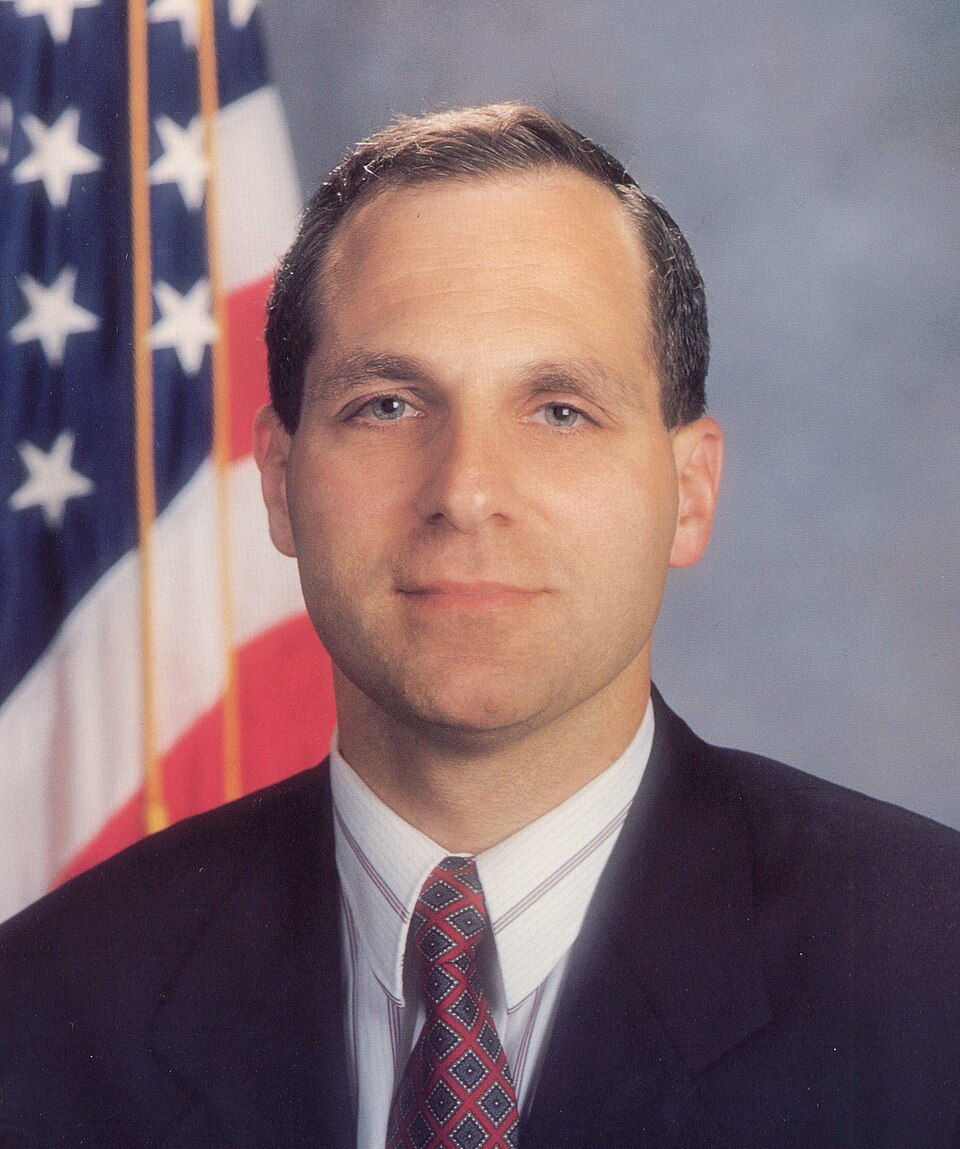
By FBI – http://www.fbi.gov/multimedia/images/people/louisfreeh.jpg as last successfully archived at https://web.archive.org/web/20100411091743/http://www.fbi.gov/multimedia/images/people/louisfreeh.jpg and thumbnailed and linked by http://www.fbi.gov/multimedia/photos.htm, Public Domain, Link
Snapshot
Louis Freeh’s place in the Epstein record is defined by an extraordinary institutional reversal.
In September 1996, Freeh was Director of the Federal Bureau of Investigation when Maria Farmer made a criminal complaint about Jeffrey Epstein. The complaint described stolen photographs of her minor sisters, Epstein’s interest in obtaining pictures of young girls, and a threat to burn Farmer’s house if she spoke. The FBI created a record of the complaint but apparently did not conduct a meaningful investigation.
Nearly two decades later, after leaving government, Freeh’s private investigative firm worked for Alan Dershowitz as Dershowitz fought Virginia Giuffre’s allegations that Epstein had trafficked her to him. A short summary attributed to the Freeh Group concluded that the available evidence did not support the accusations. Giuffre said Freeh’s investigators never interviewed her. Her attorneys said Freeh’s firm did not contact them or request their evidence.
Freeh’s report was later cited by Ghislaine Maxwell’s attorneys to dispute claims about Bill Clinton visiting Epstein’s private island. The report entered litigation as defense sponsored investigative material. It was not an FBI report, a judicial finding, or a government exoneration of anyone.
The public record does not establish that Freeh knew about Maria Farmer’s complaint while he directed the FBI. It also does not establish that he personally ordered the Bureau to ignore it. The chronological overlap is nevertheless significant: Freeh led the FBI when the earliest known documented federal warning about Epstein arrived, and his private firm later supplied material used by people defending themselves against allegations arising from the same trafficking network.
Freeh has not been charged with an Epstein related crime and has not been accused by a survivor of participating in Epstein’s sexual abuse.
Full name: Louis Joseph Freeh
Born: January 6, 1950
Birthplace: Jersey City, New Jersey
Profession: Attorney, private investigator, corporate consultant, former federal judge, former federal prosecutor, and former FBI Director
FBI service: Special agent from 1975 to 1981
Federal prosecutor: United States Attorney’s Office for the Southern District of New York
Federal judge: United States District Court for the Southern District of New York from 1991 to 1993
FBI Director: September 1, 1993 through June 25, 2001
Private firms: Freeh Group International Solutions and Freeh Sporkin & Sullivan LLP
The FBI’s official biography records Freeh’s work as an FBI agent, organized crime prosecutor, federal judge, and director of the Bureau.
Why Freeh Matters to the Epstein Record
Freeh matters for three separate reasons.
First, he was FBI Director when Maria Farmer’s 1996 complaint entered the Bureau.
Second, the Freeh Group investigated Virginia Giuffre’s allegations against Alan Dershowitz at Dershowitz’s request.
Third, findings attributed to the Freeh Group were reused in Giuffre v. Maxwell to challenge claims about Bill Clinton’s travel to Little St. James.
These roles must not be collapsed into one unsupported theory.
The fact that Freeh headed the FBI in 1996 does not prove he personally saw Farmer’s complaint. The fact that his firm later investigated Giuffre does not prove that Freeh represented Epstein or Maxwell. The fact that Maxwell’s lawyers cited the firm’s findings does not mean Freeh worked directly for Maxwell.
What the record shows is a recurring use of Freeh’s institutional reputation in Epstein related disputes.
Freeh’s Law Enforcement Career
Freeh graduated from Rutgers College in 1971, received his law degree from Rutgers School of Law in 1974, and later earned a Master of Laws in criminal law from New York University.
He joined the FBI as a special agent in 1975. He later entered the United States Attorney’s Office for the Southern District of New York, where he held senior prosecutorial positions and participated in major organized crime investigations.
Freeh became widely known for his work on the Pizza Connection prosecution, a lengthy case involving heroin trafficking and organized crime.
President George H. W. Bush appointed Freeh to the United States District Court for the Southern District of New York in 1991. President Bill Clinton nominated him to become FBI Director in 1993.
His experience gave his name enormous authority. When the Freeh Group later issued conclusions about Giuffre, Dershowitz, Clinton, and Epstein related travel, those conclusions carried the prestige of a former FBI Director even though the work was privately commissioned.
Maria Farmer’s 1996 FBI Complaint
On September 3, 1996, the FBI recorded a criminal complaint concerning Jeffrey Epstein.
The complainant’s name was redacted when the document became public, but Maria Farmer confirmed through her attorneys that it was her report.
The complaint stated that Farmer was a professional artist who had photographed her younger sisters, then twelve and sixteen. She reported that Epstein had stolen photographs and negatives and that she believed he may have sold the images.
The record also stated that Epstein had asked Farmer to photograph young girls at swimming pools. Farmer reported that Epstein threatened to burn her house if she spoke about the photographs.
The complaint concerned possible child sexual abuse material and a threat against the person reporting it.
The FBI records released in 2025 confirmed that the Bureau received the warning. The public record has not revealed a meaningful investigative response resulting from the complaint.
Freeh Was FBI Director When the Complaint Arrived
Freeh had been FBI Director for three years when Farmer’s complaint was recorded.
That fact establishes institutional responsibility at the highest level of the Bureau. It does not establish personal knowledge.
There is no publicly available evidence showing that:
- Freeh personally reviewed Farmer’s complaint
- The complaint was forwarded to his office
- Freeh discussed Farmer or Epstein with agents in 1996
- Freeh ordered agents not to investigate
- Freeh knew Epstein socially or professionally during his FBI tenure
The distinction matters because the FBI Director does not personally review every public complaint received by field offices.
The institutional question remains severe. The Bureau created a record describing possible offenses involving minors, stolen images, solicitation of additional photographs, and a threat of arson. No known federal prosecution or protective intervention followed.
What Maria Farmer Says She Reported
Maria Farmer has said her communications with law enforcement extended beyond the surviving complaint form.
Farmer has stated that she reported her own alleged sexual assault by Epstein and Ghislaine Maxwell, concerns about her sister Annie, Epstein’s possession of sexualized images, and threats against her.
The released complaint form does not contain every element of Farmer’s later account. That does not prove the additional information was never reported. It means the surviving public document is incomplete as a record of what Farmer says she told federal authorities.
Farmer’s account is important because it raises questions about whether additional FBI records were created, lost, misclassified, withheld, or never formally entered.
Those questions concern the FBI under Freeh’s leadership, even in the absence of evidence tying Freeh personally to the intake decision.
Why the 1996 Failure Was Consequential
The Farmer complaint arrived approximately nine years before Palm Beach police began the investigation that exposed Epstein’s recruitment of teenage girls.
During that interval, Epstein continued cultivating access to young women and girls through residences, schools, artists, modeling contacts, employees, recruiters, and wealthy social networks.
It is impossible to prove how many later crimes would have been prevented by a competent investigation in 1996. The complaint nevertheless contained enough information to justify basic investigative steps.
Those steps could have included:
- Interviewing Maria Farmer fully
- Locating and examining the photographs and negatives
- Interviewing Annie Farmer and other family members
- Investigating the reported threat
- Determining whether Epstein had requested photographs from other people
- Checking Epstein’s residences and known employees
- Coordinating with the New York Police Department and authorities in Ohio
- Identifying other young women and girls in Epstein’s orbit
The released record has not shown that these steps occurred.
The Public Record Does Not Show a 1996 Freeh Epstein Relationship
Some summaries describe Freeh as Epstein’s personal attorney or adviser. The publicly accessible evidence does not clearly substantiate that broad description.
The strongest documented connection is that Alan Dershowitz retained a private investigative firm led by Freeh to investigate allegations involving Dershowitz, Giuffre, and Epstein.
That is materially different from proving that Freeh personally represented Epstein.
The available court records establish that Freeh’s firm produced investigative conclusions later used by Dershowitz and Maxwell. They do not conclusively establish that Epstein hired Freeh, paid Freeh, or maintained a continuing attorney and client relationship with him.
Unless a retainer agreement, invoice, payment record, or authenticated correspondence establishes direct representation, the safer description is that Freeh’s firm performed Epstein related investigative work for Dershowitz.
Alan Dershowitz Retains the Freeh Group
In 2015, Dershowitz retained a security and investigative firm led by Freeh to examine Virginia Giuffre’s allegations.
Giuffre had alleged that Epstein and Maxwell trafficked her to Dershowitz when she was a minor. Dershowitz categorically denied the allegation.
The Freeh Group’s investigation became part of Dershowitz’s public and legal effort to clear his name.
A short summary attributed to the firm concluded that the totality of the evidence refuted Giuffre’s accusation. The summary referenced travel records, documentary material, statements by witnesses, and questions about other assertions attributed to Giuffre.
The investigation was commissioned by a person directly accused of misconduct. It was therefore defense sponsored work, not a neutral government investigation.
The Freeh Report and Virginia Giuffre
The complete investigative file underlying the Freeh Group’s conclusion has not been made publicly available in a form that permits independent review of every interview, document, assumption, and investigative step.
The New Yorker’s examination of Dershowitz’s defense reported that Dershowitz supplied a one page summary of the investigation.
That summary said investigators found no evidence supporting the allegations. It emphasized questions concerning whether Bill Clinton and Al Gore had visited Epstein’s island.
The summary reportedly offered little detail about the specific evidence addressing Giuffre’s allegations against Dershowitz.
When The New Yorker requested supporting documentation, Dershowitz said he did not possess it. Freeh’s firm did not provide substantiation for the article.
Giuffre told the magazine that Freeh’s investigators never interviewed her.
Giuffre’s Lawyers Say Freeh Never Contacted Them
David Boies publicly challenged the completeness of the Freeh investigation.
Boies said Freeh did not contact him, Giuffre, Sigrid McCawley, or the lawyers handling Giuffre’s representation to request an interview or examine their documentation.
That criticism goes directly to investigative methodology.
An investigation can review records without interviewing the person who made an allegation. It cannot credibly be described as a complete examination of that person’s evidence if the investigators never request her testimony, supporting materials, witness list, or response to contrary evidence.
The absence of an interview does not prove Giuffre’s allegation was true. It limits what the Freeh investigation could fairly claim to have established.
The 2016 Dershowitz Settlement Statement
In April 2016, Dershowitz, attorneys Bradley Edwards and Paul Cassell, and related parties resolved competing defamation claims.
Edwards and Cassell acknowledged that filing the sexual misconduct accusations against Dershowitz in the particular proceeding had been a mistake and withdrew the accusations from those filings.
They maintained that they had acted in good faith and performed due diligence. Giuffre, through separate counsel, continued to stand by her account.
Dershowitz released a statement from Freeh asserting that the totality of the evidence refuted the allegations.
The settlement statement was not a judicial finding that Giuffre lied. No jury heard the competing evidence. The complete Freeh investigative file was not tested through public cross examination.
The Later Giuffre v. Dershowitz Settlement
Giuffre sued Dershowitz directly for defamation in 2019.
The parties resolved that litigation in 2022. Giuffre stated that she had long believed she correctly identified Dershowitz but recognized that she may have made a mistake. Dershowitz maintained his denial and expressed support for Giuffre and other survivors of Epstein’s abuse.
The settlement ended the litigation without a verdict.
The outcome should not be retroactively described as judicial validation of the Freeh report. It also should not be represented as a court finding against Dershowitz.
The case ended through an agreement between the parties.
The Bill Clinton Travel Inquiry
The Freeh Group also investigated an allegation that Bill Clinton visited Little St. James.
The inquiry examined a period between January 1, 2001 and January 1, 2003. Findings attributed to the firm concluded that Clinton did not travel to or appear on Epstein’s island during that period.
The analysis reportedly relied in part on United States Secret Service records and the procedures governing presidential protection and travel documentation.
This was a narrower question than whether Clinton associated with Epstein or traveled aboard Epstein’s aircraft. Clinton’s travel on Epstein’s plane has been documented separately.
A conclusion that Clinton was not on Little St. James during a specified period does not establish that he had no other contact with Epstein.
Maxwell’s Lawyers Use the Freeh Findings
Maxwell’s defense attorneys cited the Freeh Group’s Clinton travel conclusion in Giuffre v. Maxwell.
They used it to dispute reporting that placed Clinton at a dinner on Little St. James and to challenge the reliability of statements attributed to Giuffre or other sources.
HOUSE_OVERSIGHT_014788 contains a filing discussing the proposed admissibility of Freeh’s testimony and report.
The filing proves that Maxwell’s attorneys wanted to use the Freeh material. It does not prove that the court accepted every conclusion, that Freeh represented Maxwell, or that the report resolved every question about Clinton’s travel.
EFTA02800088 and the Freeh Group Report
EFTA02800088 contains material concerning the Freeh Group’s examination of claims involving Dershowitz, Giuffre, Clinton, Little St. James, and government travel records.
The document reflects conclusions produced through a privately commissioned investigation.
Its evidentiary significance depends on:
- Who retained and paid the investigators
- What questions the investigators were asked to answer
- Which witnesses were interviewed
- Which witnesses were not interviewed
- Whether the investigators received all relevant records
- Whether the underlying documents can be independently authenticated
- Whether the conclusions were subjected to cross examination
The report is evidence of what Freeh’s firm concluded. It is not an FBI finding merely because Freeh once directed the Bureau.
EFTA02799860 and Related Filings
EFTA02799860 contains related litigation material addressing the Freeh Group, Secret Service information, and the dispute over Clinton’s alleged presence on Little St. James.
The material illustrates how privately commissioned investigations can move between separate legal disputes.
A report obtained for one person’s defense may later be cited by another party if it contains findings helpful to that party’s argument.
This reuse does not establish a direct professional relationship between the investigator and every party who cites the report.
EFTA01186541
EFTA01186541 contains Epstein related material concerning Freeh and Dershowitz’s response to the allegations.
The record should be read as part of Dershowitz’s defense campaign and the surrounding litigation.
It establishes that Freeh’s name and investigative conclusions appeared in the released government collection. It does not establish that the Department of Justice adopted those conclusions.
The EFTA number identifies where the material appeared in the disclosure. It does not change the document’s original authorship or purpose.
EFTA00802948
EFTA00802948 contains additional material involving the Freeh investigation and the legal campaign concerning allegations against Dershowitz.
Researchers should compare this record with the related court filings rather than treating isolated excerpts as a complete investigative report.
Repeated appearance of the same claim across filings does not necessarily constitute independent corroboration. The repetition may trace back to a single Freeh Group summary.
Freeh’s Name in the Giuffre v. Maxwell Discovery Record
Freeh appeared in the discovery record because his firm had information potentially relevant to several disputed subjects.
Those subjects included:
- Dershowitz’s denial of Giuffre’s allegations
- Clinton’s travel
- Little St. James
- Secret Service records
- Statements attributed to Giuffre
- The credibility arguments advanced by Maxwell and Dershowitz
A person’s inclusion on a potential witness or discovery list does not establish misconduct. It indicates that the person may possess relevant information or documents.
The Report Was Not an FBI Investigation
The distinction between the FBI and the Freeh Group is essential.
The FBI is a federal law enforcement agency operating under statutory authority, Department of Justice supervision, evidentiary rules, internal policies, and constitutional limitations.
The Freeh Group was a private consulting and investigative organization retained by clients.
A private investigator can interview witnesses, review records, analyze timelines, and issue findings. The resulting product remains client sponsored work unless adopted through an independent governmental or judicial process.
Calling the document a report by a former FBI Director is accurate. Calling it an FBI report is not.
The Authority of a Former FBI Director
Freeh’s former title gave his private work exceptional persuasive power.
A conclusion bearing his name could be presented to courts, journalists, corporations, donors, and the public as the product of elite law enforcement expertise.
That does not make the conclusion unreliable. It does create a responsibility to disclose who commissioned the work, how the investigation was conducted, what evidence was unavailable, and whether opposing witnesses were interviewed.
In the Epstein cases, prestige often functioned as a form of reputation protection. Former prosecutors, prominent attorneys, academics, executives, and government officials lent authority to people attempting to manage damaging allegations.
Freeh’s work belongs within that institutional context.
The Penn State Contrast
Freeh is also known for leading the private investigation of Penn State’s handling of reports concerning Jerry Sandusky.
The university commissioned the investigation after Sandusky’s arrest on child sexual abuse charges. Freeh’s report strongly criticized senior Penn State officials for failing to protect children and report warning signs.
The contrast with the Epstein record is striking.
In the Penn State matter, Freeh’s public report emphasized institutional responsibility, inadequate reporting, leadership failures, and the consequences of ignoring allegations involving children.
In the Epstein related matter, his private firm produced defense material challenging a survivor’s credibility without interviewing her, according to Giuffre and her attorneys.
The two investigations involved different clients, evidence, mandates, and circumstances. The contrast does not prove improper conduct. It does illustrate how the mission assigned by a paying client can shape the scope of a private investigation.
Questions About Independence
The Freeh Group’s work was frequently described as independent.
In professional investigations, independence is not established simply because the investigator is outside the client’s organization.
Researchers must ask:
- Who selected the investigator?
- Who paid the investigator?
- Who defined the investigative mandate?
- Could the investigator pursue evidence harmful to the client?
- Were opposing witnesses invited to participate?
- Did the client control publication?
- Were the complete findings released?
- Could the underlying evidence be independently reviewed?
The publicly available record does not answer all of these questions about the Dershowitz investigation.
No Verified Evidence of Criminal Participation
No public criminal charge accuses Freeh of participating in Epstein’s abuse, trafficking operation, recruitment system, or financial crimes.
No survivor has publicly alleged that Freeh sexually abused her.
The available evidence places Freeh within the legal, investigative, and institutional response to Epstein related allegations.
That role deserves scrutiny because his credentials gave substantial weight to privately commissioned defense claims. It should not be converted into an unsupported allegation that he participated in Epstein’s underlying crimes.
No Verified Basis for Broad Flight Claims
Some online databases and social media posts claim that Freeh flew aboard Epstein’s aircraft numerous times.
Those claims require examination of the original flight logs, passenger entries, dates, routes, and identification methodology.
A name in a legal filing about flight records is not the same as a passenger entry. A report examining another person’s travel does not prove that the investigator personally boarded the aircraft.
Unless a specific log entry can be tied to Freeh through an authenticated record, claims that he flew with Epstein should not be presented as established fact.
Evidence Classification
| Record | What it establishes | What it does not establish |
|---|---|---|
| FBI biography | Freeh directed the FBI from 1993 to 2001 | His knowledge of every complaint received during that period |
| September 1996 complaint | The FBI received a criminal warning about Epstein during Freeh’s tenure | That Freeh personally saw or suppressed it |
| Freeh Group summary | Freeh’s firm concluded the available evidence did not support allegations against Dershowitz | A government exoneration or jury verdict |
| Giuffre’s account | Giuffre said Freeh’s investigators never interviewed her | That every conclusion in the report was necessarily false |
| Statements from Giuffre’s attorneys | The firm allegedly did not request their evidence or interview their client | That the investigators reviewed no other evidence |
| Clinton travel analysis | The Freeh Group disputed a claimed island visit during a specified period | That Clinton had no relationship or travel history involving Epstein |
| Maxwell defense filing | Maxwell’s lawyers sought to use the Freeh report | That Freeh represented Maxwell |
| EFTA records | Freeh related documents were preserved in the DOJ disclosure | That DOJ endorsed the contents |
| Online flight claims | Researchers have associated Freeh’s name with flight related litigation | That authenticated logs show Freeh as a passenger |
What the Evidence Establishes
The available record establishes that:
- Freeh served as FBI Director from 1993 through 2001.
- Maria Farmer’s complaint was recorded by the FBI on September 3, 1996.
- The complaint described conduct involving minor girls, stolen photographs, and threats.
- No meaningful federal investigation resulting from that complaint has been publicly documented.
- The public record does not establish that Freeh personally received the complaint.
- Alan Dershowitz retained a private investigative firm led by Freeh in 2015.
- The Freeh Group issued conclusions supporting Dershowitz’s denial.
- Giuffre said the investigators never interviewed her.
- Her attorneys said Freeh did not contact them to request evidence.
- Freeh’s firm investigated claims about Clinton’s travel to Little St. James.
- Maxwell’s attorneys later cited the Freeh findings.
- The Freeh material was privately commissioned rather than produced by the FBI.
- The complete underlying investigative file has not been publicly tested in court.
- Freeh has not been charged with an Epstein related crime.
What the Evidence Does Not Establish
The available record does not establish that:
- Freeh personally ignored Maria Farmer.
- Freeh instructed FBI agents to close or suppress her complaint.
- Freeh knew Epstein during his tenure as FBI Director.
- Freeh was Epstein’s personal attorney.
- Epstein directly retained or paid the Freeh Group.
- Freeh represented Ghislaine Maxwell.
- The Freeh Group interviewed Virginia Giuffre.
- The Freeh report was an official FBI document.
- A court adopted every conclusion in the report.
- The report proved every allegation by Giuffre was false.
- Clinton never traveled with Epstein.
- Freeh flew on Epstein’s aircraft.
- Freeh participated in Epstein’s sexual abuse or trafficking operation.
- Inclusion in the Epstein files establishes criminal wrongdoing.
Investigative Assessment
Freeh’s importance is not that he was accused of participating in Epstein’s abuse. It is that his career connects two major institutional failures surrounding the case.
The first was the FBI’s failure to meaningfully act on Maria Farmer’s 1996 complaint while Freeh directed the Bureau.
The second was the use of Freeh’s former government authority in a privately commissioned investigation designed to defend a powerful attorney accused by an Epstein survivor.
No evidence currently bridges those events into a personal conspiracy. The public record does not show that Freeh knew about Farmer in 1996 or that he later investigated Giuffre to protect Epstein.
The events still belong in the same institutional history.
Farmer approached the most powerful federal law enforcement agency in the country and received no known protection. Years later, a former leader of that agency supplied investigative credibility to a campaign challenging another survivor.
The central unanswered questions concern records and methodology:
- What happened to Farmer’s complaint after intake?
- Which FBI office received it?
- Was it assigned to an agent?
- Were additional records created?
- Did any supervisor review it?
- Who commissioned and paid for the Freeh Group’s later work?
- What evidence did the Freeh Group examine?
- Why did investigators not interview Giuffre or her attorneys?
- Why has the complete investigative file not been released?
Until those records are available, the evidence supports scrutiny but not speculation.
Key Takeaways
- Louis Freeh was FBI Director when Maria Farmer reported Epstein in 1996.
- The FBI documented Farmer’s complaint but apparently did not conduct a meaningful investigation.
- No public evidence shows Freeh personally received or suppressed the complaint.
- Freeh’s private firm later investigated Virginia Giuffre’s allegations against Alan Dershowitz.
- Dershowitz commissioned the investigation as part of his defense.
- Giuffre said Freeh’s investigators never interviewed her.
- Her attorneys said the investigators never requested their evidence.
- The Freeh Group also examined claims about Bill Clinton visiting Little St. James.
- Maxwell’s attorneys cited the firm’s conclusions in civil litigation.
- The Freeh report was privately commissioned and was not an FBI report.
- The complete underlying investigative file has not been publicly tested through cross examination.
- Existing records do not conclusively establish that Freeh served as Epstein’s personal attorney.
- Online claims that Freeh flew with Epstein require authentication through original flight records.
- Freeh has not been accused by a survivor of participating in Epstein’s sexual abuse.
- His significance lies in institutional authority, investigative methodology, and the unanswered history of the FBI’s first documented warning about Epstein.
Related EpsteinWiki Articles
- Jeffrey Epstein
- Ghislaine Maxwell
- Maria Farmer
- Annie Farmer
- Virginia Roberts Giuffre
- Alan Dershowitz
- FBI Federal Bureau of Investigation
- Giuffre v. Maxwell
- Giuffre v. Dershowitz
- How to Read an Epstein Document
Primary Court Records and Government Sources
- Official FBI biography of Louis Freeh
- Federal Judicial Center biography of Louis Freeh
- Giuffre v. Maxwell federal docket
- Giuffre v. Dershowitz federal docket
- DOJ Office of Professional Responsibility report on the Epstein non prosecution agreement
- FBI history timeline
- Freeh Sporkin & Sullivan biography
- CBS News examination of the unsealed records and Freeh report
- The New Yorker investigation of Dershowitz’s defense and the Freeh inquiry
- Bloomberg Law report quoting Giuffre’s attorneys about the Freeh investigation
- Washington Post report on the confirmed 1996 FBI complaint
- Guardian report on Maria Farmer’s 1996 complaint
Primary Epstein Data Evidence
- EFTA02800088 contains material concerning Freeh Group conclusions, Dershowitz, Clinton, Little St. James, and government travel records.
- EFTA02799860 contains related litigation material concerning the Freeh Group investigation and Clinton travel claims.
- EFTA01186541 preserves additional material concerning Freeh and Dershowitz’s response to the allegations.
- EFTA00802948 contains further material connected with the Freeh investigation and Dershowitz’s defense.
- HOUSE_OVERSIGHT_014788 contains a filing discussing the proposed use of Freeh’s testimony and report.