
Glenn Dubin and Jeffrey Epstein: Financial Ties, Continued Contact, and Disputed Allegations
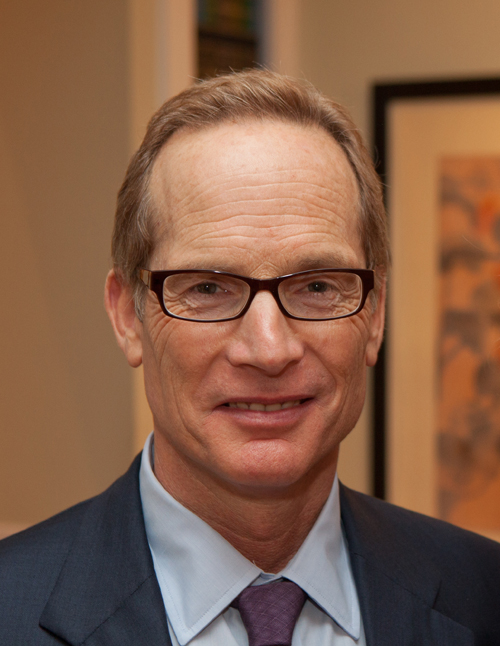
By Psmckiernan – http://www.flickr.com/photos/cplharvard/4993403114/in/set-72157624962383286/, CC BY-SA 3.0, Link
Snapshot
Glenn Russell Dubin is an American investor best known for cofounding Highbridge Capital Management and helping establish the Robin Hood Foundation.
Dubin and his family maintained a close social and financial relationship with Jeffrey Epstein spanning several decades. The documented record includes flights aboard Epstein’s aircraft, social photographs, household contacts, business introductions, investment relationships, correspondence, subpoenas, sworn testimony, and continued contact after Epstein’s 2008 conviction.
Virginia Giuffre alleged under oath that Ghislaine Maxwell directed her to provide Dubin with a massage that involved sex. Dubin categorically denied the allegation. Maxwell denied instructing Giuffre to have sex with Dubin or anyone else. No criminal charge or civil judgment established that Dubin participated in Epstein’s trafficking operation.
Separate testimony from Johanna Sjoberg established that she gave massages to Glenn and Eva Dubin, but Sjoberg said she remembered no improper conduct or sexual expectation involving Glenn Dubin.
Rinaldo Rizzo, an employee in the Dubin household, testified that a distressed fifteen year old Swedish girl arrived at a Dubin residence with Epstein and Maxwell and reported disturbing events involving other people. Rizzo personally observed the girl’s condition and heard her statements, but did not witness what allegedly occurred before her arrival. The released testimony does not establish that Glenn Dubin participated in, knew about, or witnessed the alleged events.
The financial record is also significant. Epstein introduced Dubin to JPMorgan executive Jes Staley and assisted with the transaction through which JPMorgan acquired a controlling interest in Highbridge. Epstein received a reported $15 million advisory fee connected with the transaction. Official sources disagree about whether JPMorgan or Highbridge formally paid the fee, but Staley testified that Highbridge made the payment and that it did not come personally from Dubin or Henry Swieca.
The evidence establishes an unusually close and durable association. It does not, standing alone, establish criminal responsibility.
Early Life and Financial Career
Glenn Russell Dubin was born in New York City on April 13, 1957, and grew up in Washington Heights.
He studied economics at Stony Brook University and began working at E. F. Hutton during the late 1970s.
In 1984, Dubin and Henry Swieca established Dubin and Swieca Capital Management. They later founded Highbridge Capital Management in 1992 with approximately $35 million under management.
Highbridge developed into one of the largest alternative investment firms in the United States. According to Dubin and Company’s official biography, the firm eventually managed more than $35 billion.
JPMorgan Asset Management acquired a controlling interest in Highbridge in 2004 and substantially all of the remaining ownership in 2009. Dubin continued leading the business until 2013.
He subsequently became associated with Engineers Gate, Castleton Commodities International, Dubin and Company, and several philanthropic institutions.
Dubin was also a founding board member of the Robin Hood Foundation. He and his wife funded medical, educational, cultural, and public policy institutions through the Dubin Family Foundation.
Eva Andersson Dubin and the Beginning of the Epstein Relationship
Dubin married Swedish physician Eva Andersson in 1994.
Before that marriage, Andersson had been romantically involved with Epstein for several years during the 1980s. Reporting differs slightly on when their relationship ended, but it generally places the conclusion around 1990 or 1991.
Epstein later claimed that he introduced Eva Andersson to Glenn Dubin.
The connection did not end when Andersson married Dubin. Epstein remained closely involved with the family and was described in a 2008 letter as a close and important friend.
Epstein was sometimes called “Uncle Jeff” or “Uncle F” within the family. Some records and reports described him as a godfather to the Dubin children. A family representative later disputed that description, explaining that the family was Jewish and did not ordinarily use formal godparents.
The terminology is less important than the underlying evidence. The records establish that Epstein was treated as a longstanding family intimate rather than a distant business acquaintance.
Documented Relationship Timeline
The available evidence supports the following broad chronology:
- During the 1980s, Epstein and Eva Andersson had a romantic relationship.
- Around 1990 or 1991, their romantic relationship ended.
- In 1994, Eva Andersson married Glenn Dubin.
- From 1995 through at least 2004, flight records repeatedly placed Glenn, Eva, and members of their family aboard Epstein’s aircraft.
- Epstein introduced Dubin to JPMorgan executive Jes Staley and assisted with the Highbridge transaction completed in 2004.
- Around 2005, Rinaldo Rizzo said Epstein and Maxwell brought a distressed fifteen year old Swedish girl to a Dubin residence.
- In 2008, Eva Andersson Dubin supplied a supportive letter during Epstein’s criminal case.
- In 2009, Glenn and Eva Dubin wrote that they were comfortable allowing Epstein around their children despite knowing about his conviction and sex offender status.
- Epstein reportedly spent Thanksgiving with the Dubin family in 2009 after his release from jail.
- In 2010, Dubin received a document subpoena in litigation involving Epstein and attorney Bradley Edwards.
- A May 1, 2015 amendment and restatement of Epstein’s “2014 Trust” names Celina Dubin in property and residual provisions; a January 2019 version again names her conditionally. These are testamentary provisions, not proof of receipt. Later reported renunciation is discussed separately.
- From 2014 through 2016, records reviewed by the United States Virgin Islands reportedly identified three wire transfers involving Dubin or related entities.
- In 2015 and 2016, civil litigation generated testimony concerning Glenn Dubin, the Dubin family, massages, and the Swedish girl described by Rizzo.
- In 2019, the relationship received renewed scrutiny following Epstein’s federal arrest.
- In 2020, the United States Virgin Islands subpoenaed Glenn Dubin and Highbridge for communications and financial records.
- In 2026, congressional transcripts and a Senate Finance Committee report added further detail about the Highbridge payment, flight history, financial reporting, and continuing institutional scrutiny.
Epstein’s Role in the Highbridge Transaction
Epstein’s role in the Highbridge transaction is documented more specifically than a general claim that he managed Glenn Dubin’s wealth. Jes Staley’s July 24, 2026 House testimony, pp. 17–18 says Epstein introduced him to Dubin, encouraged the transaction and received an advisory fee from Highbridge. Staley expressly distinguished Highbridge’s payment from a personal payment by Dubin or Henry Swieca.
The December 28, 2004 invoice bills Ron Resnick at Highbridge Capital Management LLC $15 million for merger and acquisition advice. The accompanying processed wire, dated December 29, 2004 shows $15 million with Financial Trust Company as the ultimate credited entity. The originating account owner is not visible in that wire image. An invoice, a processed transfer and a witness’s account answer related but different questions.
In Epstein’s April 20, 2011 deposition, pp. 88–89, he described a $20 million total: $15 million to Financial Trust Company and $5 million to an entity he called Financial Strategy Group. He said the latter paid expenses he or his company otherwise would have paid, while expressing uncertainty about its ownership. Pages 94–97 attribute the suggested fee to a discussion with Dubin after agreement on the transaction and identify the invoice as the $15 million portion. This is Epstein’s testimony, not independent proof of every component of his description.
An accounting reproduction, p. 10 instead labels the $5 million recipient New York Strategy Group, LLC and uses a January 3, 2005 entry date. Accounting dates also differ from the processed-wire date for the $15 million. The entity-name and date differences should be reconciled against the original ledgers and transfer records, not counted as additional fees.
JPMorgan’s litigation response, p. 78, paragraphs 171–173 denies that JPMorgan paid the fee and identifies a paying company whose first word is redacted before “& Swieca Holdings, Inc.” The redaction is not filled in here. The August 2026 Senate Finance Democratic staff report, p. 43 says JPMorgan paid $15 million, but cites a newspaper report for that proposition. Those are not two equally specific firsthand payment records: the contemporaneous invoice and wire, Staley’s sworn account and the bank’s litigating position must be considered separately from the staff report’s secondary-source shorthand.
The same exhibit, pp. 4–12 includes a consulting draft proposing a further $2.25 million in annual installments, with blank signature blocks. Epstein testified, pp. 96–97, that a consulting agreement was discussed but not entered. The draft does not establish another completed payment. The previously catalogued Highbridge response material remains a related record, not a substitute for the actual transaction exhibits.
The supported conclusion is a documented $15 million payment to Epstein’s company connected with the Highbridge transaction, plus Epstein’s account of a broader $20 million arrangement. These records do not establish a $15 million personal transfer by Glenn Dubin or a payment for abuse.
Financial Transactions and Suspicious Activity Reporting
Released financial-compliance material now permits a more precise account than saying that all suspicious activity report contents remain unavailable. EFTA01648787, p. 1 reproduces a narrative identifying Glenn Russell Dubin and Eva Birgitta Andersson-Dubin among numerous parties in a report covering 4,725 wire transactions totaling approximately $1.082 billion between October 1, 2003 and July 22, 2019. That is an aggregate across the listed network, not an amount attributed to the Dubins. The narrative does not provide a Dubin-specific transaction total or establish the purpose of each transfer.
A suspicious activity report is a compliance report, not a criminal charge or an adjudication that every listed transaction was unlawful. The reviewed narrative should not be treated as the complete underlying account history, and the existence of public excerpts does not establish that every report or attachment has been released.
The United States Virgin Islands later sought records concerning three wire transfers between 2014 and 2016. A subpoena’s description of transfers is not a finding about their purpose. The investment correspondence discussed below supplies an explanation for particular backstop and distribution entries, but cannot automatically be matched to every subpoenaed transfer or every SAR entry.
Previously catalogued investment material references Glenn Dubin and a $10 million investment dated May 1, 2002. It is not by itself proof of a personal payment to Epstein. Likewise, sums in fund subscriptions, proposed settlements, incoming distributions and outgoing repayments must not be added together as though they were separate fees.
The investment dispute, drafts and backstop repayments
The D. B. Zwirn/Fortress/Jeepers papers concern an investment-redemption dispute. They are separate from the 2004 Highbridge advisory fee and from the cash alleged in Giuffre’s account. Their word “settlement” does not describe a settlement with an abuse survivor.
An August 7, 2009 Kirkland & Ellis memorandum to Epstein examines potential claims against Zwirn, Glenn Dubin and Highbridge and the effects of an existing release. Its recommendations, pp. 7–8 discuss litigation and limitation risks. It is advice by Epstein’s lawyers about potential positions, not a court determination that Dubin committed fraud or breached a duty.
Proposed testimony also requires scrutiny. A December 2009 draft, pp. 2–3 contains editorial comments questioning what could truthfully be attributed to Glenn. A January 2010 affidavit-form version, pp. 3–4 has blank Glenn signature and notary fields. Its narrative about fund investments and withdrawal discussions is proposed testimony in the released copy, not a demonstrated sworn declaration.
The 2011 settlement redline, pp. 2–3 proposes a $70 million fund withdrawal amount payable to Jeepers under a priority/pro-rata structure and transfer of distributions associated with Glenn’s $10 million subscription interest. That does not mean Dubin paid Epstein $70 million or that Jeepers immediately received that sum. The signature page is blank; the comparison report dates the redline to September 28, 2011. The related economic-interest assignment, p. 3 bears fund-manager consent but leaves assignor and assignee signature fields blank. It is not a fully signed agreement in the reviewed copy.
There is later evidence of implementation, but it must be described in its own terms. A January 2013 email records lawyer Darren Indyke saying that a separate Dubin agreement had been executed. Richard Kahn’s December 10, 2015 accounting email reports $4,375,302 received from Dubin on October 6, 2014 under a backstop and describes subsequent distributions being applied to repay him. The November 12, 2014 distribution chain and a related explanation concern the same $222,549.24 distribution cycle, not two separate payments.
The 2015 summary lists prior rounded entries of $222,549, $166,911 and $244,778, plus a new $183,753.77 distribution expected the next day. It asks whether to send the new amount to Dubin. A reported incoming receipt, a contractual obligation and a request for transfer instructions are different evidence; the email is not a bank statement proving every outgoing repayment. See the arrangement-records article for the complete source-status and payment sequence.
Documented Flights
The original pilot exhibit supports repeated travel by Glenn Dubin, not merely a name match in an address book. The following 18 selected flight segments have been checked against the handwritten 118-page pilot-log exhibit. This is a reproducible index of selected entries, not a claim that 18 is his complete lifetime total or that each leg was a separate visit. The scan uses both “Glen” and “Glenn”; unrelated redacted passengers are not identified here.
| Date | Route | Recorded flight no. | Original scan |
|---|---|---|---|
| November 21, 1995 | Teterboro → Palm Beach | 781 | PDF p. 39; EFTA02846498 |
| November 26, 1995 | Palm Beach → Teterboro | 782 | PDF p. 39; EFTA02846498 |
| April 8, 1996 | Palm Beach → Teterboro | 821 | PDF p. 40; EFTA02846499 |
| November 7, 1996 | Teterboro → Palm Beach | 915 | PDF p. 44; EFTA02846503 |
| November 17, 1996 | Palm Beach → Bedford | 919 | PDF p. 45; EFTA02846504 |
| November 17, 1996 | Bedford → Teterboro | 920 | PDF p. 45; EFTA02846504 |
| February 17, 1997 | Palm Beach → Teterboro | 946 | PDF p. 46; EFTA02846505 |
| December 14, 1997 | Palm Beach → Teterboro | 1056 | PDF p. 52; EFTA02846511 |
| January 3, 1998 | Palm Beach → Teterboro | 1059 | PDF p. 52; EFTA02846511 |
| February 6, 1998 | Teterboro → Palm Beach | 1072 | PDF p. 52; EFTA02846511 |
| April 9, 1998 | Teterboro → Palm Beach | 1095 | PDF p. 54; EFTA02846513 |
| May 1, 1998 | Teterboro → Palm Beach | 1104 | PDF p. 55; EFTA02846514 |
| May 3, 1998 | Palm Beach → Teterboro | 1105 | PDF p. 55; EFTA02846514 |
| November 28, 1999 | Palm Beach → Teterboro | 1312 | PDF p. 71; EFTA02846530 |
| February 18, 2002 | Palm Beach → Albany, Georgia | 64 | PDF p. 91; EFTA02846550 |
| February 18, 2002 | Albany, Georgia → New York/JFK | 65 | PDF p. 91; EFTA02846550 |
| November 25, 2003 | New York/JFK → Palm Beach | 240 | PDF p. 106; EFTA02846565 |
| April 11, 2004 | Palm Beach → New York/JFK | 258 | PDF p. 108; EFTA02846567 |
This table replaces an earlier family-passenger column that was too categorical about some entries. For example, the November 17, 1996 rows visibly name Eva with Glenn, while some early entries describe an unnamed baby rather than naming a particular child. The date, route, flight number and original page allow those details to be checked without converting inferred identities into facts.
The Senate staff report, p. 44 separately reports at least 18 flights involving one or both spouses, with Maxwell on at least 13. That mixed-spouse summary must not be cited as an independently audited Glenn-only count. Larger database counts may use different source sets or counting rules; they require record-level reconciliation rather than an assumed explanation.
A passenger entry is evidence of recorded travel, not what occurred at a destination. A St. Thomas airport leg is not, by itself, proof of a visit to Little St. James. For a distinct source, Staley’s 2026 testimony, pp. 187–188 acknowledges staying on Epstein’s island with the Dubins in February 2005. He was uncertain about the length of the stay. His recollection does not establish that every person listed on an associated aircraft manifest stayed on the island, and it is not testimony that Glenn committed abuse.
The 2008 Support Letter
During Epstein’s Florida criminal proceedings, his attorneys gathered letters intended to support a favorable sentencing outcome.
A letter attributed to Eva Andersson Dubin described Epstein as a close and important friend to both her and Glenn.
The letter was supplied after the Palm Beach investigation had produced allegations involving underage girls. It is important because it documents the family’s continuing support during the criminal case.
The letter does not establish that Glenn authored every statement attributed to Eva. It nevertheless demonstrates that Epstein’s relationship with the family survived the public emergence of the Florida investigation.
The 2009 Comfort Letter
The probation file, PDF p. 101 / EFTA01625538 preserves Eva’s November 16, 2009 email to probation officer Carmen Sloane, ending with the typed names Eva and Glenn Dubin. It acknowledges Epstein’s sex-offender registration and the Florida pleas, including the offense involving a minor, and expresses complete comfort with him being around their children. It is an email sent by Eva with a joint typed signoff, not two separately authenticated signatures.
The complete probation context matters. The November 23 contact entry, PDF pp. 133–134 / EFTA01625570–71 records Eva’s request for the family to visit Epstein over Thanksgiving. The officer checked the relevant charges and condition, recorded Eva’s assurance that the children would not be alone with him, and approved the visit. That limiting assurance belongs beside the comfort statement, not in an omitted footnote.
The email and approval establish informed post-conviction support and plans for contact. They do not, by themselves, prove the visit occurred or where a Thanksgiving dinner took place. Earlier reporting by ABC News and Vanity Fair describes continuing contact. A reported completed dinner should remain attributed reporting rather than be inferred from permission alone.
Virginia Giuffre’s Allegation
Virginia Giuffre named Glenn Dubin during sworn testimony in her litigation against Maxwell.
In a publicly released Giuffre deposition, Giuffre said Maxwell directed her to go to Dubin and give him a massage. Giuffre explained that, in the context of Maxwell’s directions, the massage meant sex.
A separately released excerpt records Giuffre being asked whether Dubin was the powerful business executive whose pregnant wife was asleep in the next room. Giuffre answered yes.
The allegation was made under oath and therefore belongs in any comprehensive account of the evidence.
It was not adjudicated.
Dubin categorically denied having sex with Giuffre. His representatives said the allegation was false and that he had no knowledge of the conduct she described.
No Epstein-related criminal charge or conviction against Glenn Dubin was identified in the court records and reporting reviewed for this article as of October 19, 2026. No civil finding establishing the alleged encounter was identified in that review.
The deposition establishes that Giuffre made the allegation under oath. It does not transform the allegation into a judicial finding.
The earlier FBI record adds chronological and evidentiary detail to the later sworn allegation. In the record of Giuffre’s March 17, 2011 interview, PDF p. 4, she said Epstein introduced her to Glenn and Eva, that she gave Eva an ordinary massage during a pregnancy, and that an encounter with Glenn at a condominium beside the Breakers became sexual. She said she was 16 and described cash from Glenn followed by money from Epstein the next day. This is an FBI agent’s written account of what she said, not a verbatim sworn deposition or an FBI finding that it happened.
A parallel production of the same interview, PDF pp. 4–5 places the introduction on p. 4 and the sexual-act, age and payment account on p. 5 (EFTA01249105). These are not two independent witnesses or two independent corroborating interviews. The interview date should also be distinguished from transcription or later processing dates on different copies. The surname GIUFFRE is visibly printed twice on PDF p. 2; that identification does not depend on reconstructing its redacted header.
The May 3, 2016 deposition excerpt, PDF p. 9 / transcript p. 200 records Giuffre explaining that Maxwell’s massage instruction meant sex. Some names are redacted in this production; they are not reconstructed from the black bars. The named 2011 account and previously published court testimony provide the surrounding identification.
A separate September 9, 2019 FBI interview, PDF p. 7 describes a legitimate massage of Eva, a separate instruction involving Glenn and a general statement that the witness was not paid by third-party men. The witness’s name is redacted in this released copy. It should not be confidently attributed to Giuffre without an authenticated identity bridge. Its payment wording differs from the named 2011 account, but that is a difference between documents, not a demonstrated contradiction by the same identified witness. Neither the identity nor an explanation for the difference is supplied by inference.
Maxwell’s Denial
Maxwell was asked directly about Dubin during her 2016 deposition.
Maxwell acknowledged knowing Glenn Dubin as Eva’s husband.
She denied sending Giuffre to Dubin’s condominium at The Breakers for a massage. She also denied instructing Giuffre to have sex with Dubin or instructing her to have sex with anyone.
The relevant questions and answers appear in the released Maxwell deposition and the broader Giuffre v. Maxwell deposition record.
Maxwell’s denial conflicts with Giuffre’s account.
That conflict was never resolved through a trial concerning Dubin.
Maxwell’s later conviction established her responsibility for the trafficking and conspiracy offenses charged in her criminal case. It did not establish the truth or falsity of every answer she gave about every person during civil discovery.
The page-level locator is EFTA02792016, PDF pp. 25–26 / transcript pp. 57–58. Maxwell denied sending Giuffre to the Breakers condominium for a massage and denied instructing her to have sex with Glenn. Her separate answer concerning Sjoberg, PDF p. 29 / transcript p. 61, was that she had no recollection of directing that massage; lack of recollection is not the same wording as an affirmative denial.
Johanna Sjoberg’s Massage Testimony
Johanna Sjoberg testified that she provided massages to Glenn and Eva Dubin.
Her testimony is important because it establishes that Epstein or Maxwell connected a young woman within their massage network to members of the Dubin family.
Sjoberg did not describe Glenn Dubin behaving sexually or inappropriately toward her.
She said she had become a licensed massage therapist and had massaged many people connected with Epstein. She remembered Glenn as another person on the massage table and said there was no additional expectation.
This evidence must be kept separate from Giuffre’s allegation.
Sjoberg’s account does not disprove what Giuffre said happened on a different occasion. Giuffre’s allegation likewise does not alter Sjoberg’s description of her own interaction.
The underlying passage is EFTA02792145, PDF pp. 114–116 / transcript pp. 113–115. Sjoberg recalled the Breakers Row apartment and carrying her massage table upstairs. She placed the event approximately around 2003, with explicit uncertainty, and said there was nothing sexual. That uncertainty should not be converted into a precise date or an exact count of visits.
Rinaldo Rizzo and the Swedish Girl
Rinaldo Rizzo worked as a chef and household employee for Glenn and Eva Dubin.
In sworn testimony, Rizzo described an incident involving Epstein, Maxwell, and a fifteen year old Swedish girl.
According to Rizzo, Epstein and Maxwell arrived at a Dubin residence with the girl. Rizzo said she appeared disoriented, distressed, and frightened. He recalled her shaking uncontrollably while speaking in the kitchen.
Rizzo testified that the girl said she had been on Epstein’s island with Maxwell and another woman named Sarah. According to his account, she said people had requested sex, that she refused, and that her passport had been taken.
The Rizzo deposition excerpts preserve his sworn account. The Rizzo subpoena documents how his testimony was obtained.
Rizzo personally observed the girl’s condition and personally heard what she said. He did not witness the events she described on the island.
The public transcript does not establish that:
- Glenn Dubin requested sexual activity from the girl.
- Glenn Dubin took or controlled her passport.
- Glenn Dubin was present in the kitchen during her disclosure.
- Glenn Dubin knew what allegedly occurred before the girl reached the residence.
- The girl’s complete account was independently verified.
Maxwell’s attorneys questioned Rizzo’s credibility and raised a prior employment dispute between him and the Dubins. The dispute is relevant to evaluating possible motive, but it does not erase his testimony or prove that it was false.
The substantive excerpt is EFTA02785609, PDF pp. 3–11 / transcript pp. 52–60, from June 10, 2016. Rizzo placed the encounter in late 2004 or 2005 and said the girl gave her age as 15. His observation of distress was firsthand; her reported island experience, age and account of a passport being withheld were information she conveyed to him. He did not identify Glenn as the person who requested sex or withheld the passport. Pages 9–11 / transcript pp. 58–60 contain his account of Eva’s nanny remark, seeing the girl later on a flight to Sweden and leaving the household’s employment.
The family disputed Rizzo’s account. Cohan’s September 2019 report records a spokesperson denying an underage Swedish nanny and citing flight records and a longtime nanny’s testimony. Those underlying rebuttal materials were not independently authenticated here; the denial is not a judicial resolution.
A June 13, 2016 email, p. 1 shows Epstein warning Glenn about Rizzo’s deposition concerning young girls at North Salem and dismissing it as nonsense. Glenn’s visible reply was “uuugghh.” This proves the warning reached him and received a response three days after the deposition. It does not establish when Glenn first learned of the alleged events, that he accepted their truth, or that the reply was a confession. The outgoing copy belongs to the same correspondence, not independent corroboration.
Post-conviction arrangements and what actually happened
The post-conviction relationship is documented in ordinary logistics as well as the probation correspondence. The arrangement-records dossier preserves the longer chains so invitations, requests and later responses can be compared instead of treating every contact as a completed event.
- May 2014 and March 2015 apartment records show staff coordinating access to a Dubin apartment: EFTA00369159, EFTA00352427 and EFTA02084601. A request or automatic reply is not proof of another completed stay.
- A May 2015 dinner has stronger completion evidence: EFTA02502802 contains Glenn’s thanks afterward and EFTA02502820 Epstein’s reply. It should be distinguished from a calendar-only proposal.
- The June 10, 2017 invitation EFTA00300312, PDF p. 1 and calendar EFTA00315414, PDF p. 2 concern Glenn’s birthday party. EFTA02347618, PDF p. 1 records Groff telling Epstein on June 5 that his nonattendance had been confirmed. An invitation and unrevised calendar entry do not prove he attended.
- February–March 2017 island-hospitality planning appears in EFTA02204775. In EFTA00679740, Glenn asks to be billed for a damaged island vehicle. That is an acknowledgment and a request, not proof that a repair invoice was issued or paid.
- Later correspondence includes a 2018 Thanksgiving invitation EFTA01015929 and a Paris accommodation proposal EFTA02250203. The latter chain ends with a different family travel plan; it should not be described as a completed Paris stay.
These records establish continuing access and coordination after the conviction. Their significance is the durability of the relationship, not a presumption that a dinner, loaned apartment, professional massage, charitable invitation or vehicle repair was an abuse arrangement. The evidence must identify the participants and purpose before those categories can be connected.
Celina Dubin and Epstein’s Trust Planning
Estate-planning documents record Epstein’s proposed disposition of his assets, not a completed gift or evidence of wrongdoing by the named beneficiary. The May 1, 2015 amendment and restatement of the “2014 Trust,” PDF pp. 6–7 expressly names Celina Edith Dubin in provisions concerning four properties and separate operating allocations. It also contains a contingent residual sequence involving Celina, then Eva and then MIT. This is more specific than simply describing an unspecified Dubin-family inheritance.
The January 2019 trust version, PDF pp. 10–12 again expressly names Celina in conditional property and residuary provisions. A different 2018 copy has a redacted beneficiary field; this article does not fill it in. Versions, conditions and later revisions must be compared individually, not collapsed into a statement that one person was continuously entitled to the same property.
Reporting about Epstein discussing marriage to Celina describes his purported proposal, not her agreement or a romantic relationship. The family has said it did not know she was included in estate planning; reported waiver or renunciation statements must likewise be distinguished from proof of payment. Nothing in the cited testamentary provisions proves that Celina received any bequest. See the dedicated Celina articles linked below for the version-by-version estate record.
Photographic Evidence
The public photographic record provides visual confirmation of social proximity but must be interpreted carefully.
Glenn Dubin with Epstein and other prominent associates
A publicly circulated dinner photograph shows Glenn Dubin with Epstein, Alan Dershowitz, and former Harvard president Larry Summers. The image has been reproduced in reporting about Epstein’s academic, financial, and social network, including The Left Hook’s examination of Epstein’s relationships.
The image establishes that the men attended the same gathering. Without authenticated date, location, caption, and original metadata, it does not independently establish what they discussed or why they were present.
Photograph provenance at the 2012 Dubin Breast Center benefit
The December 2012 gala images have different provenance. Contemporary Business Insider captions identify the Lutnicks and Glenn Dubin at the benefit. A separate image identified as Epstein with Eva is reproduced and attributed to that event by Bekah Day; its event attribution should remain credited to her unless the original caption, photographer or event archive is authenticated.
Bekah Day’s investigation reproduces event imagery and related invitation records. The 2026 Howard Lutnick congressional transcript also identifies an email from the Dubin Breast Center to Epstein containing a special invitation from Eva Andersson Dubin.
The invitation and guest correspondence establish social coordination, not every invitee’s attendance. A properly authenticated event photograph can establish presence, but a later attributed image should not be presented as if its date and occasion were independently verified. Neither establishes misconduct.
Glenn and Eva Dubin at philanthropic events
Numerous professional event photographs show Glenn and Eva at benefits connected with the Dubin Breast Center, Mount Sinai, the Robin Hood Foundation, and other institutions.
These images document their public philanthropic activity. They are relevant mainly when captions, guest lists, or surrounding photographs place Epstein at the same event.
Family and private setting photographs
Investigative reporting has reproduced or described photographs portraying Epstein with members of the Dubin family in informal social settings.
Such images can establish familiarity and social access. They generally cannot establish the date, duration, or purpose of the relationship unless supported by original captions, photographer records, emails, or calendar entries.
Evidentiary limitations
A photograph can establish that identifiable people appeared together at a particular moment if the image is authentic and correctly dated.
A photograph ordinarily cannot establish:
- What the people discussed.
- Whether anyone knew about another person’s criminal activity.
- Whether a person participated in conduct that occurred elsewhere.
- Whether an event was personal, financial, professional, or incidental.
- Whether a caption created years later is accurate.
Photographs should therefore be paired with flight records, correspondence, invitations, calendars, testimony, and contemporaneous metadata.
Phone Directories, Messages, and Contact Records
The congressional record confirms that Epstein’s residences and offices maintained extensive phone directories and contact books.
Glenn Dubin appeared within Epstein related contact and message records.
EFTA01867787 is a phone message record concerning Dubin. It directs Epstein to call Glenn Dubin at work.
The document establishes direct telephone access and an expectation that Epstein would return the call. It does not reveal what they discussed.
Litigation records also list Dubin addresses and contact information for service, discovery, or witness identification. Such entries should not automatically be described as evidence from Epstein’s black book unless the originating document is actually an address book.
The existence of a contact entry establishes a connection. It does not establish criminal conduct.
The 2010 Subpoena
Dubin received a subpoena during litigation connected with Epstein and attorney Bradley Edwards.
EFTA01581723 contains Dubin’s objections and responses to a November 9, 2010 subpoena seeking documents.
The record is important because it demonstrates that litigants considered Dubin potentially capable of supplying information relevant to Epstein related disputes.
A subpoena does not imply guilt. It is a legal demand for testimony or records from someone believed to possess relevant information.
Dubin’s objections also do not establish that the requested material was incriminating. Parties routinely object to subpoenas on relevance, burden, privacy, privilege, and procedural grounds.
United States Virgin Islands Subpoenas
In September 2020, the United States Virgin Islands issued subpoenas to Glenn Dubin and Highbridge as part of its civil enforcement case against Epstein’s estate.
The official Dubin subpoena requested communications and transaction records covering an extended period.
Reporting by ABC News stated that the government specifically sought information concerning three wire transfers made between 2014 and 2016.
The subpoenas demonstrate that investigators considered the Dubin relationship financially and factually relevant.
They do not establish that Dubin committed an offense. The publicly available record does not contain a judicial finding that the identified transfers were unlawful.
Epstein’s Financial Client Claims
Richard Kahn’s March 11, 2026 deposition became a source of reporting about Epstein’s financial clients. The House Committee published the deposition video, but no official written transcript or usable official captions were located in this review. Searchable automated transcripts are useful locators, not authenticated quotations, and should not be cited as proof that Kahn established a separate personal-wealth-management engagement for Glenn.
A Dubin representative disputed the personal-client characterization, saying Epstein invested in a Dubin-managed fund rather than managing Dubin’s personal finances. The contemporaneous invoice and wire and Staley’s sworn testimony establish a Highbridge-related advisory payment without requiring that broader characterization. An advisory fee, an investment in a managed fund and management of an individual’s wealth are distinct relationships. The reviewed records do not justify treating them as interchangeable.
Eva Andersson Dubin and Mount Sinai
Eva Andersson Dubin founded the Dubin Breast Center at Mount Sinai.
Released records show that Epstein maintained contacts within the medical and philanthropic network surrounding Eva. He sought medical referrals and received invitations connected with the center.
Reporting by Bloomberg Law described records in which Epstein sought assistance with medical arrangements for women and discussed a proposed $5 million contribution associated with a women’s floor at Mount Sinai.
These records principally concern Eva and institutional contacts. They should not automatically be attributed to Glenn.
In 2026, Mount Sinai reportedly initiated an internal review of its Epstein related connections. The existence of that review represents institutional scrutiny, not a finding against Glenn or Eva Dubin.
Congressional Testimony in 2026
The congressional investigation produced several records relevant to Dubin.
Jes Staley
Staley confirmed that Epstein introduced him to Dubin and that the relationship ultimately contributed to JPMorgan’s Highbridge transaction.
Staley said Highbridge paid Epstein the $15 million advisory fee.
He also testified that he remained friends with Glenn and Eva. He said they had discussed the reputational consequences of their respective relationships with Epstein, including social exclusion and investments being rejected.
Those remarks establish continuing friendship and shared reputational consequences. They do not establish coordinated misconduct.
Lesley Groff
Epstein assistant Lesley Groff was asked whether she ever arranged a massage for Glenn Dubin. She said no.
She was also asked whether she had heard allegations concerning him and said no.
The Groff transcript records her personal knowledge. It does not disprove Giuffre’s allegation because Giuffre identified Maxwell, not Groff, as the person who gave the instruction.
Kathryn Ruemmler
Attorney Kathryn Ruemmler testified that she had spoken with Glenn and Eva about the media scrutiny arising from their Epstein associations.
The Ruemmler transcript supports the conclusion that the Dubins remained part of the network of people publicly scrutinized for post conviction contact with Epstein.
Thomas Massie’s House statement
Representative Thomas Massie publicly included Dubin among people he believed required further investigation in connection with the Epstein files.
A congressional statement is not an indictment, judicial finding, or criminal charge. Its evidentiary importance depends on the records supporting it, many of which have not been individually explained in public.
Political contributions and the Ramaswamy super PAC
FEC receipt data records a $100,000 contribution attributed to Glenn Dubin on March 30, 2023, to American Exceptionalism PAC (C00833749), the independent super PAC supporting Vivek Ramaswamy’s 2024 presidential bid. The entry is marked “PARTNERSHIP ATTRIBUTION” (Form 3X, line 11AI; source image 202307319584280150). It is separate from Dubin’s direct contribution to Ramaswamy’s campaign.
The PAC’s FEC summary identifies it as a terminated independent-expenditure-only committee, not an authorized campaign committee. For February 17, 2023 through December 27, 2024, it reports $0 in contribution refunds and $0 in ending cash. Cleveland.com reported on December 10, 2025 that the PAC dissolved without donating or refunding the $100,000. Separately, campaign spokesperson Connie Luck said Ramaswamy’s campaign donated its direct Dubin contribution to Hope Ministries, an Iowa shelter. She said neither the candidate nor his campaign could coordinate with the independent PAC and that he did not know what it had done with the money.
These records document political financing. They do not establish that Dubin’s contribution funded a particular 2026 advertisement, establish criminal conduct, or resolve the disputed allegations discussed in this article.
Institutional and Reputational Consequences
Scrutiny of the Dubin relationship produced consequences beyond litigation.
In 2019, the Guerrilla Girls criticized the Museum of Modern Art for maintaining a gallery named for Glenn and Eva Dubin while questions about their Epstein relationship remained unresolved.
In early 2020, Glenn Dubin’s name disappeared from the Harvard Kennedy School Dean’s Executive Board and the advisory council of the Center for Public Leadership. The Harvard Crimson reported the departures amid student criticism of Epstein connected donors.
Dubin announced his retirement from the hedge fund industry in January 2020. He said the decision reflected a planned transition after forty years and was unrelated to Epstein reporting. Reuters reported the retirement and his intention to focus on private investments.
Reporting also indicated that at least one major Engineers Gate investor evaluated its position during the period of heightened scrutiny. That review reportedly included investment performance considerations and should not automatically be characterized as an Epstein based withdrawal.
Glenn Dubin’s Denials and Public Position
Dubin’s representatives have consistently denied the central allegation made by Giuffre.
They have also emphasized that:
- Dubin did not participate in Epstein’s criminal conduct.
- Sjoberg described no improper conduct during her massage interaction with him.
- Epstein did not manage Dubin’s personal finances in the manner sometimes reported.
- The family did not know that Celina had been included in Epstein’s trust planning.
- Dubin’s retirement was planned and was not caused by Epstein reporting.
- References to Epstein as a formal godfather were inaccurate.
These responses are part of the evidentiary record and must be included alongside allegations.
A denial does not automatically disprove an allegation. An allegation does not automatically overcome a denial. The unresolved question depends on corroborating documents, independent witnesses, admissibility, and findings by an authorized fact finder.
A corrected transcript and the limits of legal status
A circulated transcript passage cannot responsibly be used as an Epstein admission concerning Glenn. Judge Loretta Preska’s January 10, 2024 order struck a filing containing an erroneously transcribed answer at deposition p. 217, lines 17–19, and required a corrected redacted replacement. The earlier ruling, PDF p. 16 states that the deposition video showed a stenographic error. The withdrawn apparent admission must not be repeated as evidence. The correction does not decide whether Giuffre’s separate allegation was true.
No Epstein-related criminal charge or conviction against Glenn Dubin was identified in the court records and reporting reviewed for this article as of October 19, 2026. That is not a claim that every inquiry was closed or that prosecutors formally exonerated him. Pamela Bondi’s May 29, 2026 House interview, p. 99 did not affirm or deny an open investigation when asked about Dubin. A subpoena, congressional question, investigative list or prosecutor’s summary is not an indictment or finding of guilt.
What the Evidence Establishes
The public record establishes that:
- Epstein had a romantic relationship with Eva Andersson before she married Glenn Dubin.
- Epstein remained close to the Dubin family after the marriage.
- Glenn and Eva treated Epstein as a family intimate.
- Glenn Dubin travelled repeatedly aboard Epstein controlled aircraft.
- Epstein introduced Dubin to Jes Staley.
- That introduction contributed to JPMorgan’s acquisition of Highbridge.
- Epstein received approximately $15 million for assistance connected with the transaction.
- Glenn and Eva supported Epstein during and after his Florida criminal case.
- They expressed comfort with Epstein being around their children after his conviction.
- The probation file records permission for Thanksgiving contact in 2009, with an assurance that the children would not be alone with Epstein; completion is separately reported, not proved by the approval.
- Giuffre accused Dubin under oath of participating in a sexual encounter arranged by Maxwell.
- Dubin denied the allegation.
- Maxwell denied arranging sexual activity between Giuffre and Dubin.
- Sjoberg massaged Glenn and Eva but described no improper conduct by Glenn.
- Rizzo observed a distressed fifteen year old girl at a Dubin residence and heard her describe alleged mistreatment involving other people.
- Dubin and Highbridge received subpoenas seeking Epstein related records.
- Financial institutions reported transactions involving Epstein and the Dubin family.
- Photographs document Epstein’s access to the Dubins’ social and philanthropic environment.
- Epstein considered or arranged for a Dubin family member to benefit under his estate planning.
- The relationship continued to receive congressional and institutional scrutiny in 2026.
What the Evidence Does Not Establish
The available evidence does not establish that:
- Every allegation made about Glenn Dubin was true.
- Dubin was convicted of or charged with an Epstein related crime.
- A court found that Dubin had sex with Giuffre.
- Sjoberg accused Dubin of sexual misconduct.
- Rizzo witnessed the events allegedly experienced by the Swedish girl before she reached the residence.
- Glenn Dubin took the girl’s passport.
- Glenn Dubin knew the full extent of Epstein’s abuse.
- Every flight aboard Epstein’s aircraft involved criminal activity.
- Every reported financial transaction was suspicious for the same reason or was unlawful.
- Dubin personally paid Epstein the $15 million fee.
- A subpoena established guilt.
- An address book entry established participation in trafficking.
- A photograph established knowledge of criminal conduct.
- Celina Dubin agreed to marry Epstein or knowingly sought an inheritance from him.
- Continued friendship after 2008 proved participation in Epstein’s crimes.
- Congressional demands for investigation constituted criminal findings.
Investigative Assessment
The Glenn Dubin record is significant because it combines several forms of evidence that are often found separately in other Epstein relationships.
There is documented social access, family intimacy, repeated air travel, business intermediation, a multimillion dollar advisory fee, post conviction support, household testimony, sworn allegations, photographs, financial reporting, subpoenas, and continuing congressional scrutiny.
That combination demonstrates that Epstein’s relationship with the Dubin family was substantial and durable.
The most serious unresolved evidence is Giuffre’s sworn allegation. It is direct testimony from the person who said the event happened, but it was denied and never adjudicated.
Sjoberg’s testimony is independently important because it confirms that women connected with Epstein’s massage network were referred to the Dubin household. Her account is also limiting evidence because she described no improper conduct by Glenn during her own massage interaction.
Rizzo’s account supplies powerful evidence about the movement of a distressed minor through Epstein and Maxwell’s social environment. Its relevance to Glenn must not be exaggerated. Rizzo’s testimony places the girl at a Dubin residence but does not establish Glenn’s knowledge of the events she described.
The Highbridge transaction supplies the clearest documented financial benefit Epstein received through his relationship with Dubin. It also shows how Epstein converted introductions to wealthy associates into institutional access and large fees.
The post conviction evidence presents a separate question of judgment. Glenn and Eva continued welcoming Epstein after acknowledging his conviction and sex offender status. That fact does not prove knowledge of undisclosed crimes, but it demonstrates that the conviction did not end the relationship.
A defensible account must therefore preserve three conclusions simultaneously:
- The relationship was far closer than an incidental social acquaintance.
- Serious allegations and unresolved investigative questions exist.
- The public record has not established Glenn Dubin’s criminal responsibility.
Key Takeaways
- Glenn Dubin was a longstanding member of Epstein’s financial and social network.
- Epstein’s earlier relationship with Eva Andersson developed into a close relationship with the entire Dubin family.
- The 18 selected pilot-log entries indexed here document Glenn’s travel with original page references; they are not an exhaustive count.
- Epstein introduced Dubin to Jes Staley and assisted with JPMorgan’s Highbridge transaction.
- Epstein received approximately $15 million connected with that transaction.
- The invoice, wire, sworn accounts and bank response provide different levels of evidence about the fee; the Senate report’s secondary-source shorthand is not a substitute for them.
- Glenn and Eva continued supporting Epstein after his conviction.
- Giuffre accused Dubin under oath, and Dubin denied the allegation.
- Maxwell denied directing Giuffre to have sex with Dubin.
- Sjoberg gave Dubin a massage but described no inappropriate conduct.
- Rizzo’s testimony concerns a distressed minor brought to a Dubin residence, but does not establish Glenn’s participation in the alleged preceding events.
- Photographs establish social proximity, not criminal conduct.
- Phone records and directories establish access and communication, not guilt.
- Subpoenas and suspicious activity reports document investigative interest, not adjudicated wrongdoing.
- The relationship produced lasting institutional, financial, and reputational scrutiny.
Concrete unanswered questions
- Can an authenticated contemporaneous record or independent witness place the alleged Breakers encounter in a specific time window? Any location, pregnancy or travel comparison must test both accounts without treating an incomplete log as a universal alibi.
- Can the identity of the redacted 2019 interview be authenticated from an authorized unredacted source, and only then can its payment wording be compared with the named 2011 account through original notes or recordings?
- What do the complete original flight records and nanny statement cited in the family’s Rizzo rebuttal actually establish about the relevant dates? Their production and provenance matter as much as the public denial.
- Are there communications showing what Glenn knew before the June 13, 2016 warning, rather than assuming that later notice proves earlier knowledge?
- Which originating legal entity and account funded the Highbridge fee, and how do the $5 million entity name and accounting date reconcile with Epstein’s testimony? The visible redaction must not be filled by conjecture.
- Can fully executed versions of the 2011 settlement and assignment, the separate backstop agreement and bank confirmations be matched to each reported distribution? Amounts due, amounts received and outgoing repayments require separate columns.
- Which of the three subpoena-described 2014–2016 transfers correspond to the documented backstop cycle, if any? The public SAR narrative’s aggregate cannot answer that question.
- Which social arrangements have affirmative completion evidence, which were cancelled, and which remain plans only? Further calendar matches should be assessed against replies, travel and contemporaneous follow-up.
Research provenance and independent sleuth contributions
Independent researchers are credited for useful leads, while factual claims are tied to the original record. Nina Burleigh and Katie Chenoweth’s American Freakshow report, “Jeff and the Blondes” (March 9, 2026) examines Swedish women, the Dubin household and Rizzo’s account. Its relevance is direct, but a later article discussing the same deposition is not another witness to the events.
Ellie Leonard’s “Follow the Money” installment on the 2011 JPMorgan emails (December 22, 2025) is a useful chronological lead for Highbridge, Zwirn and the banking correspondence. The financial conclusions here rest on the separately linked invoice, deposition, legal memorandum and settlement/accounting records, not on treating a published email transcription as a bank audit.
Rye’s Document Zero “Sleuthsletter” of August 24, 2026 identified citation-location problems in the Glenn profile. That source is credited as a citation audit: because it discusses EpsteinWiki itself, its repetition of a profile claim cannot serve as independent corroboration. The substantive Giuffre account is therefore linked to EFTA00269896 p. 4 and EFTA01249101 p. 5, not just to an introductory page.
Method: a PDF page number identifies the position in the linked file; the EFTA number printed on a page may differ from the file’s starting identifier. Repeated email chains and differently formatted productions of the same interview are grouped as related records. Redacted names remain redacted. OCR, automated transcripts, database counts and interpretive reports are discovery aids until checked against the scan, recording or underlying ledger.
Related EpsteinWiki Articles
- Jeffrey Epstein
- Ghislaine Maxwell
- Virginia Roberts Giuffre
- Britannia Johanna Sjoberg
- Rinaldo Rizzo
- Jes Staley
- JPMorgan Chase
- Highbridge Capital Management
- Epstein Flight Records
- Epstein Financial Records
- United States Virgin Islands Litigation
- Witness Statements and Depositions Litigation
- How to Read an Epstein Document
Primary Records and Government Sources
- Jes Staley congressional transcript
- Senate Finance Committee report on Wall Street and Epstein
- Lesley Groff congressional transcript
- Kathryn Ruemmler congressional transcript
- Howard Lutnick congressional transcript
- Glenn Dubin United States Virgin Islands subpoena
- Virginia Giuffre deposition exhibit
- Ghislaine Maxwell deposition
- Rinaldo Rizzo deposition excerpts
- Rinaldo Rizzo subpoena
- Jeffrey Epstein pilot flight logs
- United States Department of Justice Epstein Library
Primary Epstein Data Evidence
- Glenn Dubin entity record collects indexed references to Dubin across the released files. Database totals can include duplicate pages and OCR variations and should not be treated as counts of distinct events.
- EFTA01581722 contains Highbridge related response material concerning Epstein’s introduction of Glenn Dubin to Jes Staley.
- EFTA01581723 contains Glenn Dubin’s objections and responses to a November 9, 2010 subpoena.
- EFTA01867787 is a phone message directing Epstein to call Glenn Dubin at work.
- EFTA01121077 contains investment related material referencing Glenn Dubin and a $10 million investment dated May 1, 2002. The document should not be characterized as a personal payment without additional evidence.
- Epstein Data flight archive permits comparison of passenger names, aircraft legs, dates, and routes. Search results must be checked against the scanned pilot logs because aliases and OCR errors can inflate totals.
Investigative and Supporting Reporting
- Vanity Fair examination of the Dubin relationship
- ABC News report on the United States Virgin Islands subpoenas
- Business Insider report on the 2009 Thanksgiving visit
- Business Insider report on the Dubin massage referral
- Business Insider report on the Giuffre allegation
- Business Insider report on Celina Dubin and Epstein’s estate planning
- Harvard Crimson report on Dubin’s departure from Kennedy School boards
- Reuters report on Dubin’s retirement
- Bloomberg Law report on the Dubin and Mount Sinai records
- American Freakshow examination of Epstein and the Swedish social network
- Bekah Day examination of Epstein’s access to Dubin Breast Center events
- The Left Hook examination containing the dinner photograph
Investigative newsletters supply useful document leads and visual archives, but their interpretations should be checked against the underlying court, government, photographic, and EFTA records.
Additional primary records checked for this review
- EFTA00731201; original PDF and substantive pages cited in the text above.
- EFTA00586975; original PDF and substantive pages cited in the text above.
- EFTA00722155; original PDF and substantive pages cited in the text above.
- EFTA01088604; original PDF and substantive pages cited in the text above.
- EFTA00292758; original PDF and substantive pages cited in the text above.
- EFTA01204890; original PDF and substantive pages cited in the text above.
- EFTA01648787; original PDF and substantive pages cited in the text above.
- EFTA02846460; original PDF and substantive pages cited in the text above.
- EFTA00300312; original PDF and substantive pages cited in the text above.
- EFTA00315414; original PDF and substantive pages cited in the text above.
- EFTA02347618; original PDF and substantive pages cited in the text above.